" fill="%23faf1da" stroke-width="1.8"/>%0A <ellipse cx="64.5" cy="50" rx="43" ry="12" transform="rotate(4 64.5 50)" stroke="%23938466"/>%0A <path d="m26 44 1 10m3-12 1 14m3-14 1 15m3-14 1 15m4-14 1 14m4-13 1 14m39-10-1 10m5-9-1 8m5-7-1 5" stroke="%23b2a181" stroke-width=".7"/>%0A <path d="M55 60c3-10 12-14 23-10l47-44c7-6 15-6 15-2 0 5-9 11-14 14L82 60c-8 4-21 4-27 0Z" fill="%23bc8c48" stroke-width="1.6"/>%0A <path d="M61 59c3-5 9-8 15-5l-4 7m8-8 49-45 6-4M84 52l45-41" stroke="%2376562e" stroke-width="1"/>%0A <path d="M20 53c18 14 69 19 90 2" stroke="%23514431" stroke-width="2"/>%0A <path d="M27 59c22 11 59 14 78 2" stroke="%23fff9e9" stroke-width="2"/>%0A <path d="m48 87 1 1m7 8 1 1m6-12 1 1m6 12 1 1m6-9 1 1m-24 9 1 1m19 4 1-1m10-16 1 1" stroke="%23aa9b7c"/>%0A </g>%0A</svg>%0A)
Espagnole Sauce
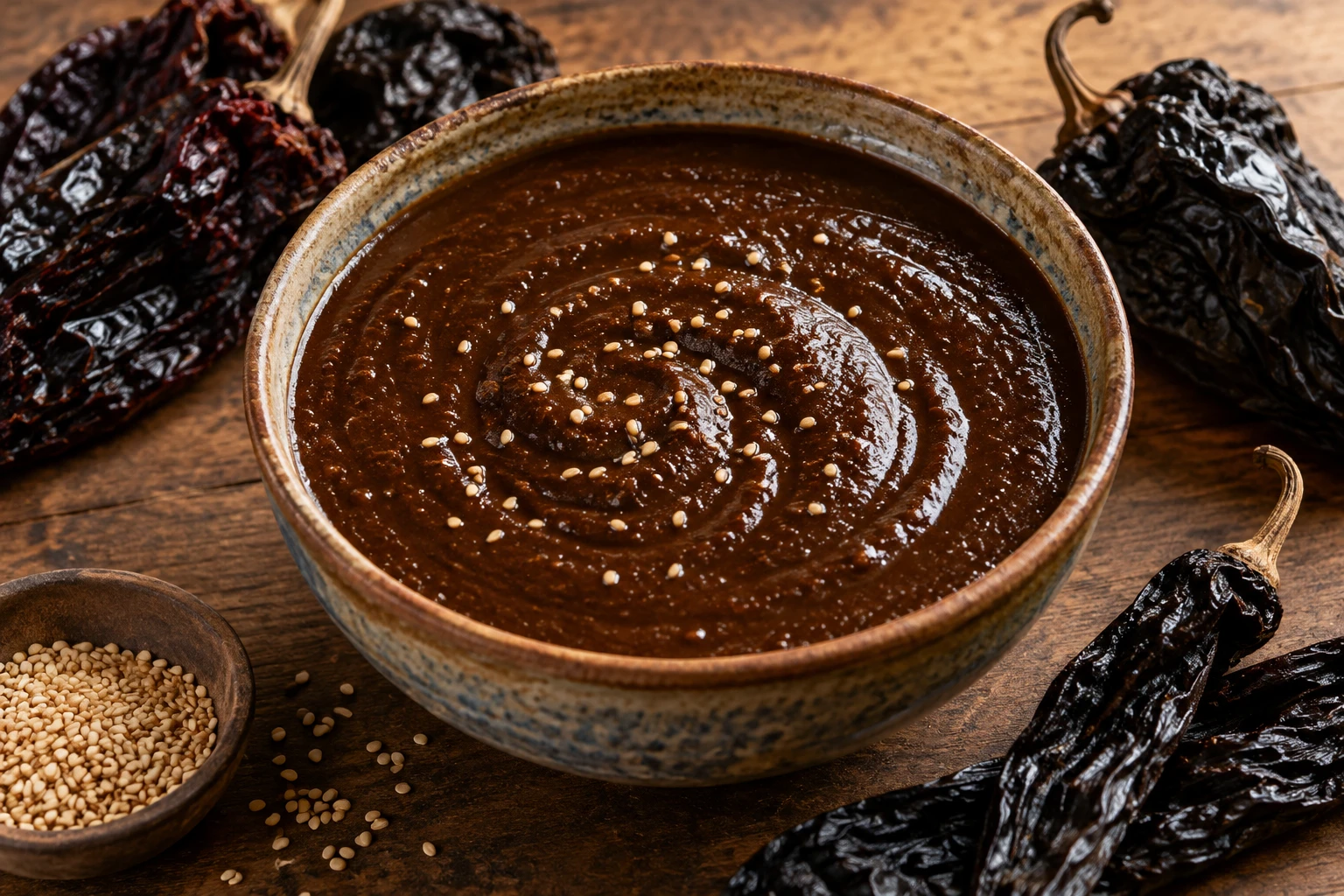
Brown stock, a dark roux, and a slow simmer create a smooth, deeply flavored French mother sauce in a home-kitchen quantity.
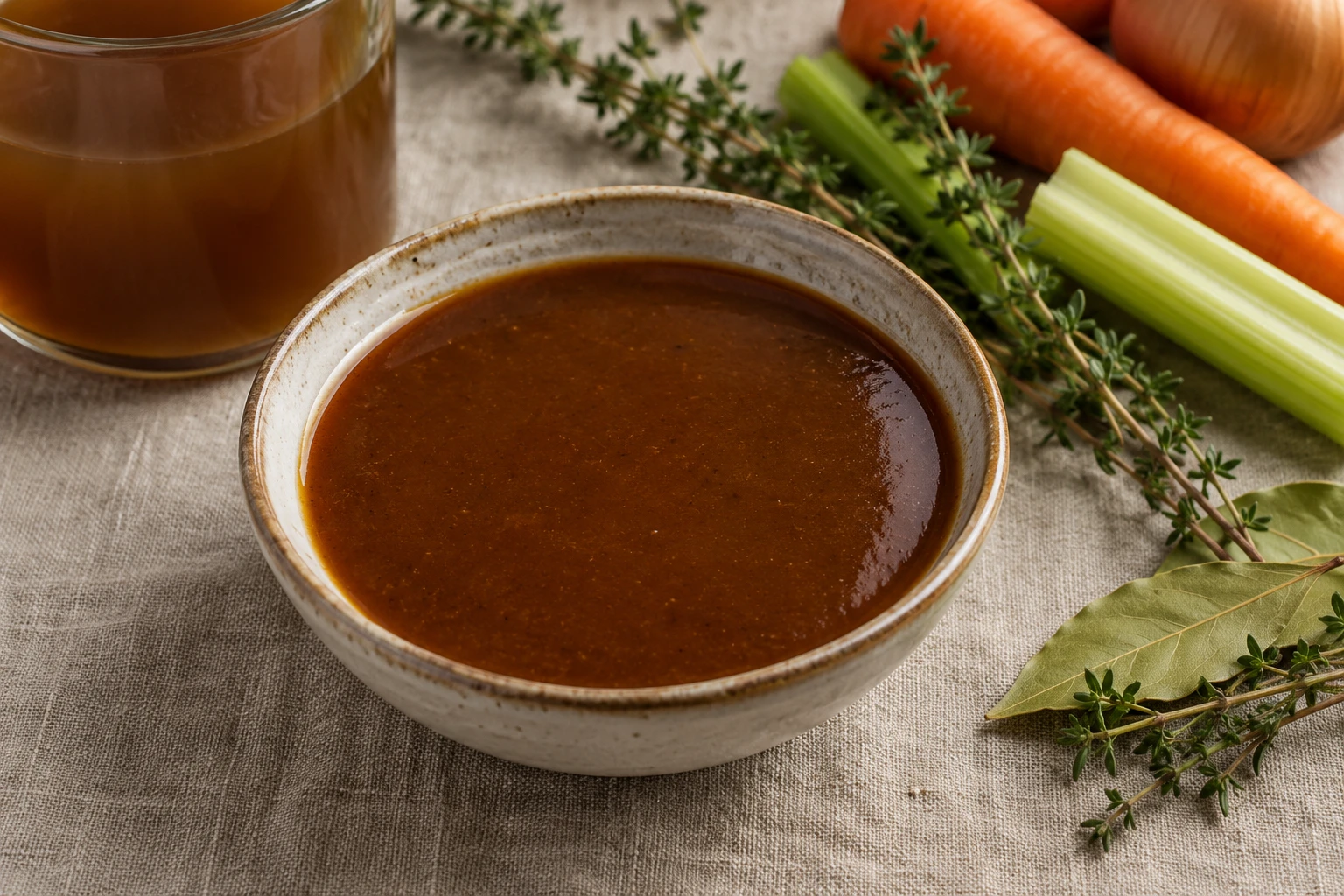
Espagnole develops its depth through several controlled stages: vegetables brown without scorching, tomato paste darkens, and flour cooks slowly in butter. A gentle simmer then gives the stock time to absorb those flavors before the sauce is strained smooth.
Build brown color gradually
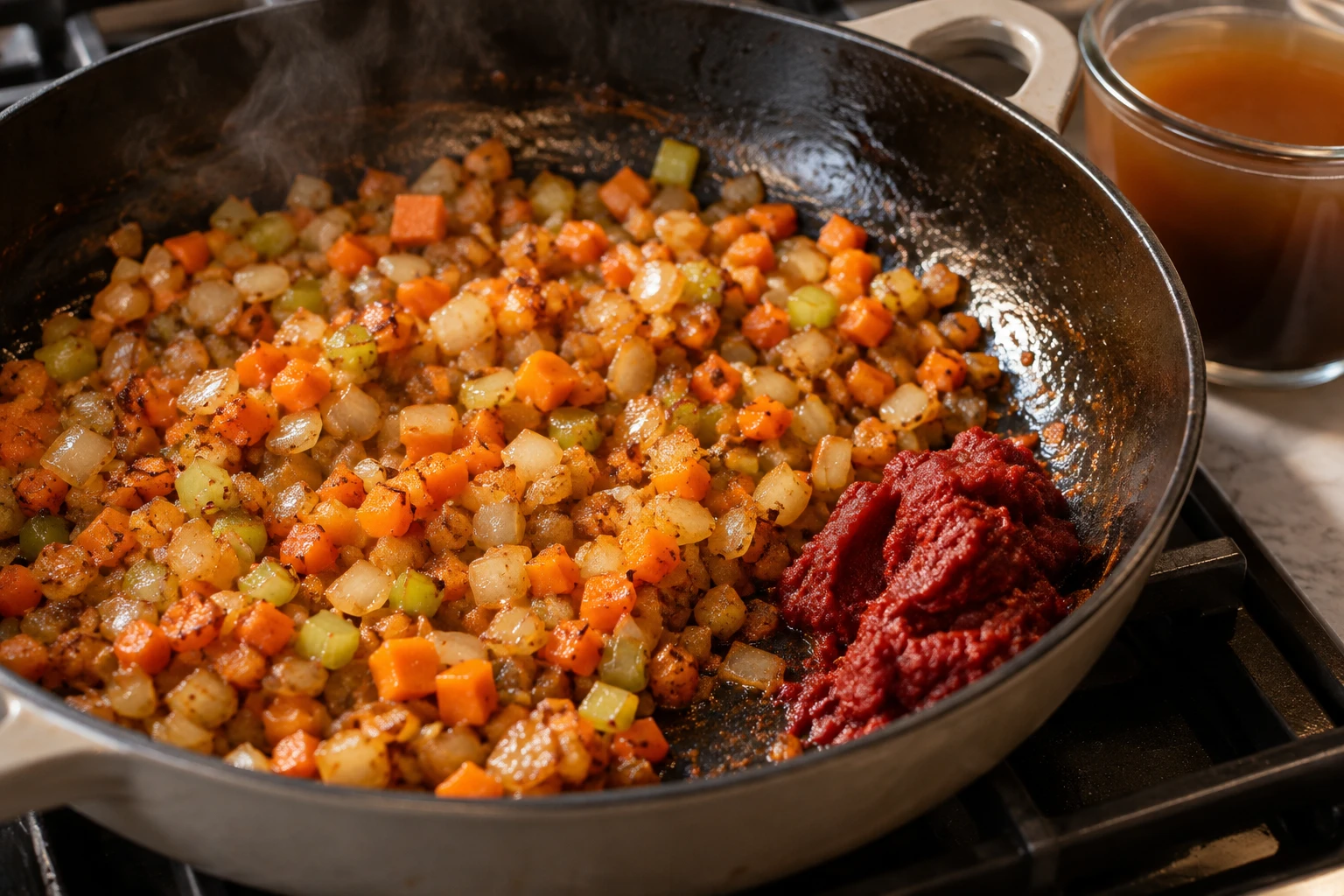
The mirepoix should turn deep golden over steady heat, with no charred edges; stir often and lower the heat if the skillet starts smoking. Tomato paste follows only after the vegetables are browned, and its brick-red color signals that its raw aroma has cooked away.
Lift the fond while it is warm
Pouring in part of the warm stock loosens the browned bits from the skillet and carries them into the sauce. Scrape the pan before the liquid evaporates, then add both the vegetables and deglazing liquid when the roux is ready.
Cook the roux to a nutty brown
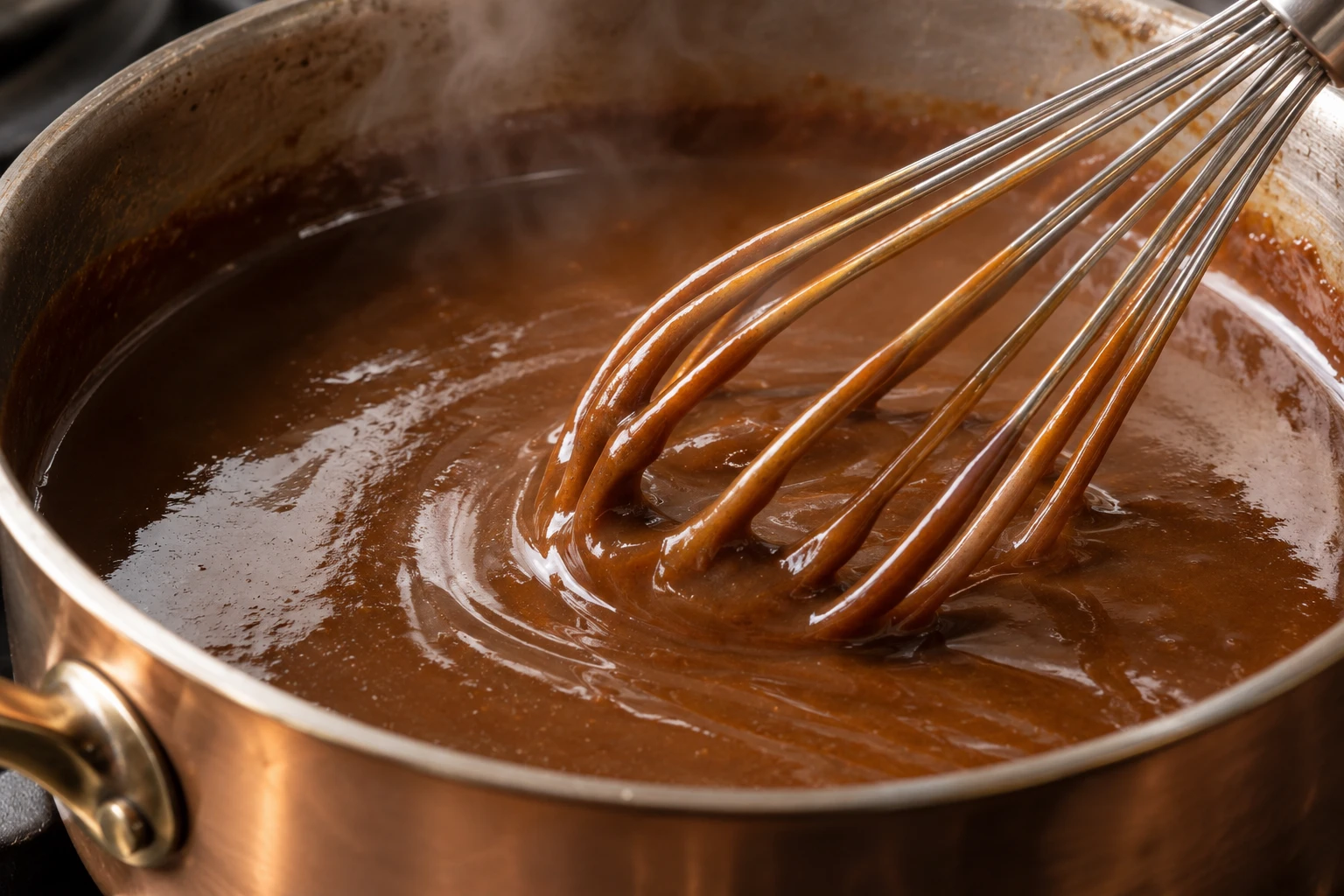
A deep roux thickens less than a pale one, so it needs patient cooking to reach the right color without scorching. Stir continuously and trust the visual and aromatic cues: milk-chocolate brown and toasted, never smoky or bitter.
Keep the simmer gentle
A quiet bubble extracts flavor while keeping the sauce from reducing too quickly or catching on the bottom. Skimming every 10 to 15 minutes removes surface foam and fat, and occasional stirring protects the roux from settling.
Espagnole Sauce
Ingredients
- • 4 cups unsalted brown veal or beef stock
- • 1 tbsp neutral oil
- • 1/2 cup finely diced yellow onion
- • 1/4 cup finely diced carrot
- • 1/4 cup finely diced celery
- • 1 tbsp tomato paste
- • 4 tbsp unsalted butter
- • 4 tbsp all-purpose flour
- • 1 small bay leaf
- • 3 fresh thyme sprigs
- • 4 parsley stems
- • 6 whole black peppercorns
- • 1/2 tsp kosher salt, or to taste
Method
Warm the brown stock
Measure the brown stock into a saucepan and warm it over low heat until steaming but not boiling; keep it covered while you prepare the vegetables and roux.
Look for: Small wisps of steam rise without bubbles breaking at the surface.
Brown the mirepoix
Heat the oil in a heavy skillet over medium heat, add the onion, carrot, and celery, and cook 10 to 12 minutes, stirring often, until evenly deep golden brown with no blackened edges.
Look for: The vegetables are deeply golden and smell sweet and roasted, never acrid.
Toast the tomato paste
Stir the tomato paste into the browned vegetables and cook for 1 to 2 minutes, until it darkens to brick red; pour in 1/2 cup of the warm stock and scrape up the browned fond.
Look for: The paste smells concentrated and the stock loosens the brown bits from the skillet.
Cook a deep brown roux
Melt the butter in a heavy saucepan over medium-low heat, whisk in the flour, then cook 18 to 20 minutes, stirring constantly, until the roux is the color of milk chocolate and smells nutty; lower the heat if it smokes or dark specks appear.
Look for: The roux is uniformly deep brown and gives a toasted aroma without smoke or burnt flecks.
Whisk in stock and vegetables
Whisk the remaining warm stock into the roux in several small additions, fully smoothing each addition before the next; stir in the deglazed mirepoix mixture and its liquid until evenly combined.
Look for: The liquid is smooth with no flour lumps and the vegetables are distributed throughout.
Simmer with herbs
Tie the bay leaf, thyme sprigs, parsley stems, and peppercorns in a small piece of cheesecloth or secure them in a tea infuser; add to the sauce and simmer uncovered at a gentle bubble for 75 minutes, skimming the surface every 10 to 15 minutes and stirring the bottom occasionally.
Look for: Only a few small bubbles break the surface, and the sauce gradually darkens and develops a rounded aroma.
Strain and season
Remove the herb bundle, pour the sauce through a fine-mesh strainer into a clean saucepan, and let it drain without pressing the solids; stir in the salt to taste and simmer briefly if it needs a slightly thicker consistency.
Look for: The strained sauce is smooth, glossy, and lightly coats the back of a spoon.
Cool or use the sauce
Use the sauce warm as a base for another sauce, or cool it in a shallow container, stirring occasionally until steam subsides, then cover and refrigerate; do not turn this preparation into a finished dish.
Look for: The warm sauce pours smoothly, or the cooled sauce is covered once it no longer releases visible steam.