" fill="%23faf1da" stroke-width="1.8"/>%0A <ellipse cx="64.5" cy="50" rx="43" ry="12" transform="rotate(4 64.5 50)" stroke="%23938466"/>%0A <path d="m26 44 1 10m3-12 1 14m3-14 1 15m3-14 1 15m4-14 1 14m4-13 1 14m39-10-1 10m5-9-1 8m5-7-1 5" stroke="%23b2a181" stroke-width=".7"/>%0A <path d="M55 60c3-10 12-14 23-10l47-44c7-6 15-6 15-2 0 5-9 11-14 14L82 60c-8 4-21 4-27 0Z" fill="%23bc8c48" stroke-width="1.6"/>%0A <path d="M61 59c3-5 9-8 15-5l-4 7m8-8 49-45 6-4M84 52l45-41" stroke="%2376562e" stroke-width="1"/>%0A <path d="M20 53c18 14 69 19 90 2" stroke="%23514431" stroke-width="2"/>%0A <path d="M27 59c22 11 59 14 78 2" stroke="%23fff9e9" stroke-width="2"/>%0A <path d="m48 87 1 1m7 8 1 1m6-12 1 1m6 12 1 1m6-9 1 1m-24 9 1 1m19 4 1-1m10-16 1 1" stroke="%23aa9b7c"/>%0A </g>%0A</svg>%0A)
Béchamel
A pale roux and warm milk make a smooth, spoon-coating béchamel, with optional aromatics and practical ways to correct its texture.
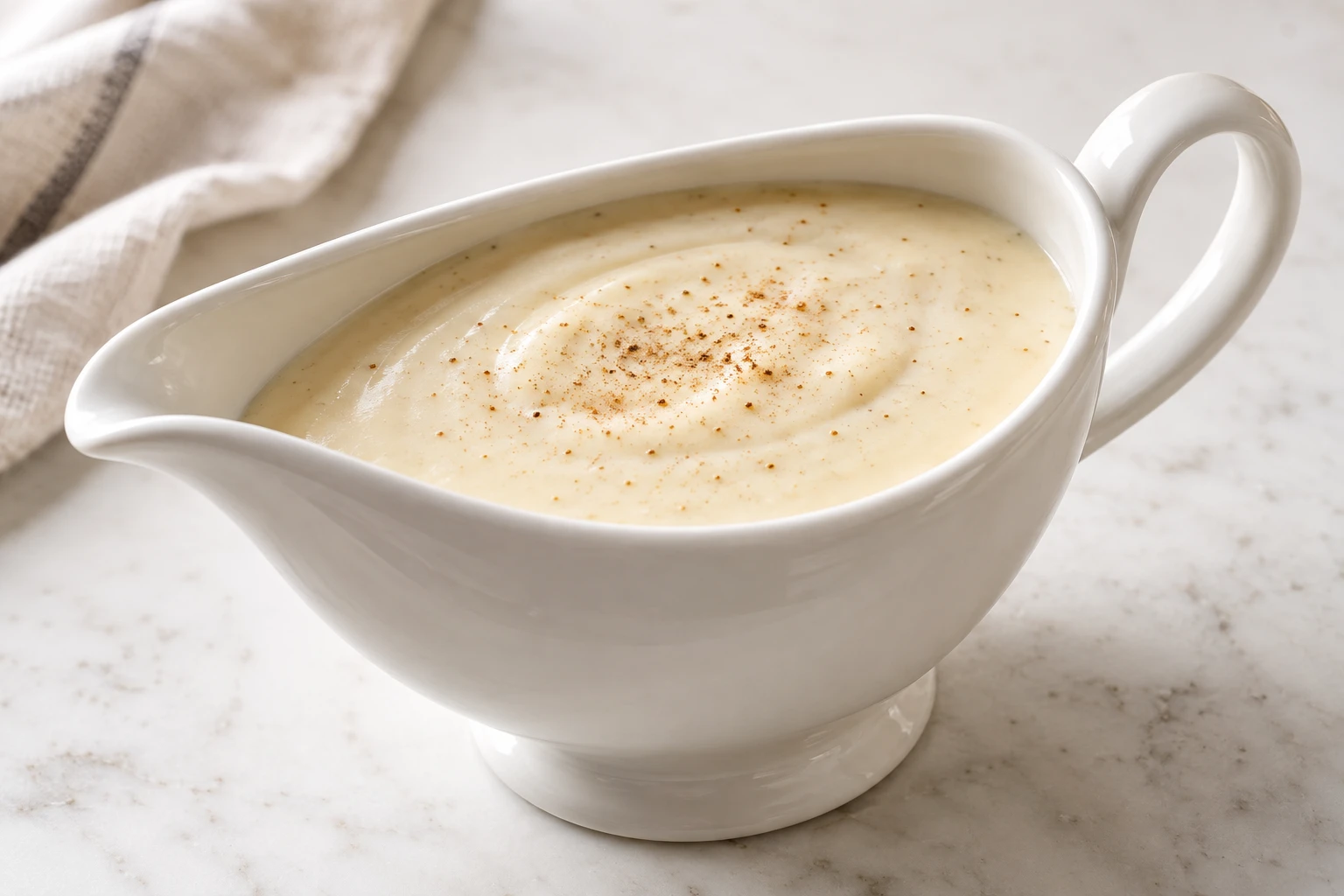
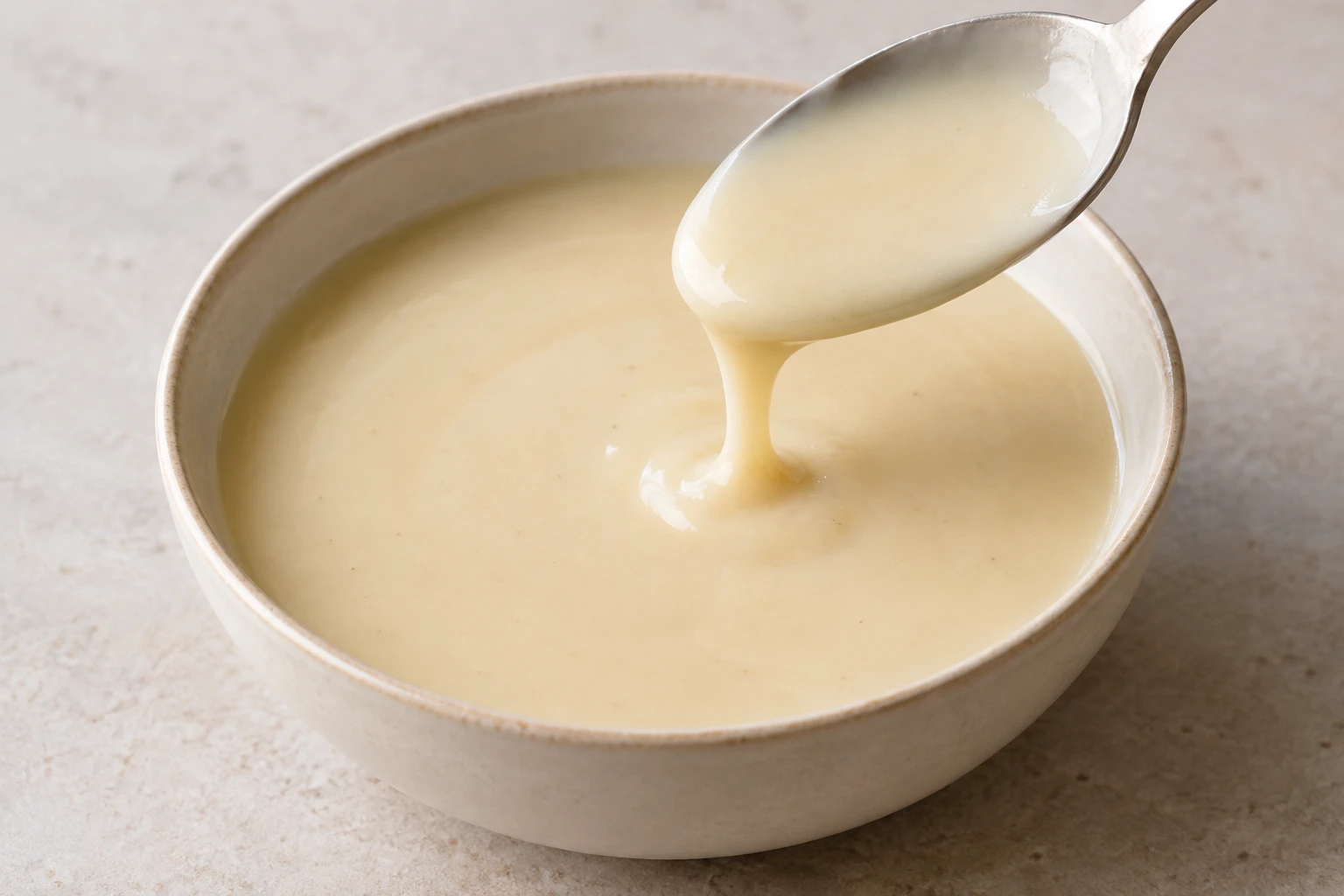
Béchamel is built from a simple roux and milk, but the order and heat matter. Warm milk joins a pale roux more smoothly, and a gentle simmer cooks away the flour taste while keeping the sauce clean.
Start with warm milk
Warm the milk until it steams, then steep the onion and bay leaf in it only if you want a light aromatic background. Strain them before the milk meets the roux, and reserve a little warm milk so the finished sauce can be loosened without a temperature shock.
Keep the roux pale
Butter should melt quietly, and the flour should cook just until its paste is smooth and pale ivory. Constant whisking prevents dry pockets, while avoiding browning preserves the mild flavor and light color expected from béchamel.
Add milk in stages
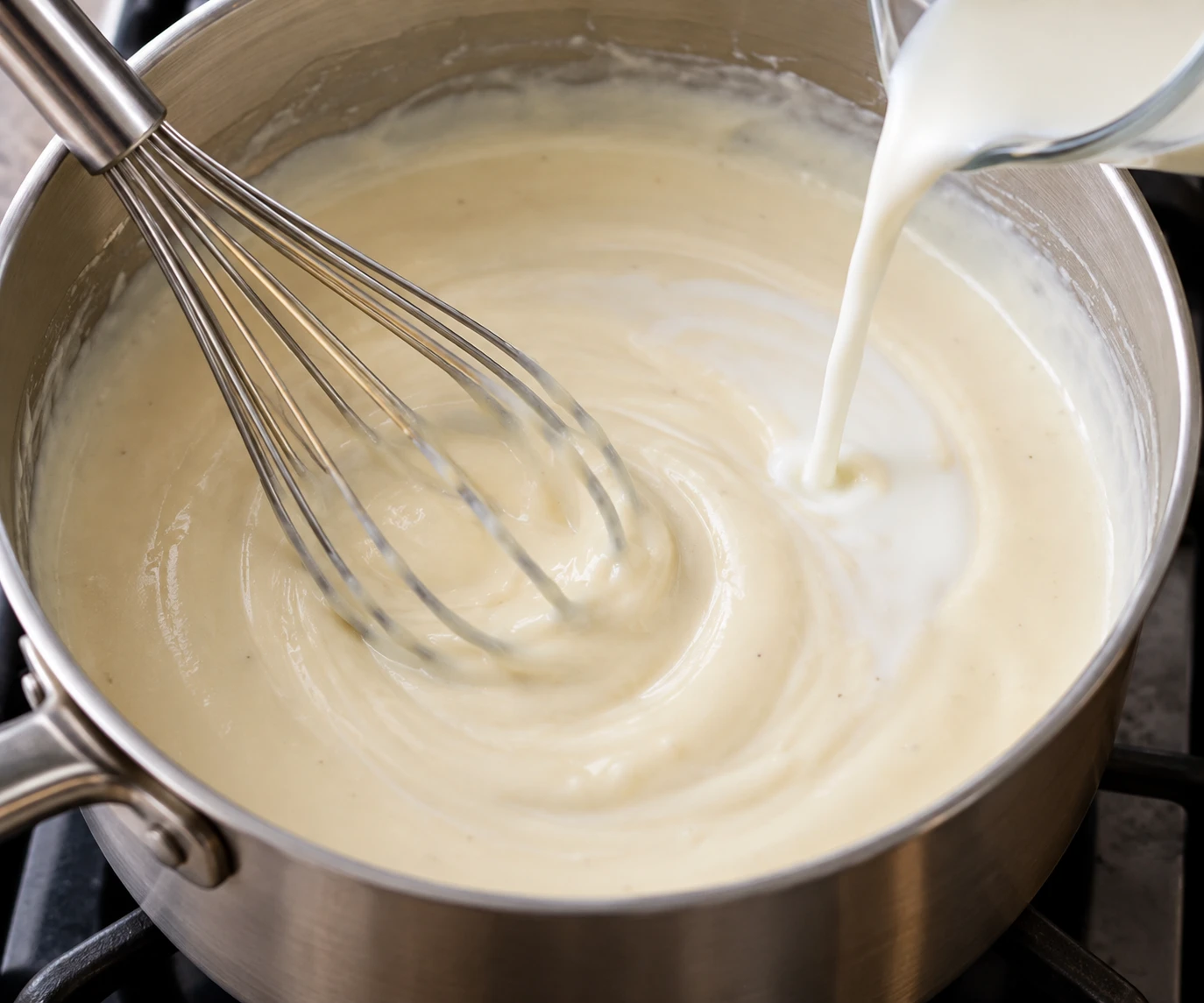
The first milk additions turn the roux into a thick paste, so whisk each one smooth before adding more. Once the mixture loosens, a steady stream is easier to incorporate, but whisking across the base and corners still matters.
Let a gentle simmer finish it
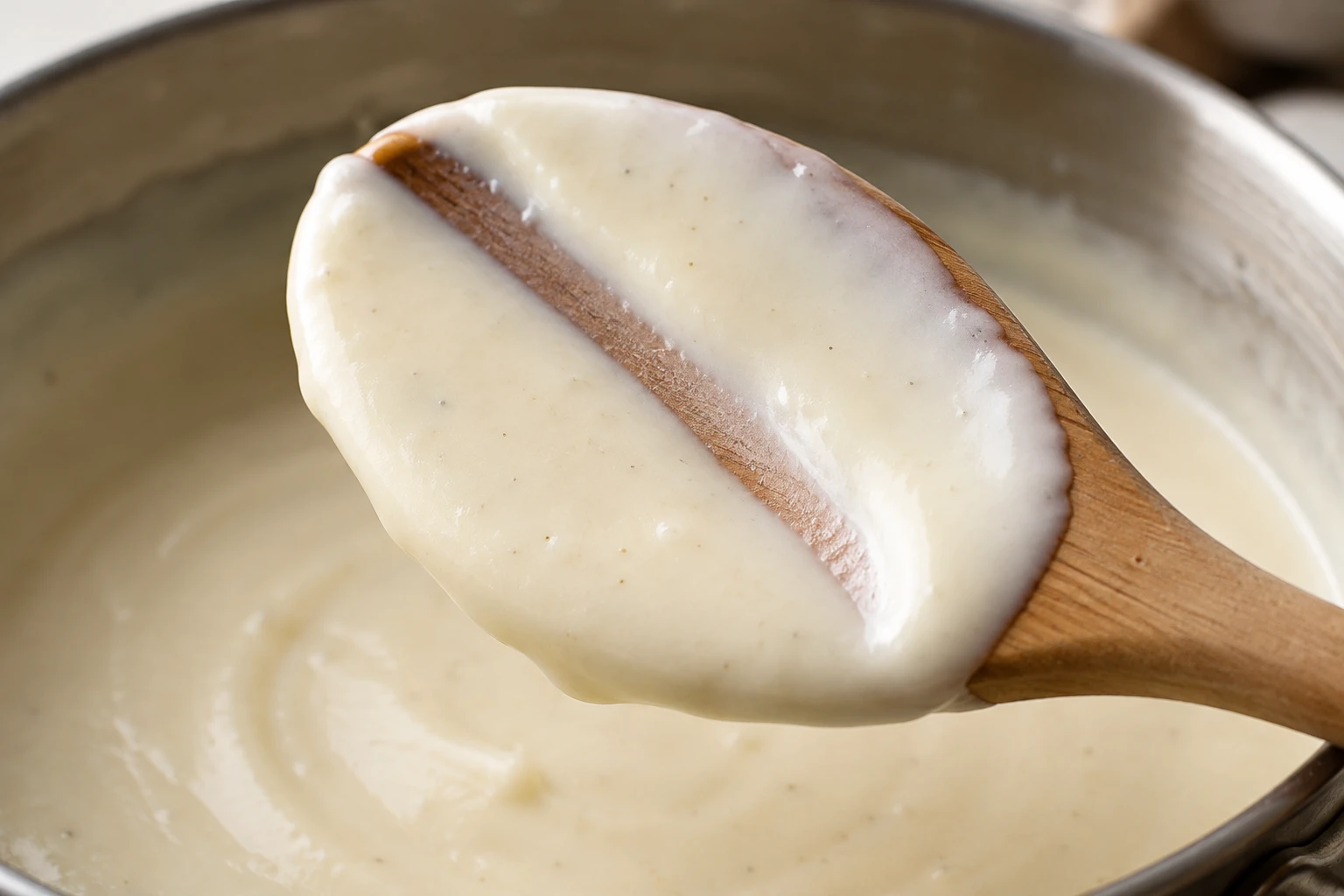
A few small bubbles are enough; a rolling boil can scorch the milk solids at the pan bottom. Stirring through the simmer cooks off the raw flour aroma, and the sauce is ready when it looks glossy and clings to a spoon.
Correct lumps and thickness
If lumps appear, take the pan off the heat and whisk briskly; strain the sauce if they remain. A sauce that is too thick can be loosened with reserved warm milk a little at a time, while a thin one needs a brief gentle simmer and frequent stirring.
Finish with restraint
Salt and white pepper bring the milk and roux into balance, while a little nutmeg is optional for warm spice. Serve the sauce warm with vegetables, fish, or pasta, and whisk it smooth again if it has stood.
Béchamel
Ingredients
- • 4 tbsp unsalted butter
- • 4 tbsp all-purpose flour
- • 3 cups whole milk
- • 1 small yellow onion, peeled and halved, optional infusion
- • 1 bay leaf, optional infusion
- • 1/2 tsp kosher salt
- • 1/8 tsp white pepper
- • 1/8 tsp freshly grated nutmeg, optional
Method
Warm and optionally infuse the milk
Pour the whole milk into a small saucepan. If using the optional onion and bay leaf, add them and heat over medium-low just until steaming with tiny bubbles at the edge; remove from the heat and steep for 10 minutes. If skipping the infusion, simply warm the milk until steaming.
Look for: Steam rises and tiny bubbles gather at the edge without the milk boiling over.
Set up the seasonings
Measure the kosher salt and white pepper, and set the optional nutmeg beside the stove so the sauce can be seasoned while warm.
Look for: The seasonings are measured and within reach before the roux begins.
Melt the butter
Melt the unsalted butter in a heavy saucepan over medium-low heat until the foam subsides; keep it pale and do not let it brown.
Look for: The butter is fully liquid and quiet, with no brown flecks or toasted smell.
Cook a pale roux
Whisk the all-purpose flour into the butter until no dry pockets remain, then cook while whisking for about 3 minutes; stop when the paste is smooth and pale ivory, not toasted.
Look for: The roux bubbles gently, smells lightly buttery, and stays pale rather than turning golden.
Whisk in the warm milk
Set aside 1/4 cup of the warm milk for adjusting the finished sauce. If infused, strain out the onion and bay leaf; whisk the remaining warm milk into the roux in small additions, smoothing each addition before adding more, then pour in the rest in a steady stream.
Look for: The first additions form a smooth thick paste, and the finished mixture has no visible flour lumps.
Simmer until smooth
Bring the sauce to a gentle simmer over low heat, whisking across the bottom and into the pan corners, then cook for 8 minutes while stirring often to remove the raw flour taste without scorching.
Look for: Only a few small bubbles break the surface, and the sauce stays glossy with no browned film on the pan.
Season and correct the texture
Whisk in the kosher salt and white pepper, adding the optional nutmeg if desired. The smooth sauce should coat the back of a spoon and leave a clean track when a finger crosses it; for lumps, whisk briskly off heat and strain if needed, for thickness add reserved warm milk a tablespoon at a time, and for a thin sauce simmer gently for 1 to 2 minutes.
Look for: The sauce clings evenly to a spoon without graininess, and a finger-drawn line remains clear.
Serve warm
Serve the béchamel warm as a standalone sauce for vegetables, fish, or pasta. If it has stood, whisk it smooth again and use a splash of reserved warm milk to loosen it before serving.
Look for: The sauce pours in a soft ribbon and remains smooth as it leaves the pan.