" fill="%23faf1da" stroke-width="1.8"/>%0A <ellipse cx="64.5" cy="50" rx="43" ry="12" transform="rotate(4 64.5 50)" stroke="%23938466"/>%0A <path d="m26 44 1 10m3-12 1 14m3-14 1 15m3-14 1 15m4-14 1 14m4-13 1 14m39-10-1 10m5-9-1 8m5-7-1 5" stroke="%23b2a181" stroke-width=".7"/>%0A <path d="M55 60c3-10 12-14 23-10l47-44c7-6 15-6 15-2 0 5-9 11-14 14L82 60c-8 4-21 4-27 0Z" fill="%23bc8c48" stroke-width="1.6"/>%0A <path d="M61 59c3-5 9-8 15-5l-4 7m8-8 49-45 6-4M84 52l45-41" stroke="%2376562e" stroke-width="1"/>%0A <path d="M20 53c18 14 69 19 90 2" stroke="%23514431" stroke-width="2"/>%0A <path d="M27 59c22 11 59 14 78 2" stroke="%23fff9e9" stroke-width="2"/>%0A <path d="m48 87 1 1m7 8 1 1m6-12 1 1m6 12 1 1m6-9 1 1m-24 9 1 1m19 4 1-1m10-16 1 1" stroke="%23aa9b7c"/>%0A </g>%0A</svg>%0A)
Velouté
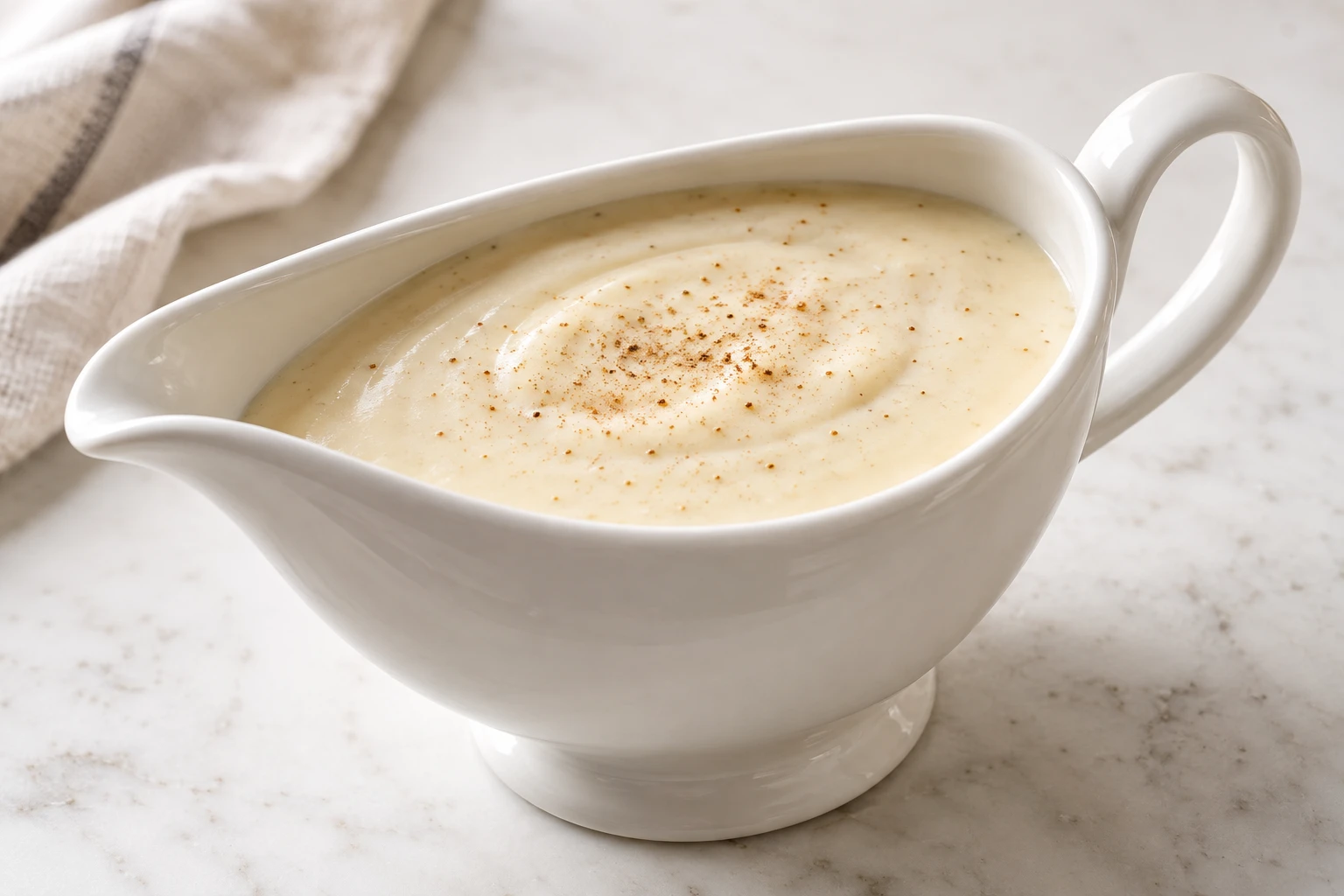
A pale roux, warm seasoned stock, and a patient simmer create the silky nappe texture that defines this French mother sauce.
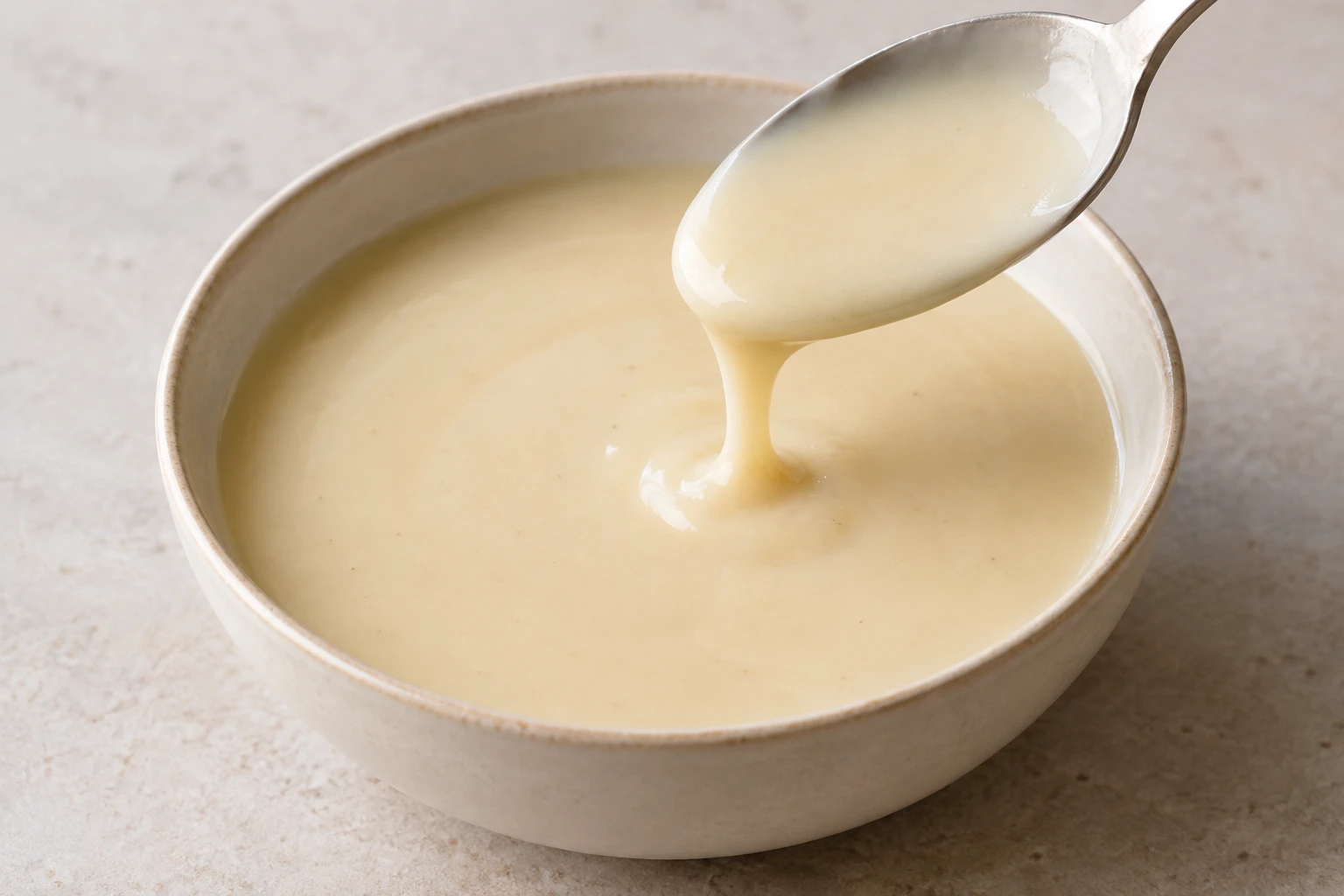
Velouté is built by thickening a light stock with a pale roux, then letting the sauce simmer until flour flavor gives way to a smooth finish. Chicken stock is the default here, while fish or vegetable stock can replace it when that flavor better suits the use.
Keep the roux pale
Butter and flour should cook together until the roux is smooth and lightly blond, without developing brown color. This gives the sauce enough thickening power while keeping the stock's flavor clear.
Choose one warm stock
Chicken stock is the favored branch for a balanced, savory base. Fish stock creates a lighter adaptation and vegetable stock keeps the sauce meat-free; each replaces the chicken stock in full, so select one and warm it before whisking.
Let the sauce simmer quietly
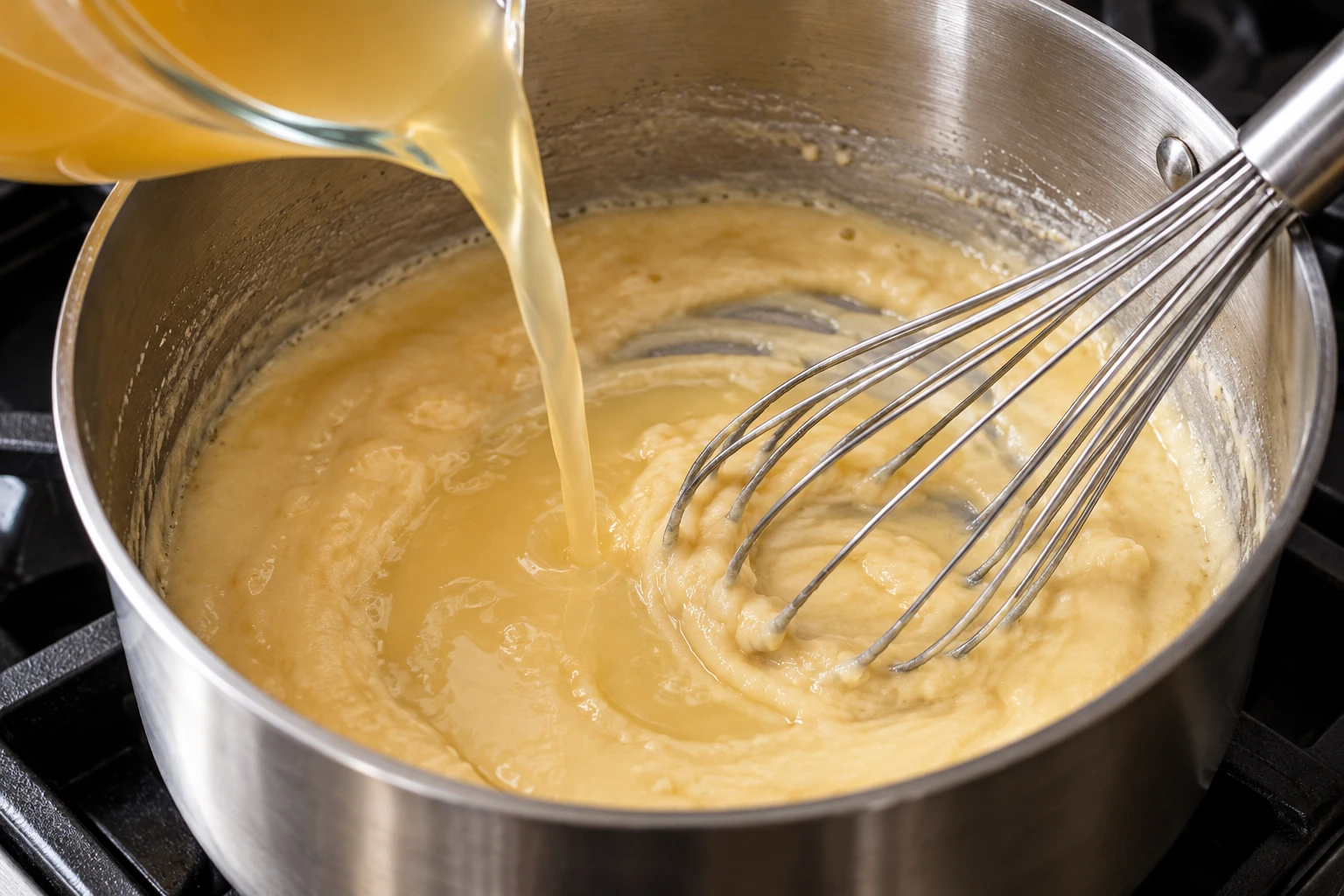
Gradual additions keep the roux smooth, and a gentle simmer gives the flour time to cook without scorching. Skimming surface foam as it appears helps the sauce keep a clean, even sheen.
Check for nappe
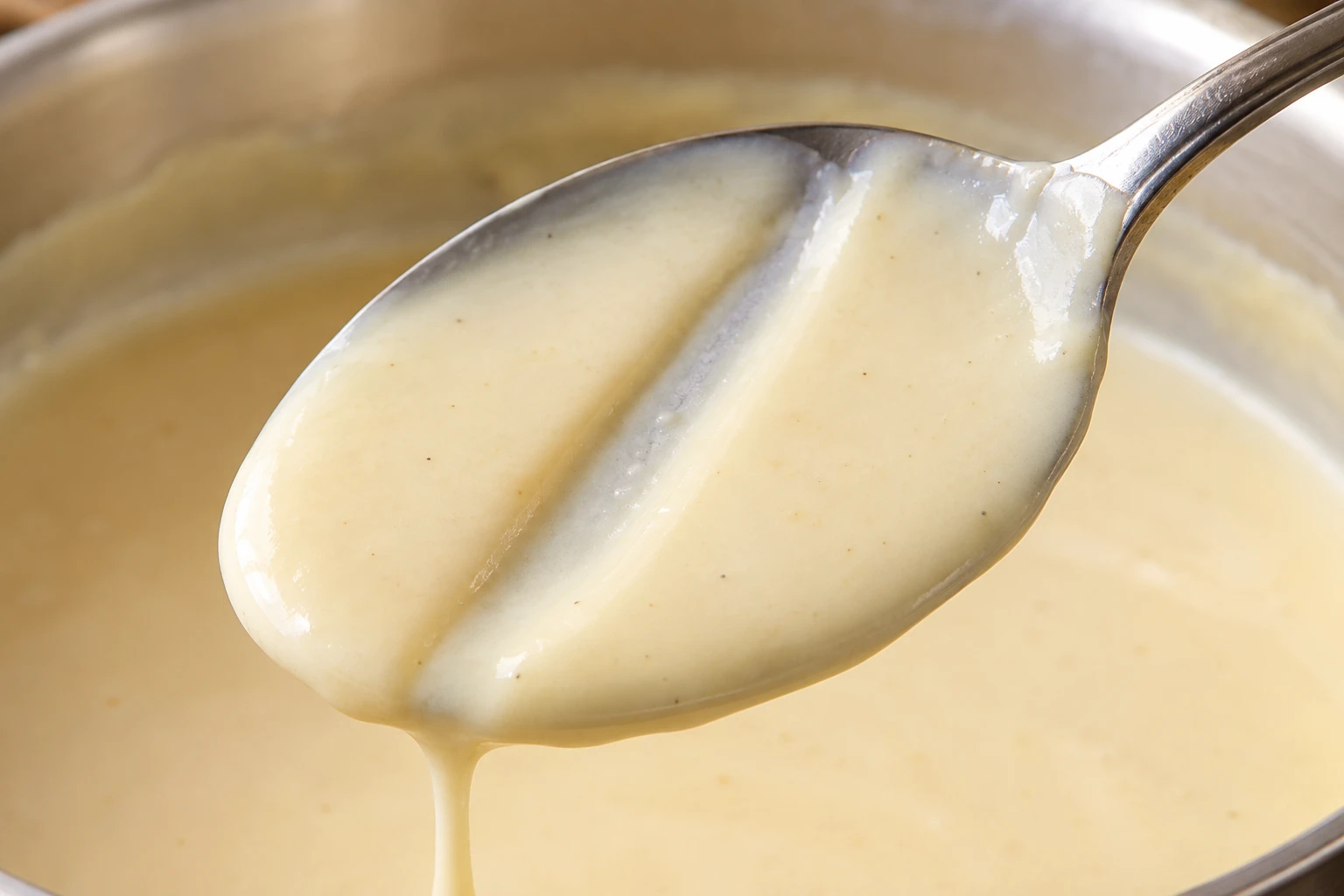
A finished velouté coats a spoon in a thin, even layer, and a finger drawn across the back leaves a line that stays open. If the line closes quickly, continue the gentle simmer and test again before straining.
Strain for a clean finish
Passing the sauce through a fine-mesh strainer catches the herbs and any small roux flecks that survived whisking. The result is a standalone base sauce, ready to serve or carry into another preparation.
Velouté
Ingredients
- •
- • 4 tbsp unsalted butter
- • 4 tbsp all-purpose flour
- • 1 bay leaf
- • 2 fresh thyme sprigs
- • 1/2 tsp kosher salt
- • 1/8 tsp ground white pepper
Method
Warm and infuse the stock
Warm the chicken stock with the bay leaf and thyme over low heat until steaming but not boiling, then remove and discard the herbs. If choosing fish or vegetable stock instead, warm that single stock with the same herbs; do not combine stock types.
Look for: The stock is hot and fragrant, with small wisps of steam and no bubbles.
Melt the butter
Melt the unsalted butter in a heavy saucepan over medium-low heat. Let the foam settle without allowing the butter to brown, so the roux stays pale.
Look for: The butter is fully liquid and foaming gently, with no golden color.
Cook the pale roux
Whisk the all-purpose flour into the melted butter until no dry pockets remain. Cook over medium-low heat, whisking constantly, until the roux looks smooth and pale blond and smells lightly toasty rather than raw.
Look for: The roux is creamy and pale, without brown flecks or a raw flour smell.
Whisk in the warm stock
Pour a small splash of warm stock into the roux while whisking briskly until smooth, then continue adding the stock gradually in several small pours. Whisk each addition smooth before adding more, and use only the selected stock branch.
Look for: The sauce is smooth after each pour, with no dry roux lumps at the pan edge.
Bring to a gentle simmer
Once all selected stock is incorporated, raise the heat slightly and bring the sauce just to a gentle simmer, whisking across the bottom and corners. Reduce the heat as soon as small bubbles appear so the sauce does not boil hard.
Look for: A few small bubbles break at the surface without a rolling boil.
Simmer and skim
Simmer gently, stirring often, until the flour flavor cooks away and the sauce turns silky. Skim any foam or surface film with a spoon as it forms, and keep the heat low enough to prevent scorching.
Look for: The sauce has no floury aroma and a smooth sheen, with any surface foam removed.
Season and test the nappe
Stir in the kosher salt and ground white pepper, then dip a spoon into the sauce and draw a finger across its back. The sauce is at nappe when it coats the spoon evenly and the line stays clear; simmer a little longer if it runs back together.
Look for: A clean line remains through the coating on the back of the spoon.
Strain until polished
Pour the velouté through a fine-mesh strainer into a warm bowl, using a spatula to guide the smooth sauce through without forcing any residue. Serve as a base sauce, or keep covered with a thin film over the surface to prevent a skin while holding briefly.
Look for: The strained sauce is glossy and uniform, with herbs and any roux specks left behind.