" fill="%23faf1da" stroke-width="1.8"/>%0A <ellipse cx="64.5" cy="50" rx="43" ry="12" transform="rotate(4 64.5 50)" stroke="%23938466"/>%0A <path d="m26 44 1 10m3-12 1 14m3-14 1 15m3-14 1 15m4-14 1 14m4-13 1 14m39-10-1 10m5-9-1 8m5-7-1 5" stroke="%23b2a181" stroke-width=".7"/>%0A <path d="M55 60c3-10 12-14 23-10l47-44c7-6 15-6 15-2 0 5-9 11-14 14L82 60c-8 4-21 4-27 0Z" fill="%23bc8c48" stroke-width="1.6"/>%0A <path d="M61 59c3-5 9-8 15-5l-4 7m8-8 49-45 6-4M84 52l45-41" stroke="%2376562e" stroke-width="1"/>%0A <path d="M20 53c18 14 69 19 90 2" stroke="%23514431" stroke-width="2"/>%0A <path d="M27 59c22 11 59 14 78 2" stroke="%23fff9e9" stroke-width="2"/>%0A <path d="m48 87 1 1m7 8 1 1m6-12 1 1m6 12 1 1m6-9 1 1m-24 9 1 1m19 4 1-1m10-16 1 1" stroke="%23aa9b7c"/>%0A </g>%0A</svg>%0A)
Garlic Aioli
Slow whisking turns egg yolk and oil into a creamy garlic sauce, while salt and a short chill round off the bite of raw garlic.
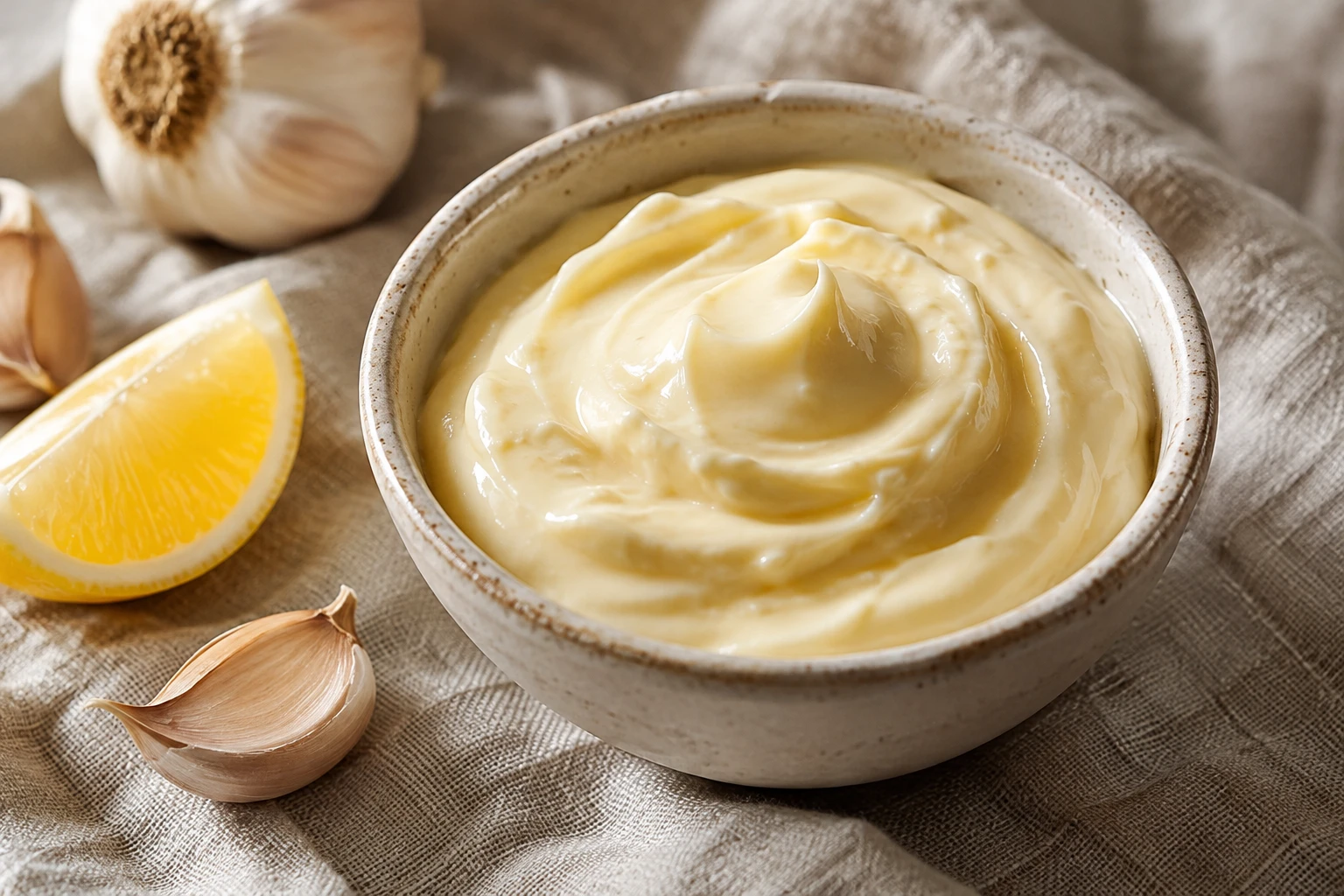
This version of aioli is an egg-yolk emulsion: the yolk binds neutral oil and olive oil into a thick sauce, and finely mashed garlic gives it its character. A little salt and a short refrigerated rest soften the garlic without cooking it.
Start with a smooth garlic paste
Finely grating the cloves makes a paste that disperses through the sauce instead of leaving hard, pungent pieces. Mashing it with some of the measured salt and letting it stand for five minutes begins to temper its raw intensity.
Let the yolk catch the oil
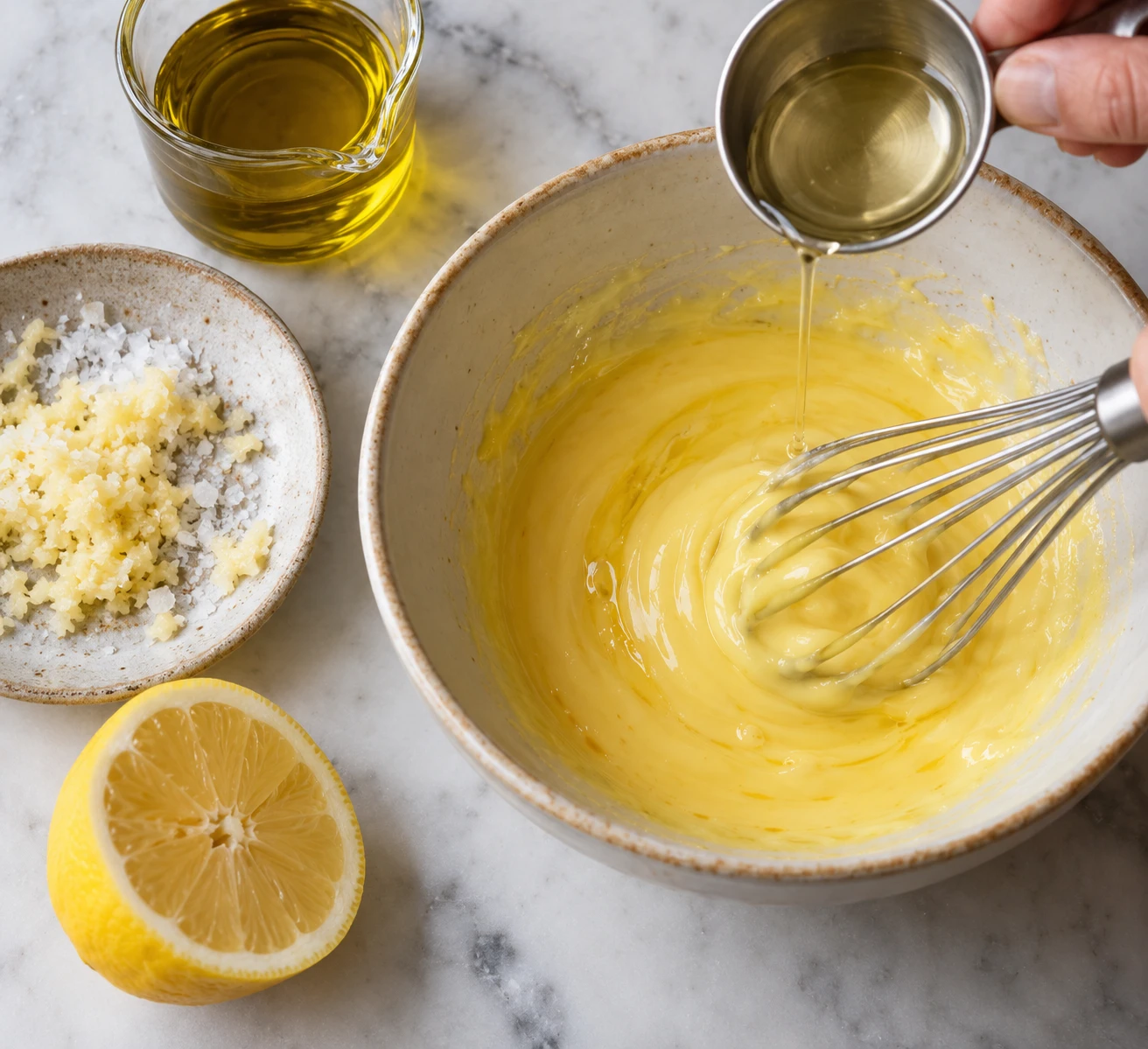
Whisk the pasteurized yolk with lemon first, then begin with oil by the teaspoon. The early additions should disappear completely into the yolk before more oil goes in; that gradual start creates a base that can accept a thin stream.
Keep the emulsion steady
A thick, glossy mixture that briefly holds whisk marks is ready for the next addition. If the surface turns oily or the sauce loosens, stop pouring and whisk until it comes back together before continuing more slowly.
A practical mayonnaise branch
For a quick fallback, skip the egg yolk and both oils and whisk one-half cup mayonnaise with the garlic paste and lemon juice. This keeps the same garlic-forward profile while avoiding a homemade raw-yolk emulsion.
Chill before serving
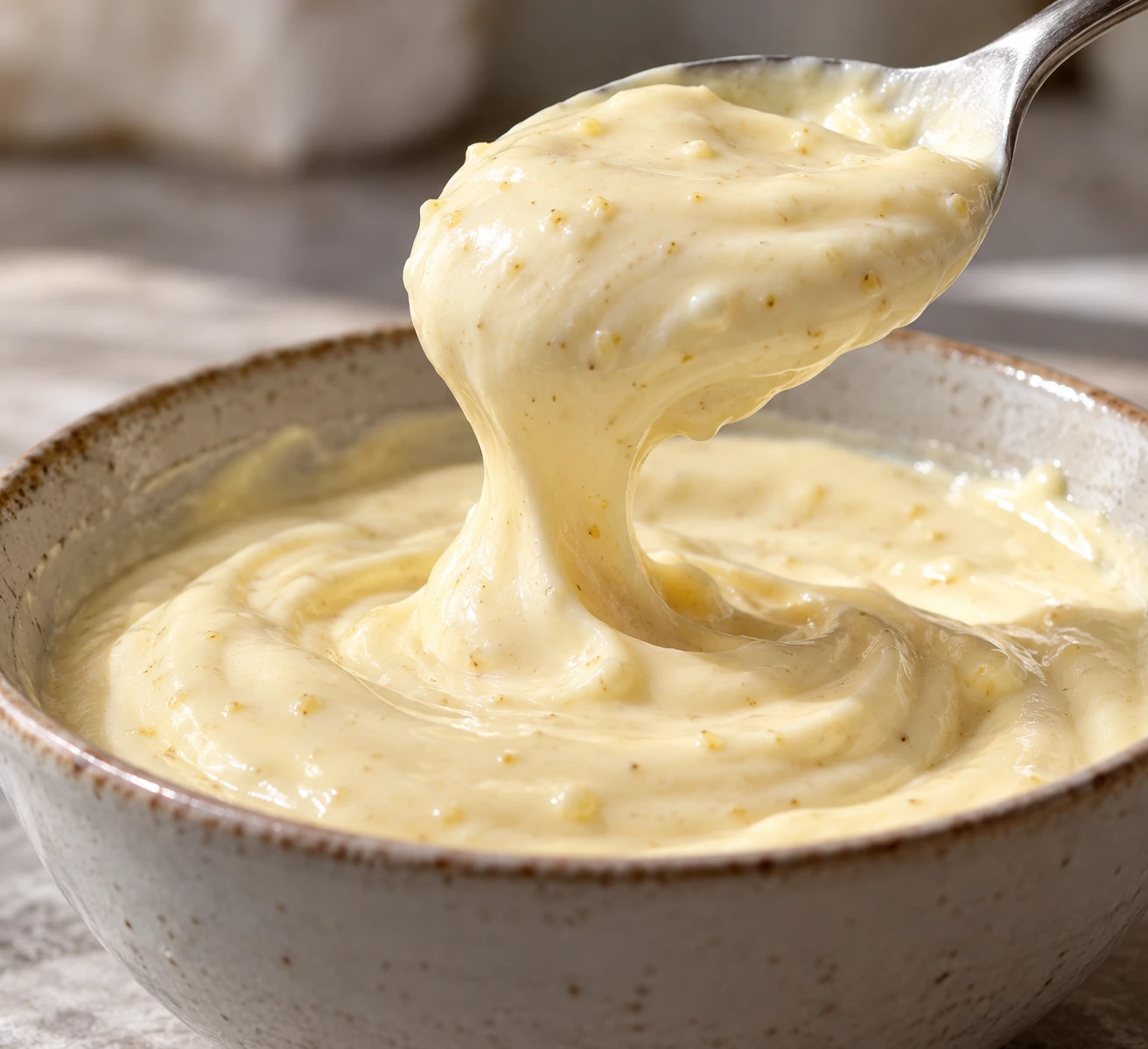
A ten-minute rest in the refrigerator lets the garlic mellow and gives the sauce time to settle. Keep the raw-yolk version at or below 40 F, use within 24 hours, and discard it after two hours at room temperature; people who should avoid raw egg can use the mayonnaise branch.
How this differs from toum
This sauce relies on egg yolk to emulsify measured amounts of oil and lemon juice. Egg-free toum is a different garlic emulsion built without yolk, so its ingredient balance and method are not interchangeable with this recipe.
Garlic Aioli
Ingredients
- •
- • 2 medium garlic cloves, peeled and finely grated
- • 1/2 tsp kosher salt
- • 2 tsp fresh lemon juice
- •
- •
Method
Mash the garlic
On a cutting board, mash the grated garlic with 1/4 tsp of the kosher salt into a smooth, moist paste; leave it for 5 minutes so the salt begins to temper its sharp raw edge.
Look for: The garlic looks glossy and has no large pieces or dry salt crystals.
Start the yolk base
In a medium bowl, whisk the pasteurized egg yolk with the lemon juice until smooth and slightly thickened; set the neutral oil and olive oil within reach before adding any.
Look for: The yolk and lemon form a uniform, creamy base with no streaks.
Begin the emulsion
Whisk continuously while adding the neutral oil one teaspoon at a time at first, letting each addition disappear before the next; this slow start gives the yolk time to bind the oil.
Look for: After the first few teaspoons, the mixture becomes paler, thicker, and glossy rather than oily.
Build a stable emulsion
Once the base is thick and cohesive, pour the remaining neutral oil in a very thin stream while whisking briskly; if oil pools on the surface, stop pouring and whisk until the mixture is smooth again.
Look for: The whisk leaves soft ridges that briefly hold, and no clear oil remains around the edge.
Add the olive oil
Whisk in the extra-virgin olive oil in a thin stream until fully incorporated; adding it last keeps its flavor fresh and avoids overworking its more assertive taste.
Look for: The aioli stays thick and even, with a pale ivory color and no separated oil.
Season the aioli
Whisk in the garlic paste and the remaining 1/4 tsp salt, then taste; add a few drops more lemon juice only if desired, keeping the sauce thick enough to cling to a spoon.
Look for: Garlic is noticeable but not harsh, and the sauce clings to the spoon without looking greasy.
Use the mayonnaise fallback
For the mayonnaise-based fallback, skip steps 2–5 and whisk 1/2 cup mayonnaise with the garlic paste and lemon juice until smooth; continue to chilling, using mayonnaise as the complete replacement for the yolk and both oils.
Look for: The fallback is smooth and evenly flavored, with no separate pool of lemon juice.
Rest, chill, and serve
Cover and refrigerate the aioli for 10 minutes to mellow the garlic, then stir and serve cold; keep the raw-yolk version at 40 F or below, use it within 24 hours, and discard it after 2 hours at room temperature.
Look for: After chilling, the garlic flavor is rounder and the aioli remains thick and spoonable.