" fill="%23faf1da" stroke-width="1.8"/>%0A <ellipse cx="64.5" cy="50" rx="43" ry="12" transform="rotate(4 64.5 50)" stroke="%23938466"/>%0A <path d="m26 44 1 10m3-12 1 14m3-14 1 15m3-14 1 15m4-14 1 14m4-13 1 14m39-10-1 10m5-9-1 8m5-7-1 5" stroke="%23b2a181" stroke-width=".7"/>%0A <path d="M55 60c3-10 12-14 23-10l47-44c7-6 15-6 15-2 0 5-9 11-14 14L82 60c-8 4-21 4-27 0Z" fill="%23bc8c48" stroke-width="1.6"/>%0A <path d="M61 59c3-5 9-8 15-5l-4 7m8-8 49-45 6-4M84 52l45-41" stroke="%2376562e" stroke-width="1"/>%0A <path d="M20 53c18 14 69 19 90 2" stroke="%23514431" stroke-width="2"/>%0A <path d="M27 59c22 11 59 14 78 2" stroke="%23fff9e9" stroke-width="2"/>%0A <path d="m48 87 1 1m7 8 1 1m6-12 1 1m6 12 1 1m6-9 1 1m-24 9 1 1m19 4 1-1m10-16 1 1" stroke="%23aa9b7c"/>%0A </g>%0A</svg>%0A)
Mole Poblano
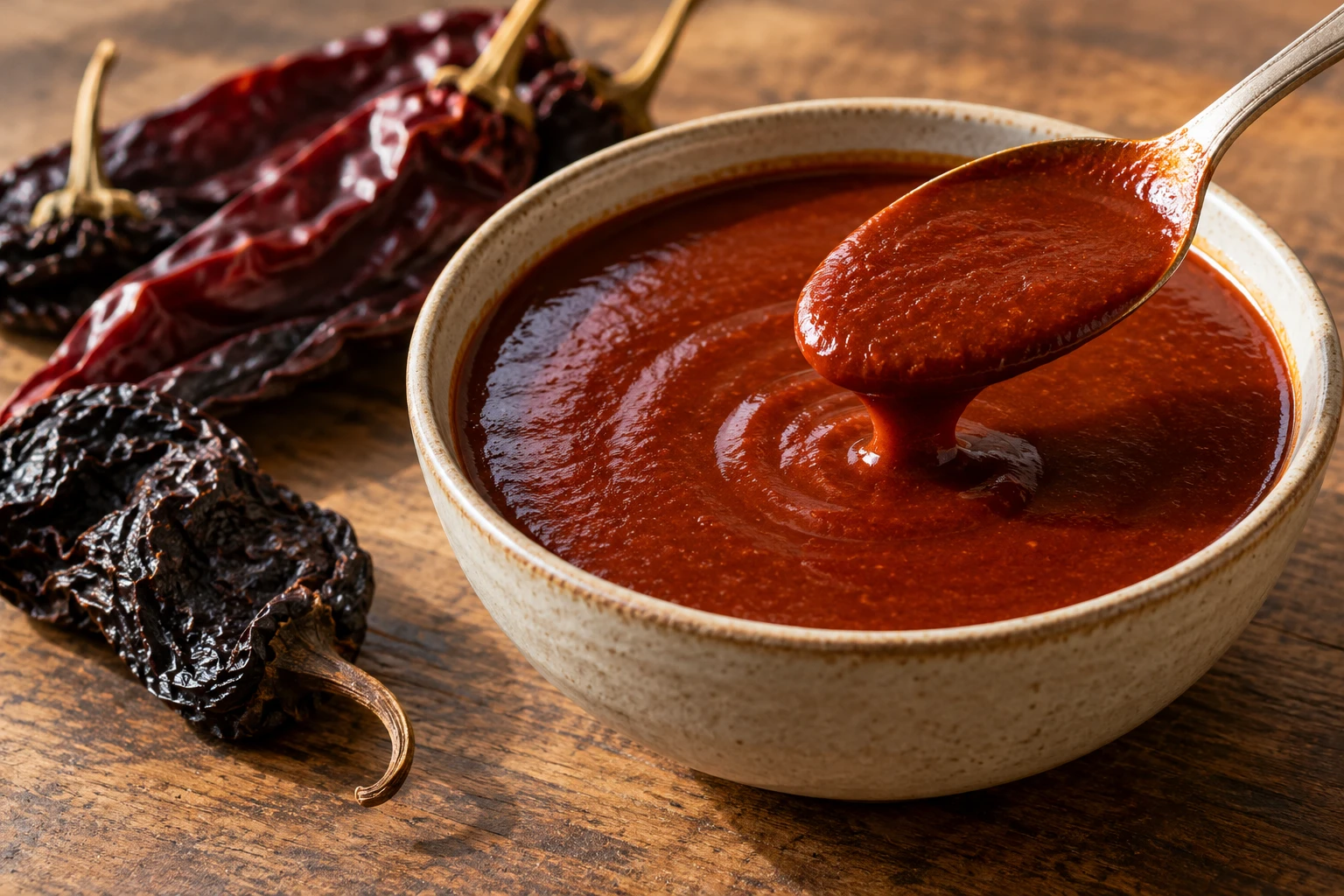
Ancho, pasilla, and mulato chiles meet toasted nuts, seeds, warm spices, and a restrained touch of Mexican chocolate in a slow-simmered sauce.
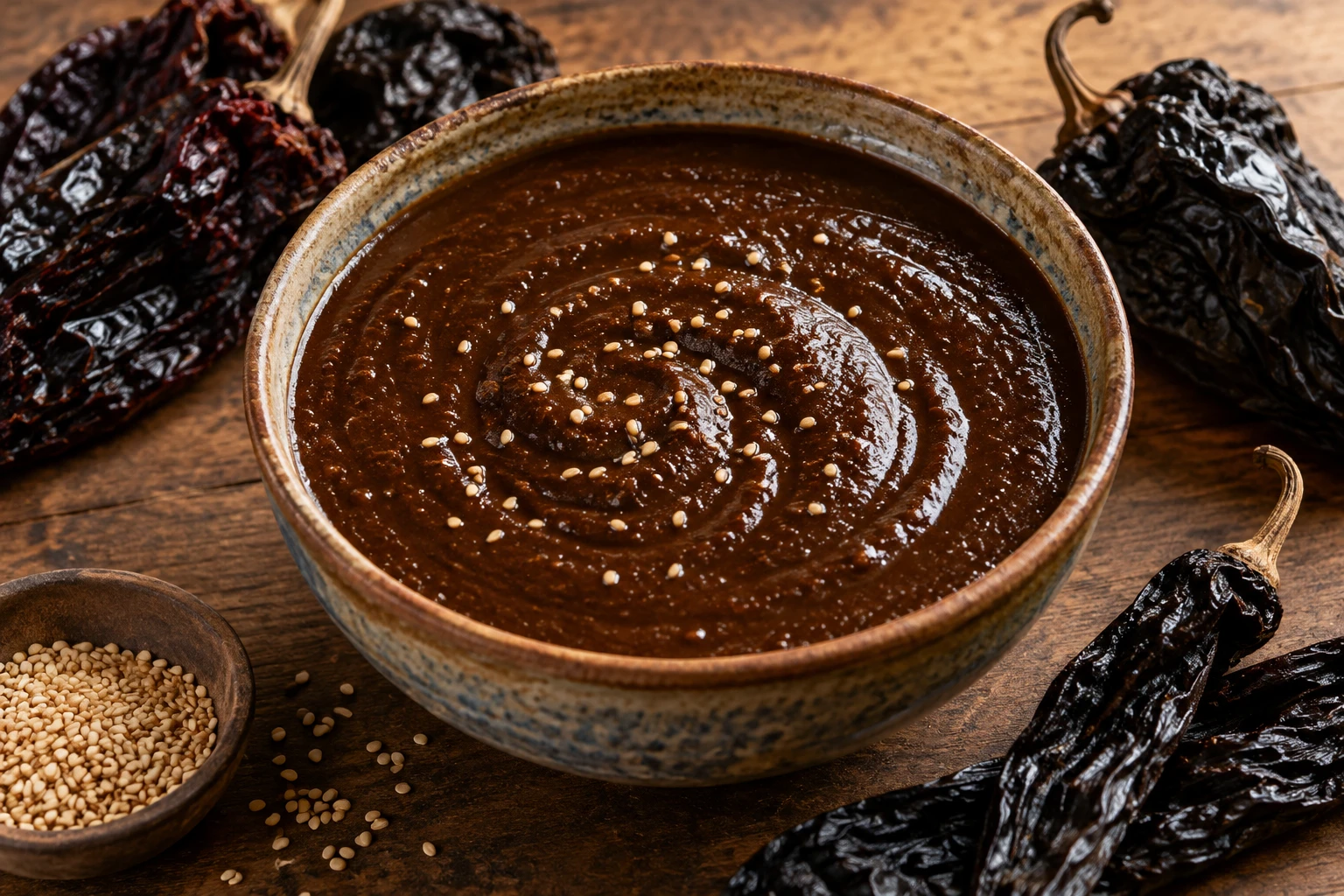
Mole poblano builds depth through a sequence of small transformations: dried chiles are warmed, softened, and blended with toasted seeds, nuts, aromatics, and spice. A patient simmer rounds the sauce into a savory, complex whole, while a little Mexican chocolate supports the chile rather than making the mole sweet.
The recipe centers on the sauce itself. Serve it alongside roast turkey, chicken, or enchiladas, and let each diner add the amount they want.
Warm the chiles without scorching
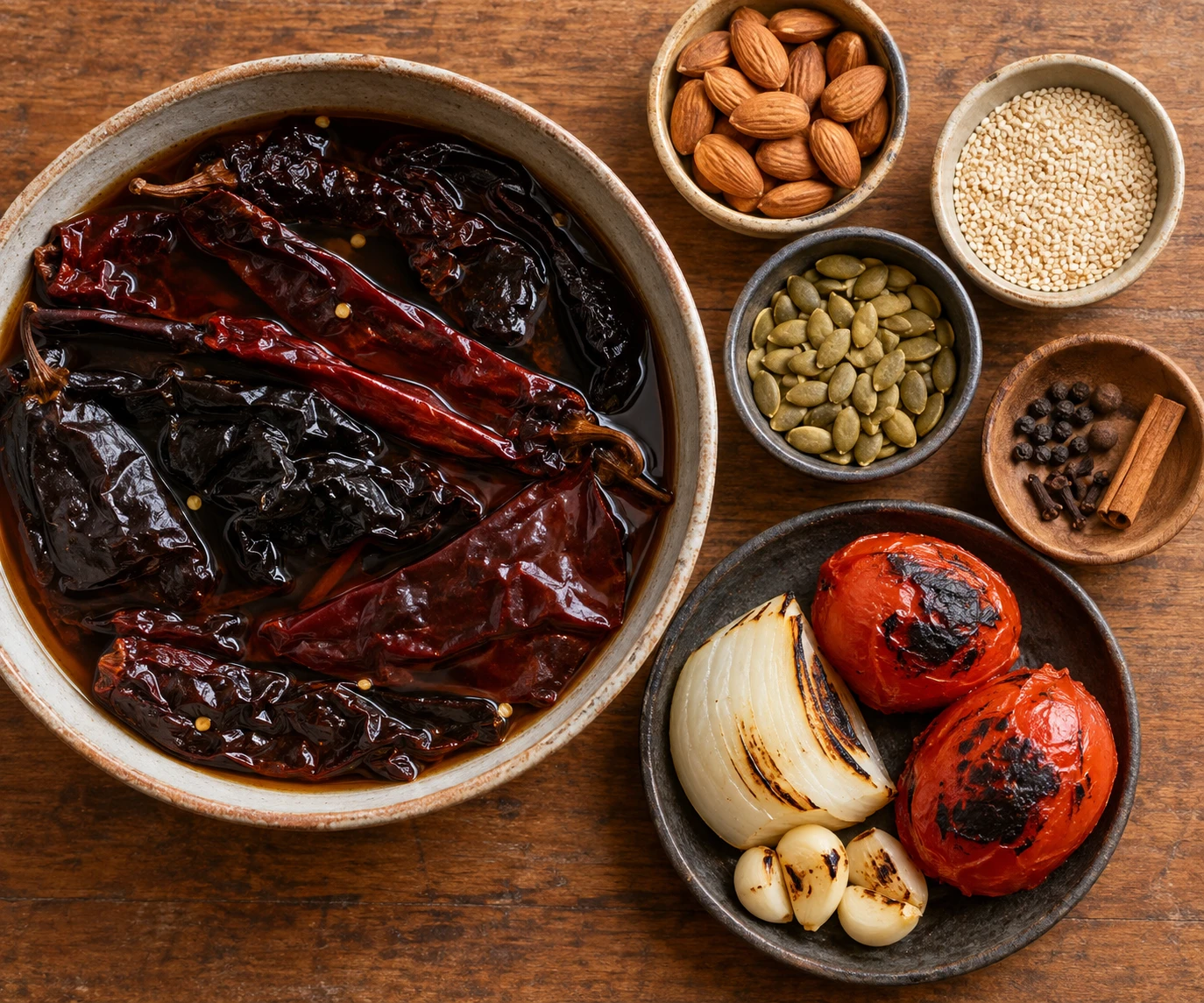
Ancho, pasilla, and mulato chiles bring different layers of fruit, earth, and gentle warmth. Toast their pieces briefly over medium-low heat, turning them as soon as their aroma blooms; a black patch or acrid smoke signals that the chile has gone too far.
Toast each ingredient on its own
Almonds, sesame, pumpkin seeds, and spices release their aromas at different speeds, so they toast separately. Remove each as soon as it smells nutty or fragrant, then char the onion and tomato and add garlic only at the end to keep it sweet.
Blend in manageable batches
After soaking, the chiles blend more evenly with the toasted ingredients and aromatics. Add stock only as needed to move the blades, vent the blender carefully, and strain each batch if you want a silkier sauce.
Give the sauce time to come together
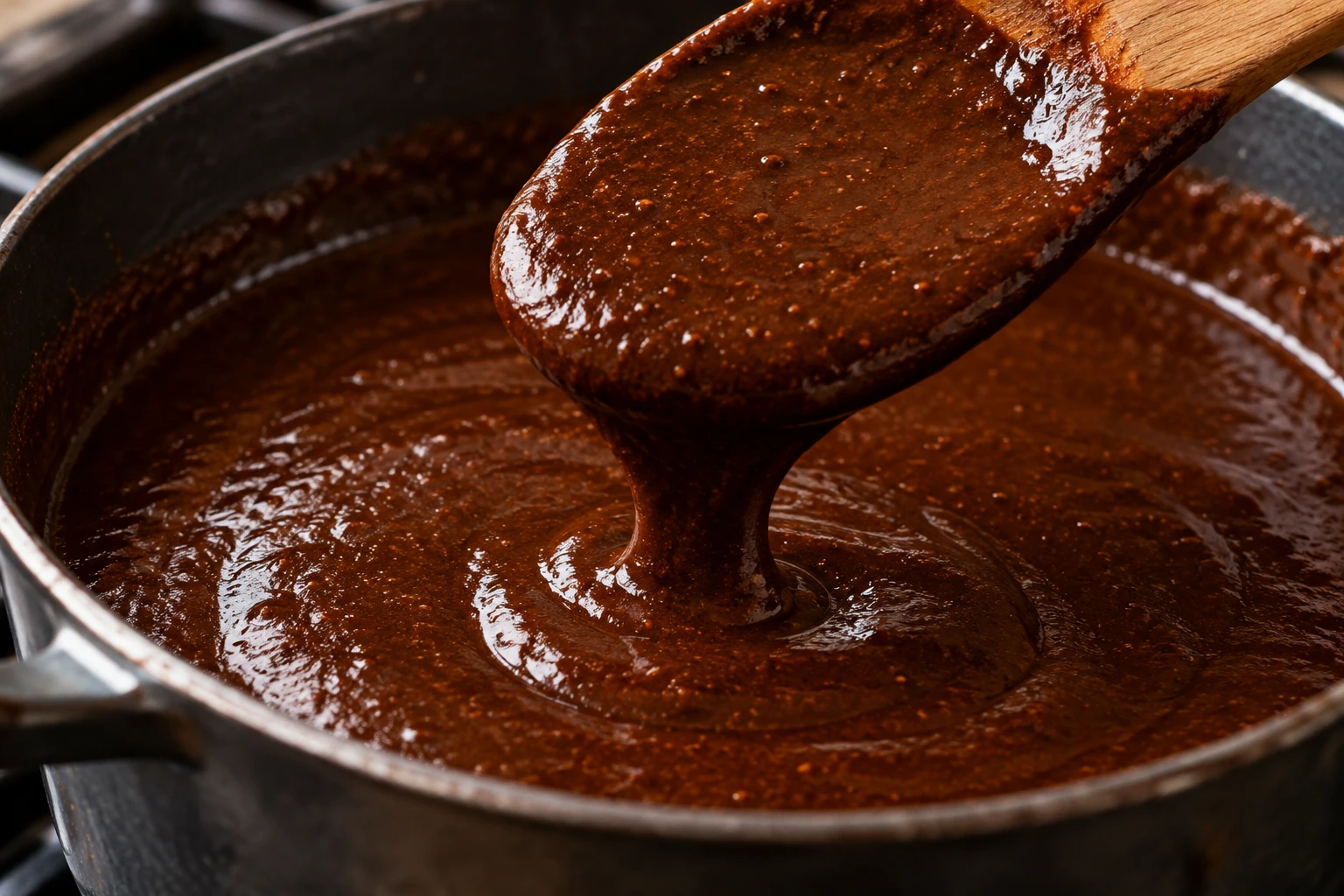
Frying the puree first softens its raw edge, and a low simmer lets the flavors knit while the sauce thickens. Stir and scrape the pot often; if the mole becomes too thick to stir smoothly, loosen it with a little more stock.
Keep the finish savory
Mexican chocolate melts in near the end, adding body and a quiet roasted note without turning the sauce into a sweet glaze. Vinegar and salt sharpen the finish; serve the mole warm with turkey, chicken, or enchiladas and keep the sauce at the center of the meal.
Mole Poblano
Ingredients
- • 4 dried ancho chiles, stemmed and seeded
- • 3 dried pasilla chiles, stemmed and seeded
- • 3 dried mulato chiles, stemmed and seeded
- • 2 tbsp neutral oil
- • 1/3 cup raw almonds
- • 2 tbsp sesame seeds
- • 1 tbsp hulled pumpkin seeds
- • 1 tsp coriander seeds
- • 1/2 tsp cumin seeds
- • 1/4 tsp whole cloves
- • 1/2 tsp ground cinnamon
- • 6 black peppercorns
- • 1 small yellow onion, quartered
- • 4 garlic cloves, peeled
- • 2 medium plum tomatoes, halved
- • 2 tbsp raisins
- • 4 cups low-sodium chicken stock, divided
- • 1/2 oz Mexican chocolate, finely chopped
- • 1 tbsp apple cider vinegar
- • 1 1/2 tsp kosher salt
Method
Prepare the chiles
Wipe the ancho, pasilla, and mulato chiles clean, remove their stems and seeds, then tear each chile into flat pieces so they toast evenly.
Look for: The chile pieces are dry, flat, and free of loose seeds.
Toast the chiles gently
Warm a dry skillet over medium-low heat and toast the chile pieces in uncrowded batches, pressing briefly and turning once; remove each as soon as it smells fruity and warm, before it darkens or smokes.
Look for: Chiles smell fragrant and pliable, with no black patches or acrid smoke.
Soak until supple
Cover the toasted chiles with very hot water and weigh them down with a small plate; soak until pliable, then drain and reserve a cup of the soaking liquid in case the blender needs help.
Look for: A chile strip bends easily without cracking; the reserved liquid smells clean and fruity.
Toast nuts, seeds, and spices
In the dry skillet, toast almonds, sesame seeds, and pumpkin seeds separately over medium-low heat, stirring until aromatic; briefly toast coriander, cumin, cloves, peppercorns, and cinnamon last, removing every item before it browns too deeply.
Look for: Seeds smell nutty and spices bloom in the pan; nothing is scorched or bitter-smelling.
Soften the aromatics
Char the onion and tomatoes cut-side down in the skillet, turning as needed, until softened and spotted; add the garlic only for the final minute so it turns golden and sweet without scorching.
Look for: Tomatoes slump and show dark spots, onion edges soften, and garlic is pale gold rather than brown.
Blend in batches
Blend the drained chiles with toasted nuts, seeds, spices, onion, garlic, tomatoes, raisins, and enough stock to move the blades, working in batches and venting hot liquid safely; strain each batch into a bowl for a smoother sauce.
Look for: The puree is thick but pourable, with no large chile skins or nut pieces remaining.
Fry the puree
Heat the neutral oil in a heavy pot over medium heat, carefully add the puree, and stir as it sizzles until its color deepens and the raw chile aroma gives way to a roasted fragrance.
Look for: The puree darkens slightly, thickens, and smells rounded rather than raw or sharp.
Simmer the mole slowly
Stir in the remaining stock gradually until the mole coats a spoon, then lower the heat and simmer gently, stirring and scraping the bottom often so the thick sauce does not catch.
Look for: Small bubbles break lazily across the surface and the sauce becomes glossy and cohesive.
Finish with chocolate and seasoning
Stir in the Mexican chocolate until melted, then add apple cider vinegar and kosher salt; simmer briefly and taste, keeping the chocolate in the background and the chile, spice, and toasted notes in front.
Look for: Chocolate is fully melted, sweetness stays restrained, and vinegar lifts the finish without tasting sour.
Rest and serve the sauce
Take the pot off the heat and let the mole settle before serving warm as a sauce with roast turkey, chicken, or enchiladas; spoon it over the pairing at the table rather than cooking those dishes in this recipe.
Look for: The sauce falls from a spoon in a thick ribbon and its layered aroma remains balanced.