" fill="%23faf1da" stroke-width="1.8"/>%0A <ellipse cx="64.5" cy="50" rx="43" ry="12" transform="rotate(4 64.5 50)" stroke="%23938466"/>%0A <path d="m26 44 1 10m3-12 1 14m3-14 1 15m3-14 1 15m4-14 1 14m4-13 1 14m39-10-1 10m5-9-1 8m5-7-1 5" stroke="%23b2a181" stroke-width=".7"/>%0A <path d="M55 60c3-10 12-14 23-10l47-44c7-6 15-6 15-2 0 5-9 11-14 14L82 60c-8 4-21 4-27 0Z" fill="%23bc8c48" stroke-width="1.6"/>%0A <path d="M61 59c3-5 9-8 15-5l-4 7m8-8 49-45 6-4M84 52l45-41" stroke="%2376562e" stroke-width="1"/>%0A <path d="M20 53c18 14 69 19 90 2" stroke="%23514431" stroke-width="2"/>%0A <path d="M27 59c22 11 59 14 78 2" stroke="%23fff9e9" stroke-width="2"/>%0A <path d="m48 87 1 1m7 8 1 1m6-12 1 1m6 12 1 1m6-9 1 1m-24 9 1 1m19 4 1-1m10-16 1 1" stroke="%23aa9b7c"/>%0A </g>%0A</svg>%0A)
Buffalo Sauce
Cayenne pepper hot sauce, vinegar, and butter make a balanced Buffalo sauce with a smooth emulsion and simple fixes for taste or texture.
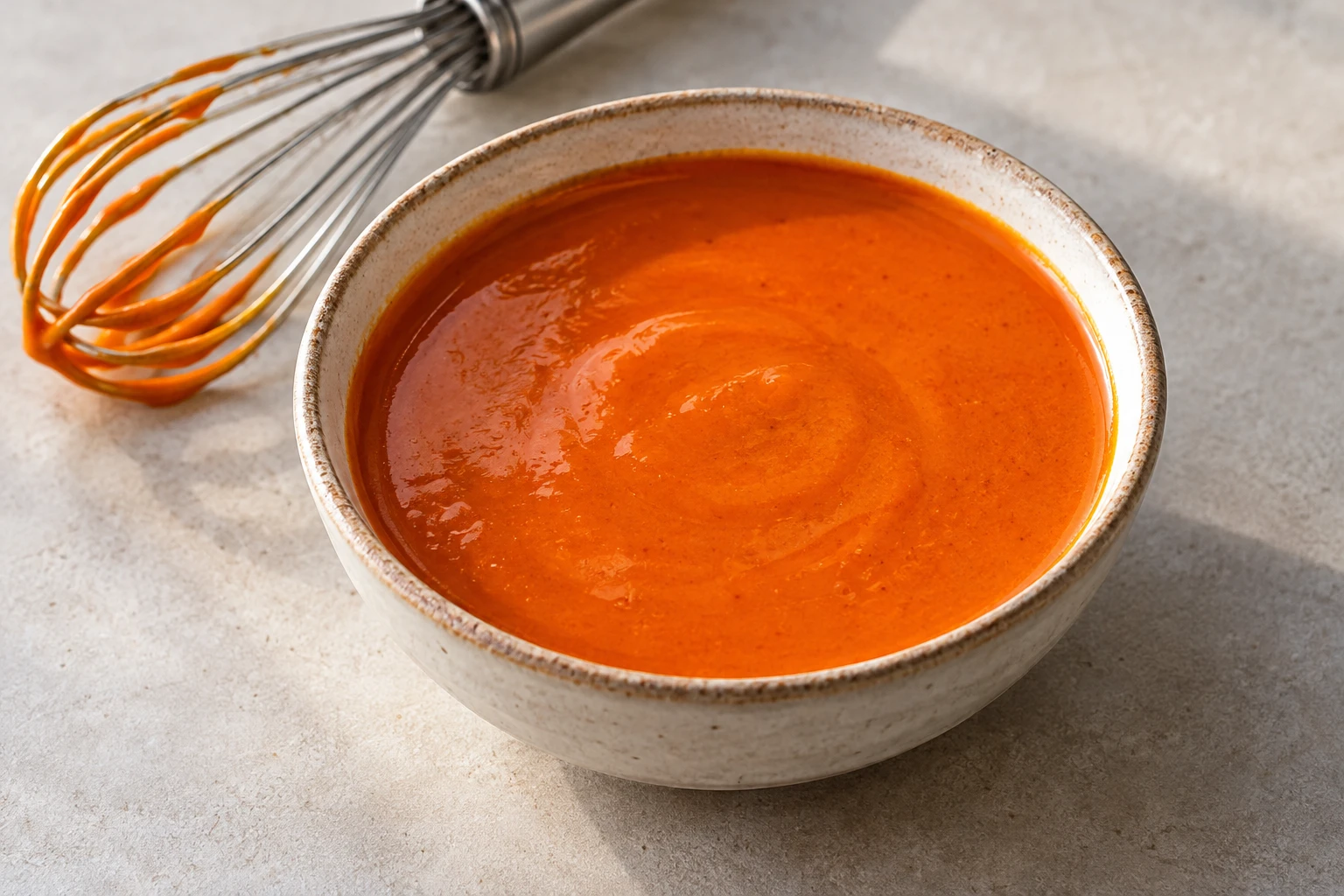
A Buffalo sauce gets its character from the meeting of chile heat, vinegar tang, and butter richness. Warming the base gently and whisking in butter a little at a time produces a glossy sauce that is easy to adjust.
Warm the sharp ingredients first
Cayenne pepper hot sauce already brings heat and vinegar, so the added distilled vinegar is measured modestly. Worcestershire, a little garlic powder, and honey round the base without taking it away from the familiar pepper-and-butter profile.
Let butter disappear into the sauce
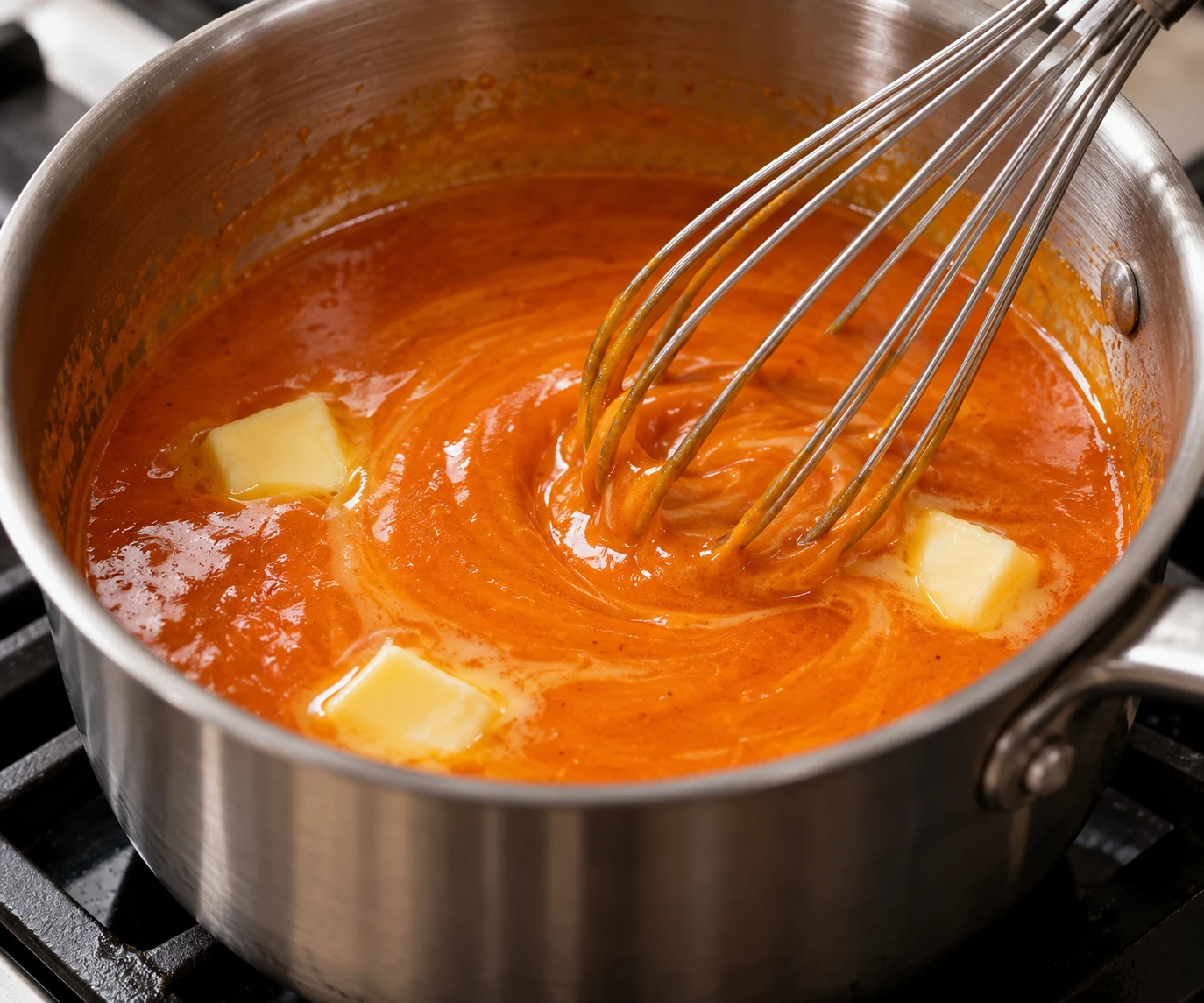
Butter blends more smoothly when the hot sauce is warm rather than boiling. Small pieces and steady whisking give the watery chile base time to hold the fat in a fine, glossy emulsion.
Tune the balance in small steps
Taste a small dab before making adjustments. A little more cayenne pepper hot sauce increases heat, a few drops of vinegar sharpen the finish, and an extra bit of butter softens the edge and adds richness.
Bring a separated sauce back together
If butter beads collect on the surface, take the pan off the heat first. Whisk in warm water a teaspoon at a time until the sauce looks glossy again, then keep it warm without letting it bubble.
Buffalo Sauce
Ingredients
- • 1 cup cayenne pepper hot sauce, plus up to 2 tbsp for heat adjustment
- • 6 tbsp unsalted butter, cut into tablespoons, plus up to 1 tbsp for richness adjustment
- • 1 tbsp distilled white vinegar, plus up to 1 tsp for tang adjustment
- • 1 tsp Worcestershire sauce
- • 1/8 tsp garlic powder
- • 1/2 tsp honey
- • 1 tbsp warm water, for re-emulsifying if needed
Method
Measure the ingredients
Measure the cayenne pepper hot sauce, distilled white vinegar, Worcestershire sauce, garlic powder, and honey; keep the adjustment portions of hot sauce and vinegar separate.
Look for: The base amounts and small adjustment portions are measured before heating begins.
Warm the sauce base
Combine the hot sauce, vinegar, Worcestershire, garlic powder, and honey in a small saucepan over low heat, whisking until the honey dissolves and the mixture is steaming but not bubbling.
Look for: The base looks uniform and releases steam without simmering or boiling.
Prepare the butter
Cut the unsalted butter into tablespoon-size pieces and lower the burner to its lowest setting so the sauce stays warm enough to accept the butter without boiling.
Look for: The butter pieces are small and evenly sized, and the sauce base remains quiet rather than bubbling.
Whisk in the butter gradually
Add the butter one tablespoon at a time, whisking continuously and waiting until each piece is almost melted before adding the next; keep the pan over low heat and do not let the sauce boil.
Look for: The butter disappears into the sauce between additions, leaving a smooth orange surface rather than floating oily beads.
Check the emulsion
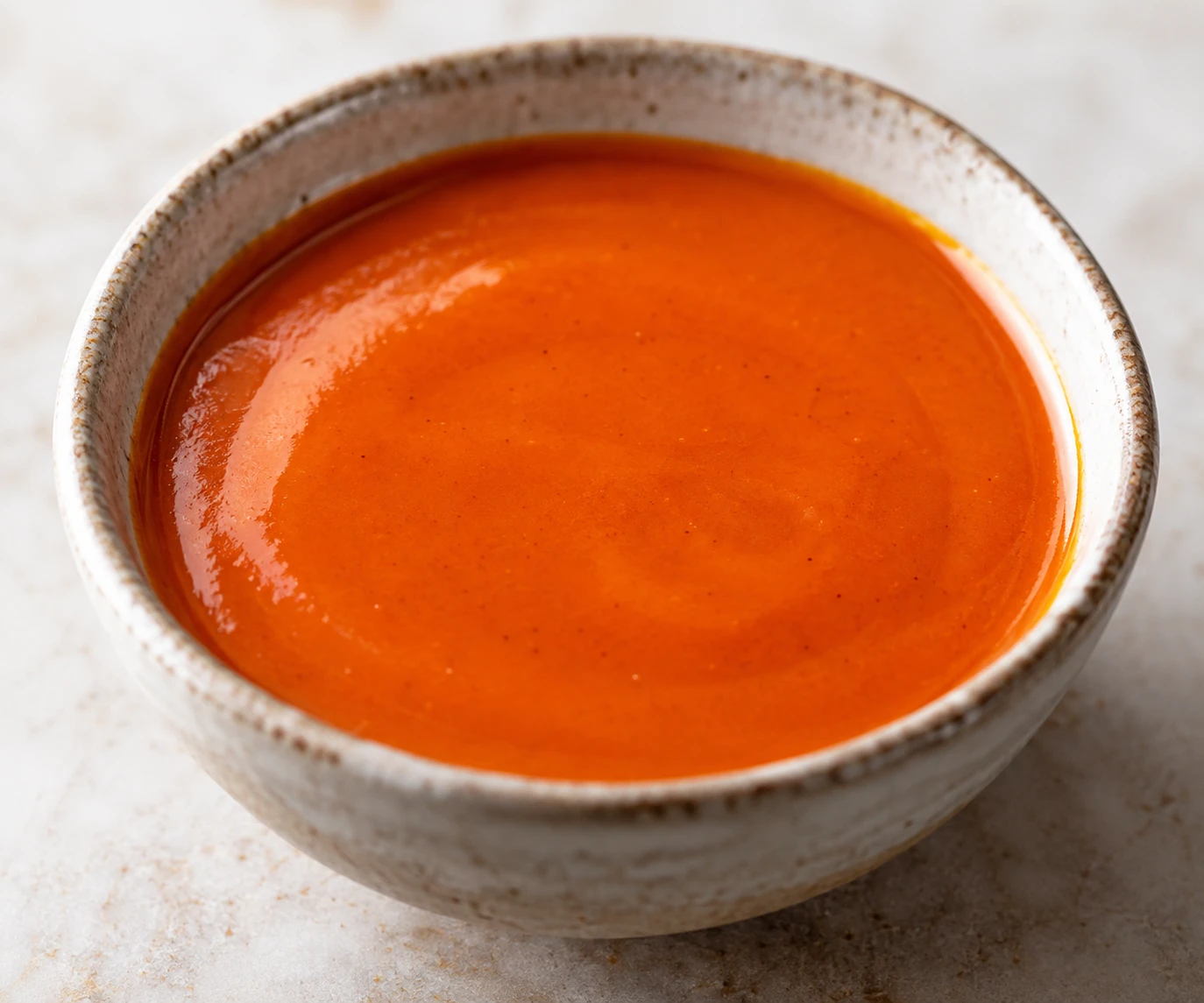
Take the saucepan off the heat and whisk for a few seconds until the sauce is glossy and evenly orange, with no distinct pools of melted butter around the edge.
Look for: The sauce looks shiny and cohesive and lightly coats the whisk.
Balance heat and tang
Taste a small dab; for more heat whisk in reserved hot sauce a teaspoon at a time, or for more tang add reserved vinegar a quarter-teaspoon at a time, tasting after each addition.
Look for: The sauce tastes lively and balanced, with the heat and vinegar adjusted in small increments.
Adjust richness
If the finish tastes too sharp, whisk in reserved butter a teaspoon at a time until the sauce feels rounder; pause as soon as the vinegar and chile taste balanced.
Look for: The finish is buttery without feeling greasy, and the sauce remains glossy after each small addition.
Serve or re-emulsify
Serve the sauce warm, such as alongside cooked wings; if it separates, remove it from heat and whisk in warm water a teaspoon at a time, using up to the measured tablespoon, until glossy again.
Look for: The finished sauce clings in a thin glossy coat, and a separated sauce comes together as the warm water is whisked in.