" fill="%23faf1da" stroke-width="1.8"/>%0A <ellipse cx="64.5" cy="50" rx="43" ry="12" transform="rotate(4 64.5 50)" stroke="%23938466"/>%0A <path d="m26 44 1 10m3-12 1 14m3-14 1 15m3-14 1 15m4-14 1 14m4-13 1 14m39-10-1 10m5-9-1 8m5-7-1 5" stroke="%23b2a181" stroke-width=".7"/>%0A <path d="M55 60c3-10 12-14 23-10l47-44c7-6 15-6 15-2 0 5-9 11-14 14L82 60c-8 4-21 4-27 0Z" fill="%23bc8c48" stroke-width="1.6"/>%0A <path d="M61 59c3-5 9-8 15-5l-4 7m8-8 49-45 6-4M84 52l45-41" stroke="%2376562e" stroke-width="1"/>%0A <path d="M20 53c18 14 69 19 90 2" stroke="%23514431" stroke-width="2"/>%0A <path d="M27 59c22 11 59 14 78 2" stroke="%23fff9e9" stroke-width="2"/>%0A <path d="m48 87 1 1m7 8 1 1m6-12 1 1m6 12 1 1m6-9 1 1m-24 9 1 1m19 4 1-1m10-16 1 1" stroke="%23aa9b7c"/>%0A </g>%0A</svg>%0A)
Ragù alla Bolognese
A patient, low simmer brings pancetta, beef, pork, milk, wine, and a restrained amount of tomato into a deep, cohesive ragù.
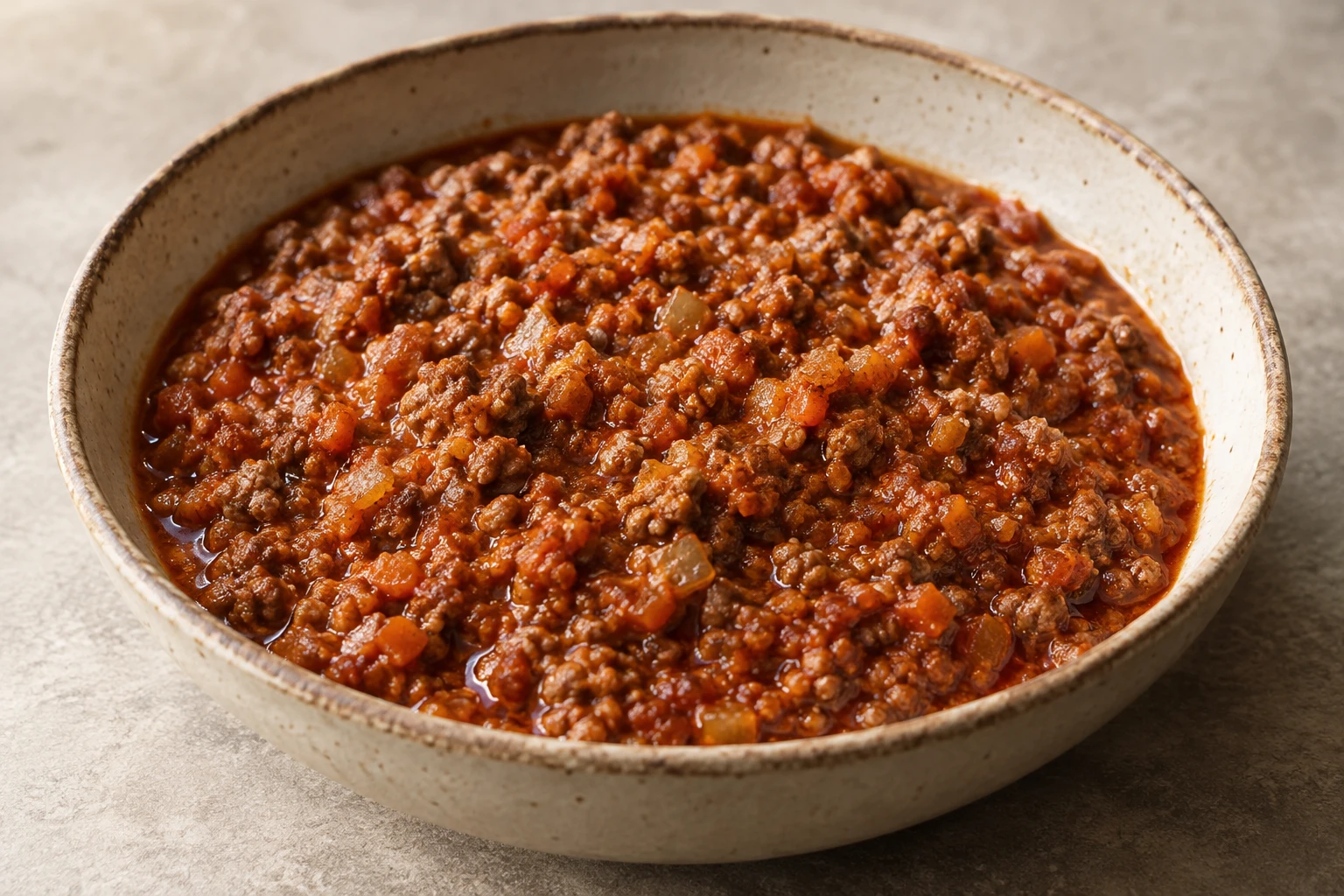
Ragù alla Bolognese rewards time more than complexity. Fine-cut vegetables soften into the rendered pancetta, and the meat slowly absorbs wine, milk, stock, and just enough tomato to bind the sauce.
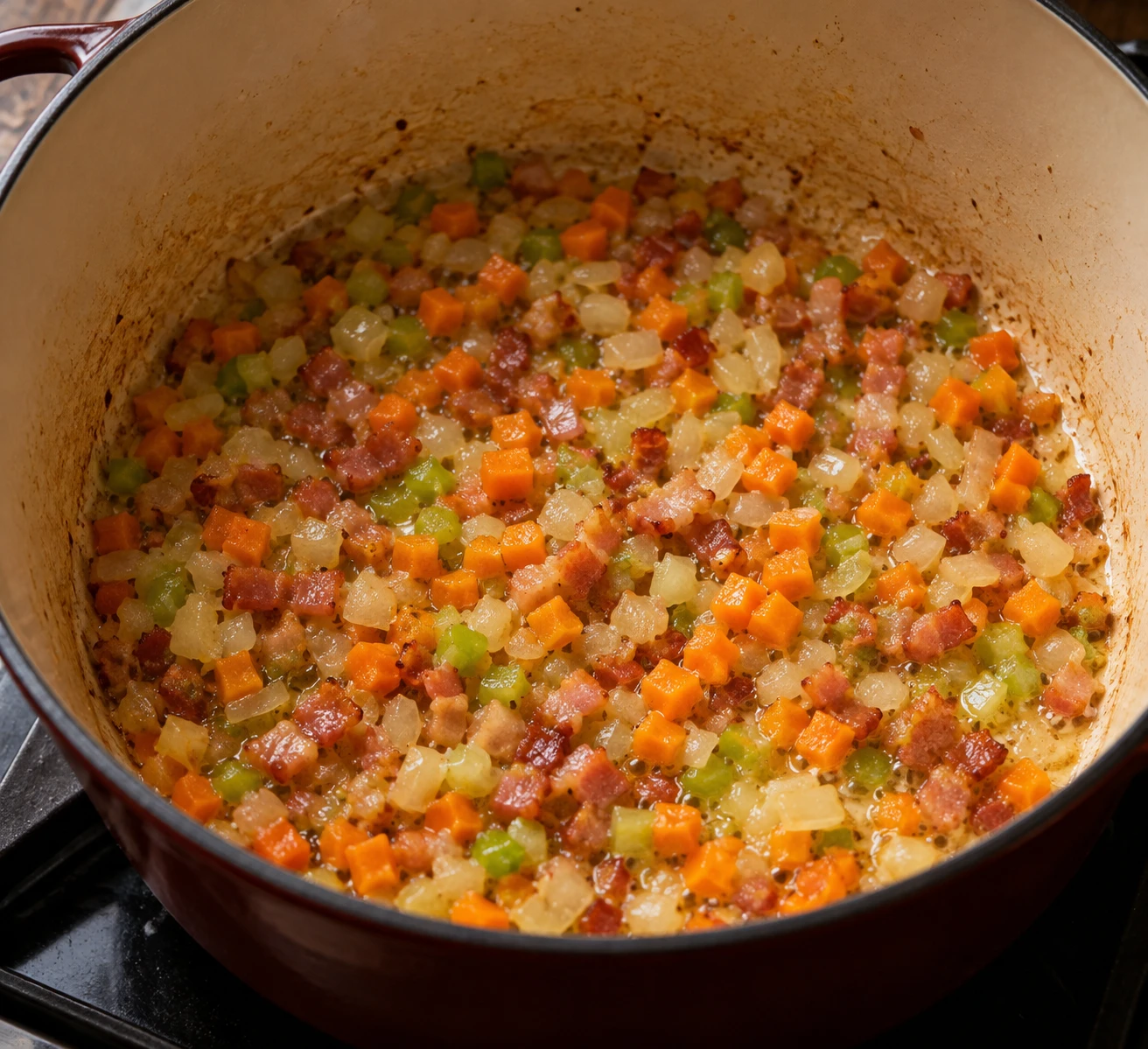
Start with a fine soffritto
Cutting onion, carrot, and celery to a very fine, even dice lets them soften into the ragù instead of remaining distinct chunks. Give them time over low heat after the pancetta renders; they should become glossy and sweet without browning.
Brown the meat before adding liquid
Break the beef and pork into small pieces, then let their released moisture evaporate so they brown instead of steam. Reducing the wine until nearly dry clears the pot bottom and gives the milk a chance to absorb into the meat.
Keep the tomato restrained
A small measure of passata and tomato paste supplies body and color without making this a tomato-forward sauce. The milk softens the meat's edges, while stock lets the long simmer stay moist without flooding the ragù.
Let low heat do the work
Keep the pot at an occasional lazy bubble and stir along its bottom every 20 minutes. If the sauce tightens before the meat turns tender, add reserved stock a few tablespoons at a time; frequent stirring and gentle heat help prevent scorching.
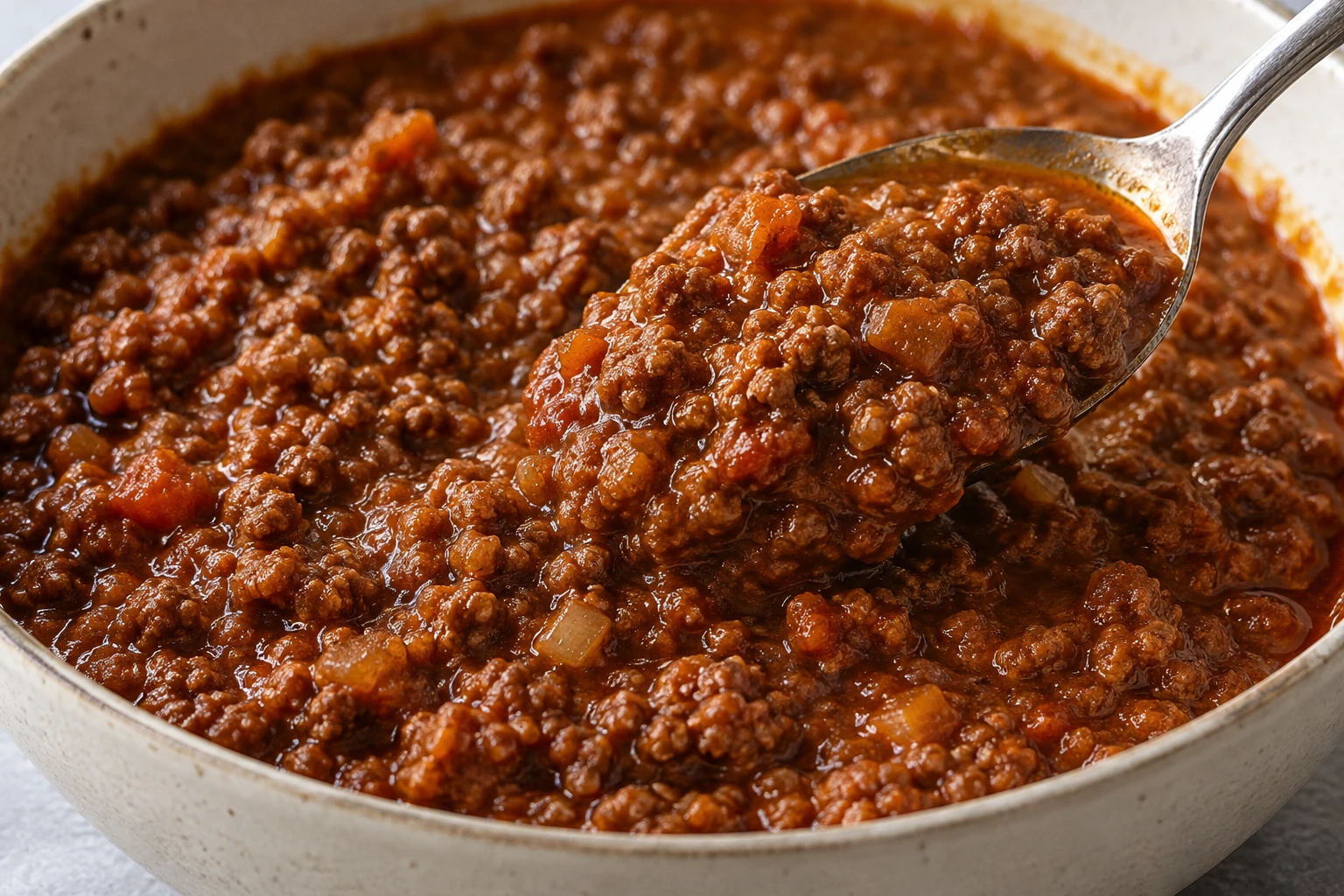
Judge the texture, not the clock
The ragù is ready when the meat is tender and the sauce clings in a unified coating, even if that takes the full three hours. A watery surface means it needs more gentle reduction; a tight bottom needs a small splash of the reserved stock.
Ragù alla Bolognese
Ingredients
- • 4 oz pancetta, finely diced
- • 1 tbsp olive oil
- • 1 medium yellow onion, very finely diced
- • 1 medium carrot, very finely diced
- • 1 celery rib, very finely diced
- • 1 lb ground beef, preferably 80% lean
- • 1 lb ground pork
- • 1 tsp kosher salt
- • 1/4 tsp freshly ground black pepper
- • 1 cup dry white wine
- • 1 cup whole milk
- • 1/8 tsp freshly grated nutmeg
- • 2 tbsp tomato paste
- • 1/2 cup tomato passata
- • 1 1/2 cups low-sodium beef stock, divided
- • 1 dried bay leaf
Method
Cut the soffritto
Finely dice the onion, carrot, and celery into pieces no larger than 1/8 inch so they soften evenly and nearly disappear into the finished ragù.
Look for: The onion, carrot, and celery are cut to a uniform, very fine dice.
Render the pancetta
Set a heavy Dutch oven over medium-low heat, add the pancetta and olive oil, and cook for 6 to 8 minutes, stirring, until the fat is rendered and the pancetta is lightly golden.
Look for: The pancetta has released a thin layer of fat and is lightly golden, not crisp.
Soften the vegetables
Add the onion, carrot, and celery to the pancetta and cook over low heat for 12 to 15 minutes, stirring occasionally, until glossy, very soft, and sweet-smelling without taking on much color.
Look for: The fine-cut vegetables have collapsed into the fat and are tender without browned edges.
Brown both meats
Add the ground beef, ground pork, kosher salt, and black pepper; raise the heat to medium and break the meat into small pieces as it cooks for 12 to 15 minutes, until its liquid evaporates and browned bits form on the pot bottom.
Look for: The meat looks browned rather than gray and there is no pool of liquid in the pot.
Reduce the wine
Pour in the dry white wine and scrape up the browned bits; simmer at medium heat for 8 to 10 minutes, stirring, until the sharp wine aroma fades and the pot is nearly dry.
Look for: A spoon drawn across the bottom leaves a path with no watery wine pooling behind it.
Add milk and nutmeg
Stir in the whole milk and nutmeg and keep the pot at a gentle simmer for 6 to 8 minutes, stirring often, until the milk is mostly absorbed and the meat looks creamy rather than wet.
Look for: The milk has mostly disappeared into the meat and no pale liquid pools at the edges.
Build the tomato base
Stir in the tomato paste and cook for 1 minute, then add the passata, 1 cup of the beef stock, and the bay leaf; bring just to a simmer, reserving the remaining 1/2 cup stock for later adjustment.
Look for: The tomato is distributed through the meat, leaving a muted brick-red sauce rather than a bright red tomato base.
Simmer patiently
Partially cover and simmer on the lowest heat for 2 1/2 to 3 hours, stirring and scraping the bottom every 20 minutes; keep only an occasional lazy bubble, adding reserved stock 2 tablespoons at a time if the bottom begins to stick or the ragù tightens before the meat is tender.
Look for: Only an occasional bubble breaks the surface, and the sauce stays moist without a layer of separated fat.
Check the finished ragù
Remove the bay leaf and stir well; the meat should be tender and the sauce rich, cohesive, and spoon-coating, with no watery tomato liquid, so correct the texture with a splash of reserved stock only if it has become too tight.
Look for: The ragù clings to a spoon in a unified coating and tastes savory, rounded, and gently tomato-scented.