" fill="%23faf1da" stroke-width="1.8"/>%0A <ellipse cx="64.5" cy="50" rx="43" ry="12" transform="rotate(4 64.5 50)" stroke="%23938466"/>%0A <path d="m26 44 1 10m3-12 1 14m3-14 1 15m3-14 1 15m4-14 1 14m4-13 1 14m39-10-1 10m5-9-1 8m5-7-1 5" stroke="%23b2a181" stroke-width=".7"/>%0A <path d="M55 60c3-10 12-14 23-10l47-44c7-6 15-6 15-2 0 5-9 11-14 14L82 60c-8 4-21 4-27 0Z" fill="%23bc8c48" stroke-width="1.6"/>%0A <path d="M61 59c3-5 9-8 15-5l-4 7m8-8 49-45 6-4M84 52l45-41" stroke="%2376562e" stroke-width="1"/>%0A <path d="M20 53c18 14 69 19 90 2" stroke="%23514431" stroke-width="2"/>%0A <path d="M27 59c22 11 59 14 78 2" stroke="%23fff9e9" stroke-width="2"/>%0A <path d="m48 87 1 1m7 8 1 1m6-12 1 1m6 12 1 1m6-9 1 1m-24 9 1 1m19 4 1-1m10-16 1 1" stroke="%23aa9b7c"/>%0A </g>%0A</svg>%0A)
Raspberry Coulis
Ripe raspberries, restrained sugar, and lemon become a seedless sauce with a choice of fresh raw fruit or brief, gentle warming.
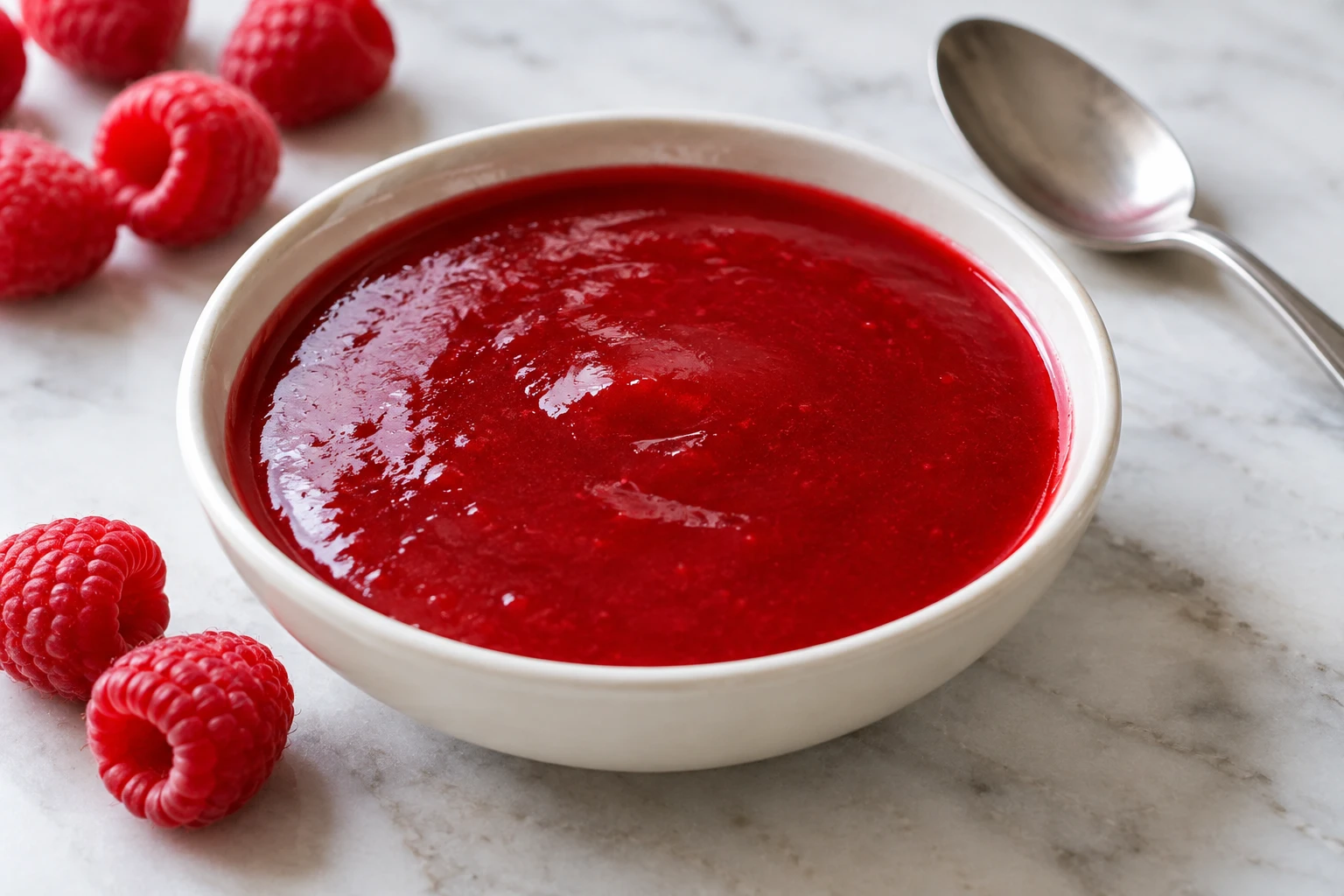
Raspberry coulis depends on ripe fruit and a light touch with sugar. Pureeing the berries raw preserves their perfumed freshness, while a brief warm softens them and concentrates their flavor.
Choose the flavor you want
Raw berries make the brightest sauce, especially when the fruit is fragrant and fully ripe. A short, gentle warm is useful when berries are firm or you want a smoother, more concentrated coulis; stop as soon as they collapse and release their juice.
Let the fruit set the sweetness
Start with a modest amount of sugar and taste the puree before adding the rest. Raspberries vary in sweetness, so small additions keep the sauce lively instead of turning it flat.
Press, do not scrape, the seeds
A fine-mesh sieve removes the seeds while the soft fruit passes through. Press steadily with a flexible spatula and scrape the underside to recover the sauce, but leave the dry seed pulp behind for a clean texture.
Keep the sauce in a supporting role
The coulis works as a thin ribbon beside cheesecake or panna cotta, or as a small pool beneath fresh fruit. Chill it covered when making it ahead, then stir briefly before serving because it firms slightly in the refrigerator.
Raspberry Coulis
Ingredients
- • 12 oz ripe raspberries
- • 2 tbsp granulated sugar, divided
- • 1 tbsp fresh lemon juice
- • 1 tbsp water, warming method only
- • 1 pinch fine salt
Method
Sort the berries
Pick through the ripe raspberries and discard leaves or damaged fruit; rinse only if needed, then dry gently so excess water does not thin the coulis.
Look for: The raspberries are clean, dry, and free of leaves or bruised fruit.
Choose a berry method
For a fresh flavor, place the raspberries in a blender with 1 tbsp sugar and the pinch of fine salt; for a smoother, concentrated sauce, put them in a small saucepan with 1 tbsp sugar, the water, and salt.
Look for: The raw method stays cool and bright; the warming method starts in a saucepan with a spoonable splash of water.
Warm for a deeper sauce
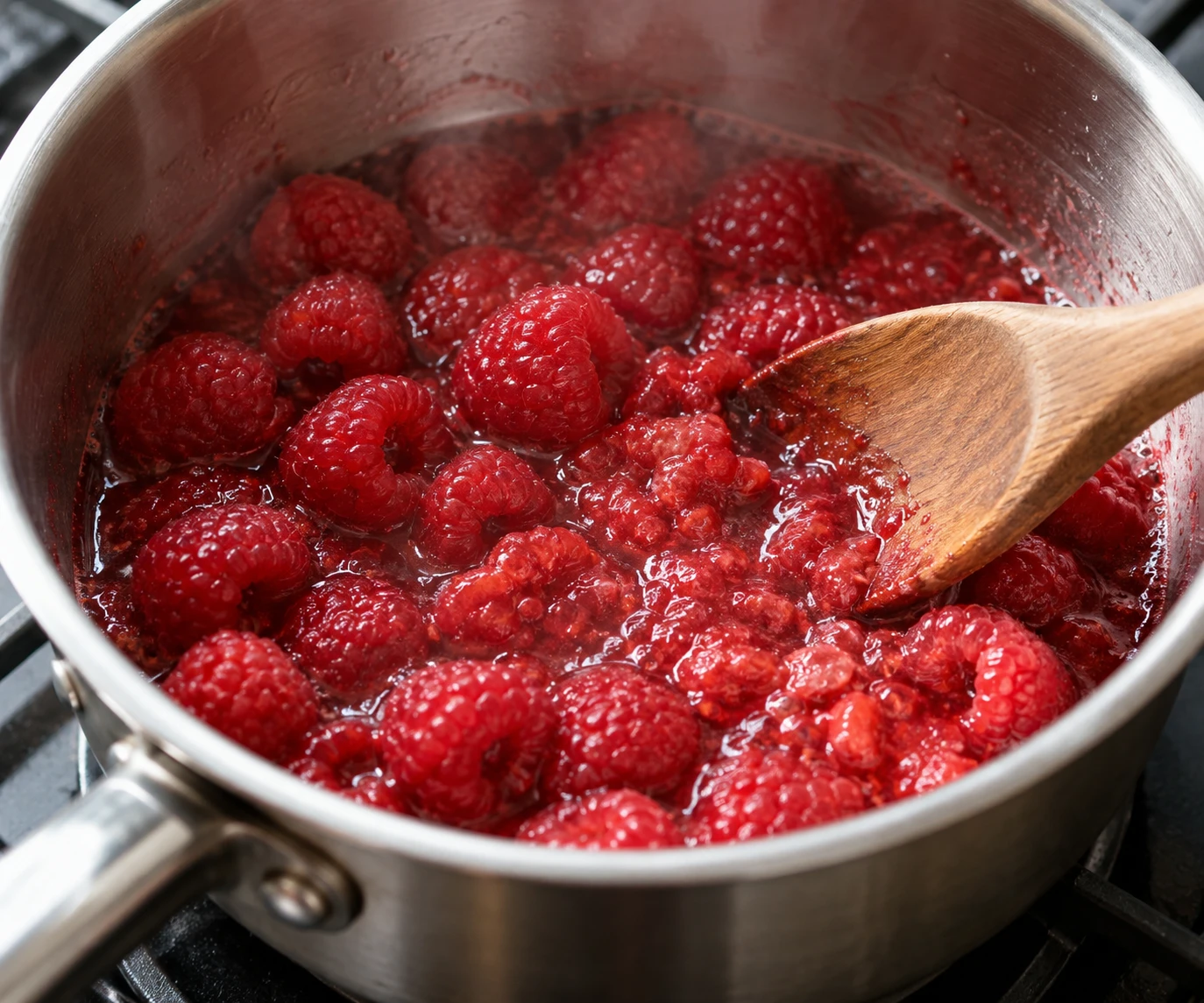
If using the warming method, heat the raspberries over medium-low, stirring and crushing gently for 2 to 3 minutes until juicy and just bubbling; skip this step for the raw method.
Look for: The warm berries soften into a glossy, loose pulp without a rolling boil.
Puree the fruit
Add the lemon juice to the raw berries or transfer the warm berries and their syrup to the blender, then puree until no large pieces remain and the sauce looks evenly red.
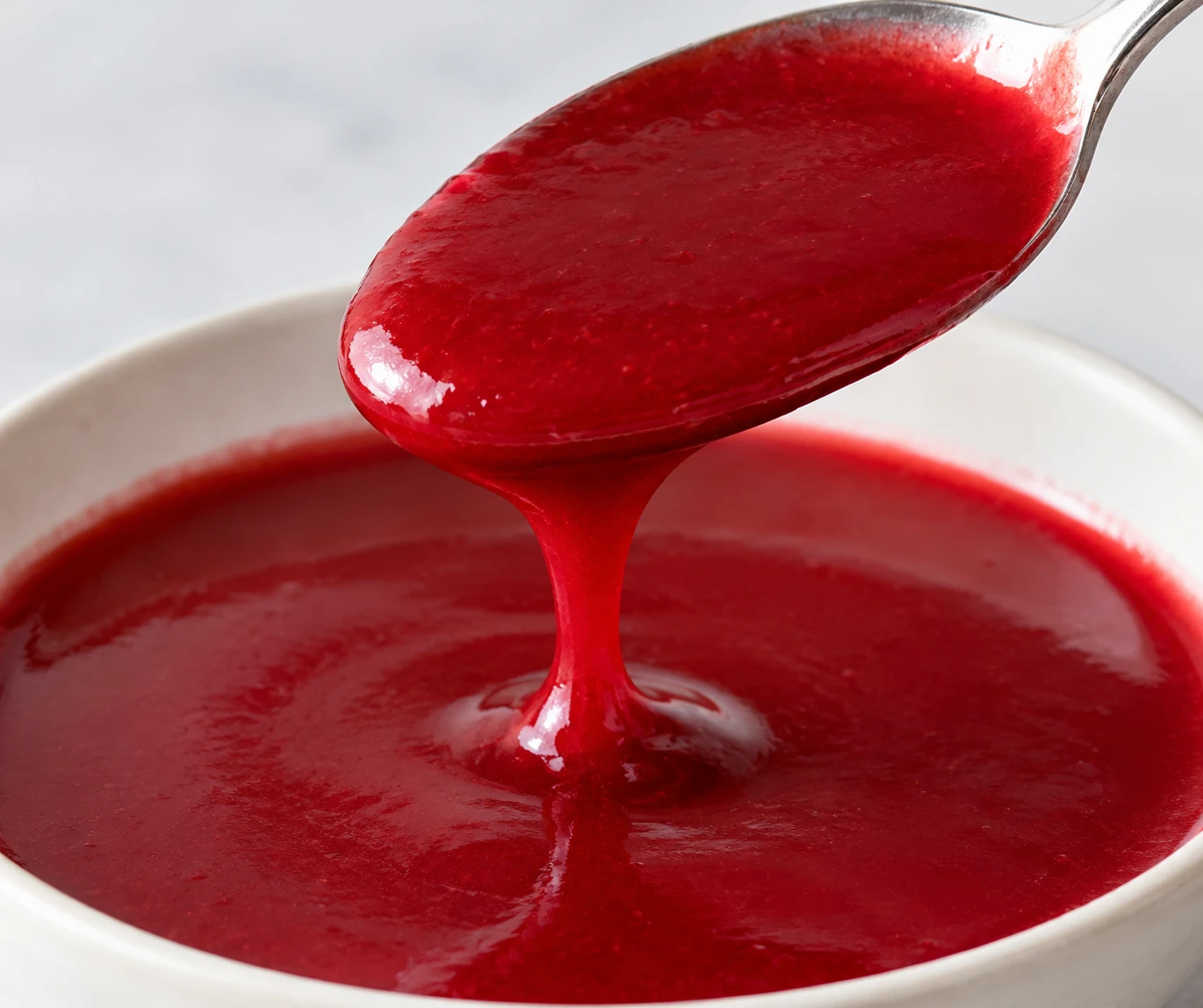
Look for: The puree is uniformly red and flows from a spoon in a steady ribbon.
Taste before sweetening
Taste the puree before adding more sugar; if the berries are sharply tart, blend in the reserved sugar a teaspoon at a time, stopping when the fruit still tastes vivid.
Look for: The sweetness supports the berries without masking their fresh, tangy flavor.
Strain out the seeds
Set a fine-mesh sieve over a bowl and press the puree through with a flexible spatula, scraping the underside as needed; discard the dry seed pulp left in the sieve.
Look for: A smooth sauce collects below while mostly dry seeds remain in the sieve.
Cool and check texture
Let the coulis cool until no longer warm, then check that it pours easily; use it at once or cover and chill, knowing it thickens slightly when cold.
Look for: The seedless coulis pours smoothly and clings lightly to a spoon.