" fill="%23faf1da" stroke-width="1.8"/>%0A <ellipse cx="64.5" cy="50" rx="43" ry="12" transform="rotate(4 64.5 50)" stroke="%23938466"/>%0A <path d="m26 44 1 10m3-12 1 14m3-14 1 15m3-14 1 15m4-14 1 14m4-13 1 14m39-10-1 10m5-9-1 8m5-7-1 5" stroke="%23b2a181" stroke-width=".7"/>%0A <path d="M55 60c3-10 12-14 23-10l47-44c7-6 15-6 15-2 0 5-9 11-14 14L82 60c-8 4-21 4-27 0Z" fill="%23bc8c48" stroke-width="1.6"/>%0A <path d="M61 59c3-5 9-8 15-5l-4 7m8-8 49-45 6-4M84 52l45-41" stroke="%2376562e" stroke-width="1"/>%0A <path d="M20 53c18 14 69 19 90 2" stroke="%23514431" stroke-width="2"/>%0A <path d="M27 59c22 11 59 14 78 2" stroke="%23fff9e9" stroke-width="2"/>%0A <path d="m48 87 1 1m7 8 1 1m6-12 1 1m6 12 1 1m6-9 1 1m-24 9 1 1m19 4 1-1m10-16 1 1" stroke="%23aa9b7c"/>%0A </g>%0A</svg>%0A)
Gochujang Sauce
A smooth, chile-forward Korean-inspired condiment balances gochujang's fermented savoriness with soy, rice vinegar, honey, garlic, and sesame.
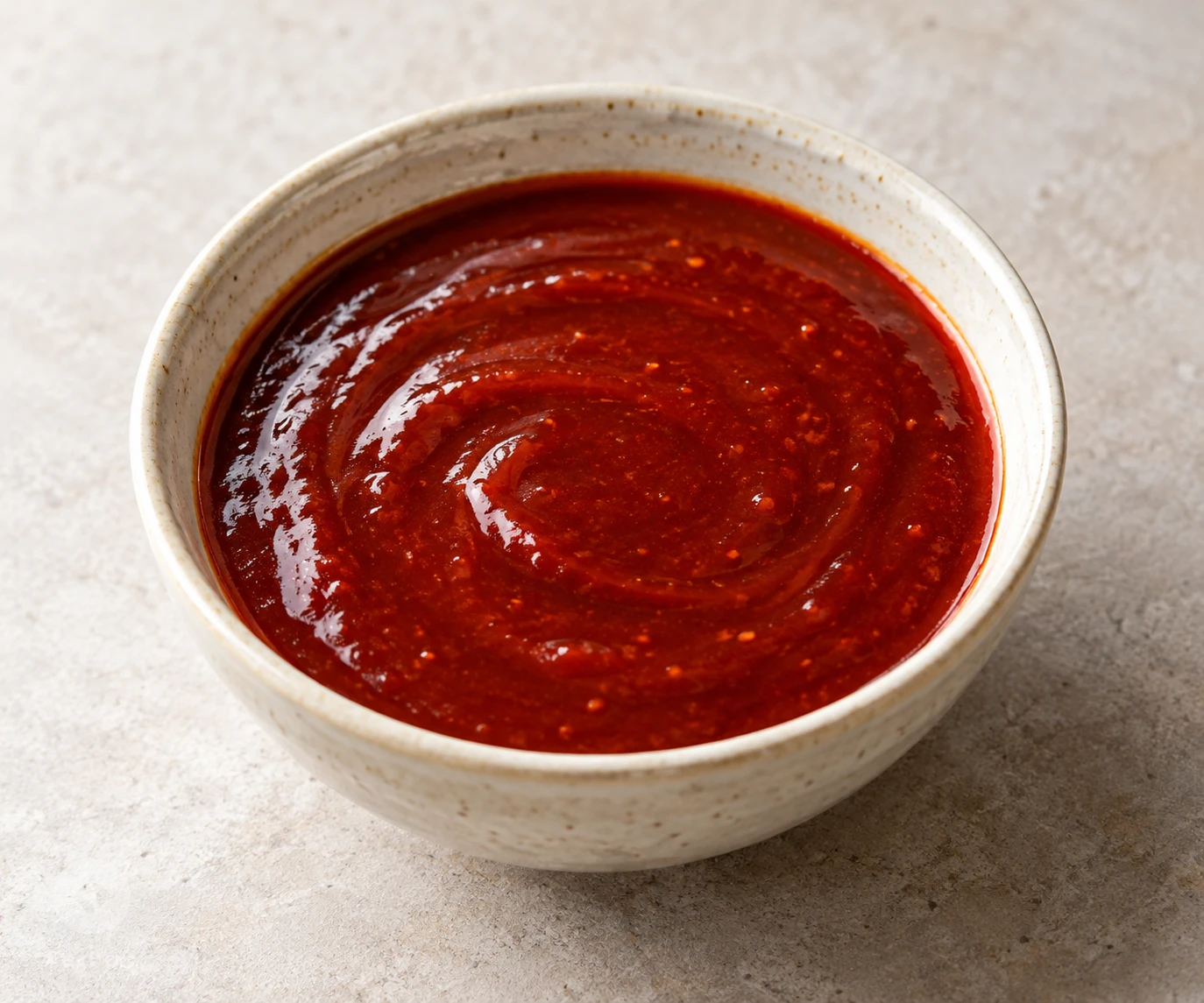
Gochujang is a dense fermented chile paste, so the first task is to loosen it without losing its body. Soy sauce smooths the paste, while rice vinegar and honey temper its savory heat with acidity and restrained sweetness.
A short rest rounds the garlic before a measured consistency choice: warm water makes the sauce easier to brush, while extra gochujang keeps it thicker for dipping.
Start by loosening the paste
Gochujang can hold dense pockets when other liquids are poured in all at once. Stirring in soy sauce first gives the paste time to relax into a smooth base, so the later vinegar and honey distribute evenly.
Keep the chile in front
Rice vinegar brightens the fermented savoriness, and honey rounds the edge of the heat without turning the condiment sweet. Grated garlic adds a fresh savory note, while toasted sesame oil is used sparingly so its aroma supports rather than covers the chile.
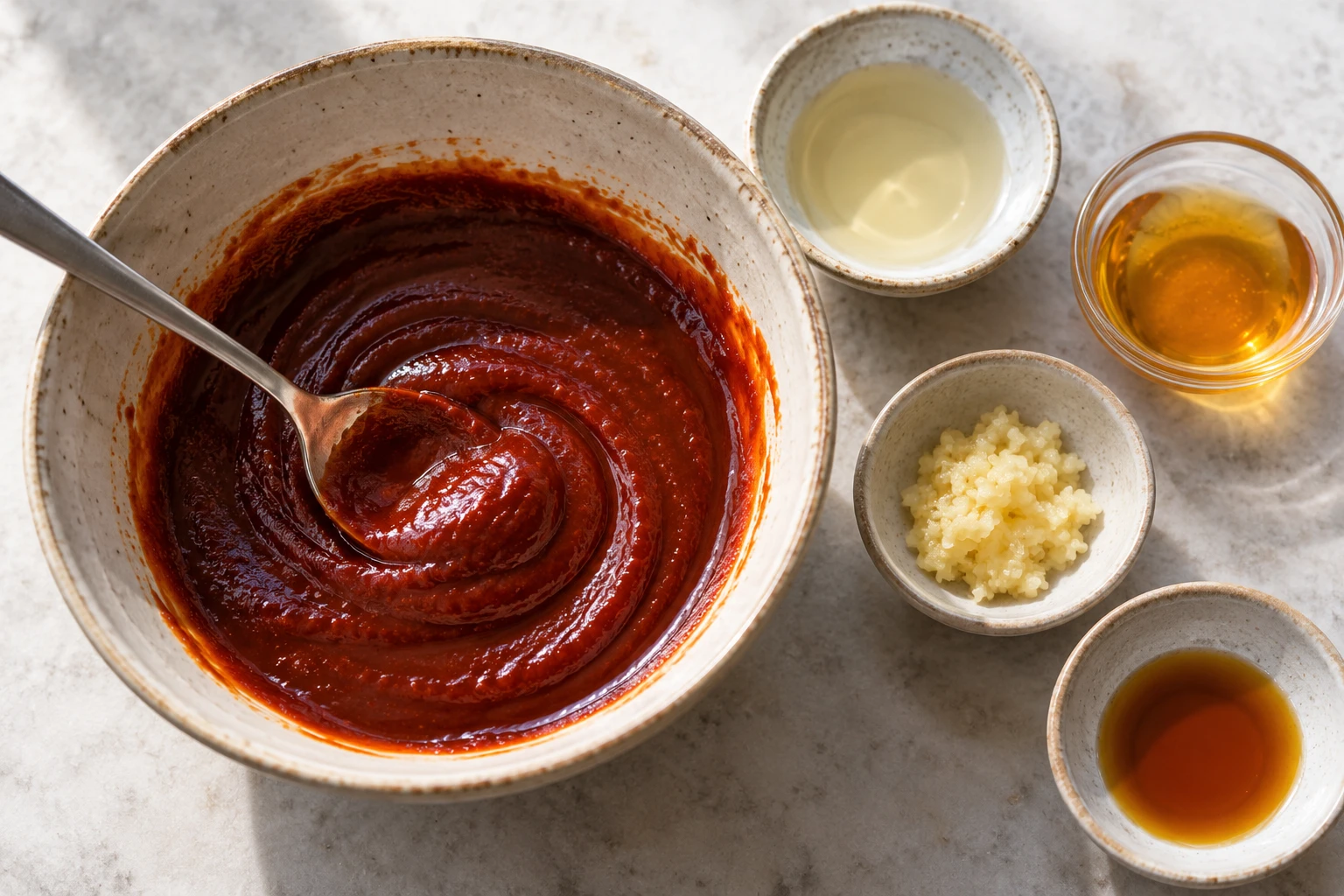
Match the consistency to its use
The measured water branch makes a looser sauce that can be brushed in an even layer. If a thicker dipping condiment is wanted, replace the water with the measured gochujang branch; do not combine both adjustments, since each is designed to set a different consistency.
Let the flavor settle
Resting lets the garlic mellow and gives the fermented chile, acidity, and sweetness time to meet. Serve the condiment by itself in the selected consistency, tasting before serving so the sharp, sweet, and savory notes remain in balance.
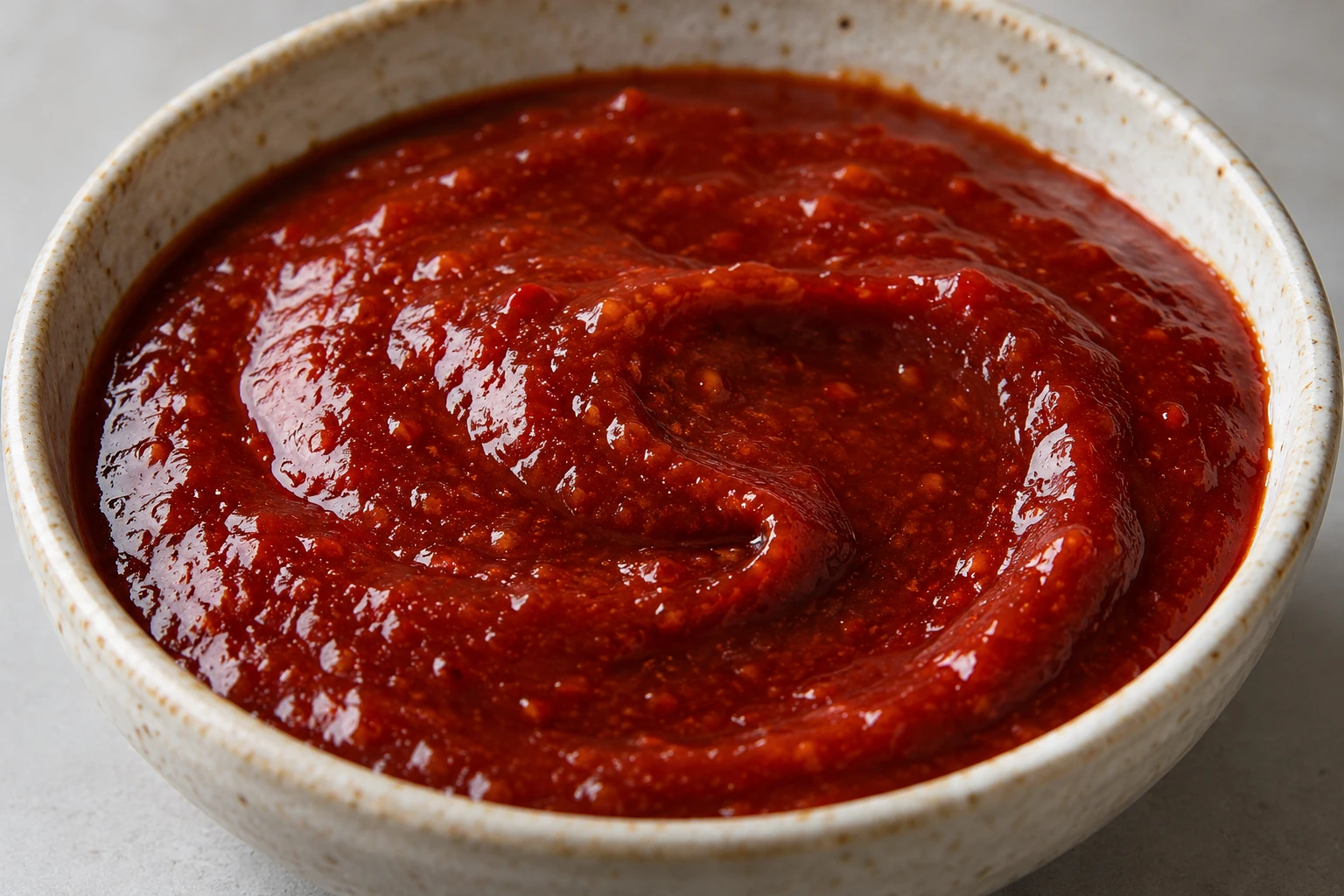
Gochujang Sauce
Ingredients
- • 1/3 cup Korean gochujang
- • 2 tbsp soy sauce
- • 1 tbsp rice vinegar
- • 1 tbsp honey
- • 1 medium garlic clove, finely grated
- • 2 tsp toasted sesame oil
- •
Method
Prepare the garlic
Finely grate the garlic clove into a small bowl, scraping in its juices; measure the gochujang, soy sauce, rice vinegar, honey, and sesame oil before mixing.
Look for: The garlic is a moist, fine paste without large pieces.
Loosen the gochujang
Put the gochujang in a medium bowl and stir in the soy sauce a little at a time, pressing the mixture against the bowl until the dense paste turns smooth and glossy.
Look for: No dry gochujang pockets remain and the paste falls slowly from the spoon.
Balance the base
Stir in the rice vinegar and honey until fully blended; the vinegar should sharpen the fermented chile and the honey should round its heat without making the sauce taste sugary.
Look for: The surface is even and the chile remains the leading flavor.
Add garlic and sesame
Fold in the grated garlic and toasted sesame oil until the sauce is uniformly fragrant, scraping the sides so the oil does not sit in a separate slick.
Look for: A sesame aroma is present, but it does not cover the gochujang.
Rest the sauce
Let the base stand for 10 minutes at room temperature so the garlic can mellow and the fermented, sweet, and acidic notes settle together before adjusting its consistency.
Look for: The aroma is rounded, with no sharp raw-garlic edge.
Choose a consistency
For the looser brushing version, whisk in the preferred 1 tbsp warm water. For a thicker dipping version, use the alternative 1 tbsp gochujang instead of the water and whisk until it holds a soft mound; choose one adjustment, not both.
Look for: The brush version flows in a thick ribbon; the dip version stays spoonable and holds its shape.
Taste and serve
Taste a small spoonful and serve the selected sauce on its own as a dipping condiment or brushing sauce; keep the chile's fermented savoriness clear and avoid adding enough sweetener or sesame oil to mask it.
Look for: The finished sauce tastes savory, gently sweet, tart, and distinctly chile-forward.