" fill="%23faf1da" stroke-width="1.8"/>%0A <ellipse cx="64.5" cy="50" rx="43" ry="12" transform="rotate(4 64.5 50)" stroke="%23938466"/>%0A <path d="m26 44 1 10m3-12 1 14m3-14 1 15m3-14 1 15m4-14 1 14m4-13 1 14m39-10-1 10m5-9-1 8m5-7-1 5" stroke="%23b2a181" stroke-width=".7"/>%0A <path d="M55 60c3-10 12-14 23-10l47-44c7-6 15-6 15-2 0 5-9 11-14 14L82 60c-8 4-21 4-27 0Z" fill="%23bc8c48" stroke-width="1.6"/>%0A <path d="M61 59c3-5 9-8 15-5l-4 7m8-8 49-45 6-4M84 52l45-41" stroke="%2376562e" stroke-width="1"/>%0A <path d="M20 53c18 14 69 19 90 2" stroke="%23514431" stroke-width="2"/>%0A <path d="M27 59c22 11 59 14 78 2" stroke="%23fff9e9" stroke-width="2"/>%0A <path d="m48 87 1 1m7 8 1 1m6-12 1 1m6 12 1 1m6-9 1 1m-24 9 1 1m19 4 1-1m10-16 1 1" stroke="%23aa9b7c"/>%0A </g>%0A</svg>%0A)
Sambal Oelek
A coarse, vivid chile paste gets just enough vinegar and gentle cooking to round its raw edge while keeping fresh red chile flavor in focus.
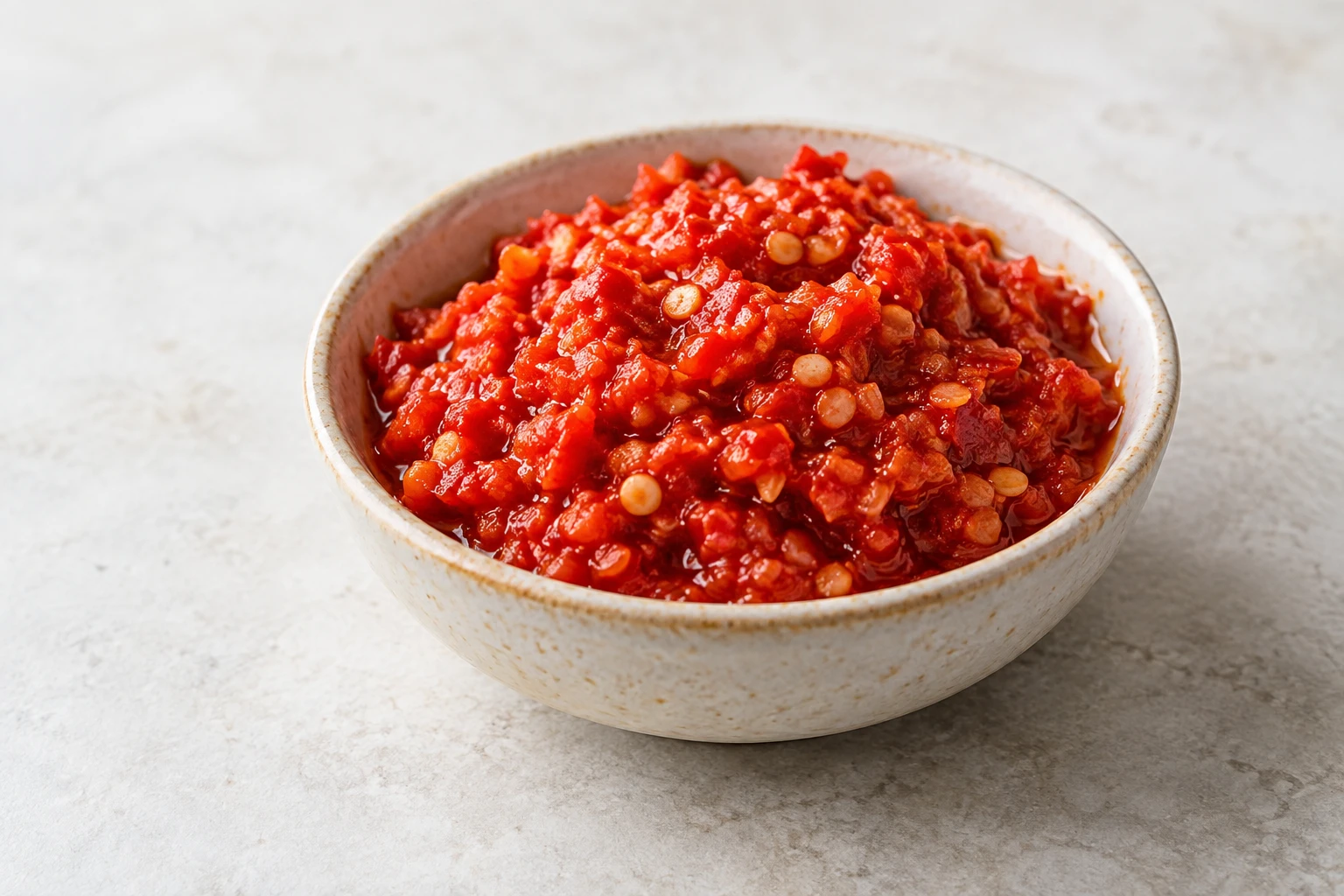
Sambal oelek is a direct, fresh-tasting chile condiment built around red chiles, salt, and a small splash of vinegar. A brief turn over low heat softens the sharp raw edge without making it sweet or turning it into a pourable sauce.
Choose the heat before grinding
The pale inner ribs carry much of a chile's heat, so scraping them out of some or all of the peppers gives you control before the paste is made. Leaving more ribs in keeps the result sharper; removing them does not change the basic red chile character.
Keep the chile texture visible
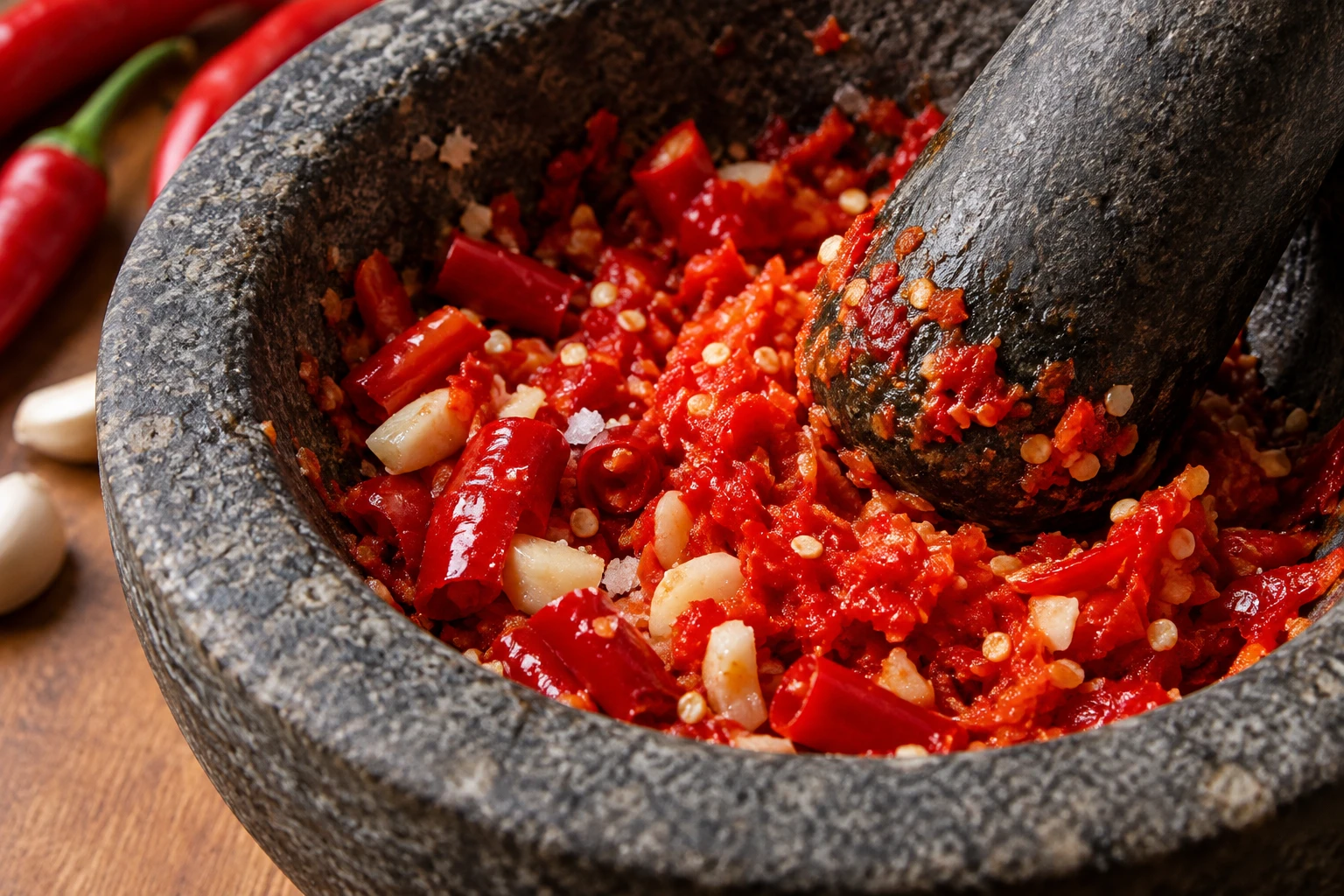
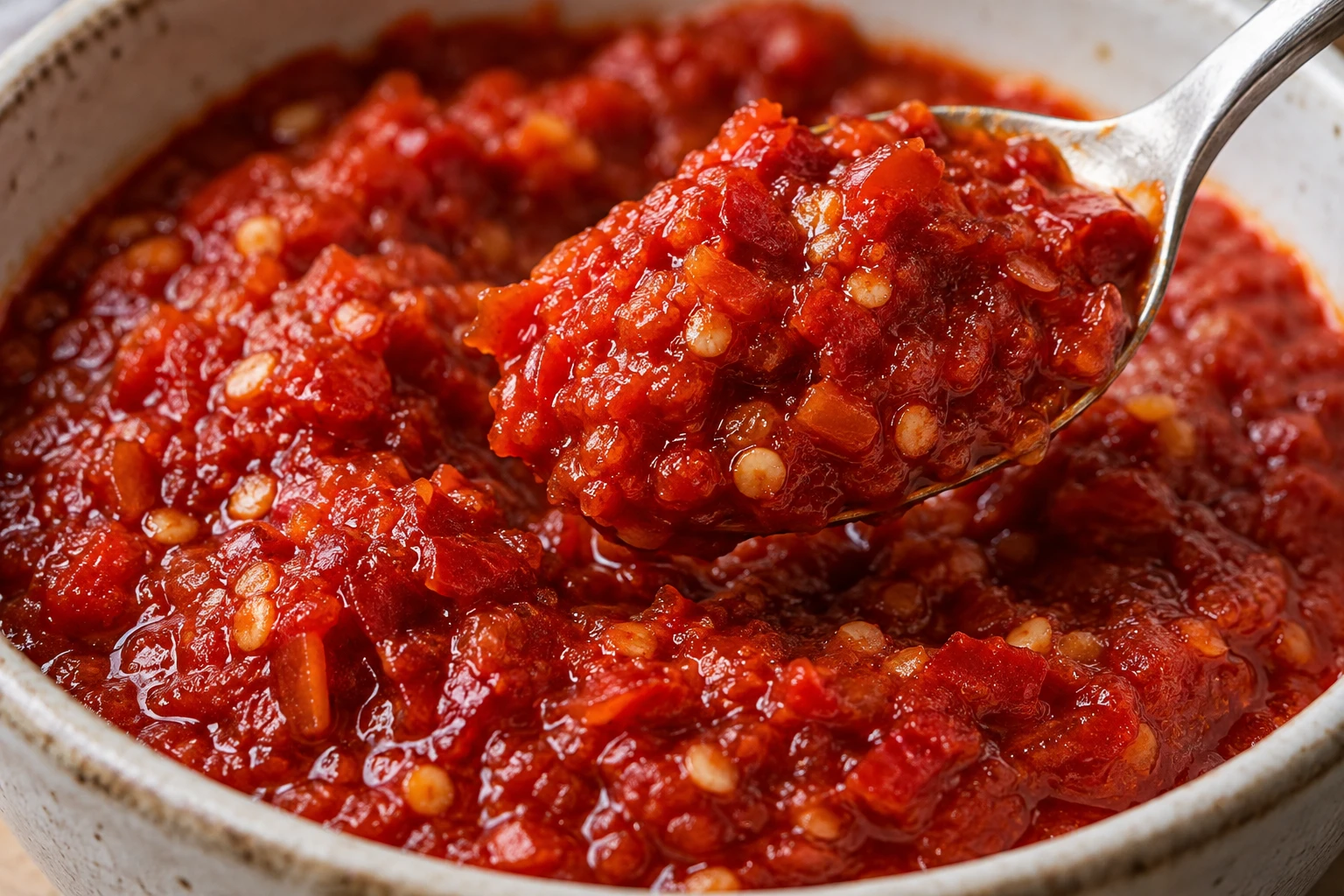
Sambal oelek should look crushed and coarse, with small red pieces suspended in a thick paste. A mortar makes that texture easy to feel, while a food processor works well when used in short pulses rather than run continuously.
Round the raw edge gently
Rice vinegar and a little water loosen the grind so it can warm evenly. Keep the saucepan over low heat and stir until the raw aroma mellows, then stop before browning dulls the bright color and fresh chile flavor.
Bring it to the table as a condiment
Serve a small spoonful beside rice, noodles, eggs, or vegetables, letting diners add heat bite by bite. The paste is deliberately unsweetened and concentrated, so treat it as a condiment rather than a ready-made sweet chile sauce.
Sambal Oelek
Ingredients
- • 1 lb fresh red Fresno chiles, stems removed
- • 1 small garlic clove, peeled
- • 1 tsp fine sea salt
- • 1 tbsp rice vinegar
- • 2 tbsp water
Method
Wash and dry the chiles
Rinse the Fresno chiles under cool water, then dry them thoroughly with a clean towel so the paste does not become watery.
Look for: The chile skins are clean and no water beads remain on them.
Trim and tune the heat
Remove the stems and split each chile lengthwise; for a milder paste, scrape out the pale ribs and seeds from some or all of the chiles, and leave more ribs for greater heat.
Look for: The cut chiles have the amount of pale ribbing you want for the finished heat.
Roughly chop
Cut the prepared chiles into small pieces and keep the peeled garlic clove nearby; smaller pieces make an even coarse grind without needing a smooth puree.
Look for: The chile pieces are small enough to crush evenly, with no long strips remaining.
Grind a coarse paste
Combine the chopped chiles, garlic, and sea salt in a mortar and pound, or pulse in a food processor, until crushed and chunky with visible chile flecks rather than completely smooth.
Look for: The mixture holds together as a rough paste and still shows distinct red chile pieces.
Loosen with vinegar and water
Stir the rice vinegar and water through the ground paste until it is spoonable but still thick, scraping the sides so the liquid is evenly distributed.
Look for: The paste looks moist and cohesive without liquid pooling around it.
Cook briefly
Scrape the paste into a small saucepan and warm over low heat for about 4 minutes, stirring often; stop once the raw chile edge softens, before the paste browns or loses its vivid color.
Look for: The paste smells fresh and aromatic, looks slightly glossier, and has not browned.
Cool the paste
Take the saucepan off the heat and let the sambal cool for 5 minutes so it thickens slightly and is easier to transfer without cooking away its fresh chile character.
Look for: The paste is no longer steaming heavily and remains bright red.
Serve as a condiment
Spoon a small amount alongside rice, noodles, eggs, or grilled vegetables so each bite can be seasoned to taste; refrigerate any remaining paste in a clean, covered jar.
Look for: A small spoonful adds direct chile heat without turning the plate into a sweet or pourable sauce.