" fill="%23faf1da" stroke-width="1.8"/>%0A <ellipse cx="64.5" cy="50" rx="43" ry="12" transform="rotate(4 64.5 50)" stroke="%23938466"/>%0A <path d="m26 44 1 10m3-12 1 14m3-14 1 15m3-14 1 15m4-14 1 14m4-13 1 14m39-10-1 10m5-9-1 8m5-7-1 5" stroke="%23b2a181" stroke-width=".7"/>%0A <path d="M55 60c3-10 12-14 23-10l47-44c7-6 15-6 15-2 0 5-9 11-14 14L82 60c-8 4-21 4-27 0Z" fill="%23bc8c48" stroke-width="1.6"/>%0A <path d="M61 59c3-5 9-8 15-5l-4 7m8-8 49-45 6-4M84 52l45-41" stroke="%2376562e" stroke-width="1"/>%0A <path d="M20 53c18 14 69 19 90 2" stroke="%23514431" stroke-width="2"/>%0A <path d="M27 59c22 11 59 14 78 2" stroke="%23fff9e9" stroke-width="2"/>%0A <path d="m48 87 1 1m7 8 1 1m6-12 1 1m6 12 1 1m6-9 1 1m-24 9 1 1m19 4 1-1m10-16 1 1" stroke="%23aa9b7c"/>%0A </g>%0A</svg>%0A)
Sausage Gravy
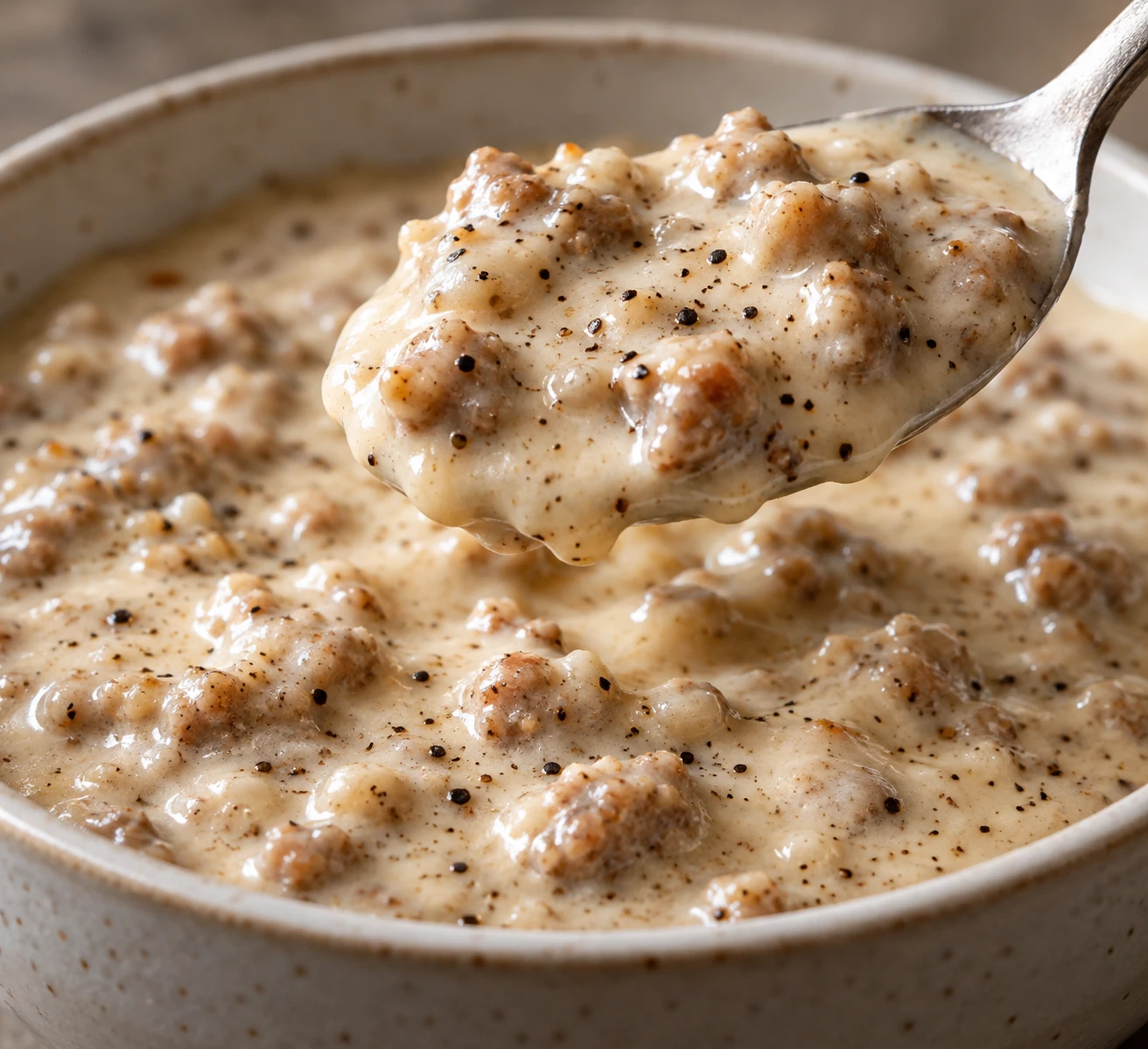
A simple skillet method turns crumbled breakfast sausage, its rendered fat, flour, and whole milk into a peppery gravy with a spoonable finish.
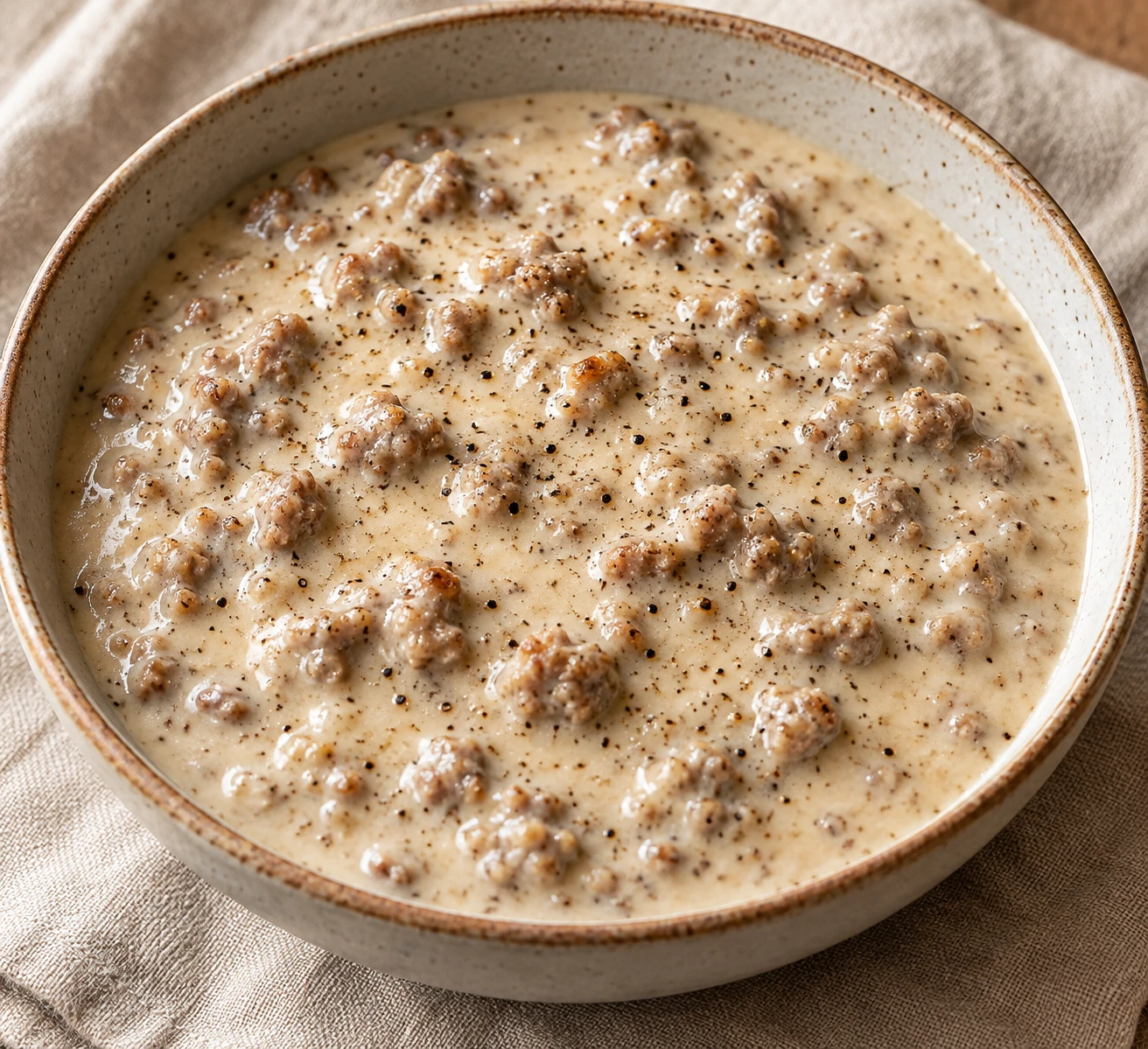
Sausage gravy depends on a small roux built directly in the skillet, where browned sausage and rendered fat carry the flour. Gradual milk additions make it easier to keep the sauce smooth and control its final thickness.
Start with the rendered fat
Let the sausage brown before adding flour so it develops savory edges and releases its fat. Leaving a thin, even layer in the skillet gives the flour enough coating to cook without clumping.
Cook the flour briefly
The flour needs a short cook in the sausage fat to lose its raw taste. Stir constantly and stop while the mixture is still pale; deep browning would change the gravy's familiar color and flavor.
Add milk in stages
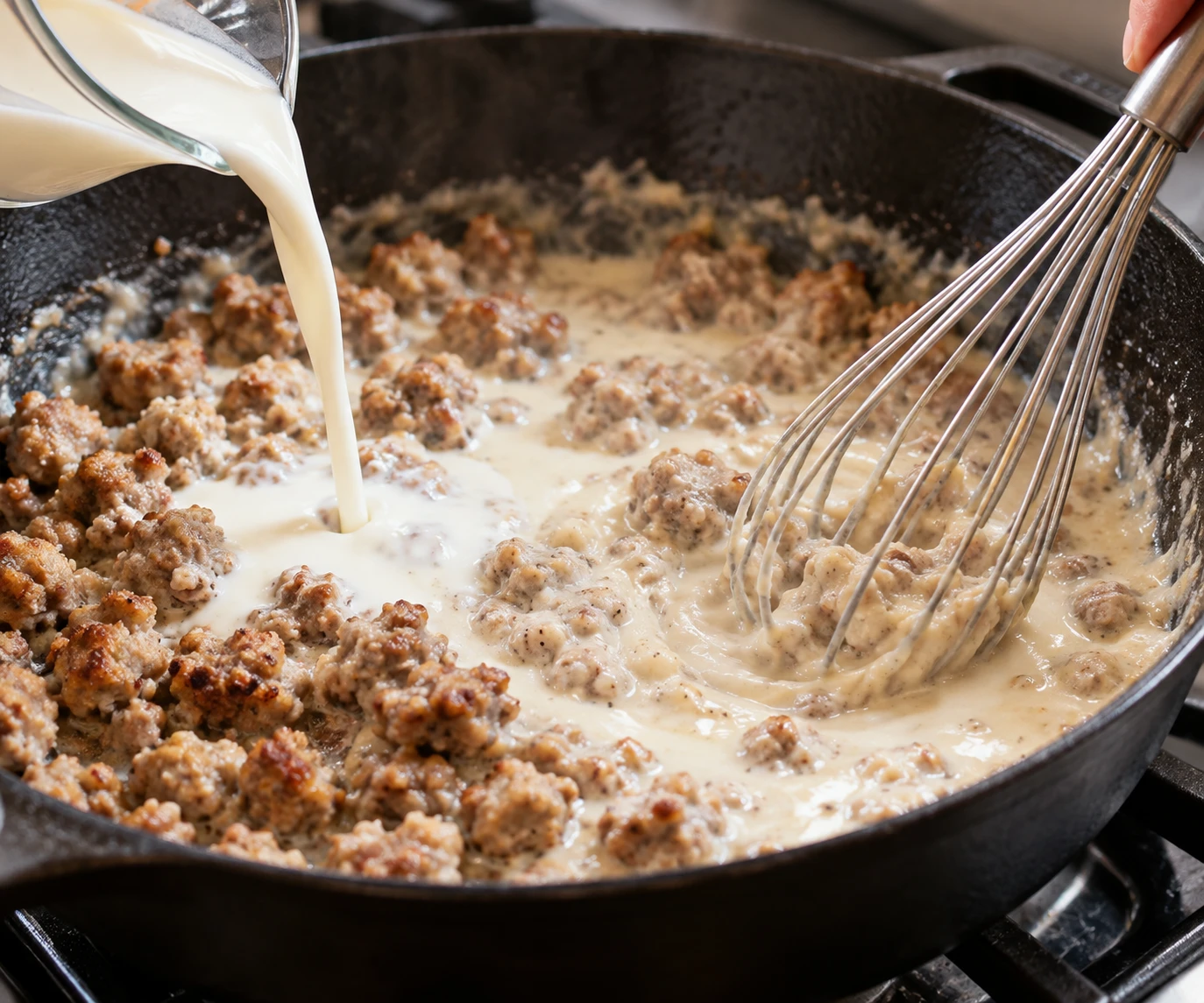
A steady whisk and gradual pours help each addition blend into the roux before more liquid arrives. Scrape across the pan bottom and around the edges, where small flour pockets can otherwise remain.
Let black pepper lead
Freshly ground black pepper gives this gravy its distinct warmth and visible flecks. Taste before adding much salt because seasoned breakfast sausage may already provide plenty.
Adjust the texture gently
If lumps appear, lower the heat and whisk firmly, pressing any stubborn clumps against the skillet with the back of a spoon. If the gravy gets too thick, loosen it with small splashes of the measured milk until it again flows slowly from a spoon.
Serve while spoonable
Take the skillet off the heat once the gravy clings to a spoon but still settles back into the pan. It pairs naturally with biscuits, served separately, or can be spooned alongside another breakfast plate.
Sausage Gravy
Ingredients
- • 1 lb bulk breakfast sausage
- • 3 tbsp all-purpose flour
- • 3 cups whole milk
- • 1 1/2 tsp freshly ground black pepper
- • 1/2 tsp kosher salt
Method
Brown the sausage
Crumble the sausage into a wide, cold skillet, then set it over medium heat and cook for 7 to 9 minutes, breaking it into small pieces as it browns.
Look for: The sausage is browned in spots with no pink centers, and fat has pooled in the skillet.
Leave the rendered fat
Spread the sausage across the skillet and leave about 3 tablespoons of its rendered fat; spoon off any excess so the flour can coat evenly.
Look for: A thin, glossy layer of fat coats the skillet without deep pools.
Cook the flour
Sprinkle the flour evenly over the sausage and fat, then stir constantly for 1 to 2 minutes until no dry patches remain and the mixture smells lightly toasted.
Look for: The sausage is coated in a pale paste, with no raw flour smell or browned roux color.
Whisk in the milk
Pour in the milk gradually while whisking across the bottom and edges of the skillet, loosening the flour paste before each addition so the gravy stays smooth.
Look for: The liquid looks uniform and the whisk leaves no dry flour pockets along the pan bottom.
Simmer until spoonable
Bring the gravy to a gentle simmer, stirring often, and cook for 5 to 8 minutes until it thickens while still flowing easily from a spoon.
Look for: Small bubbles break at the edges and a spoon drawn through the gravy leaves a trail that slowly closes.
Season the gravy
Stir in the black pepper and salt, taste a small spoonful, and adjust only if needed because breakfast sausage can already be salty.
Look for: Black pepper is visible throughout and the gravy tastes savory without becoming overly salty.
Smooth any lumps
If lumps remain, lower the heat and whisk briskly, pressing any stubborn flour clumps against the skillet with the back of a spoon until they dissolve.
Look for: The gravy is creamy and even, with sausage pieces distinct from any flour clumps.
Set the final consistency
If the gravy has become too thick, whisk in a small splash of the measured milk at a time until it is loose but still clings to a spoon; serve warm.
Look for: The gravy settles slowly after stirring and remains spoonable rather than stiff.