" fill="%23faf1da" stroke-width="1.8"/>%0A <ellipse cx="64.5" cy="50" rx="43" ry="12" transform="rotate(4 64.5 50)" stroke="%23938466"/>%0A <path d="m26 44 1 10m3-12 1 14m3-14 1 15m3-14 1 15m4-14 1 14m4-13 1 14m39-10-1 10m5-9-1 8m5-7-1 5" stroke="%23b2a181" stroke-width=".7"/>%0A <path d="M55 60c3-10 12-14 23-10l47-44c7-6 15-6 15-2 0 5-9 11-14 14L82 60c-8 4-21 4-27 0Z" fill="%23bc8c48" stroke-width="1.6"/>%0A <path d="M61 59c3-5 9-8 15-5l-4 7m8-8 49-45 6-4M84 52l45-41" stroke="%2376562e" stroke-width="1"/>%0A <path d="M20 53c18 14 69 19 90 2" stroke="%23514431" stroke-width="2"/>%0A <path d="M27 59c22 11 59 14 78 2" stroke="%23fff9e9" stroke-width="2"/>%0A <path d="m48 87 1 1m7 8 1 1m6-12 1 1m6 12 1 1m6-9 1 1m-24 9 1 1m19 4 1-1m10-16 1 1" stroke="%23aa9b7c"/>%0A </g>%0A</svg>%0A)
Hollandaise
Gentle steam thickens egg yolks into a light sabayon before warm butter turns them into a glossy, ribboning sauce.
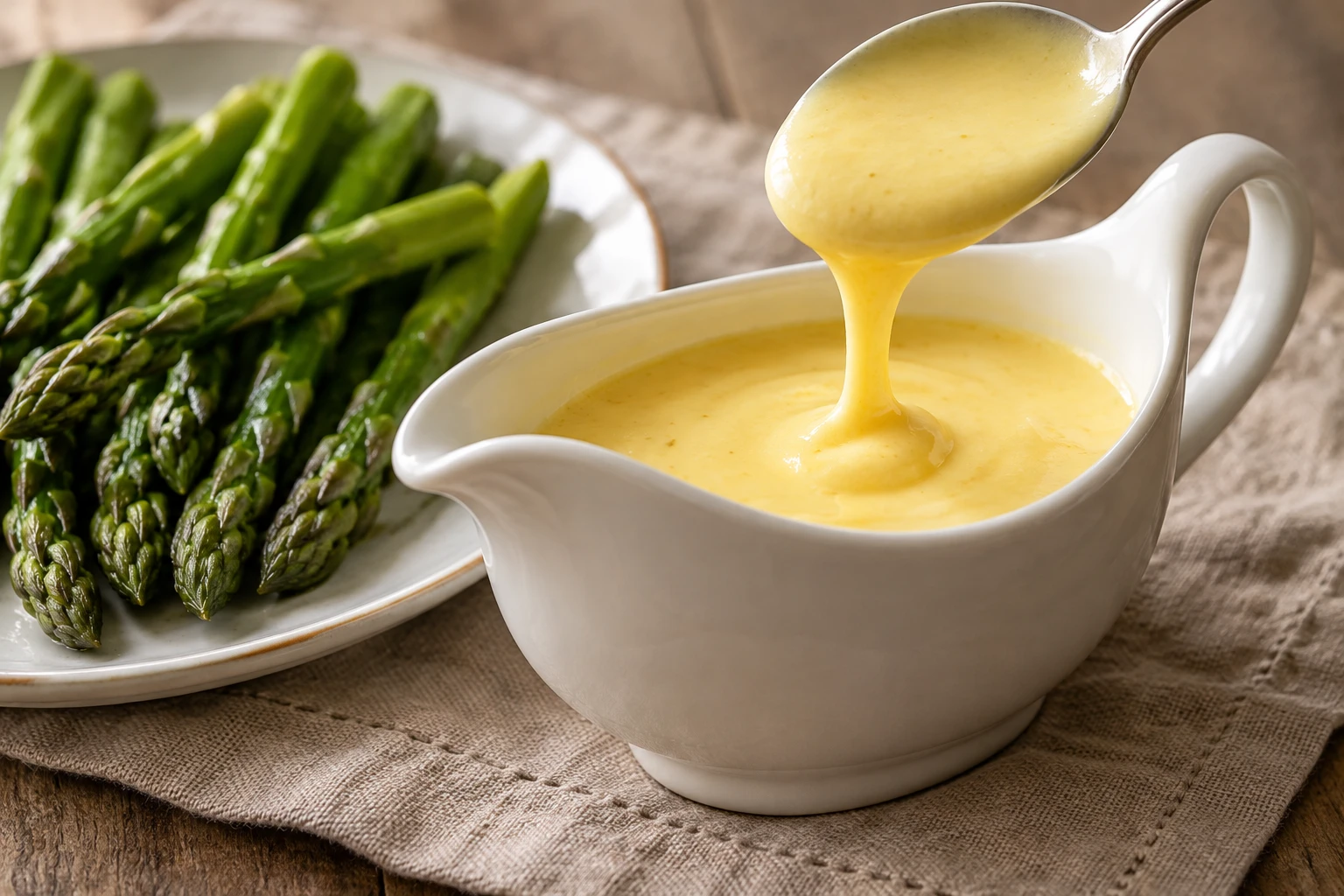
Hollandaise is an emulsion built in two stages: whisk egg yolks with water and lemon over gentle steam, then add butter slowly enough for the base to absorb it.
The visual cue matters more than force. A pale sabayon that falls in soft ribbons gives the butter a stable starting point, while steady whisking keeps the finished sauce cohesive.
Keep the bowl over gentle steam
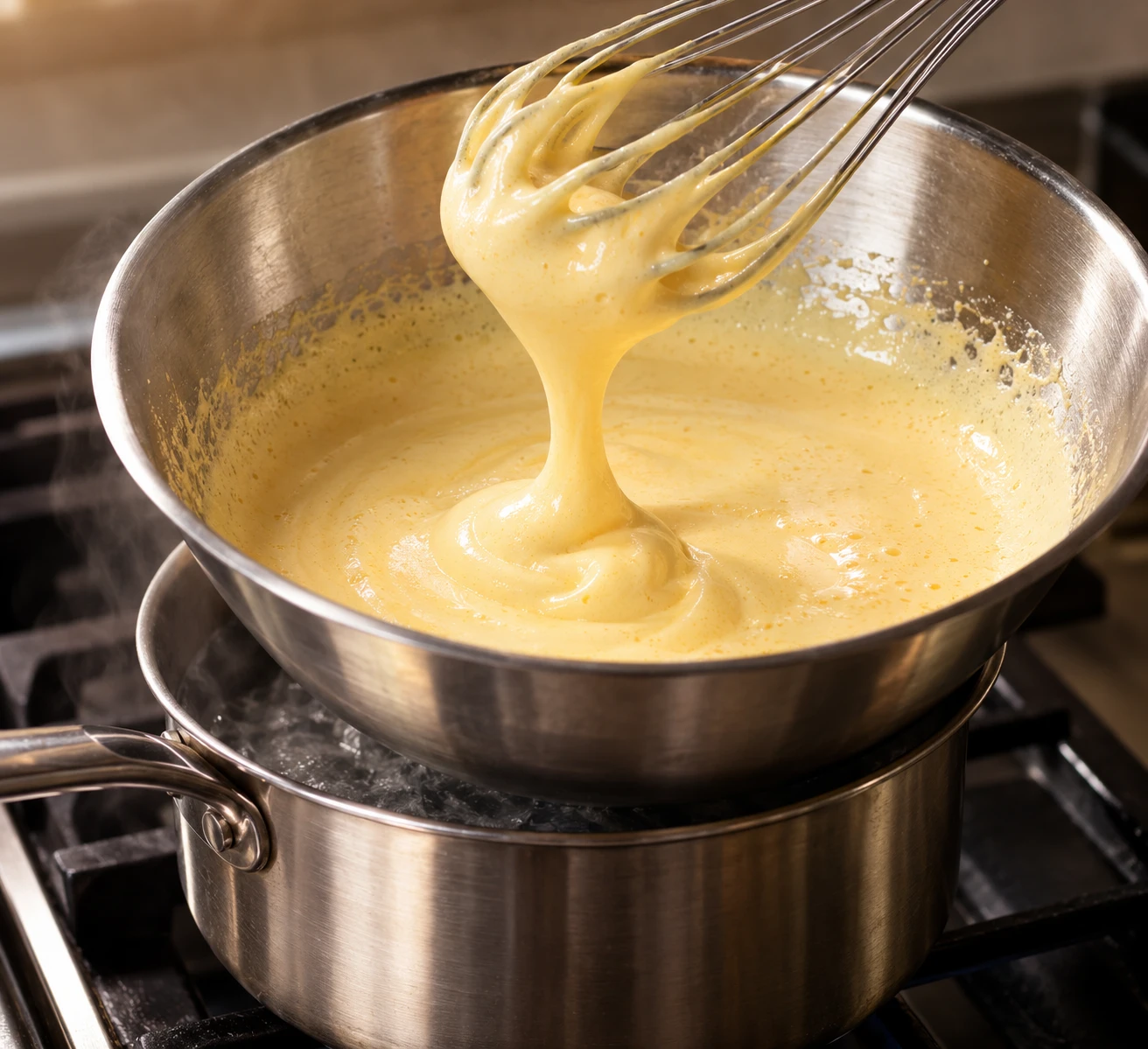
The bowl sits above barely simmering water, with its base clear of the water itself. This indirect heat warms the yolks gradually; if the bowl feels hot, lift it away and continue whisking so the eggs thicken instead of scrambling.
Wait for a light sabayon
Whisk the yolks, water, and lemon until the mixture turns pale, expands, and falls from the whisk in soft ribbons. Those brief trails show that the base has thickened enough to begin taking in butter.
Stream butter into the base
Begin with just a few drops of warm butter at a time, whisking each addition smooth before continuing. Once the sauce thickens and turns glossy, a thin steady stream can be incorporated while the bowl stays off direct heat.
Restore a smooth texture
If the sauce becomes too thick, whisk in warm water a teaspoon at a time until it flows again. If it splits, start with the reserved yolk and warm water in a clean bowl, then whisk in the broken sauce gradually to form a new emulsion.
Hollandaise
Ingredients
- • 4 large pasteurized egg yolks, divided (3 for the sauce base; 1 for a rescue if needed)
- • 2 tbsp water, divided (1 tbsp cold for the sabayon; reserve 1 tbsp for adjustments)
- • 1 tbsp fresh lemon juice
- • 3/4 cup unsalted butter, melted and warm or clarified
- • 1/4 tsp fine salt
- • 1 pinch cayenne pepper (optional)
Method
Warm the butter
Melt the butter gently in a small saucepan over low heat, then keep it warm and fluid without letting it sizzle or brown; clarified butter can be used in the same amount.
Look for: The butter is fluid and warm to the touch, with no browned milk solids or sizzling.
Set up the sabayon
In a heatproof bowl, whisk 3 egg yolks with 1 tbsp cold water and the lemon juice until blended, then set the bowl over a saucepan of barely simmering water without letting its base touch the water.
Look for: The yolks, water, and lemon juice form an even golden mixture before heating.
Whisk to a light sabayon
Whisk constantly over the gentle steam, sweeping the bowl's corners, until the yolks turn pale, increase in volume, and fall from the whisk in soft ribbons; lift the bowl off the pan if it feels hot.
Look for: The mixture is pale and airy, and each ribbon remains visible briefly before settling.
Start the emulsion
Take the bowl off the pan and whisk in the warm butter a few drops at a time at first, waiting for each addition to disappear before adding more; continue until the base looks glossy and slightly thicker.
Look for: The yolk base thickens evenly and has no clear butter pooling around its edge.
Stream in the remaining butter
Whisk continuously while pouring the remaining warm butter in a thin, steady stream; keep the bowl off direct heat, and pause the pour if the sauce begins to look oily before whisking it smooth again.
Look for: The sauce grows smooth and glossy, holds soft whisk trails, and shows no separate butter.
Season and check the texture
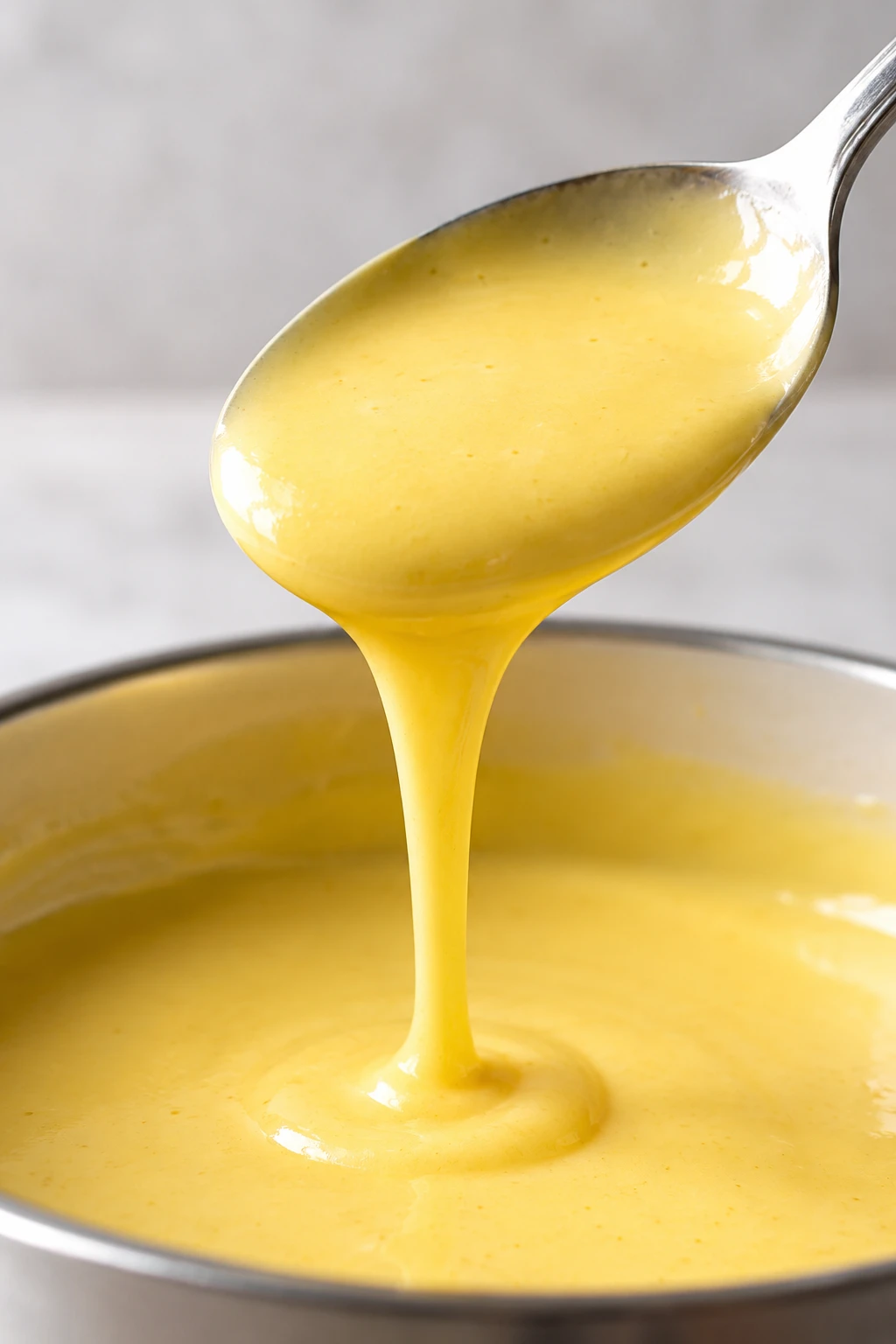
Whisk in the salt and optional cayenne, then taste; the finished sauce should be warm, smooth, and thick enough to coat a spoon while still falling in a ribbon.
Look for: The sauce coats a spoon and falls back in a continuous ribbon without looking greasy.
Rescue a thick or split sauce
If the sauce is too thick, whisk in warm water from the reserved amount a teaspoon at a time. If it splits, whisk the reserved yolk with a teaspoon of warm reserved water in a clean bowl, then slowly whisk the broken sauce into it, a few drops at a time, until smooth.
Look for: A thick sauce loosens without turning watery; a split sauce becomes cohesive with no visible butter beads.
Serve warm
Serve the hollandaise promptly over eggs, fish, or asparagus; if it needs a brief hold, rest the bowl over warm water and whisk occasionally rather than returning it to direct heat.
Look for: The sauce remains fluid and glossy when spooned onto the dish.