" fill="%23faf1da" stroke-width="1.8"/>%0A <ellipse cx="64.5" cy="50" rx="43" ry="12" transform="rotate(4 64.5 50)" stroke="%23938466"/>%0A <path d="m26 44 1 10m3-12 1 14m3-14 1 15m3-14 1 15m4-14 1 14m4-13 1 14m39-10-1 10m5-9-1 8m5-7-1 5" stroke="%23b2a181" stroke-width=".7"/>%0A <path d="M55 60c3-10 12-14 23-10l47-44c7-6 15-6 15-2 0 5-9 11-14 14L82 60c-8 4-21 4-27 0Z" fill="%23bc8c48" stroke-width="1.6"/>%0A <path d="M61 59c3-5 9-8 15-5l-4 7m8-8 49-45 6-4M84 52l45-41" stroke="%2376562e" stroke-width="1"/>%0A <path d="M20 53c18 14 69 19 90 2" stroke="%23514431" stroke-width="2"/>%0A <path d="M27 59c22 11 59 14 78 2" stroke="%23fff9e9" stroke-width="2"/>%0A <path d="m48 87 1 1m7 8 1 1m6-12 1 1m6 12 1 1m6-9 1 1m-24 9 1 1m19 4 1-1m10-16 1 1" stroke="%23aa9b7c"/>%0A </g>%0A</svg>%0A)
Lemon Butter Sauce
A sharp little shallot and wine reduction gives cold butter a flavorful base, while controlled heat keeps the sauce glossy and cohesive.
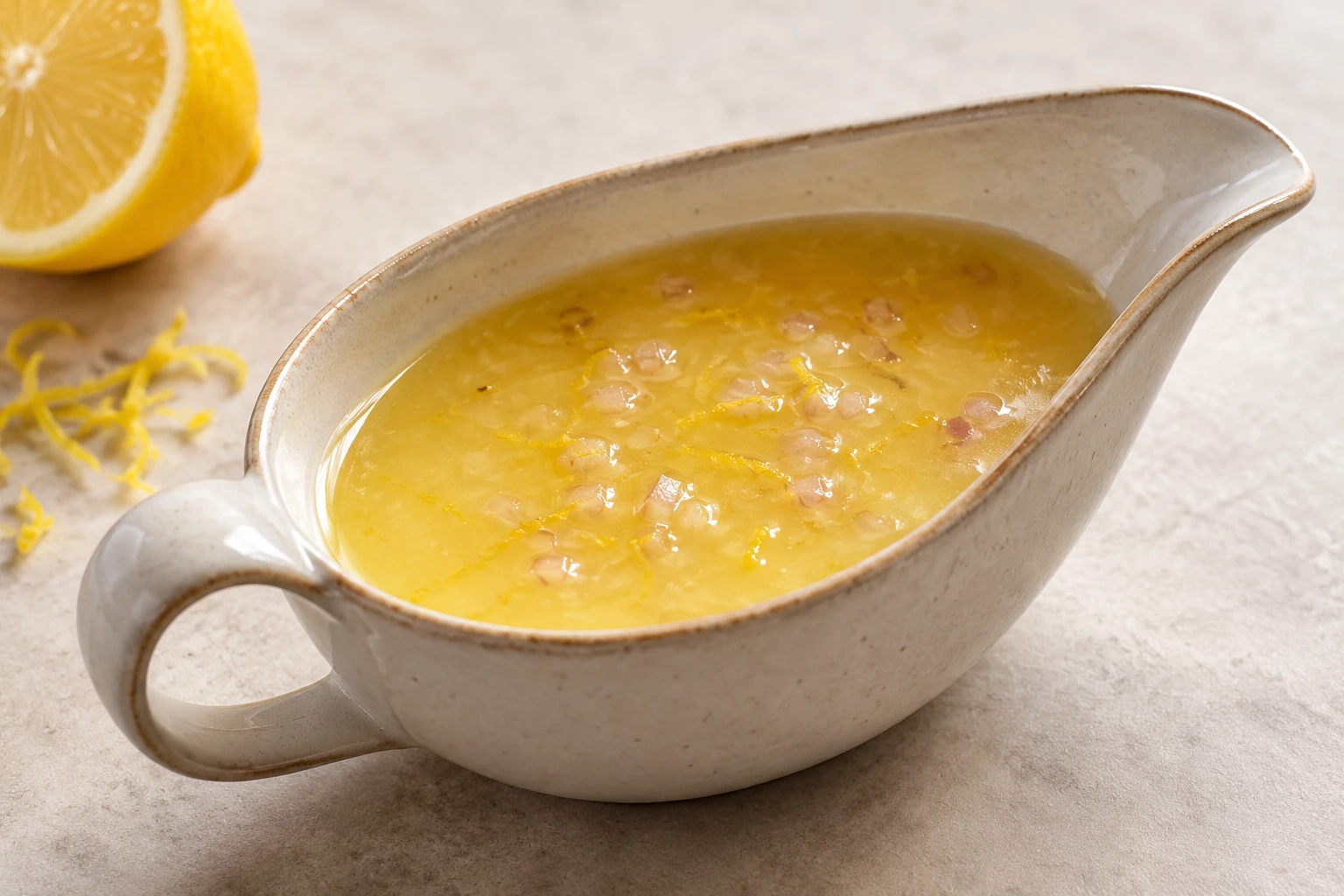
This lemon butter sauce follows the beurre blanc method: build a concentrated acidic base, then whisk cold butter into it gradually. Gentle heat matters more than speed, because the sauce needs enough warmth to melt the butter without letting the fat separate.
Concentrate the aromatics
Shallot, wine, and lemon juice simmer together until only a little liquid remains. This reduction concentrates their flavor and leaves enough acidity to keep the finished butter sauce from tasting flat.
Add butter with patience
Cold cubes melt more predictably than a large piece of butter, and constant whisking disperses each addition before the next goes in. If the base starts bubbling, lifting the pan from the burner gives the emulsion time to catch up.
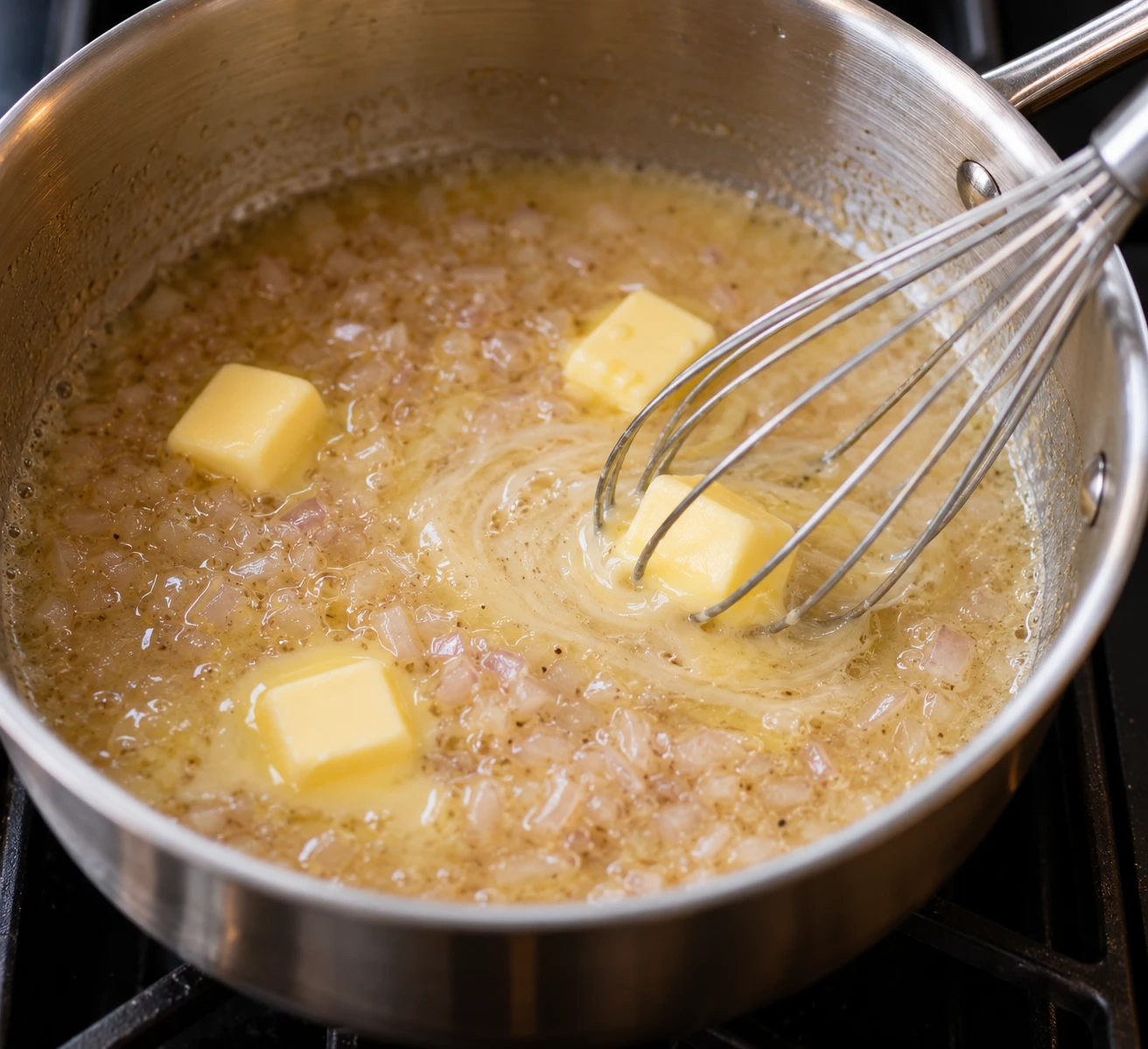
Balance brightness and richness
The lemon belongs in two stages: some cooks into the reduction, while a small finishing addition can sharpen the sauce after the butter is incorporated. Taste before adding more, since the goal is a bright finish that still lets the butter lead.
Bring a broken emulsion back
A greasy sheen usually means the sauce became too hot or the butter went in faster than it could disperse. Take the pan off heat and whisk in cold water a teaspoon at a time; the small splash helps the separated fat gather back into a creamy sauce.
Keep the pairing flexible
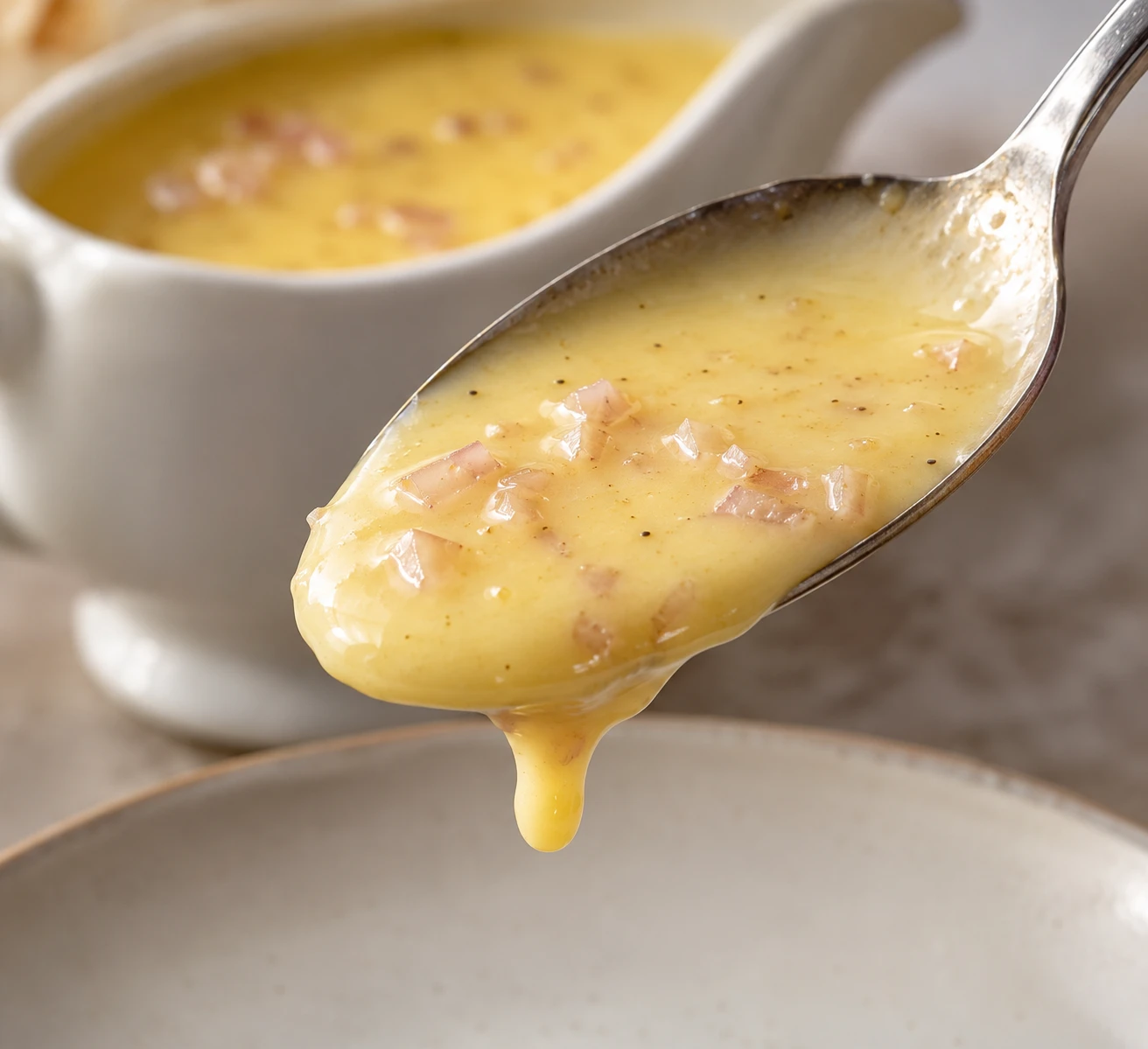
Serve the sauce warm and soon after it is made, when its texture is smooth and easy to spoon. Fish and vegetables are natural partners, though the sauce can also be passed separately so each diner chooses how much to use.
Lemon Butter Sauce
Ingredients
- • 1 small shallot, finely minced
- • 1/2 cup dry white wine
- • 1 tbsp fresh lemon juice, plus up to 1 tsp to finish
- • 8 oz unsalted butter, cold and cut into small cubes
- • 1/2 tsp kosher salt
- • 1/8 tsp white pepper
- • 1 tbsp cold water, for rescuing the emulsion
Method
Prepare the ingredients
Mince the shallot finely and cut the cold butter into small, even cubes so it melts gradually as you whisk.
Look for: The butter cubes are small enough to incorporate quickly without warming on the counter.
Reduce the aromatics
Combine the shallot, white wine, and lemon juice in a small saucepan; simmer over medium heat until about 2 tablespoons of liquid remain and the shallot is soft.
Look for: The pan holds only a shallow spoonful or two of liquid, and the sharp wine aroma has mellowed.
Start the emulsion
Lower the heat to low and whisk in a few butter cubes at a time; lift the pan off the burner whenever the liquid begins to bubble.
Look for: The first butter additions turn the reduction pale and creamy rather than oily.
Whisk in the butter
Continue adding the remaining butter gradually, whisking constantly and returning the pan to low heat only as needed; keep the sauce warm but never simmering.
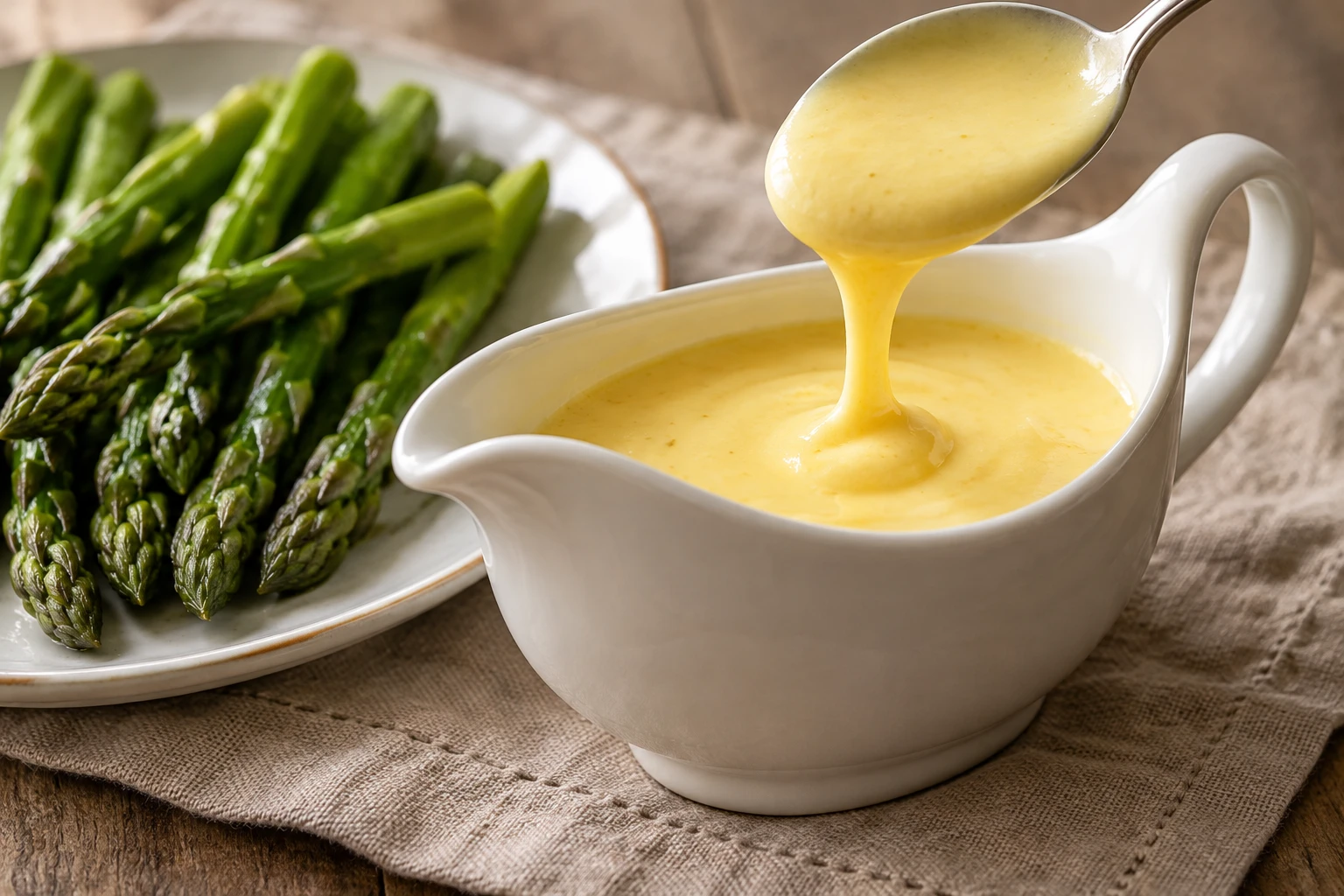
Look for: The sauce thickens into a glossy, even coat on the whisk with no separated butterfat.
Check the consistency
Remove the saucepan from the heat and whisk for a few seconds; the finished sauce should flow in a smooth ribbon while still clinging lightly to a spoon.
Look for: A spoon drawn through the sauce leaves a brief trail that slowly closes.
Balance the flavor
Whisk in the salt and white pepper, then taste; if the butter feels heavy, add the reserved lemon juice a little at a time until the finish tastes bright but rounded.
Look for: The lemon is noticeable at the finish without masking the mellow shallot and butter.
Rescue a broken sauce
If butterfat separates, take the pan fully off the heat and whisk in cold water 1 teaspoon at a time, up to the listed tablespoon, until the sauce turns creamy again.
Look for: The oily sheen disappears and the sauce becomes uniform as the water is whisked in.
Serve while warm
Serve the sauce promptly while it is warm and emulsified; spoon it over fish or vegetables if desired, or pass it separately at the table.
Look for: The sauce remains glossy and pourable when it reaches the table.