" fill="%23faf1da" stroke-width="1.8"/>%0A <ellipse cx="64.5" cy="50" rx="43" ry="12" transform="rotate(4 64.5 50)" stroke="%23938466"/>%0A <path d="m26 44 1 10m3-12 1 14m3-14 1 15m3-14 1 15m4-14 1 14m4-13 1 14m39-10-1 10m5-9-1 8m5-7-1 5" stroke="%23b2a181" stroke-width=".7"/>%0A <path d="M55 60c3-10 12-14 23-10l47-44c7-6 15-6 15-2 0 5-9 11-14 14L82 60c-8 4-21 4-27 0Z" fill="%23bc8c48" stroke-width="1.6"/>%0A <path d="M61 59c3-5 9-8 15-5l-4 7m8-8 49-45 6-4M84 52l45-41" stroke="%2376562e" stroke-width="1"/>%0A <path d="M20 53c18 14 69 19 90 2" stroke="%23514431" stroke-width="2"/>%0A <path d="M27 59c22 11 59 14 78 2" stroke="%23fff9e9" stroke-width="2"/>%0A <path d="m48 87 1 1m7 8 1 1m6-12 1 1m6 12 1 1m6-9 1 1m-24 9 1 1m19 4 1-1m10-16 1 1" stroke="%23aa9b7c"/>%0A </g>%0A</svg>%0A)
Enchilada Roja Sauce
Briefly toasted dried chiles turn into a smooth, aromatic sauce after soaking, blending, and a patient simmer with stock.
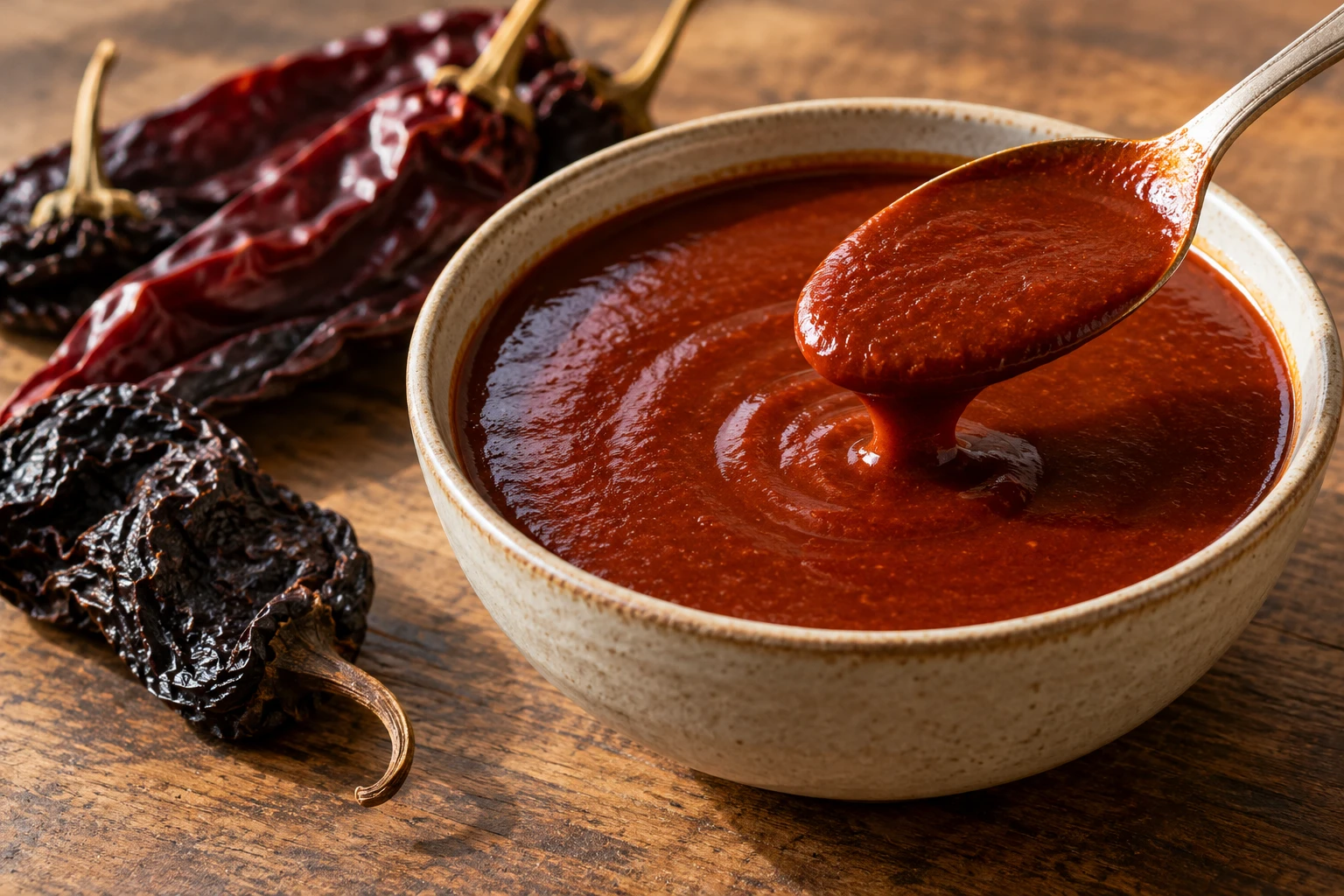
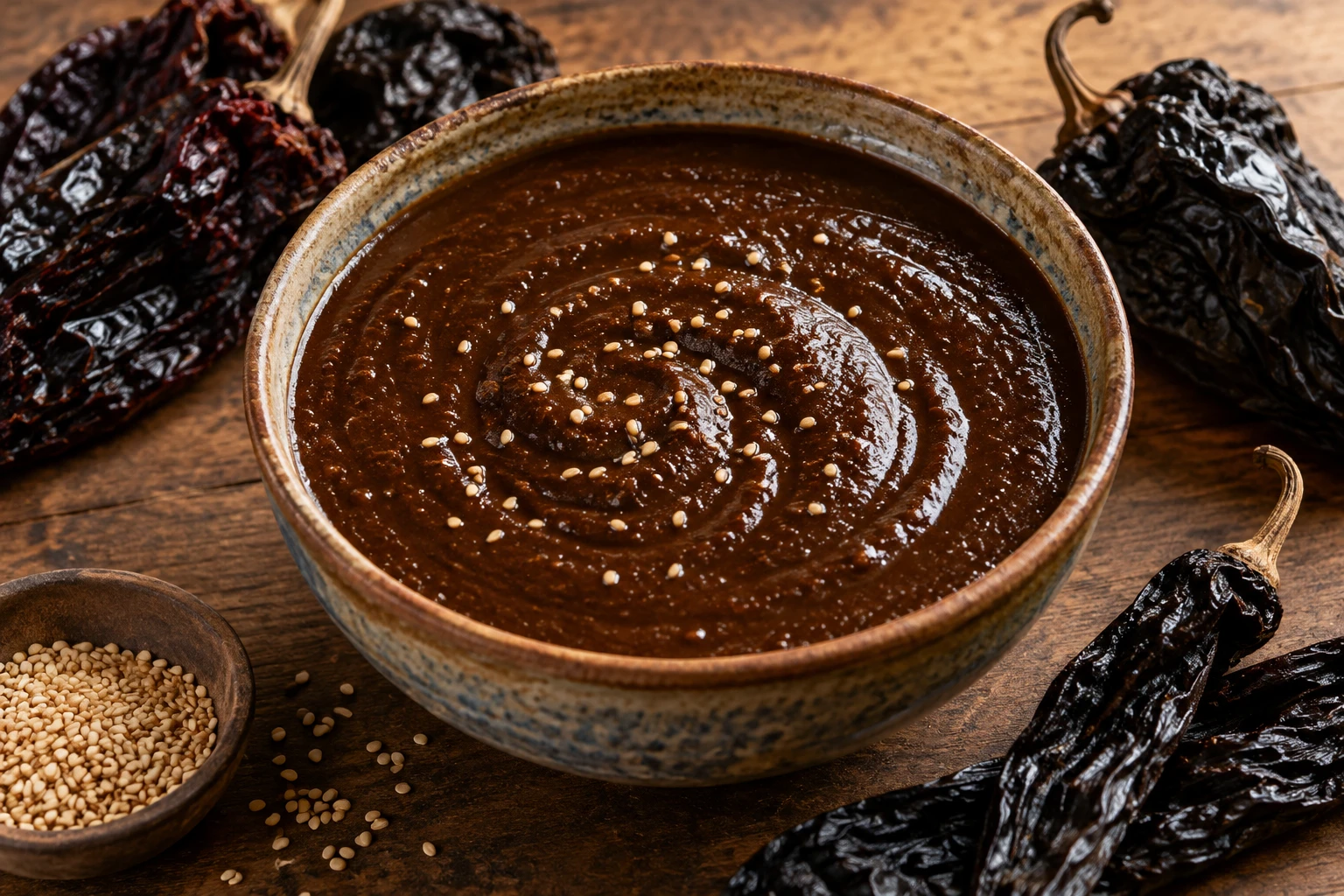
This standalone chile sauce layers the bright fruitiness of guajillo with the deeper, raisin-like character of ancho. A careful toast and an even simmer build flavor without letting the dried chiles turn bitter.
Build flavor from dried chiles
Guajillo chiles bring a clean, gently fruity base, while ancho chiles add a darker, rounded note. Their skins need enough heat to release aroma and enough moisture to soften, so the sauce starts with a brief toast followed by a covered soak.
Toast just until fragrant
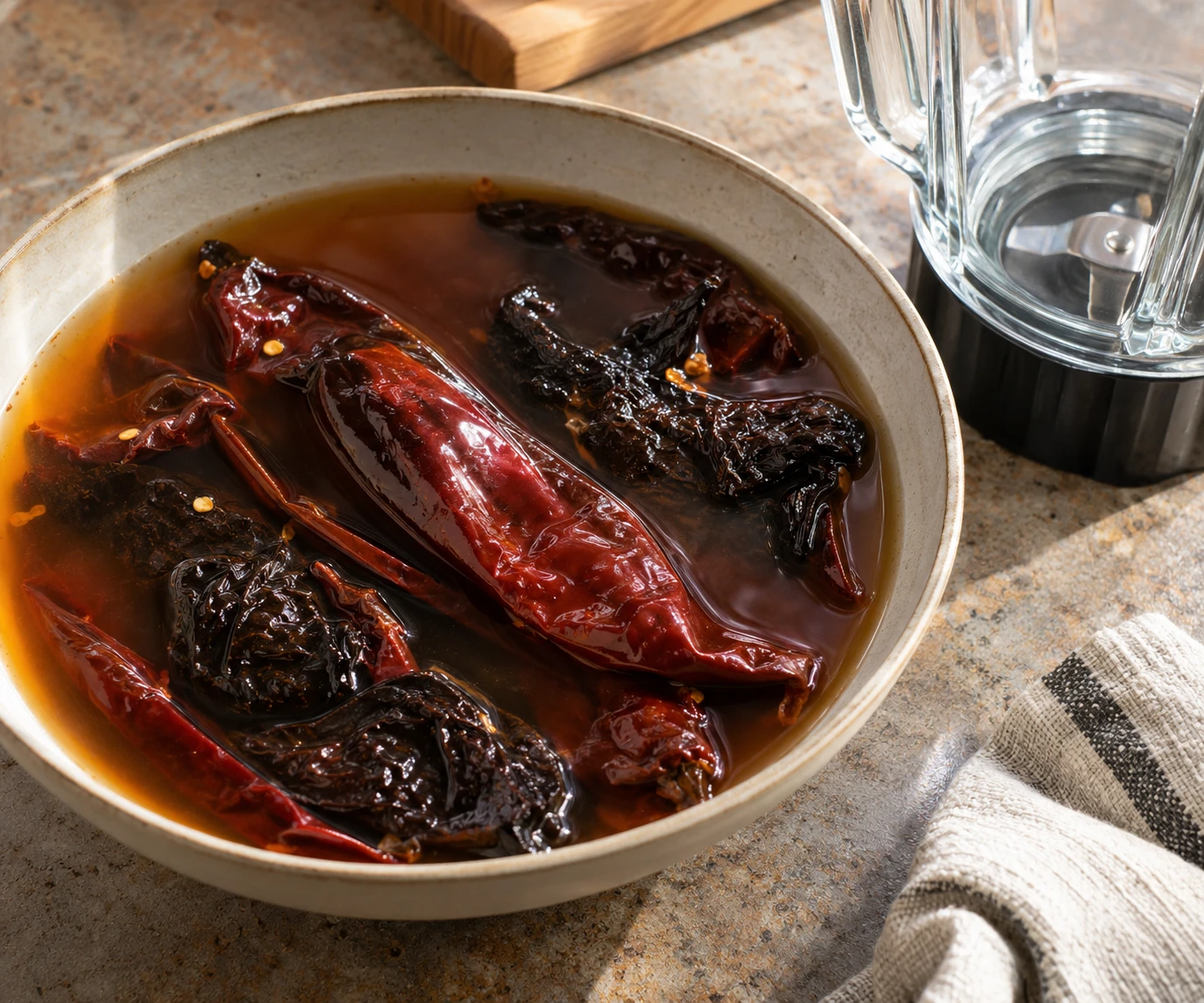
Keep the skillet at medium-low and move quickly: dried chiles toast in moments, and blackened patches turn the finished sauce bitter. Remove each pod as soon as its fragrance blooms, then cover it with hot stock until it bends easily.
Blend smooth, then simmer
Blend the softened chiles with garlic and spices until the puree looks glossy and uniform. Straining is useful when flecks of skin remain; otherwise, the puree can go straight into a pan with gently softened onion.
Adjust texture, heat, and acidity
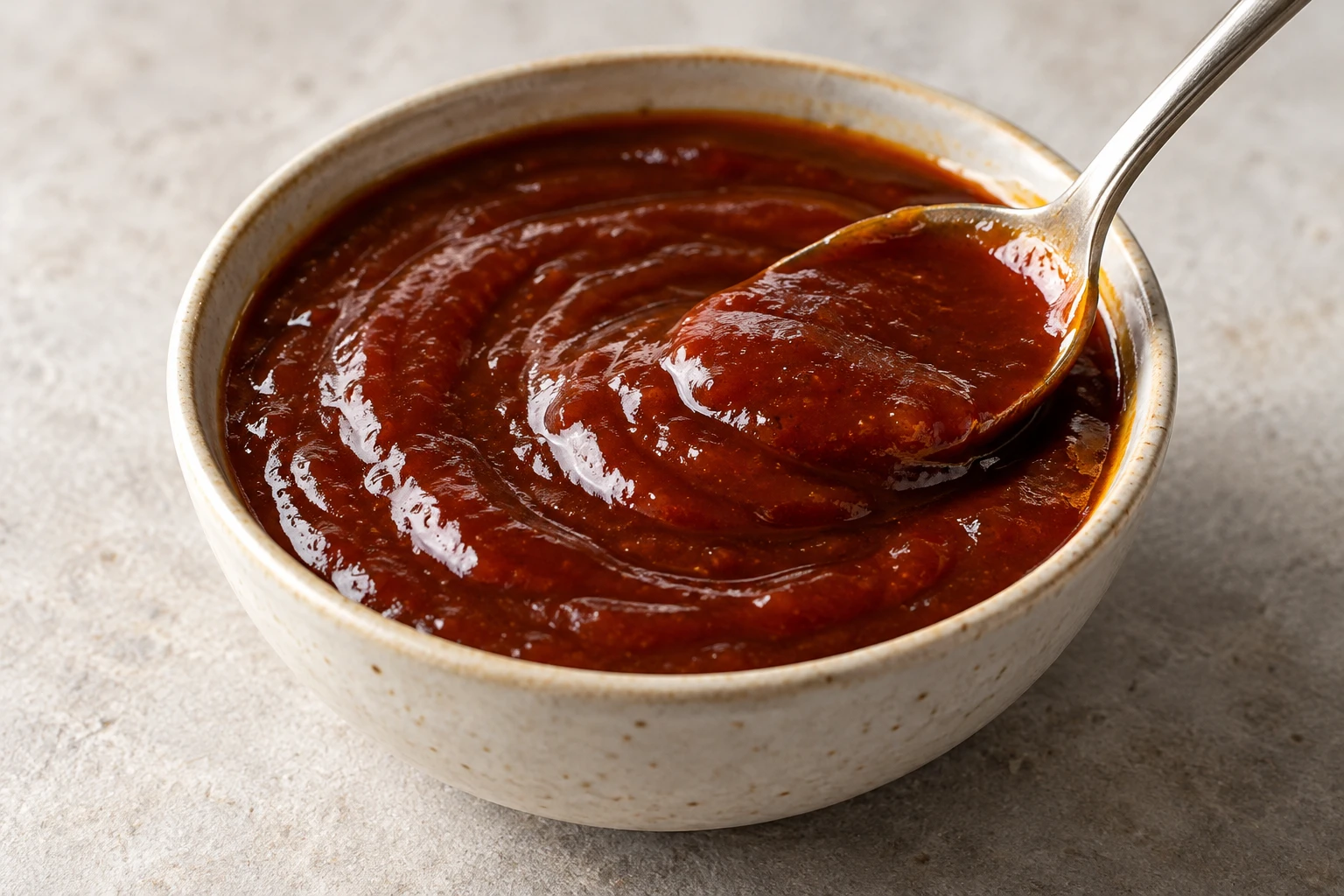
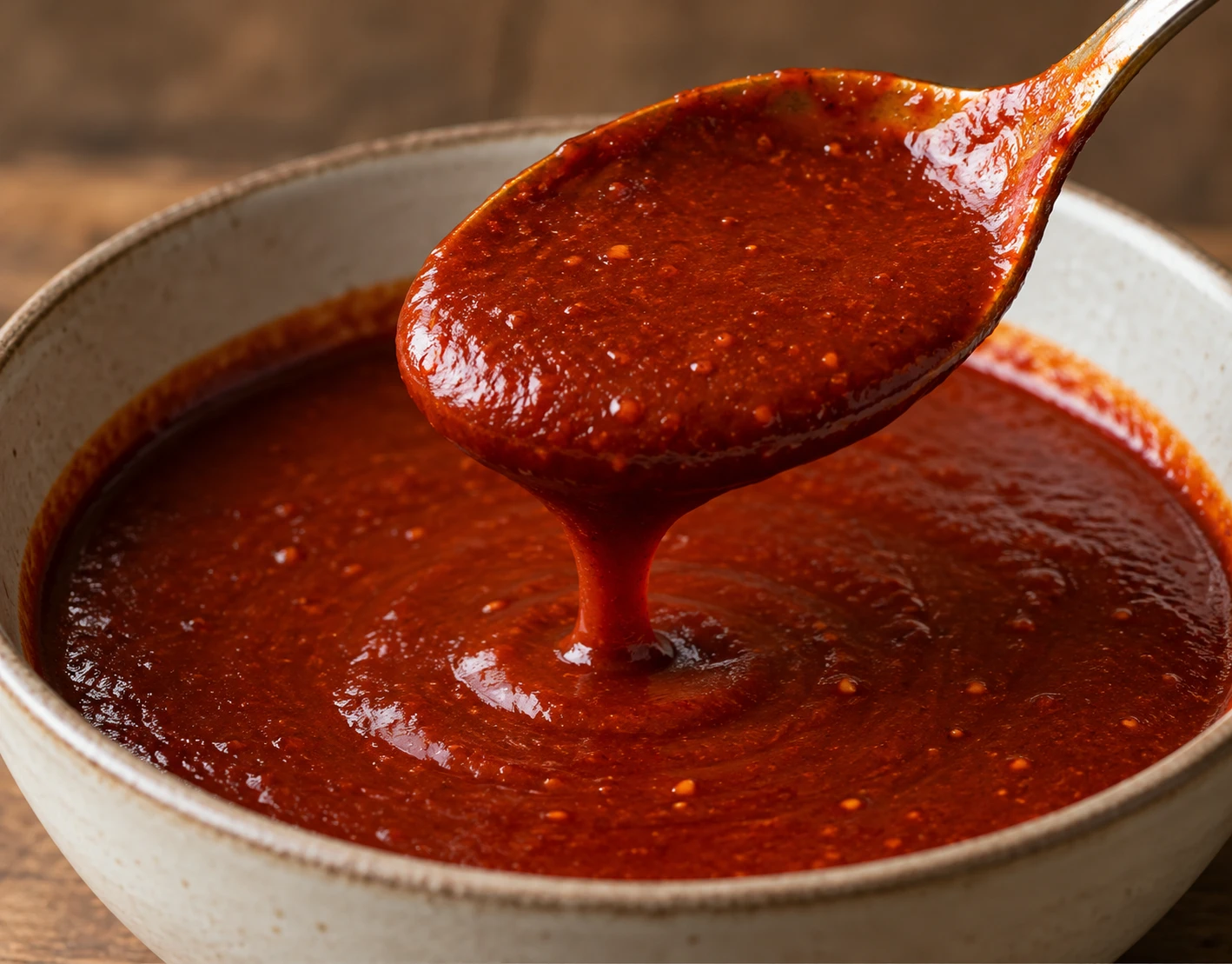
A low simmer cooks away the raw edge and lets the sauce thicken enough to coat a spoon. Omit the árbol for a gentler sauce, add it before blending for more heat, and use a little vinegar to sharpen a flat-tasting batch or stock to loosen one that is too thick.
Enchilada Roja Sauce
Ingredients
- • 4 dried guajillo chiles, stemmed and seeded
- • 2 dried ancho chiles, stemmed and seeded
- • 1 dried chile de árbol, optional
- • 2 1/2 cups low-sodium chicken stock, divided
- • 1 tbsp neutral oil
- • 1/2 medium white onion, finely chopped
- • 2 garlic cloves, peeled
- • 1/2 tsp ground cumin
- • 1 tsp dried Mexican oregano, crushed
- • 3/4 tsp kosher salt
- • 1 tbsp apple cider vinegar, plus more to taste
Method
Prepare the chiles
Snip the stems from the guajillo and ancho chiles, slit them open, and shake out the seeds; leave the optional chile de árbol whole for a hotter sauce.
Look for: The guajillo and ancho pods lie flat and no loose seeds remain inside.
Toast without scorching
Heat a dry skillet over medium-low heat and toast the guajillo and ancho chiles in a single layer for a few seconds per side, pressing gently until fragrant and pliable; toast the árbol too if using it, and remove any chile as soon as it smells aromatic.
Look for: The chiles smell fruity and feel slightly more pliable, with no black spots or acrid smoke.
Soften in hot stock
Warm 2 cups of the chicken stock until steaming, pour it over the toasted chiles in a heatproof bowl, and cover for 15 minutes until the skins bend easily; reserve the remaining 1/2 cup stock for blending and simmering.
Look for: The chiles are fully submerged and bend without cracking after soaking.
Blend until velvety
Transfer the softened chiles, garlic, cumin, Mexican oregano, salt, and 1 cup of their soaking stock to a blender; add the optional árbol for extra heat and blend until the puree looks glossy and uniformly smooth.
Look for: The puree flows in a continuous ribbon and no chile skin flecks are visible.
Strain if needed
For a silkier sauce, press the chile puree through a fine-mesh sieve into a bowl with a spatula, scraping the underside; if it is already smooth, keep it unstrained.
Look for: The strained puree is smooth, with only dry skin and seed fragments left in the sieve.
Soften the onion
Set a saucepan over medium heat, warm the neutral oil, and cook the chopped white onion for about 5 minutes, stirring, until translucent and sweet-smelling rather than browned.
Look for: The onion is soft and translucent but has not developed browned edges.
Cook the sauce
Pour the chile puree into the onion saucepan and stir carefully until it darkens slightly and smells cooked; add the remaining stock as needed, then simmer gently for 12 minutes, stirring often to prevent splattering.
Look for: The sauce has lost its raw garlic-and-chile smell and coats a spoon without clumping.
Balance and adjust
Stir in the apple cider vinegar and taste; add a little more vinegar if the chile flavor feels flat, or loosen with reserved stock if too thick, and omit the árbol for a milder batch or include it for more heat.
Look for: The sauce tastes rounded and vivid, pours slowly, and has the heat level chosen before blending.