" fill="%23faf1da" stroke-width="1.8"/>%0A <ellipse cx="64.5" cy="50" rx="43" ry="12" transform="rotate(4 64.5 50)" stroke="%23938466"/>%0A <path d="m26 44 1 10m3-12 1 14m3-14 1 15m3-14 1 15m4-14 1 14m4-13 1 14m39-10-1 10m5-9-1 8m5-7-1 5" stroke="%23b2a181" stroke-width=".7"/>%0A <path d="M55 60c3-10 12-14 23-10l47-44c7-6 15-6 15-2 0 5-9 11-14 14L82 60c-8 4-21 4-27 0Z" fill="%23bc8c48" stroke-width="1.6"/>%0A <path d="M61 59c3-5 9-8 15-5l-4 7m8-8 49-45 6-4M84 52l45-41" stroke="%2376562e" stroke-width="1"/>%0A <path d="M20 53c18 14 69 19 90 2" stroke="%23514431" stroke-width="2"/>%0A <path d="M27 59c22 11 59 14 78 2" stroke="%23fff9e9" stroke-width="2"/>%0A <path d="m48 87 1 1m7 8 1 1m6-12 1 1m6 12 1 1m6-9 1 1m-24 9 1 1m19 4 1-1m10-16 1 1" stroke="%23aa9b7c"/>%0A </g>%0A</svg>%0A)
Dill Mustard Sauce
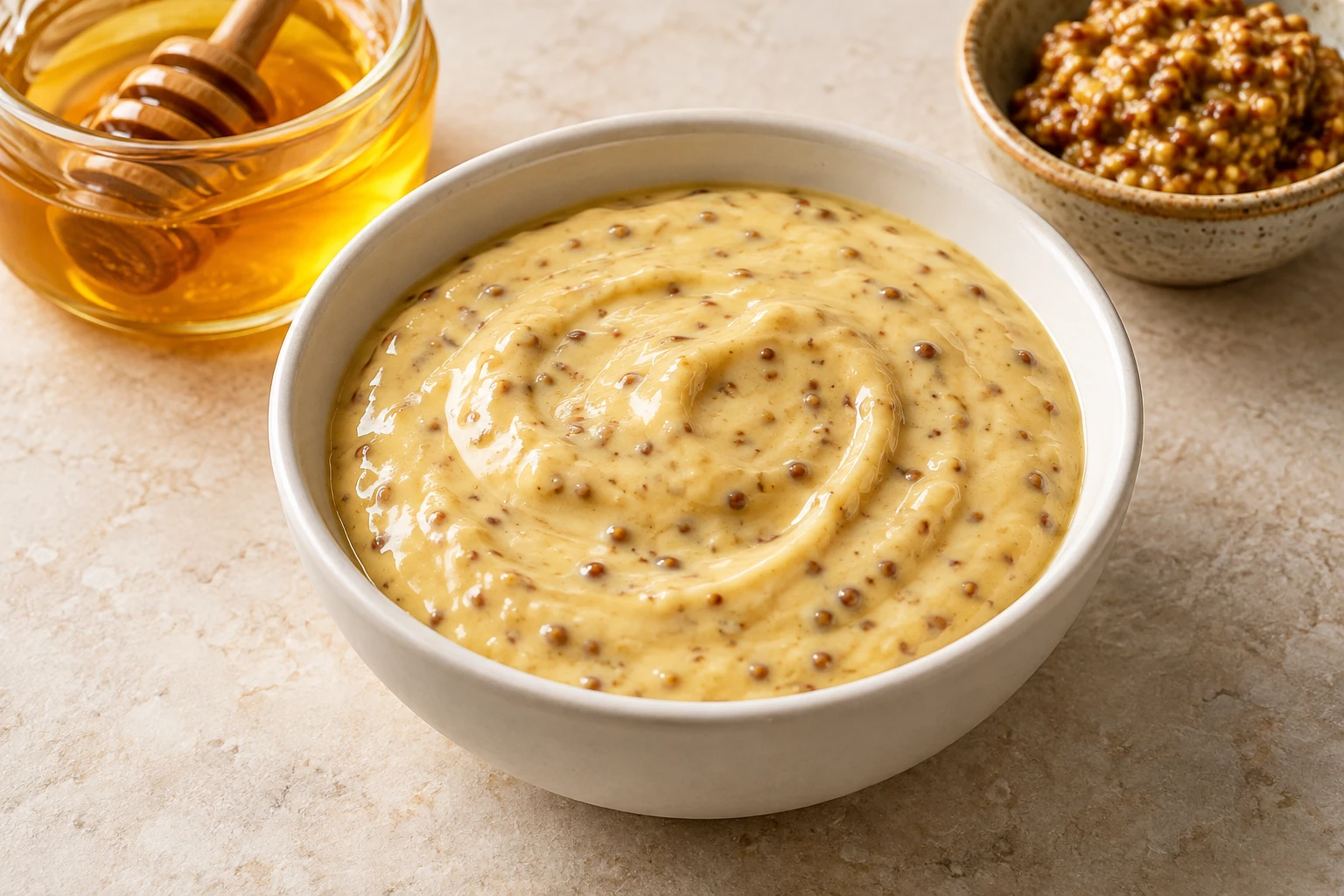
Dijon, whole-grain mustard, fresh dill, honey, and vinegar become a light emulsion with a bright, balanced finish.
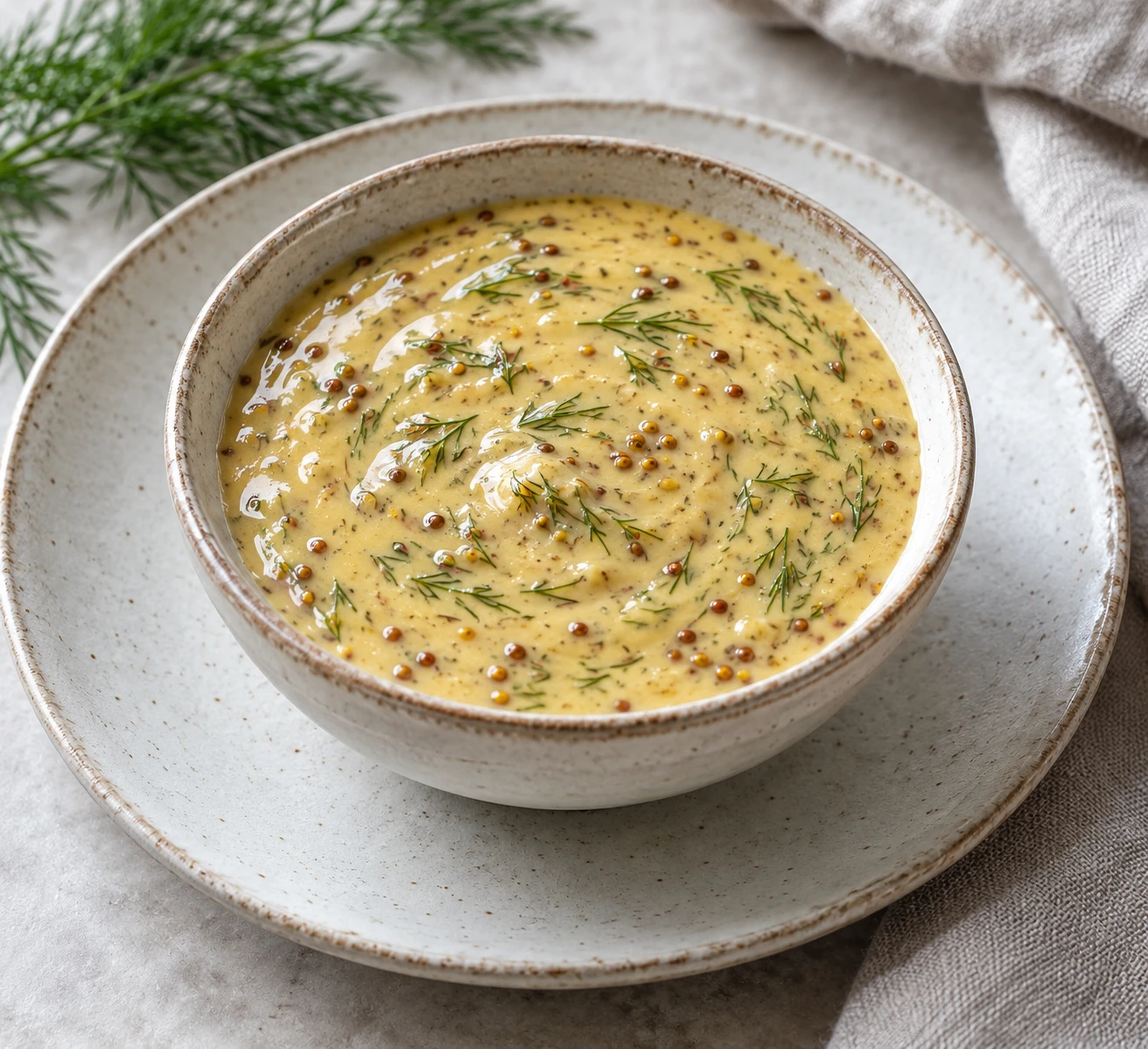
This Scandinavian-inspired sauce is built around mustard's natural sharpness and structure. A gradual addition of neutral oil softens its bite while fresh dill and a short chill keep the flavor lively.
Start with a balanced base
Dijon supplies a smooth, assertive mustard flavor, while whole-grain mustard adds texture. Whisking them with vinegar and honey first gives the oil a stable, evenly seasoned base to join.
Add the oil patiently
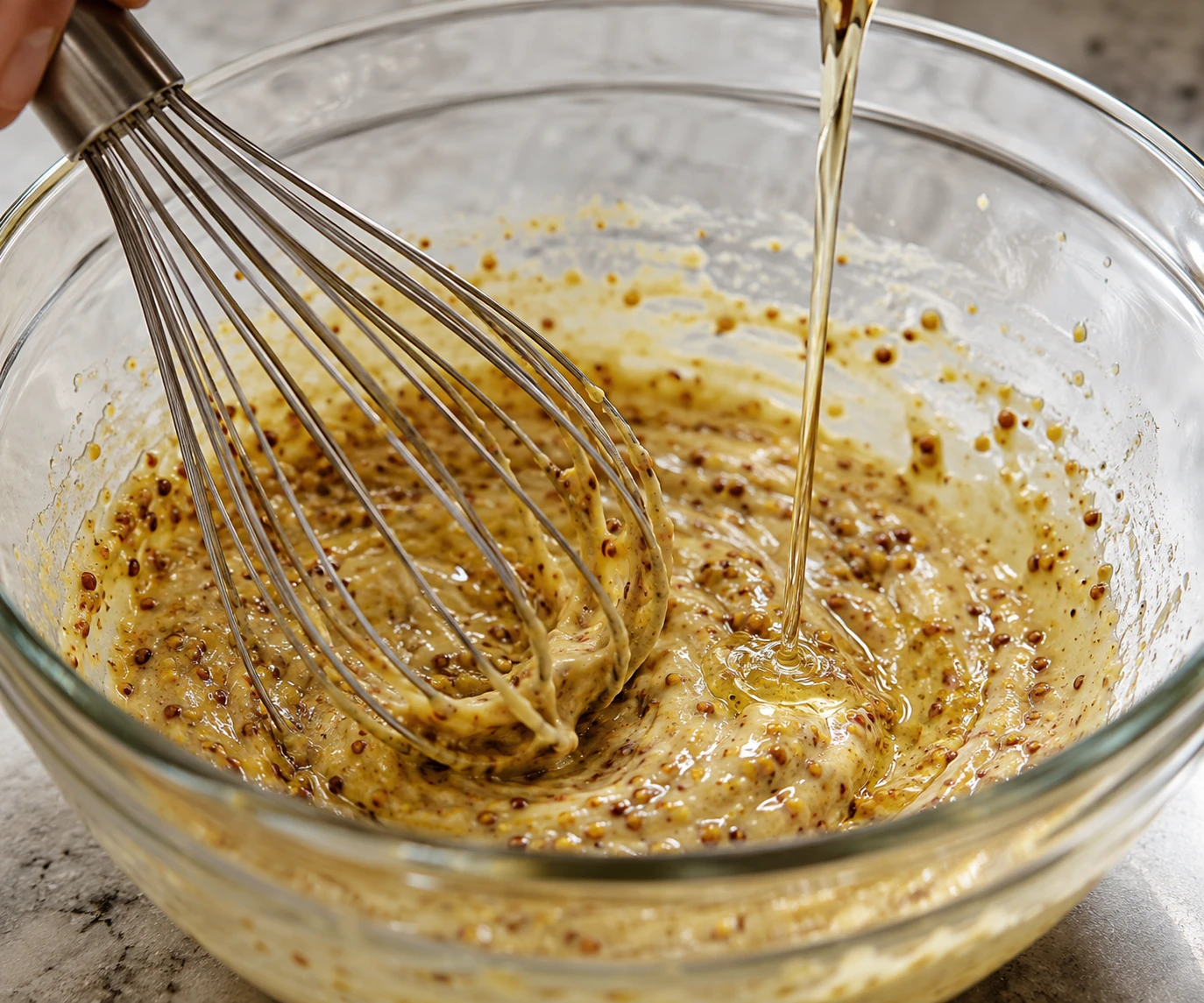
Begin with drops of oil while whisking without pause, then move to a narrow stream once the mixture starts to thicken. If a ring of oil appears, stop pouring and whisk until it disappears before continuing.
Keep the dill fresh
Stir the chopped dill in after the emulsion forms so its green flecks and clean aroma stay distinct. A brief chill lets the herbs mingle with the mustard without requiring a long rest.
Adjust the finish
Mustard brands vary in strength, so taste once the dill is added. A little honey rounds a sharp finish, while a few drops of vinegar lift a sauce that tastes too rich.
Serve it cool
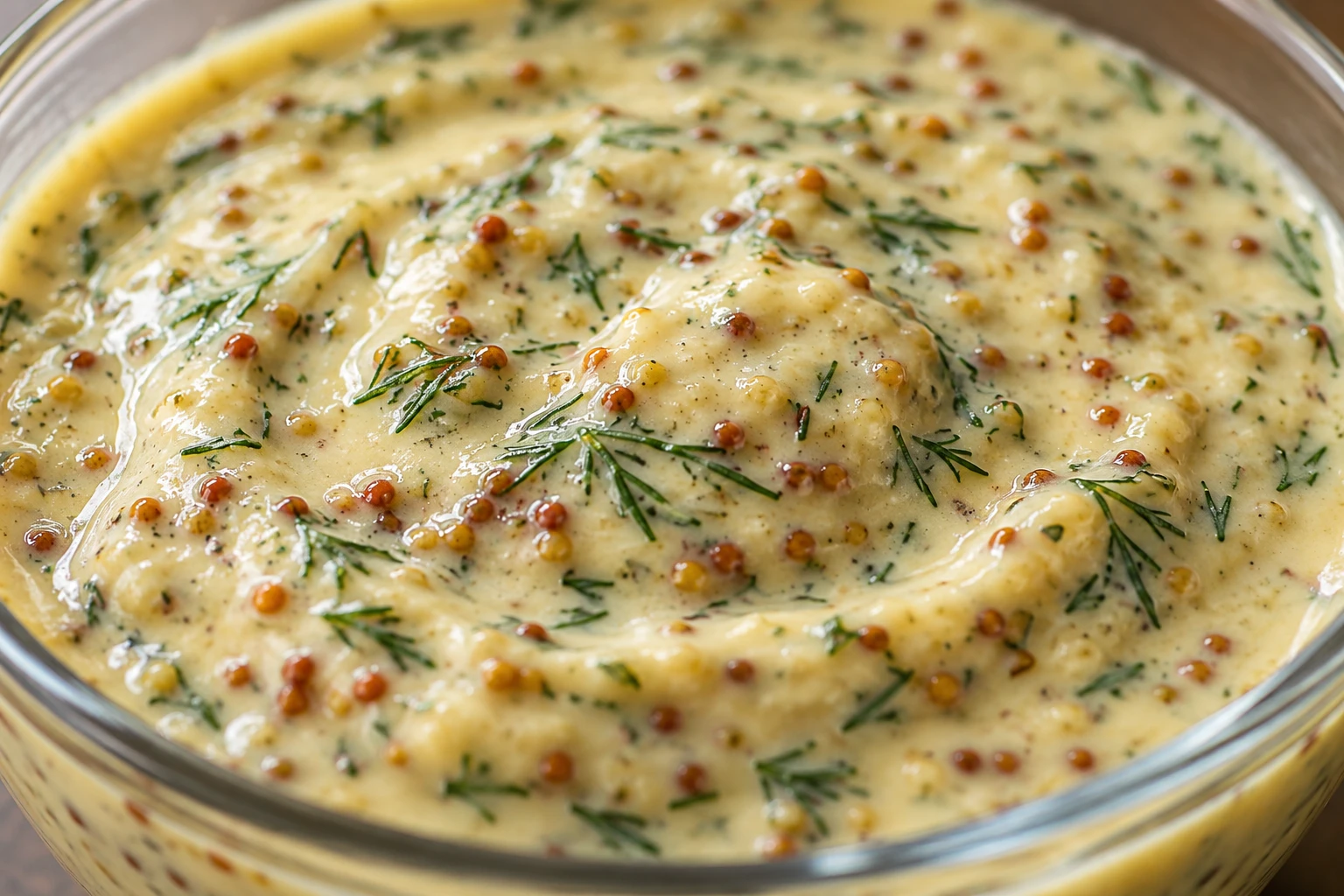
The sauce can accompany cured fish or boiled potatoes, though it also works as a standalone table condiment. Keep it cool and stir gently before serving if it has rested in the refrigerator.
Dill Mustard Sauce
Ingredients
- • 1/4 cup Dijon mustard
- • 2 tbsp whole-grain mustard
- • 1 tbsp white wine vinegar
- • 2 tsp honey
- • 1/4 cup neutral oil, such as grapeseed or canola
- • 1 tbsp finely chopped fresh dill
- • 1/8 tsp fine salt
- • 1/8 tsp freshly ground black pepper
Method
Prepare the dill
Finely chop the dill and measure the remaining ingredients before mixing so the oil can be added in a steady, controlled stream.
Look for: The dill is cut into small pieces without being crushed into a paste.
Build the mustard base
In a medium bowl, whisk the Dijon, whole-grain mustard, white wine vinegar, honey, and salt until the honey dissolves and the mixture looks even.
Look for: The base is glossy and no streaks of honey remain.
Start the emulsion
Whisk continuously and add the neutral oil a few drops at a time for the first teaspoon, giving the mustard base time to absorb each addition before adding more.
Look for: The mixture thickens slightly and no oil droplets sit on its surface.
Stream in the remaining oil
Keep whisking and pour in the remaining oil in a very thin, steady stream; slow the pour if a glossy oil ring begins to form around the bowl.
Look for: The sauce becomes creamy and lightly thickened, with no separated oil at the edge.
Finish with dill and pepper
Fold in the chopped dill and black pepper with a spoon, scraping the bowl so the herbs are distributed without losing the emulsion's body.
Look for: Green flecks are distributed throughout the pale gold sauce.
Balance the flavor
Taste the sauce; if the mustard bite feels sharp, whisk in a small drizzle of honey, or if it tastes heavy, whisk in a few drops of vinegar, tasting after each adjustment.
Look for: The finish is bright and herb-forward, with sweetness rounding but not masking the mustard.
Let the flavors settle
Cover and refrigerate the sauce for 10 minutes, then stir gently and serve chilled or cool alongside cured fish or boiled potatoes if desired.
Look for: The dill aroma is fresh and the sauce remains evenly emulsified after chilling.