" fill="%23faf1da" stroke-width="1.8"/>%0A <ellipse cx="64.5" cy="50" rx="43" ry="12" transform="rotate(4 64.5 50)" stroke="%23938466"/>%0A <path d="m26 44 1 10m3-12 1 14m3-14 1 15m3-14 1 15m4-14 1 14m4-13 1 14m39-10-1 10m5-9-1 8m5-7-1 5" stroke="%23b2a181" stroke-width=".7"/>%0A <path d="M55 60c3-10 12-14 23-10l47-44c7-6 15-6 15-2 0 5-9 11-14 14L82 60c-8 4-21 4-27 0Z" fill="%23bc8c48" stroke-width="1.6"/>%0A <path d="M61 59c3-5 9-8 15-5l-4 7m8-8 49-45 6-4M84 52l45-41" stroke="%2376562e" stroke-width="1"/>%0A <path d="M20 53c18 14 69 19 90 2" stroke="%23514431" stroke-width="2"/>%0A <path d="M27 59c22 11 59 14 78 2" stroke="%23fff9e9" stroke-width="2"/>%0A <path d="m48 87 1 1m7 8 1 1m6-12 1 1m6 12 1 1m6-9 1 1m-24 9 1 1m19 4 1-1m10-16 1 1" stroke="%23aa9b7c"/>%0A </g>%0A</svg>%0A)
Balsamic Reduction
A slow, controlled simmer turns good balsamic vinegar into a glossy reduction, with careful cooling and tasting guiding the final texture.
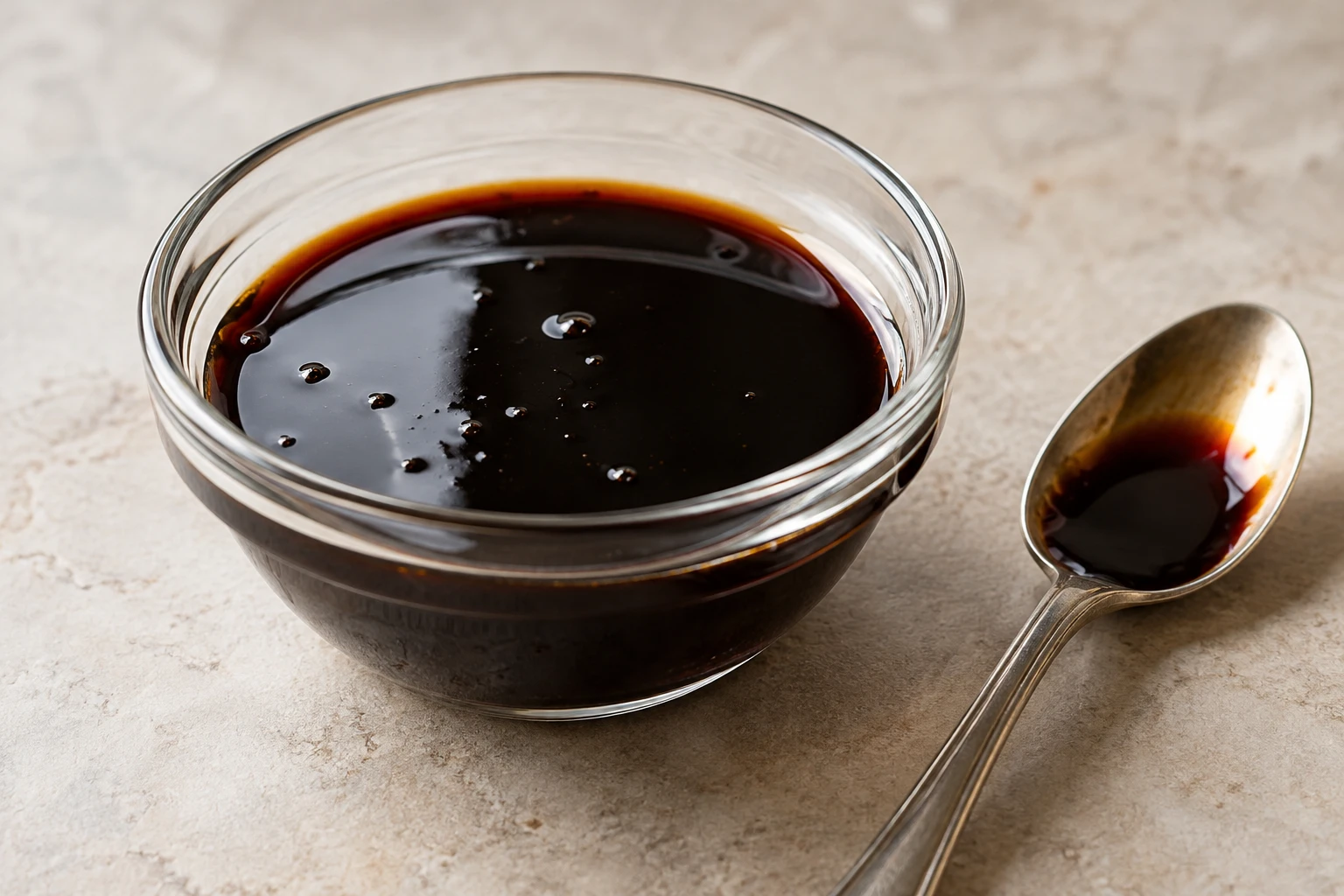
This reduction starts with good balsamic vinegar alone, so its character stays clear and the cook can decide whether it needs any sweetening. Gentle heat and frequent checks keep the syrup glossy rather than dark, burnt, or harsh.
Start with the vinegar
Taste the vinegar before heating it, then simmer it by itself in a light-colored pan. This gives you a clear baseline and makes it easier to notice when the acidity has mellowed.
Keep the simmer controlled
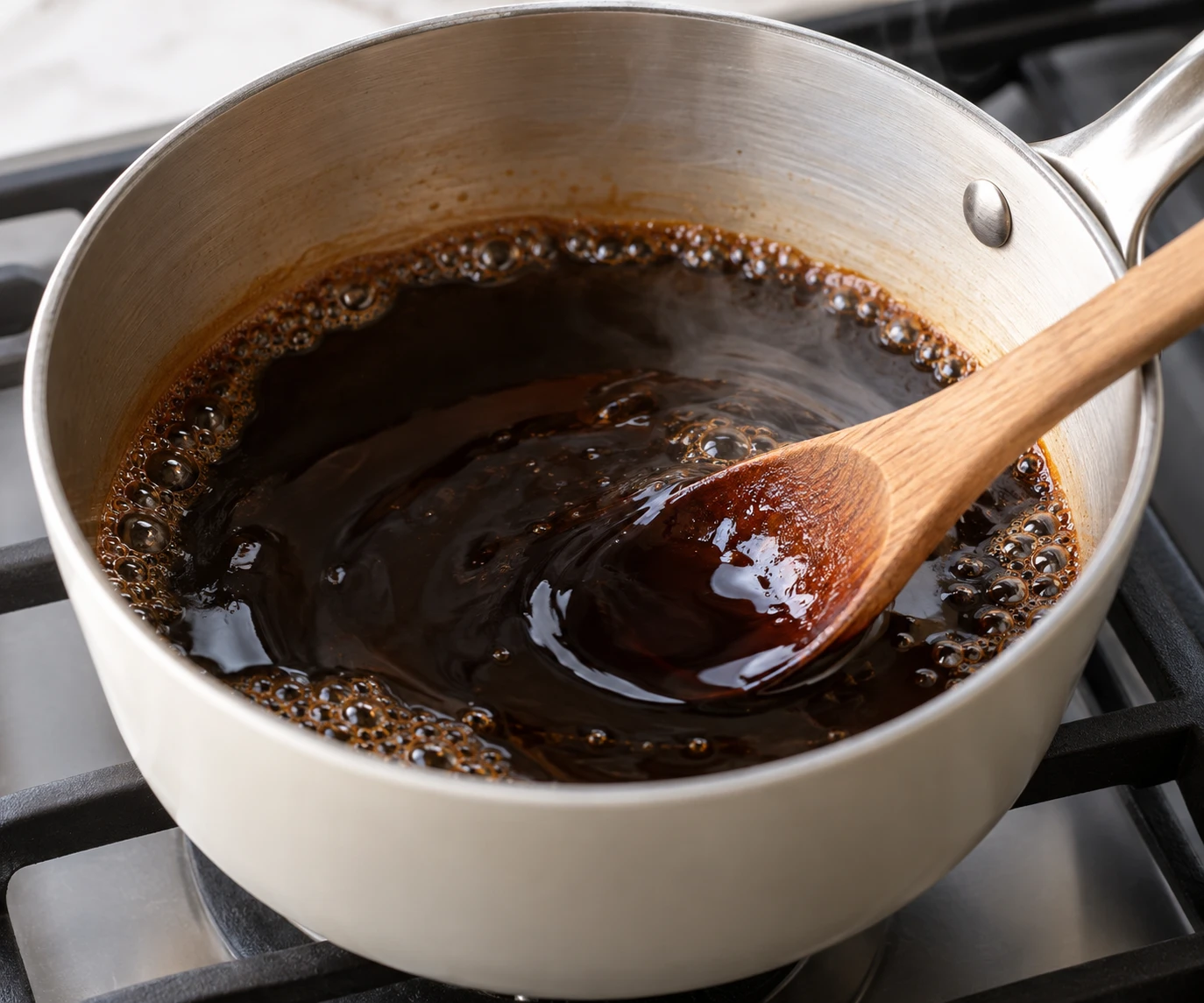
A quiet simmer evaporates water steadily while the vinegar's sugars concentrate. Stir and scrape the bottom often, and lower the heat as soon as bubbling becomes fast or the aroma turns acrid.
Sweeten only after tasting
Honey and sugar are optional, and the vinegar may need neither. If a cooled taste is still sharply acidic, use one teaspoon of either sweetener and dissolve it gently; a small amount of fine salt can round a flat flavor.
Let the cool texture decide
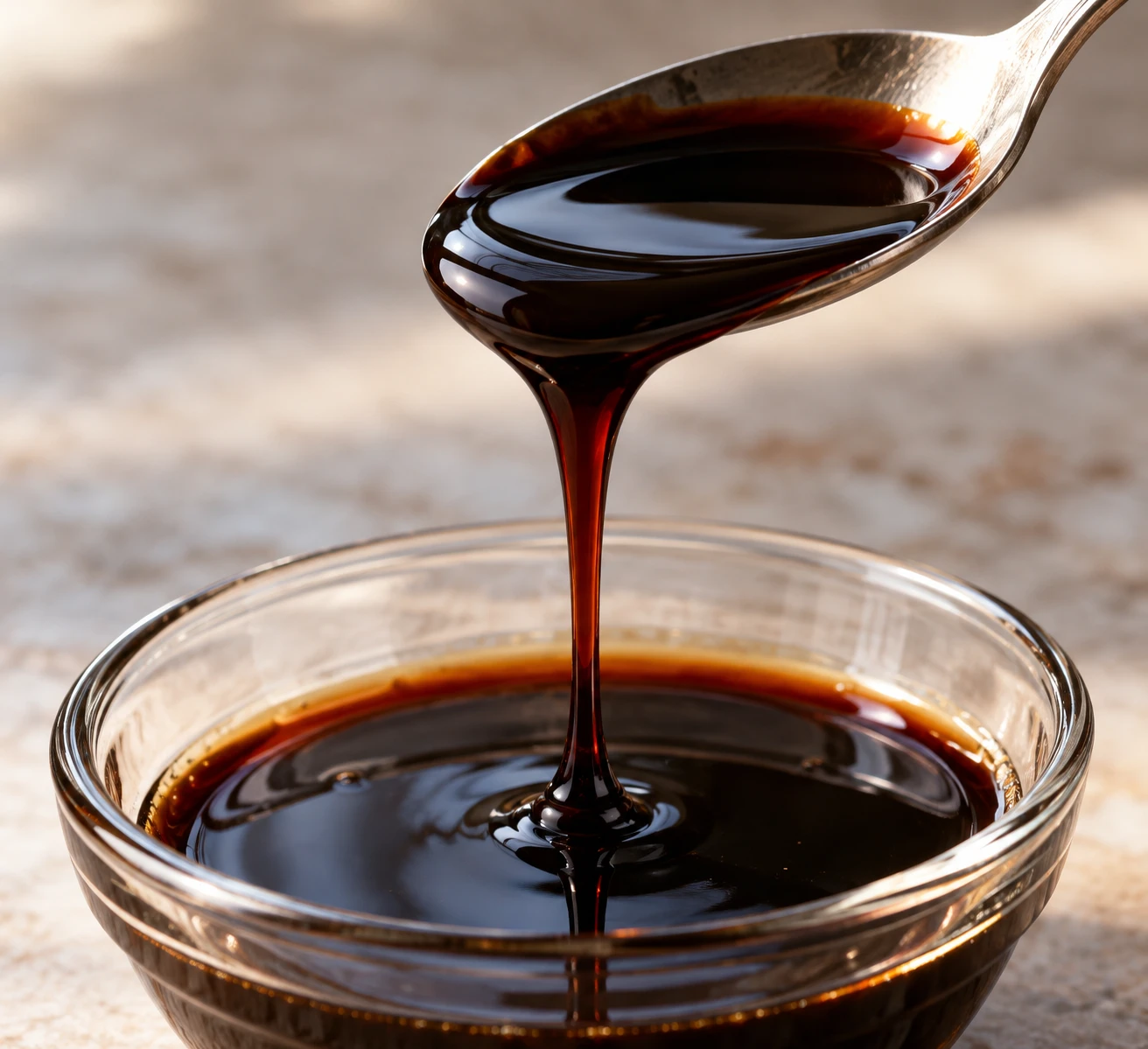
A glossy ribbon that merges back into the pan is the stopping point, because the reduction thickens considerably as it cools. If the finished syrup is too thick to pour, loosen it with a little water and check the flow again.
Balsamic Reduction
Ingredients
- • 1 1/2 cups good-quality balsamic vinegar
- • 1 teaspoon honey, optional; add only if the reduced vinegar tastes sharply acidic
- • 1 teaspoon granulated sugar, optional; use instead of honey if a cleaner sweetness is preferred
- • 1/8 teaspoon fine sea salt, optional; use only if the reduction tastes flat
- • 1 tablespoon water, optional; use only to loosen the cooled reduction
Method
Taste and measure
Taste the balsamic vinegar, then pour it into a small, light-colored saucepan with a heavy base. Start with vinegar alone so you can judge its sweetness and acidity before choosing any optional sweetener.
Look for: The vinegar smells rounded and fruity rather than sharply vinegary.
Start a gentle simmer
Set the saucepan over medium-low heat until small bubbles appear around the edge, then lower the heat to maintain a quiet simmer. Avoid a hard boil, which can make the sugars darken too quickly and taste burnt or harsh.
Look for: Only a few small bubbles break at the edge; the surface is not rolling.
Reduce slowly
Simmer uncovered, stirring and scraping the pan bottom frequently, until the vinegar has reduced to about half its starting volume. Begin checking after ten minutes and then check every couple of minutes, lowering the heat if the bubbles grow fast or the aroma turns acrid.
Look for: The bubbles become slower and glossier, and no dark film clings to the pan bottom.
Check the spoon ribbon
Dip a cool metal spoon into the reduction and let it fall back into the pan. Stop simmering when it coats the spoon in a glossy layer and falls in a ribbon that merges back into the pan; it should still pour easily while warm.
Look for: The ribbon is shiny and continuous, then levels into the pan instead of holding a stiff line.
Adjust only if needed
Taste a cooled drop. If it remains sharply acidic, stir in the optional honey or the optional sugar, choosing one teaspoon of just one sweetener; if the flavor tastes flat, stir in the optional fine sea salt. Return to the lowest heat only long enough to dissolve the addition, without a vigorous boil.
Look for: The sweetener or salt dissolves completely and the aroma stays mellow rather than burnt.
Cool and reassess
Transfer the reduction to a heat-safe jar and let it cool for ten minutes before checking the flow again. It thickens considerably as it cools, so stop while it is looser than the final texture you want rather than simmering until sticky.
Look for: After cooling, the reduction pours in a slow glossy stream instead of clinging to the spoon.
Loosen if necessary
If the cooled reduction is thicker than a pourable syrup, stir in some of the optional water a little at a time until it flows freely. Keep the finished reduction in its jar and use it as a standalone condiment or finishing sauce.
Look for: The sauce falls from a spoon in a smooth ribbon without looking watery.