" fill="%23faf1da" stroke-width="1.8"/>%0A <ellipse cx="64.5" cy="50" rx="43" ry="12" transform="rotate(4 64.5 50)" stroke="%23938466"/>%0A <path d="m26 44 1 10m3-12 1 14m3-14 1 15m3-14 1 15m4-14 1 14m4-13 1 14m39-10-1 10m5-9-1 8m5-7-1 5" stroke="%23b2a181" stroke-width=".7"/>%0A <path d="M55 60c3-10 12-14 23-10l47-44c7-6 15-6 15-2 0 5-9 11-14 14L82 60c-8 4-21 4-27 0Z" fill="%23bc8c48" stroke-width="1.6"/>%0A <path d="M61 59c3-5 9-8 15-5l-4 7m8-8 49-45 6-4M84 52l45-41" stroke="%2376562e" stroke-width="1"/>%0A <path d="M20 53c18 14 69 19 90 2" stroke="%23514431" stroke-width="2"/>%0A <path d="M27 59c22 11 59 14 78 2" stroke="%23fff9e9" stroke-width="2"/>%0A <path d="m48 87 1 1m7 8 1 1m6-12 1 1m6 12 1 1m6-9 1 1m-24 9 1 1m19 4 1-1m10-16 1 1" stroke="%23aa9b7c"/>%0A </g>%0A</svg>%0A)
Weeknight Homemade-Style Baked Beans
Canned navy beans take on the deep, smoky-sweet character of all-day baked beans through a concentrated bacon, onion, molasses, mustard, and cider-vinegar sauce.
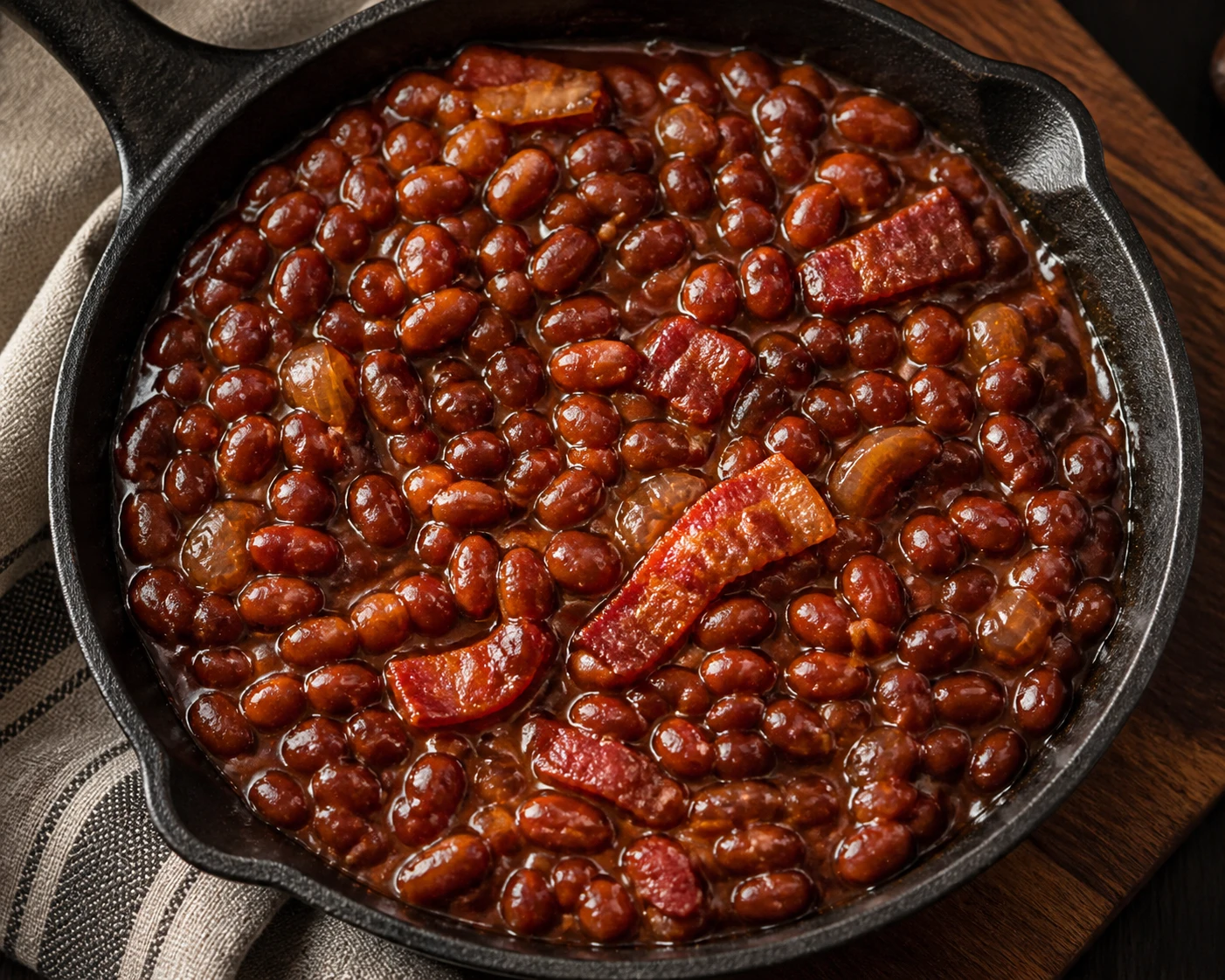
This recipe starts with canned beans but treats the sauce as the real work: bacon fat softens the onion, tomato paste and paprika toast briefly, and the sweet ingredients simmer before the beans go in. A short uncovered bake concentrates everything into a glossy coating rather than a thin, sugary liquid.
Molasses brings the dark bass note, Dijon adds sharpness, and cider vinegar keeps the sweetness from taking over. Reserving part of the bacon for the end gives each serving a crisp, smoky contrast against the tender beans.
Begin with bacon and onion
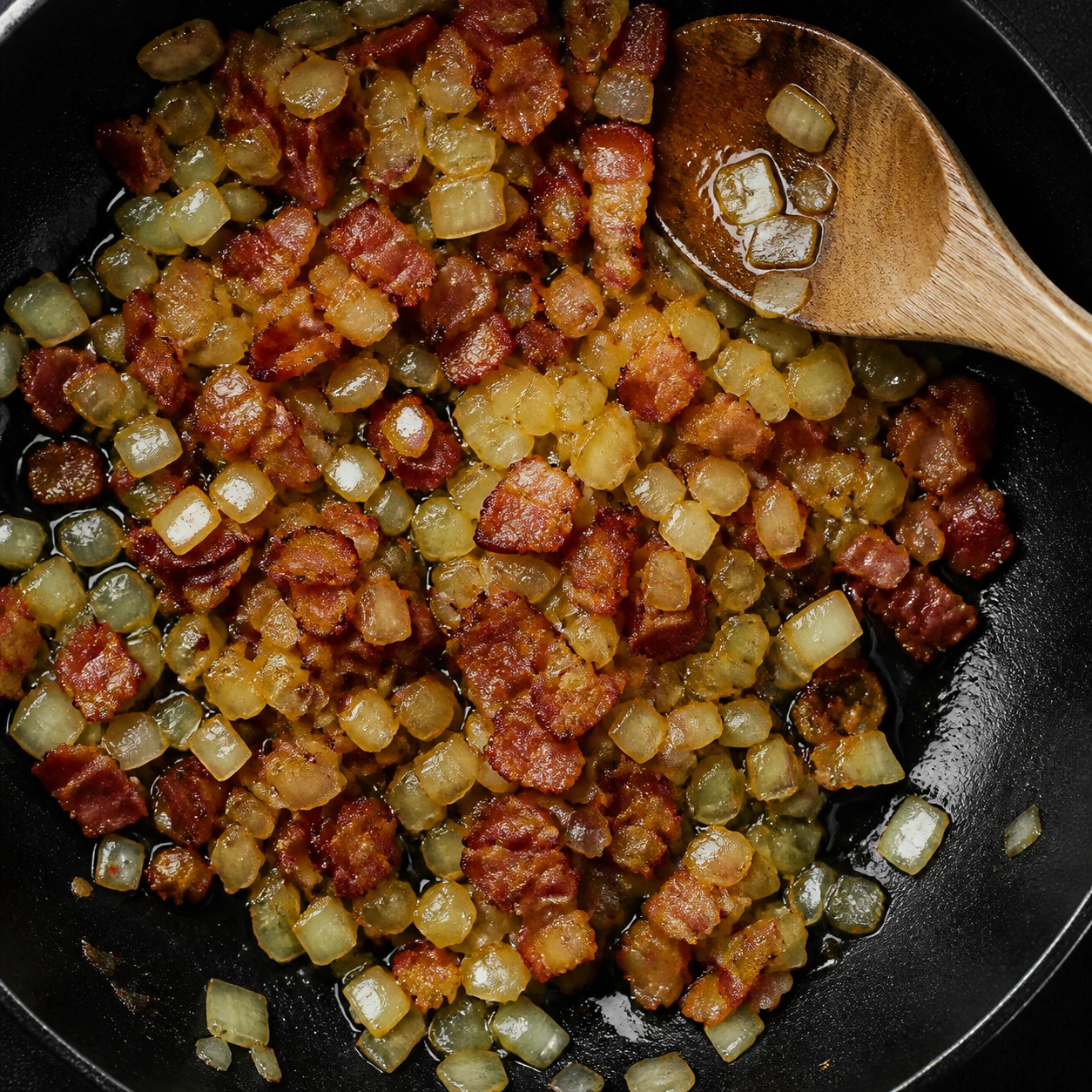
Bacon is doing more than providing a garnish here. Its rendered fat carries smoke and salt into the onion, while the onion slowly softens into a savory-sweet base that makes canned beans taste more settled and rounded.
Cook the onion until there are no crisp pieces left. That softened texture disappears into the sauce and helps it feel cohesive instead of like beans sitting in a separate glaze.
Concentrate before baking
Tomato paste and smoked paprika get a brief toast before the liquids arrive. This small step deepens their flavor and gives the finished beans a savory, gently smoky backbone without relying on a large amount of liquid.
Let the molasses, mustard, vinegar, and broth turn glossy before folding in the beans. Starting from a sauce that already coats a spoon is the clearest route to baked beans that are rich instead of watery.
Bake uncovered for body
The uncovered oven time gives the beans their slow-cooked impression. Moisture can escape while the sauce bubbles at the edges, concentrating the molasses and tomato notes around the beans rather than leaving a broth beneath them.
Look for slow bubbles and a sauce that mounds a little between the beans. If it still pools after baking, a short, gentle reduction on the stovetop fixes the consistency without making the beans mushy.
Use vinegar as the counterweight
Molasses and brown sugar are essential to the familiar baked-bean profile, but they need a firm edge. Cider vinegar provides that lift while also echoing the fruitiness of the molasses, so the finished sauce tastes layered rather than simply sweet.
Taste only after the sauce has concentrated and the beans have rested. At that point the flavor is clearer, and the acidity should read as brightness behind the bacon and smoke rather than as a separate sharp note.
Finish with crisp bacon
A brief rest off heat matters because the sauce continues to set as the bubbling stops. The beans will be easier to spoon and the coating will cling more neatly once that last bit of carryover thickening has happened.
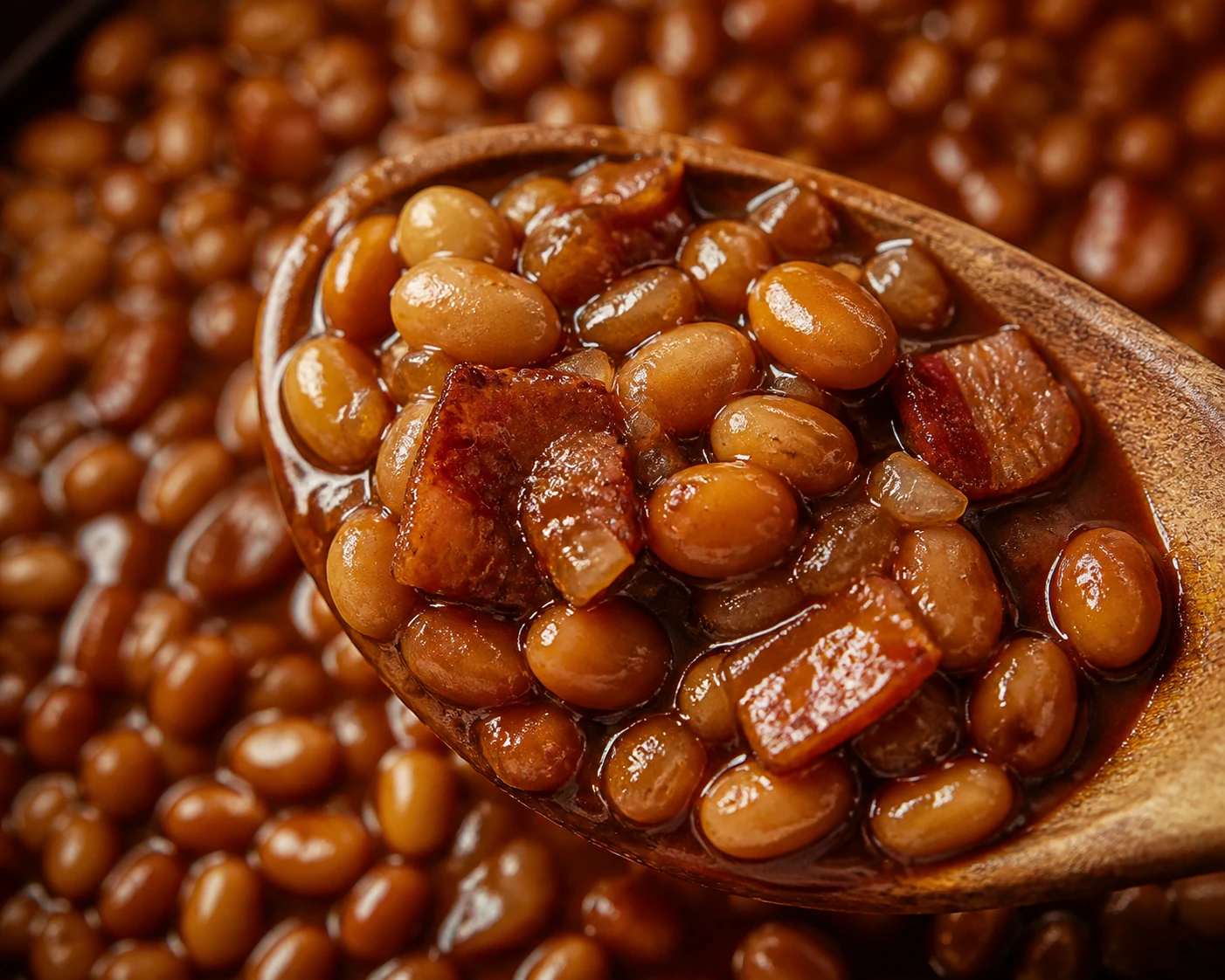
Scatter the reserved bacon just before serving. It adds a welcome crisp element and keeps the top of the dish from looking or tasting too soft after the uncovered bake.
Weeknight Homemade-Style Baked Beans
Ingredients
- • 6 slices thick-cut bacon
- • 1 medium yellow onion, finely diced
- • 3 (15-ounce) cans navy beans, drained and rinsed
- • 2 tbsp tomato paste
- • 1/3 cup unsulphured molasses
- • 2 tbsp packed dark brown sugar
- • 2 tbsp Dijon mustard
- • 1 tbsp apple cider vinegar
- • 1 tsp smoked paprika
- • 1/2 tsp kosher salt
- • 1/4 tsp black pepper
- • 1/2 cup low-sodium chicken broth
Method
Heat the oven
Set an oven rack in the center position and heat the oven to 375 F while you build the bacon and onion base.
Look for: The oven is fully preheated before the bean dish goes in.
Render the bacon
Cook the bacon in a large oven-safe skillet or Dutch oven over medium heat, stirring occasionally, until browned and crisp at the edges; leave the rendered fat in the pan.
Look for: The bacon has crisp browned edges and a shallow layer of rendered fat surrounds it.
Soften the onion
Add the diced onion to the bacon and fat, then cook over medium-low heat, stirring often, until very soft, translucent, and lightly golden at the edges.
Look for: The onion is soft and sweet-smelling with no firm or raw-looking pieces.
Bloom the tomato and smoke
Stir in the tomato paste and smoked paprika and cook over medium heat until the paste darkens slightly and leaves a rusty film on the pan bottom.
Look for: The tomato paste smells toasted and the paprika is evenly distributed without dry clumps.
Build the thick sauce
Add the molasses, brown sugar, Dijon, cider vinegar, chicken broth, salt, and pepper, then stir and simmer until the sauce looks glossy and lightly coats a spoon.
Look for: The sauce smells smoky and tangy, and it clings to the spoon instead of running off like broth.
Coat the beans
Fold in the drained navy beans and half the bacon until every bean is coated, reserving the remaining bacon for a crisp finish after baking.
Look for: There is no visible pool of thin liquid around the coated beans.
Bake until concentrated
Bake the uncovered skillet at 375 F until the sauce is deeply colored, bubbling around the edges, and thick enough to mound slightly between the beans.
Look for: The center is glossy and thick, with slow bubbles rather than a watery simmer.
Tighten if needed
If the sauce still looks loose, set the skillet over medium-low heat and stir gently until it reduces to a rich coating that stays between the beans without pooling.
Look for: A spoon drawn through the beans leaves a brief clear trail before the sauce settles.
Rest and finish
Let the beans stand off heat for 5 minutes to thicken, then scatter the reserved crisp bacon over the top and serve warm.
Look for: The sauce holds a rich sheen and the reserved bacon remains crisp on top.