" fill="%23faf1da" stroke-width="1.8"/>%0A <ellipse cx="64.5" cy="50" rx="43" ry="12" transform="rotate(4 64.5 50)" stroke="%23938466"/>%0A <path d="m26 44 1 10m3-12 1 14m3-14 1 15m3-14 1 15m4-14 1 14m4-13 1 14m39-10-1 10m5-9-1 8m5-7-1 5" stroke="%23b2a181" stroke-width=".7"/>%0A <path d="M55 60c3-10 12-14 23-10l47-44c7-6 15-6 15-2 0 5-9 11-14 14L82 60c-8 4-21 4-27 0Z" fill="%23bc8c48" stroke-width="1.6"/>%0A <path d="M61 59c3-5 9-8 15-5l-4 7m8-8 49-45 6-4M84 52l45-41" stroke="%2376562e" stroke-width="1"/>%0A <path d="M20 53c18 14 69 19 90 2" stroke="%23514431" stroke-width="2"/>%0A <path d="M27 59c22 11 59 14 78 2" stroke="%23fff9e9" stroke-width="2"/>%0A <path d="m48 87 1 1m7 8 1 1m6-12 1 1m6 12 1 1m6-9 1 1m-24 9 1 1m19 4 1-1m10-16 1 1" stroke="%23aa9b7c"/>%0A </g>%0A</svg>%0A)
Crisp Polenta with Tomato Lecithin Foam
A crisp-edged polenta side dish gets its light, modern finish from warm tomato liquid aerated with soy lecithin and a hand emulsifier.
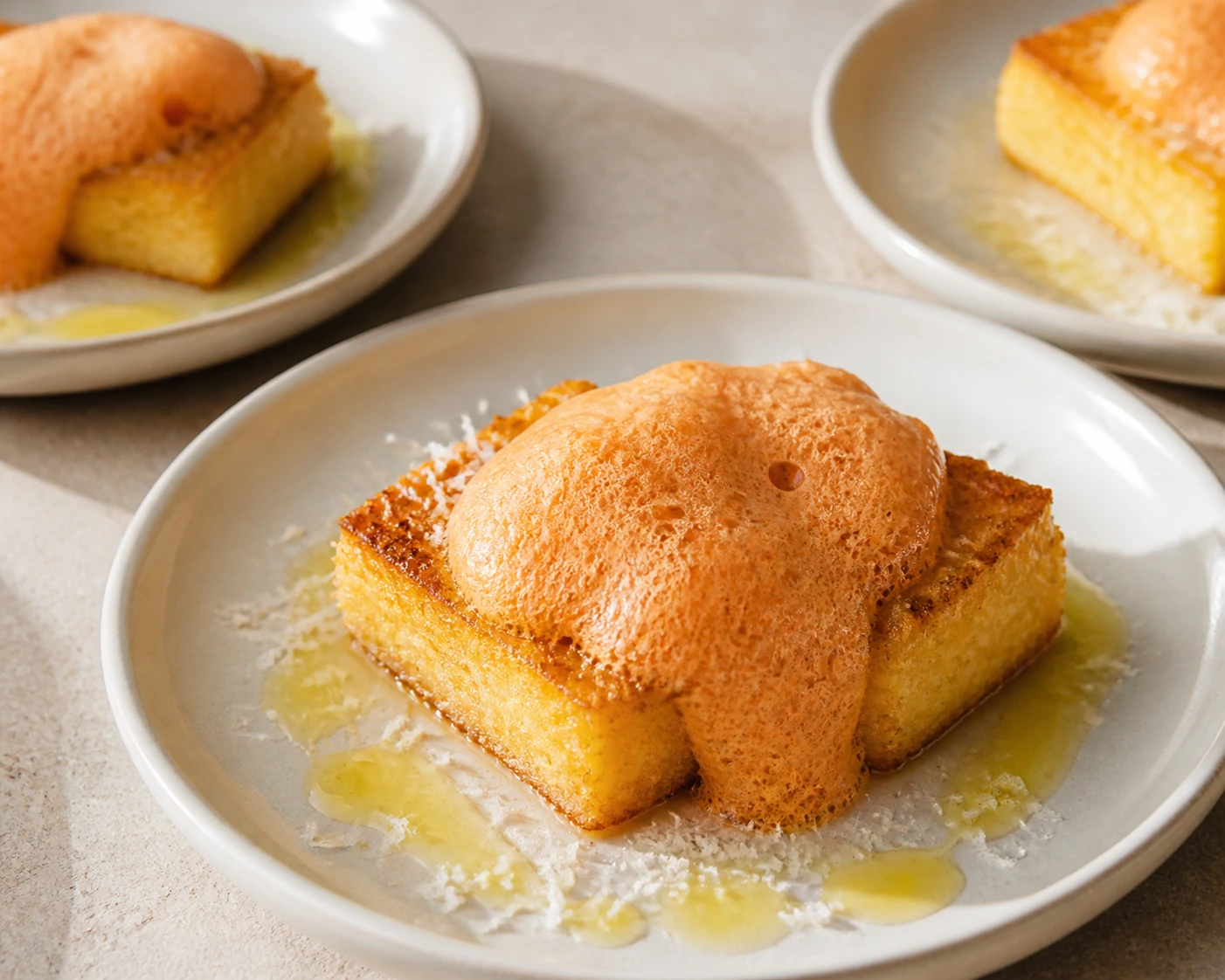
This dish makes a molecular-gastronomy technique practical for a home kitchen: soy lecithin turns a shallow pool of seasoned tomato liquid into a feather-light foam. A chilled slab of Parmesan polenta provides the necessary contrast, with a crisp seared crust that stays sturdy beneath the airy topping.
The foam belongs at the very end, so cook the polenta first and keep the tomato base warm nearby. Once the hand emulsifier introduces air at the surface, the dish moves quickly from skillet to plate.
Set a cuttable base
Cook the polenta until it is thick and glossy, then spread it while hot so it sets as an even slab. The brief chill is not about serving it cold; it gives the portioned pieces enough structure to develop a clean crust in the skillet.
Build a simple foam liquid
Tomato juice brings brightness and color without making the topping heavy, while butter rounds its sharp edge. Soy lecithin does not thicken the liquid; it helps the bubbles stabilize when air is introduced at the surface.
Let the crust form
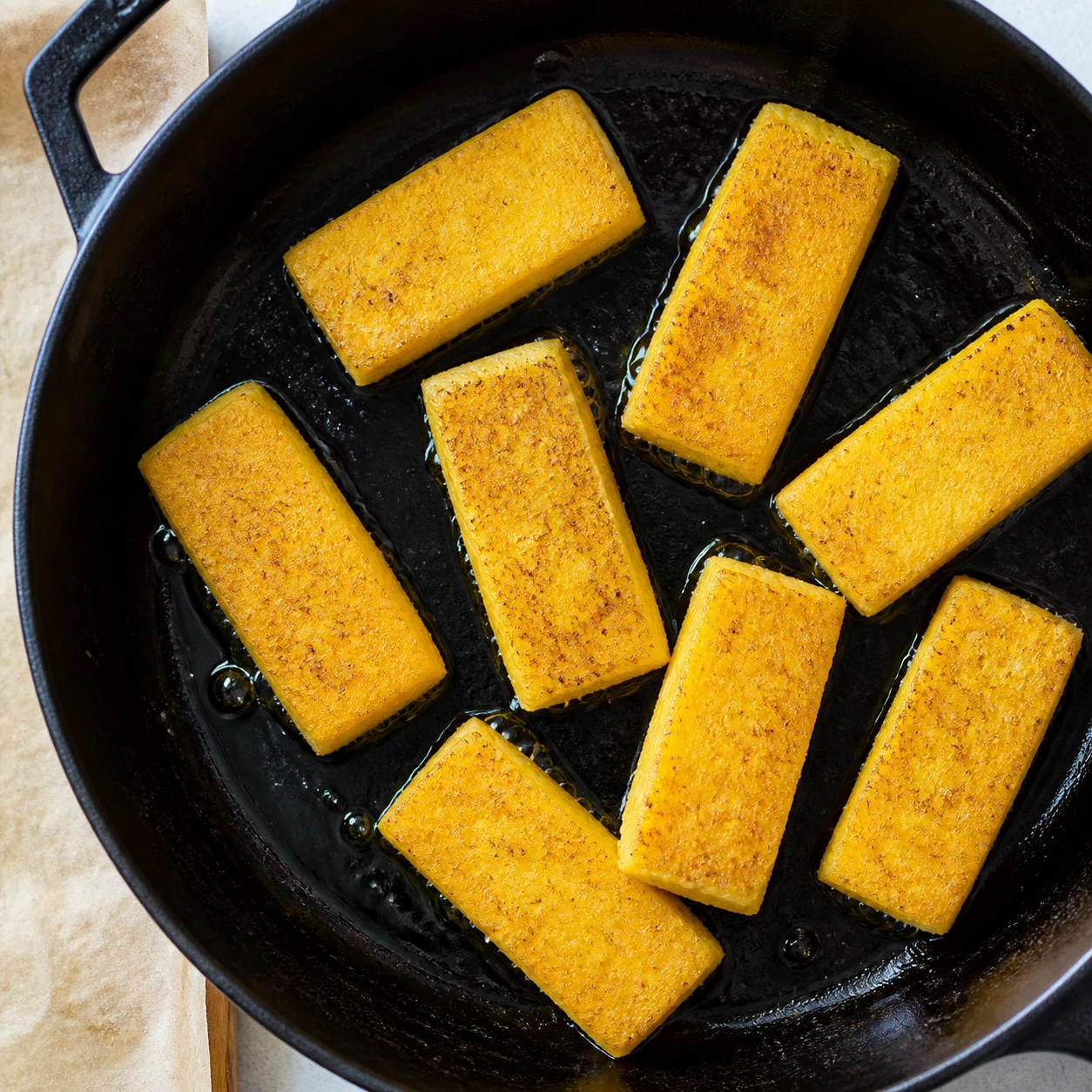
Use a hot skillet and resist moving the polenta until it releases easily. That contact creates the crisp shell that makes the soft interior and airy tomato topping feel deliberate rather than fragile.
Keep the blender at the surface
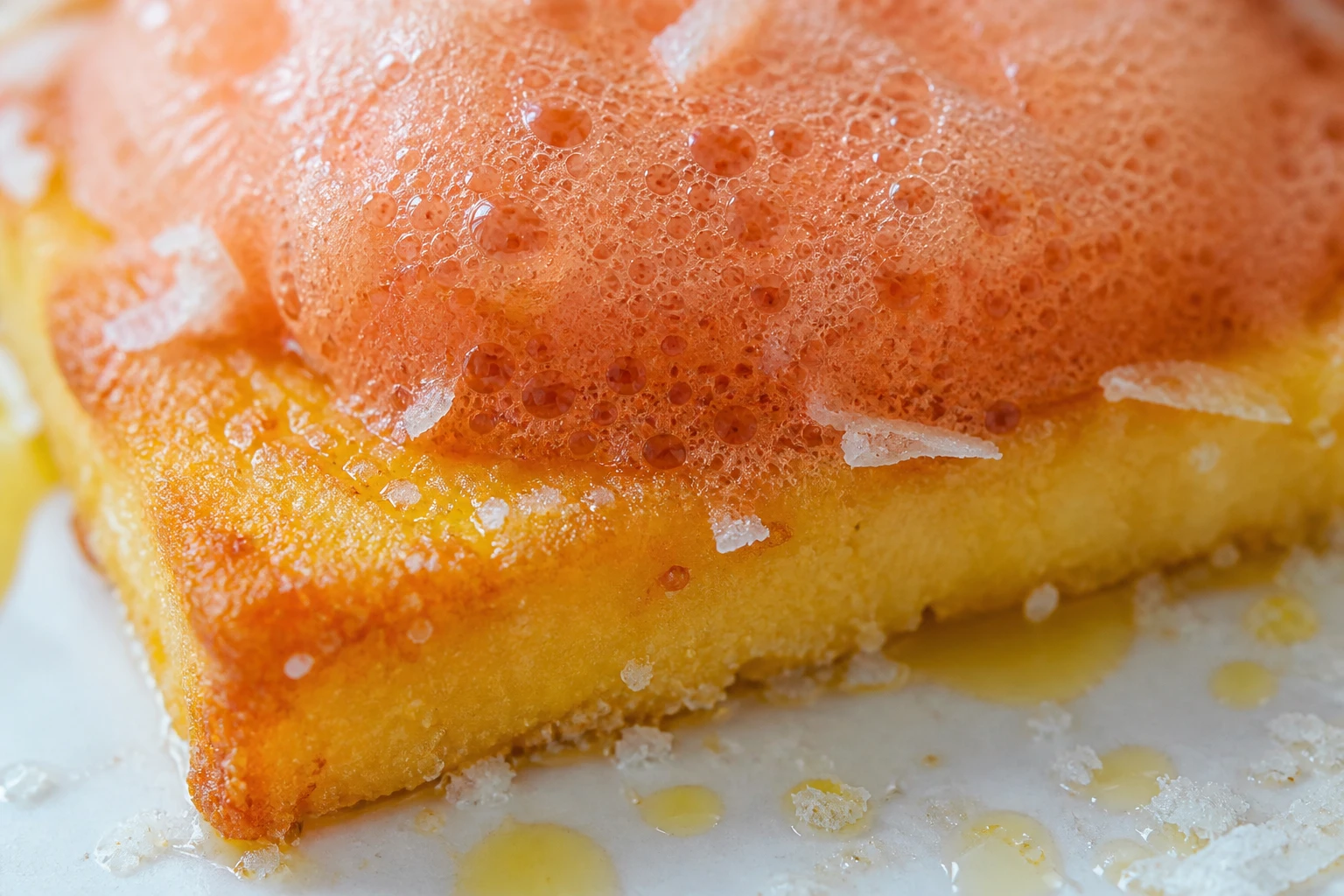
For foam, the emulsifier needs access to both liquid and air, so angle it near the surface rather than submerging it completely. If bubbles do not collect, use a narrower container to create more depth and keep aerating at the top.
Finish at the table
Arrange the crisp polenta before aerating the tomato base, then spoon only the surface foam over each portion. Serve immediately, while the bubbles are lively and the crust has not softened.
Crisp Polenta with Tomato Lecithin Foam
Ingredients
- • 1 cup quick-cooking polenta
- • 3 cups water
- • 1 tsp kosher salt, divided
- • 3 tbsp unsalted butter, divided
- • 1/2 cup finely grated Parmesan cheese
- • 2 tbsp olive oil
- • 1 cup tomato juice
- • 1/2 tsp soy lecithin powder
Method
Set the polenta pan
Line an 8-inch square pan with parchment, leaving an overhang on two sides, and set it beside the stove for the hot polenta.
Look for: The parchment lies flat in the corners and has handles for lifting.
Boil the cooking liquid
Bring the water and 3/4 tsp kosher salt to a rolling boil in a medium saucepan over high heat.
Look for: Large bubbles break across the whole surface of the water.
Cook the polenta
Whisk in the polenta in a slow stream, reduce the heat to low, and stir often for 5 minutes until the grains are tender and the mixture pulls from the pan.
Look for: The polenta is thick, glossy, and leaves a clear trail behind the spoon.
Enrich and chill
Stir 2 tbsp butter and the Parmesan into the hot polenta until smooth, spread it level in the lined pan, and chill for 15 minutes until firm enough to cut.
Look for: The surface is level and the chilled slab feels firm rather than loose at the center.
Warm the tomato base
While the polenta chills, combine the tomato juice, remaining 1/4 tsp salt, and remaining 1 tbsp butter in a small saucepan and warm over medium-low heat until steaming but not simmering.
Look for: Steam rises from the tomato liquid without bubbles breaking at the edge.
Make the foam base
Whisk the soy lecithin into the warm tomato liquid until no powder clings to the pan, then keep the mixture warm off the heat.
Look for: The tomato liquid looks uniform with no floating specks of lecithin.
Sear the polenta
Lift out the chilled polenta, cut it into 8 rectangles, and heat the olive oil in a large skillet over medium-high heat. Sear the rectangles for 4 minutes per side until deeply golden.
Look for: Each rectangle releases easily and has a crisp, deep-golden crust.
Aerate and serve
Tilt the warm tomato base in a narrow container and run a hand emulsifier at the surface until a layer of foam forms. Arrange 2 polenta rectangles per serving and spoon the foam over them immediately.
Look for: A light layer of tomato bubbles gathers at the surface and holds long enough to spoon.