" fill="%23faf1da" stroke-width="1.8"/>%0A <ellipse cx="64.5" cy="50" rx="43" ry="12" transform="rotate(4 64.5 50)" stroke="%23938466"/>%0A <path d="m26 44 1 10m3-12 1 14m3-14 1 15m3-14 1 15m4-14 1 14m4-13 1 14m39-10-1 10m5-9-1 8m5-7-1 5" stroke="%23b2a181" stroke-width=".7"/>%0A <path d="M55 60c3-10 12-14 23-10l47-44c7-6 15-6 15-2 0 5-9 11-14 14L82 60c-8 4-21 4-27 0Z" fill="%23bc8c48" stroke-width="1.6"/>%0A <path d="M61 59c3-5 9-8 15-5l-4 7m8-8 49-45 6-4M84 52l45-41" stroke="%2376562e" stroke-width="1"/>%0A <path d="M20 53c18 14 69 19 90 2" stroke="%23514431" stroke-width="2"/>%0A <path d="M27 59c22 11 59 14 78 2" stroke="%23fff9e9" stroke-width="2"/>%0A <path d="m48 87 1 1m7 8 1 1m6-12 1 1m6 12 1 1m6-9 1 1m-24 9 1 1m19 4 1-1m10-16 1 1" stroke="%23aa9b7c"/>%0A </g>%0A</svg>%0A)
Vegetarian Spinach Ricotta Gnudi
These tender spinach and ricotta gnudi trade heavy sauce for nutty brown butter, fresh lemon, crisp sage, and a bitter-green salad that keeps the plate bright.
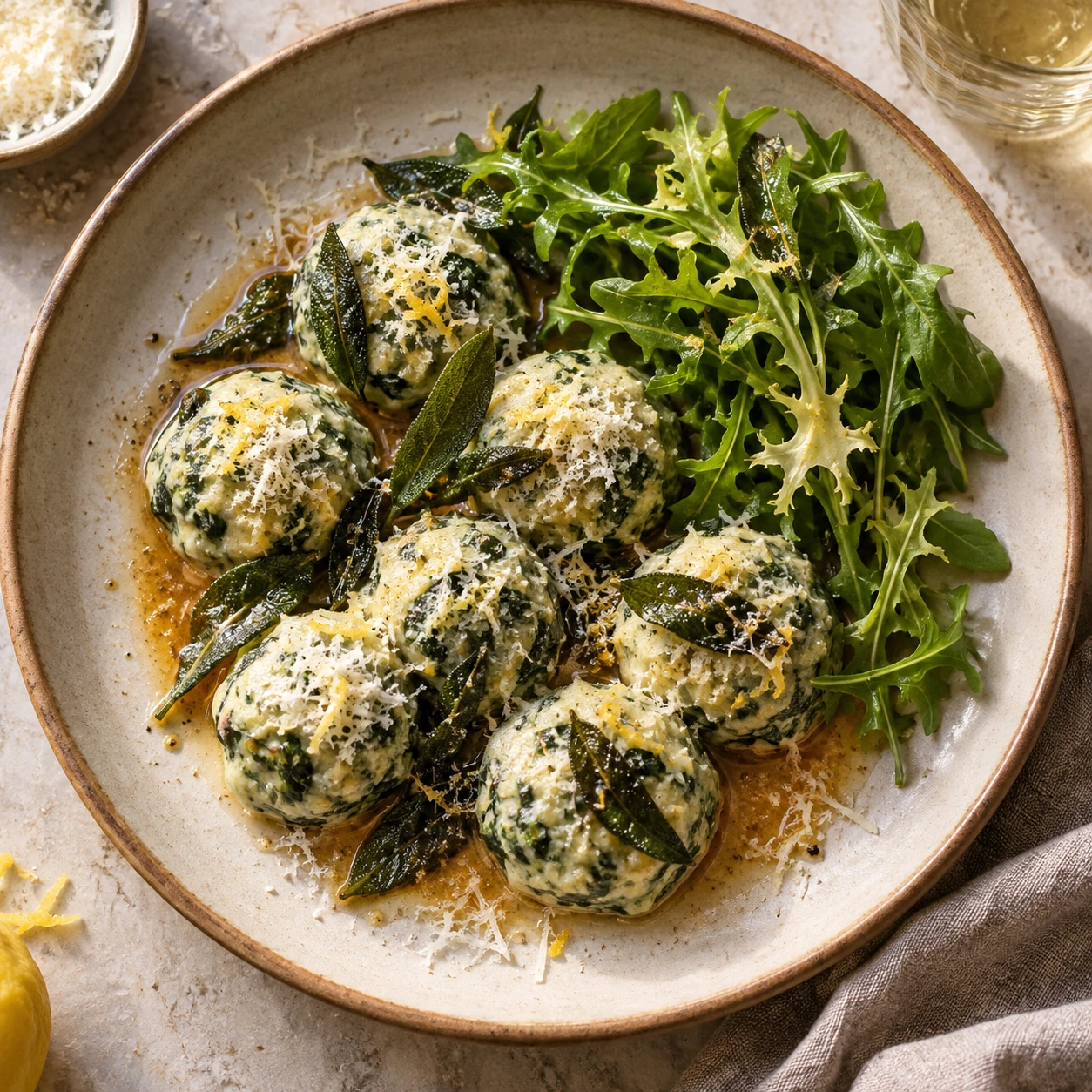
Gnudi are more forgiving than they look once their structure is understood: dry spinach, a light hand with flour, and gently simmering water make the difference. Here, their soft centers get a simple finish of brown butter and lemon instead of a heavy tomato sauce, with bitter greens providing contrast at the table.
Remove the hidden moisture
Thawed spinach can carry enough water to turn a promising ricotta mixture slack. Wrap it in a clean towel and twist firmly until the flow stops, then loosen the compressed greens before mixing so they disperse evenly through the dough.
Let one gnudi answer first
A single test dumpling removes the guesswork from a soft mixture. If it floats whole after a few minutes, the rest can be shaped with confidence; if it cracks or dissolves, one tablespoon of flour is a small correction that preserves their delicate texture.
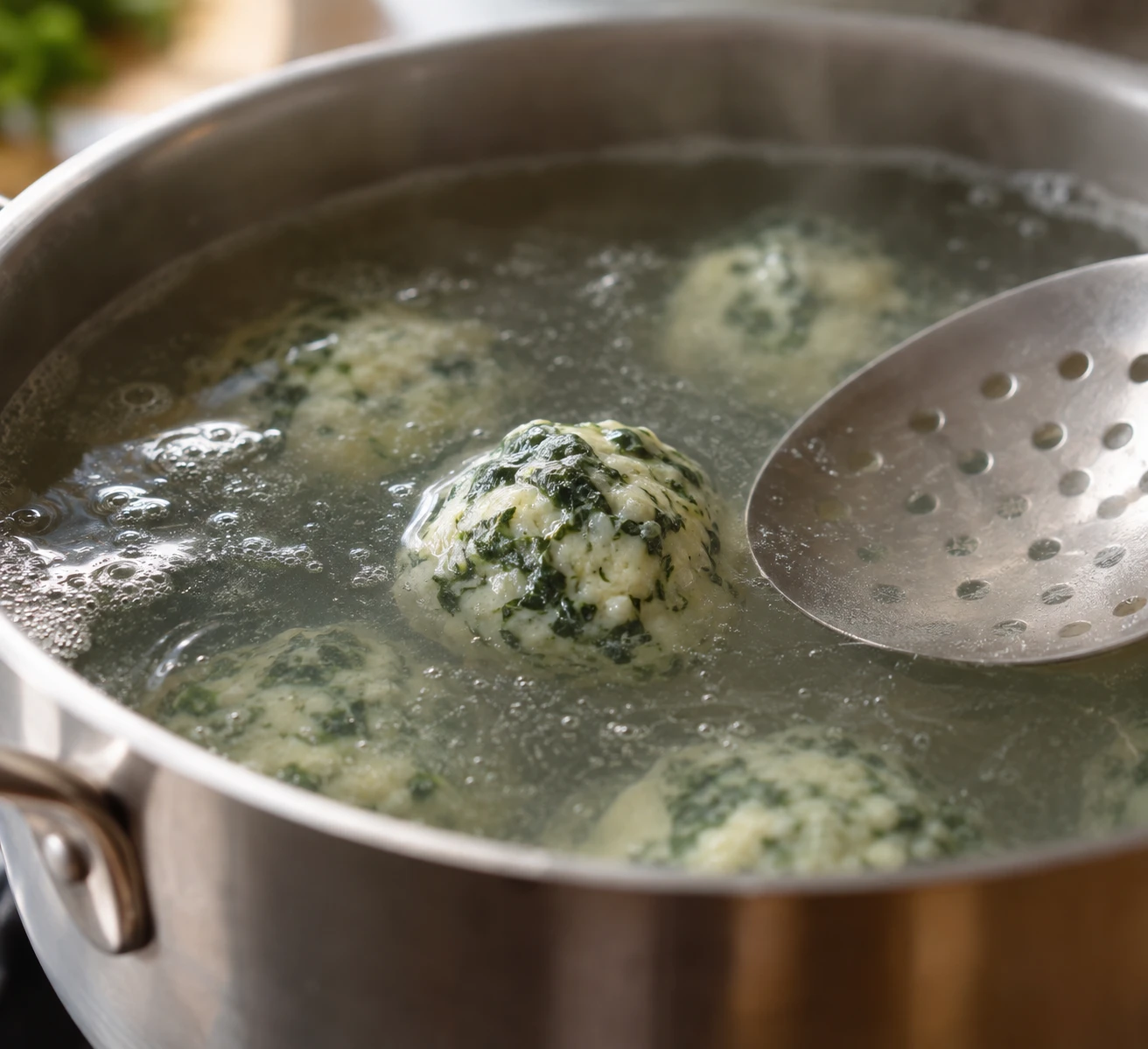
Keep the water quiet
The pot should show a steady drift of small bubbles, not the turbulence of a hard boil. Give each batch room, lower the gnudi gently, and use a slotted spoon to lift rather than stir; those calm movements help their tender edges stay whole.
Build flavor in the skillet
Brown butter turns ordinary dairy sweetness into something toasted and hazelnut-like, while sage leaves become crisp enough to scatter over the plate. Lemon zest added off the heat brings a clean lift that keeps the dumplings rich but not weighty.
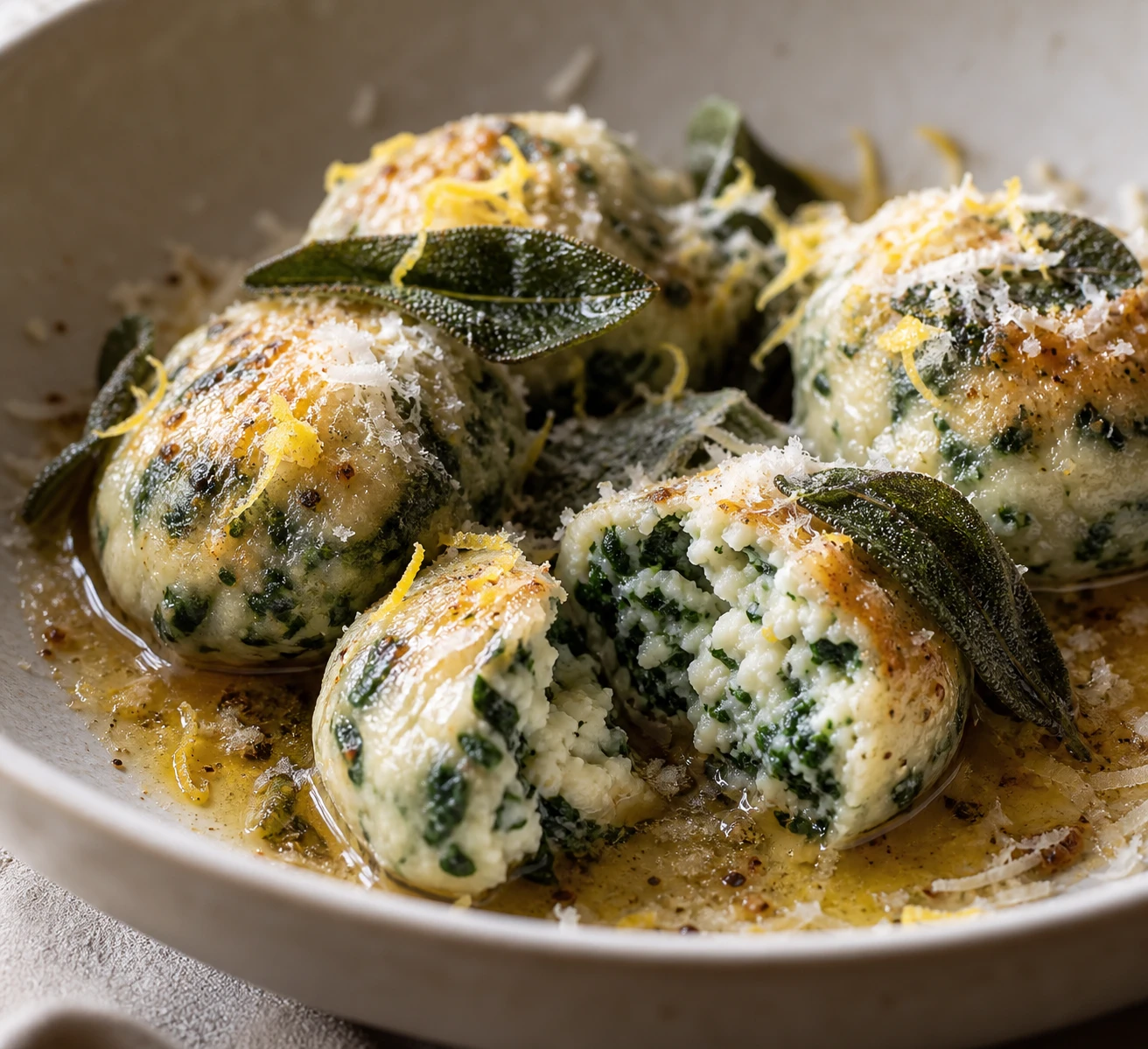
Vegetarian Spinach Ricotta Gnudi
Ingredients
- • 10 oz frozen chopped spinach, thawed
- • 15 oz whole-milk ricotta
- • 3/4 cup finely grated Parmesan, divided
- • 1 large egg
- • 1/2 tsp kosher salt, plus more for the water
- • 1/2 tsp freshly ground black pepper
- • 1/2 cup all-purpose flour, plus more for dusting
- • 6 tbsp unsalted butter
- • 16 fresh sage leaves
- • 1 lemon
- • 5 oz bitter greens
- • 1 tbsp extra-virgin olive oil
Method
Dry the spinach thoroughly
Wrap the thawed spinach in a clean kitchen towel and squeeze over the sink until almost no liquid runs out, then fluff it apart; this concentrated, dry spinach keeps the gnudi from loosening in the water.
Look for: The spinach feels crumbly rather than wet and the towel no longer releases drips when twisted.
Mix a light dough
Stir the dried spinach, ricotta, 1/2 cup Parmesan, egg, salt, pepper, and 1/4 cup flour just until no dry flour remains; cover and chill for 15 minutes so the mixture firms without becoming tough.
Look for: The mixture is soft but mounded, with spinach evenly distributed and no watery pool in the bowl.
Set up the poaching water
Bring a wide pot of generously salted water to a gentle simmer, not a rolling boil, and dust a rimmed tray with some of the remaining flour for the shaped gnudi.
Look for: Small bubbles rise lazily across the surface but the water is calm enough that a dumpling will not be tossed around.
Test one gnudi
With lightly floured hands, shape 2 tablespoons of dough into one loose oval and slip it into the simmering water for 3 minutes; if it cracks or disperses, fold 1 tablespoon more flour into the chilled dough before continuing.
Look for: The test gnudi floats intact with a tender, set exterior and no trailing clouds of ricotta.
Shape the remaining gnudi
Shape the remaining dough into 16 loose walnut-size ovals with floured hands, placing them apart on the floured tray; use only enough flour to prevent sticking so their centers stay tender.
Look for: Each oval is lightly dusted, holds its shape, and is not packed or heavily coated with flour.
Poach gently in batches
Lower half the gnudi into the barely simmering water, leaving space between them, and poach for 3 to 4 minutes until they float and feel springy; lift them out with a slotted spoon and repeat with the rest.
Look for: The dumplings remain whole, float at the surface, and yield gently when nudged with the spoon.
Brown the butter and sage
Melt the butter in a large skillet over medium heat, add the sage, and cook until the leaves are crisp and the milk solids smell nutty and turn amber; keep the heat moderate so the butter does not burn.
Look for: The butter foams, smells toasted, and has golden-brown specks while the sage is crisp and bright green.
Coat the gnudi
Slide the poached gnudi into the brown butter and spoon it over them very gently, then add the remaining 1/4 cup Parmesan and finely grate half the lemon over the skillet.
Look for: Every gnudi is glossy with butter and remains intact as the cheese begins to melt around it.
Dress the greens and serve
Whisk the juice from the remaining lemon half with olive oil and a pinch of salt, toss with the bitter greens, and serve the warm gnudi with crisp sage beside the dressed salad.
Look for: The salad is lightly coated without pooling dressing, and the gnudi are served immediately while the butter is fragrant.