" fill="%23faf1da" stroke-width="1.8"/>%0A <ellipse cx="64.5" cy="50" rx="43" ry="12" transform="rotate(4 64.5 50)" stroke="%23938466"/>%0A <path d="m26 44 1 10m3-12 1 14m3-14 1 15m3-14 1 15m4-14 1 14m4-13 1 14m39-10-1 10m5-9-1 8m5-7-1 5" stroke="%23b2a181" stroke-width=".7"/>%0A <path d="M55 60c3-10 12-14 23-10l47-44c7-6 15-6 15-2 0 5-9 11-14 14L82 60c-8 4-21 4-27 0Z" fill="%23bc8c48" stroke-width="1.6"/>%0A <path d="M61 59c3-5 9-8 15-5l-4 7m8-8 49-45 6-4M84 52l45-41" stroke="%2376562e" stroke-width="1"/>%0A <path d="M20 53c18 14 69 19 90 2" stroke="%23514431" stroke-width="2"/>%0A <path d="M27 59c22 11 59 14 78 2" stroke="%23fff9e9" stroke-width="2"/>%0A <path d="m48 87 1 1m7 8 1 1m6-12 1 1m6 12 1 1m6-9 1 1m-24 9 1 1m19 4 1-1m10-16 1 1" stroke="%23aa9b7c"/>%0A </g>%0A</svg>%0A)
Ethiopian Shiro Wat
This deeply spiced vegan chickpea stew gets its signature velvet texture from a smooth slurry and patient low-heat stirring.
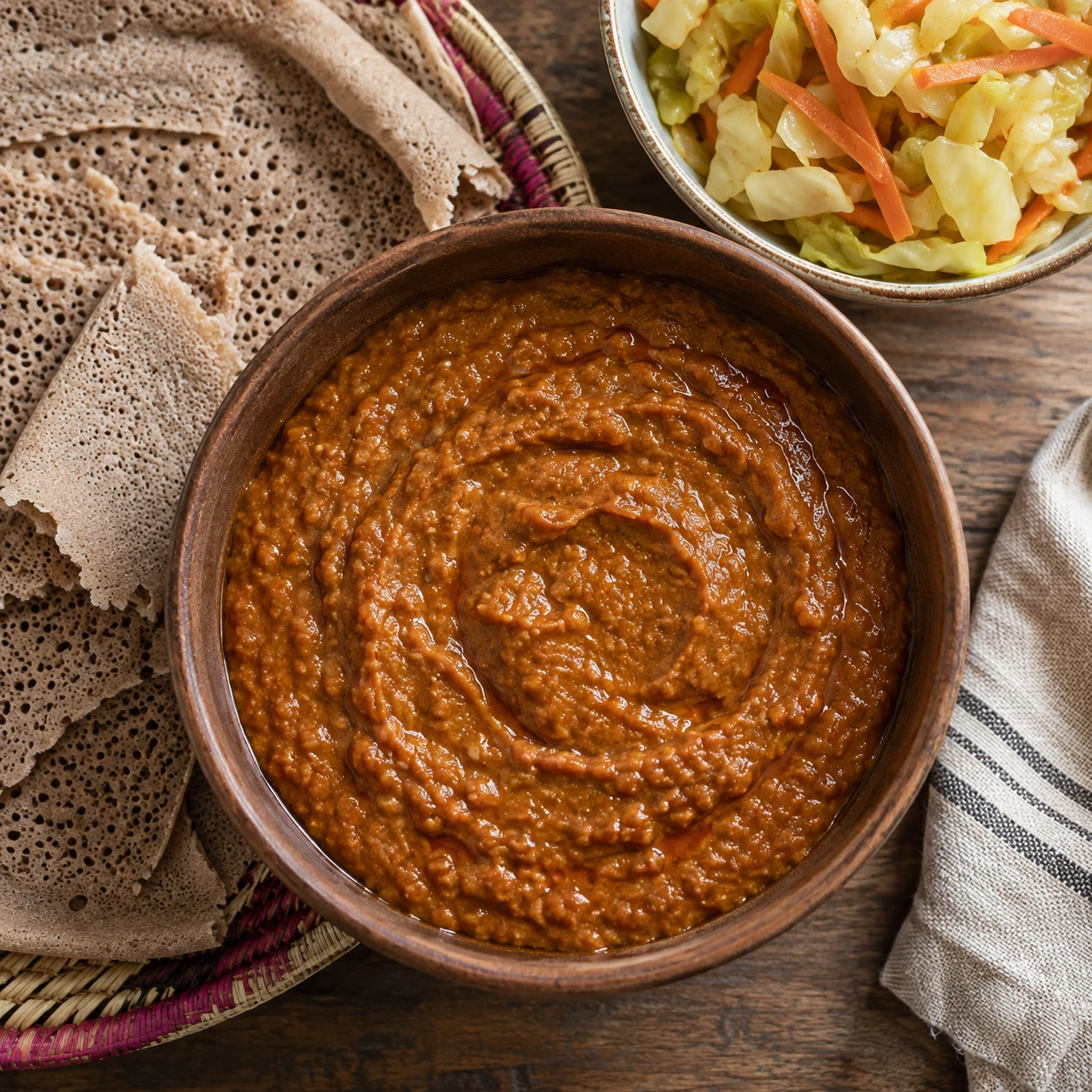
Shiro wat is a generous, warming stew built from a slowly developed onion base, fragrant berbere, and chickpea flour. This vegan version keeps the focus on that essential process, using vegetable broth for a spoonable finish that is at home beside injera or rice.
Let the onion become the sauce
Finely minced onion is more than an aromatic here: given patient medium-low heat, it melts into a savory foundation without needing butter or meat stock. Keep it moving whenever it starts to stick, and lower the heat instead of letting the edges brown too quickly.
Build warmth in layers
Tomato paste and berbere need a brief, gentle cook in the aromatic base to lose their raw edge and deepen in color. Start conservatively with the spice blend, because its heat varies, then make the final adjustment only after the stew has had time to mellow.
Whisk before the pot
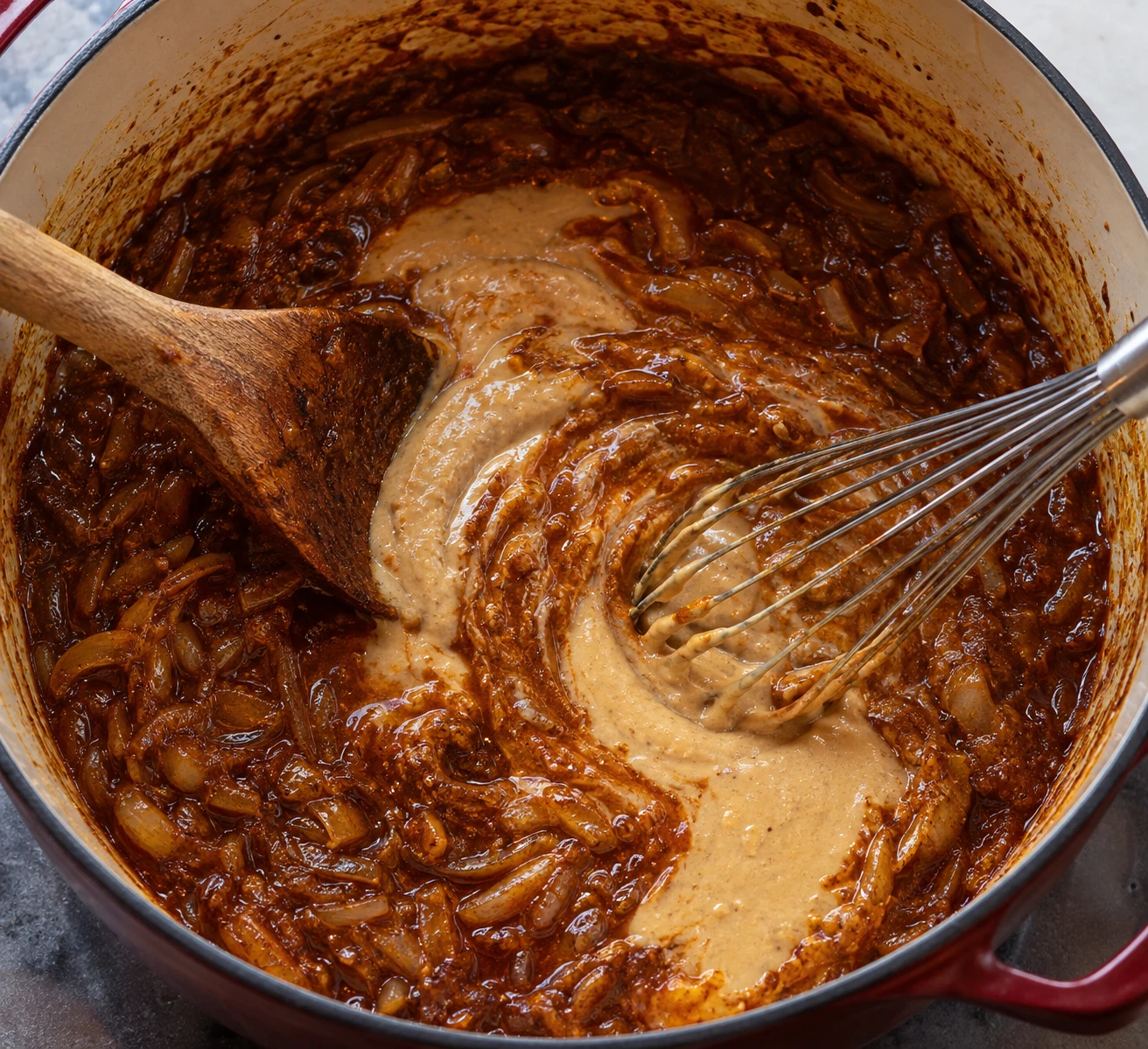
Mixing chickpea flour with warm broth before it meets the heat is the reliable route to a velvety shiro. Add that slurry gradually while whisking, then switch to a spoon as it thickens so you can sweep the pot bottom and prevent scorching.
Serve with brightness
The finished stew should be thick enough to cling to injera but loose enough to settle softly in a bowl; warm broth corrects a too-thick pot with ease. A crisp cabbage salad brings acid and crunch against the rich spices, while rice makes the meal just as satisfying when injera is unavailable.
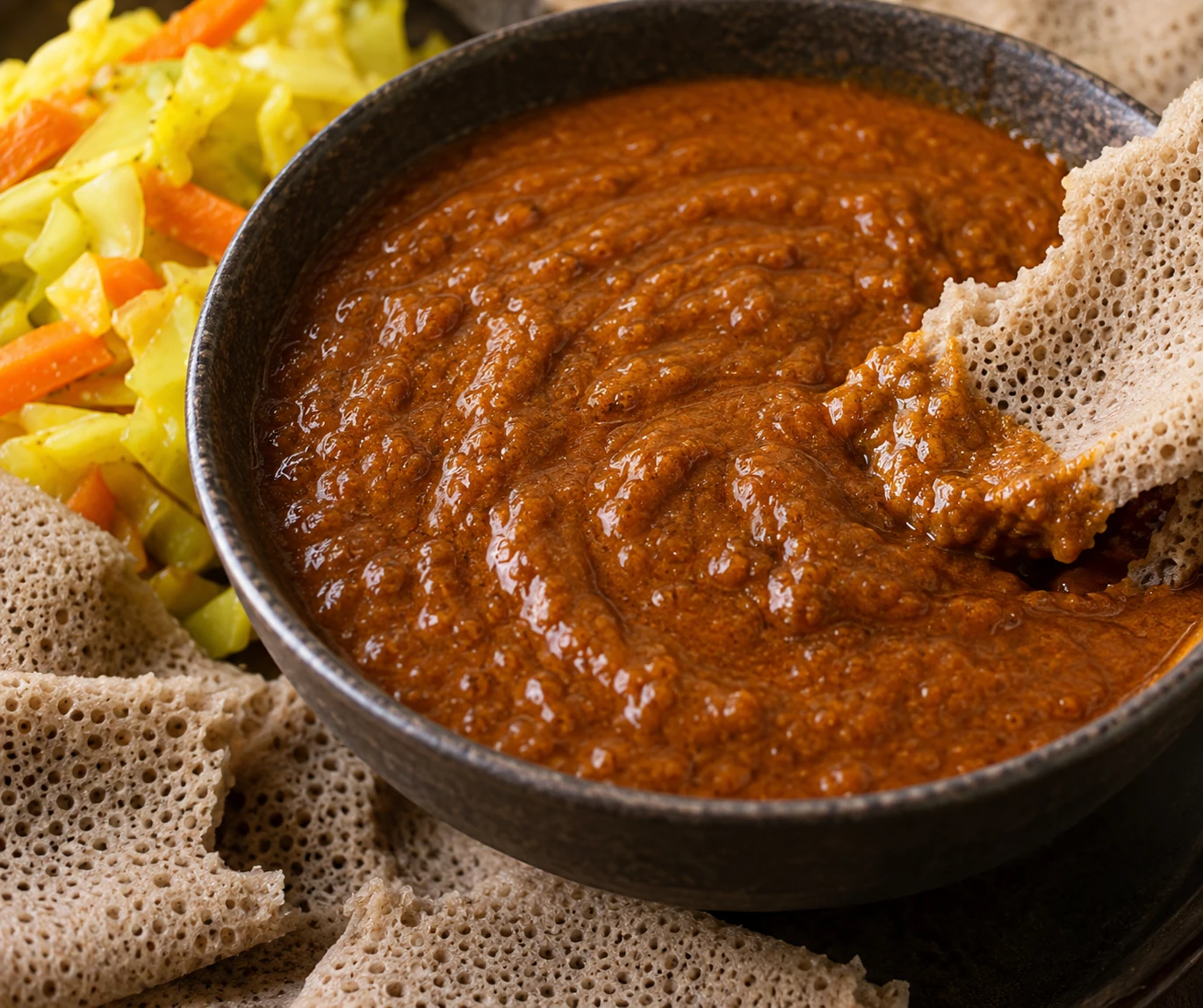
Ethiopian Shiro Wat
Ingredients
- • 2 tbsp neutral oil
- • 2 medium yellow onions, very finely minced
- • 4 garlic cloves, finely grated
- • 1 tbsp finely grated fresh ginger
- • 3 tbsp tomato paste
- • 1 to 3 tbsp berbere
- • 1 1/2 cups chickpea flour
- • 5 cups warm low-sodium vegetable broth, divided
- • 1 tsp kosher salt, plus more to taste
- • Injera or cooked rice and bright cabbage salad, for serving
Method
Prepare the aromatics
Finely mince the onions and grate the garlic and ginger so they can melt into the sauce rather than leave visible pieces.
Look for: The onion pieces are smaller than a grain of rice and the garlic and ginger form a moist paste.
Soften the onions
Warm the oil in a heavy Dutch oven over medium-low heat, add the onions and salt, and cook uncovered, stirring often, until very soft and translucent.
Look for: The onions look glossy and collapsed, with no browned edges or dry patches on the pot.
Darken the base
Stir in the garlic, ginger, tomato paste, and 1 tbsp berbere; cook over low heat, scraping the bottom frequently, until the paste is brick red and deeply fragrant.
Look for: The tomato paste has darkened slightly and the pot bottom stays clean when scraped with a wooden spoon.
Make a smooth slurry
Whisk the chickpea flour with 2 cups of the warm vegetable broth in a bowl until completely smooth, pressing out any flour pockets before it reaches the pot.
Look for: The slurry pours in a steady ribbon with no dry flour lumps clinging to the bowl.
Whisk in the shiro
Reduce the heat to low, slowly whisk the chickpea slurry into the aromatic base, then whisk in the remaining 3 cups vegetable broth until the stew is even.
Look for: The liquid turns uniformly russet and no pale streaks remain around the pot sides.
Simmer gently
Simmer the shiro over low heat for 16 minutes, stirring and scraping the bottom every 2 minutes, until it is velvety and thick enough to coat a spoon.
Look for: Small, lazy bubbles break at the surface and a spoon leaves a brief trail across the stew.
Adjust heat and texture
Taste and add up to 2 tbsp more berbere for extra heat; whisk in a splash of warm broth if too thick, or simmer a little longer if it is loose.
Look for: The finished shiro is smooth, spoonable, and warmly spiced without tasting raw or floury.
Serve the stew
Spoon the hot shiro wat into a warm serving bowl and serve with injera or cooked rice plus a bright cabbage salad for contrast.
Look for: The stew holds a soft mound in the bowl and the fresh cabbage salad provides a crisp, tangy counterpoint.