" fill="%23faf1da" stroke-width="1.8"/>%0A <ellipse cx="64.5" cy="50" rx="43" ry="12" transform="rotate(4 64.5 50)" stroke="%23938466"/>%0A <path d="m26 44 1 10m3-12 1 14m3-14 1 15m3-14 1 15m4-14 1 14m4-13 1 14m39-10-1 10m5-9-1 8m5-7-1 5" stroke="%23b2a181" stroke-width=".7"/>%0A <path d="M55 60c3-10 12-14 23-10l47-44c7-6 15-6 15-2 0 5-9 11-14 14L82 60c-8 4-21 4-27 0Z" fill="%23bc8c48" stroke-width="1.6"/>%0A <path d="M61 59c3-5 9-8 15-5l-4 7m8-8 49-45 6-4M84 52l45-41" stroke="%2376562e" stroke-width="1"/>%0A <path d="M20 53c18 14 69 19 90 2" stroke="%23514431" stroke-width="2"/>%0A <path d="M27 59c22 11 59 14 78 2" stroke="%23fff9e9" stroke-width="2"/>%0A <path d="m48 87 1 1m7 8 1 1m6-12 1 1m6 12 1 1m6-9 1 1m-24 9 1 1m19 4 1-1m10-16 1 1" stroke="%23aa9b7c"/>%0A </g>%0A</svg>%0A)
Tiramisu
Espresso-soaked ladyfingers and airy mascarpone cream settle into a cleanly sliced Italian classic beneath unsweetened cocoa.
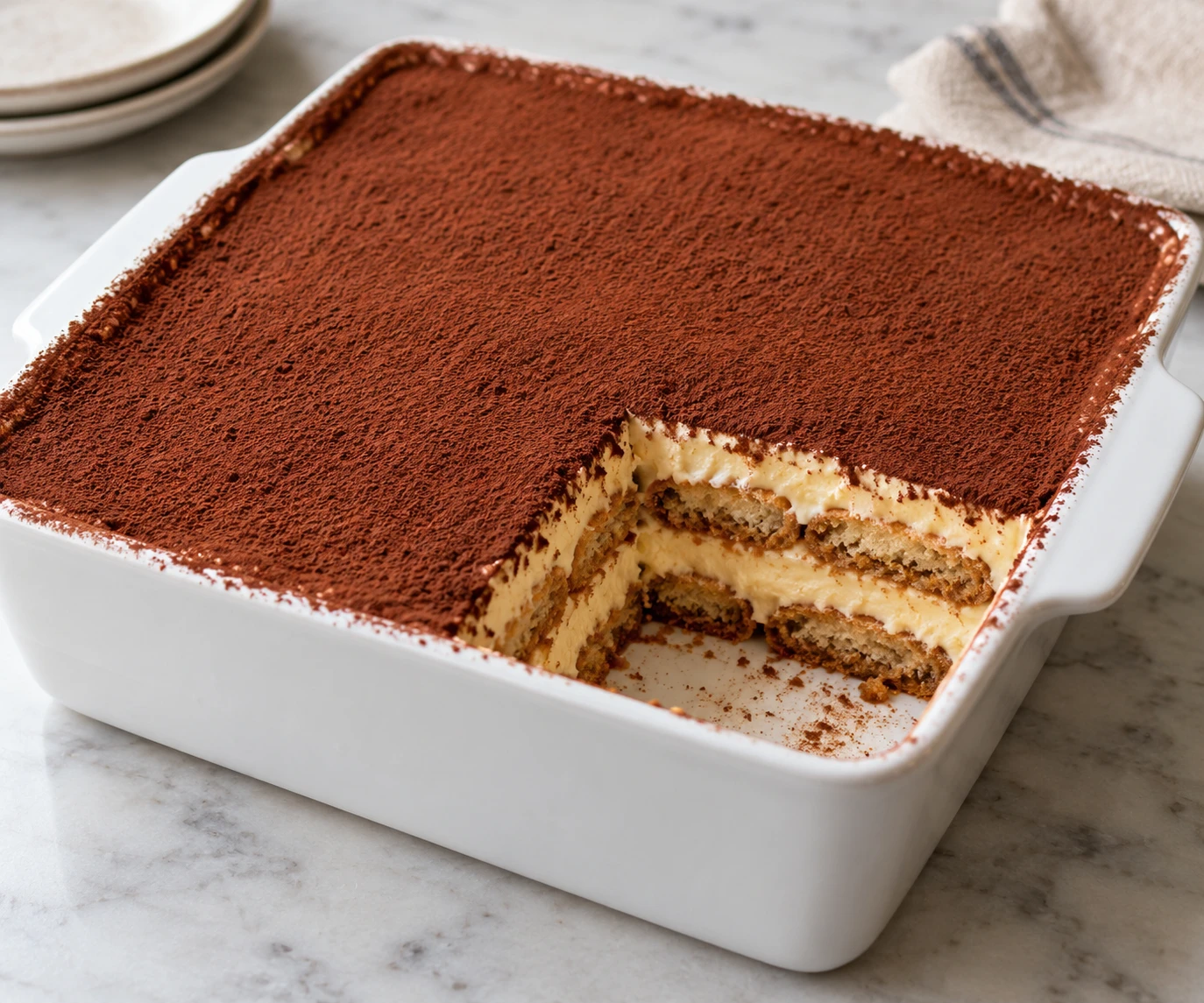
Tiramisu depends on contrast: crisp ladyfingers soften in espresso while a light mascarpone cream stays rich and smooth. A brief dip and a long chill let those layers meet without losing their shape.
Warm the yolks gently
Whisking the pasteurized yolks and sugar over simmering water builds a pale, thick base while bringing it to 160 F. Keep the bowl above the water and whisk continuously; direct heat can set the eggs into small curds.
Keep the cream light
Let the yolk mixture cool close to room temperature before folding in mascarpone. Brief mixing keeps the cheese smooth, and softly whipped cream gives the filling enough body to hold between the cookie layers.
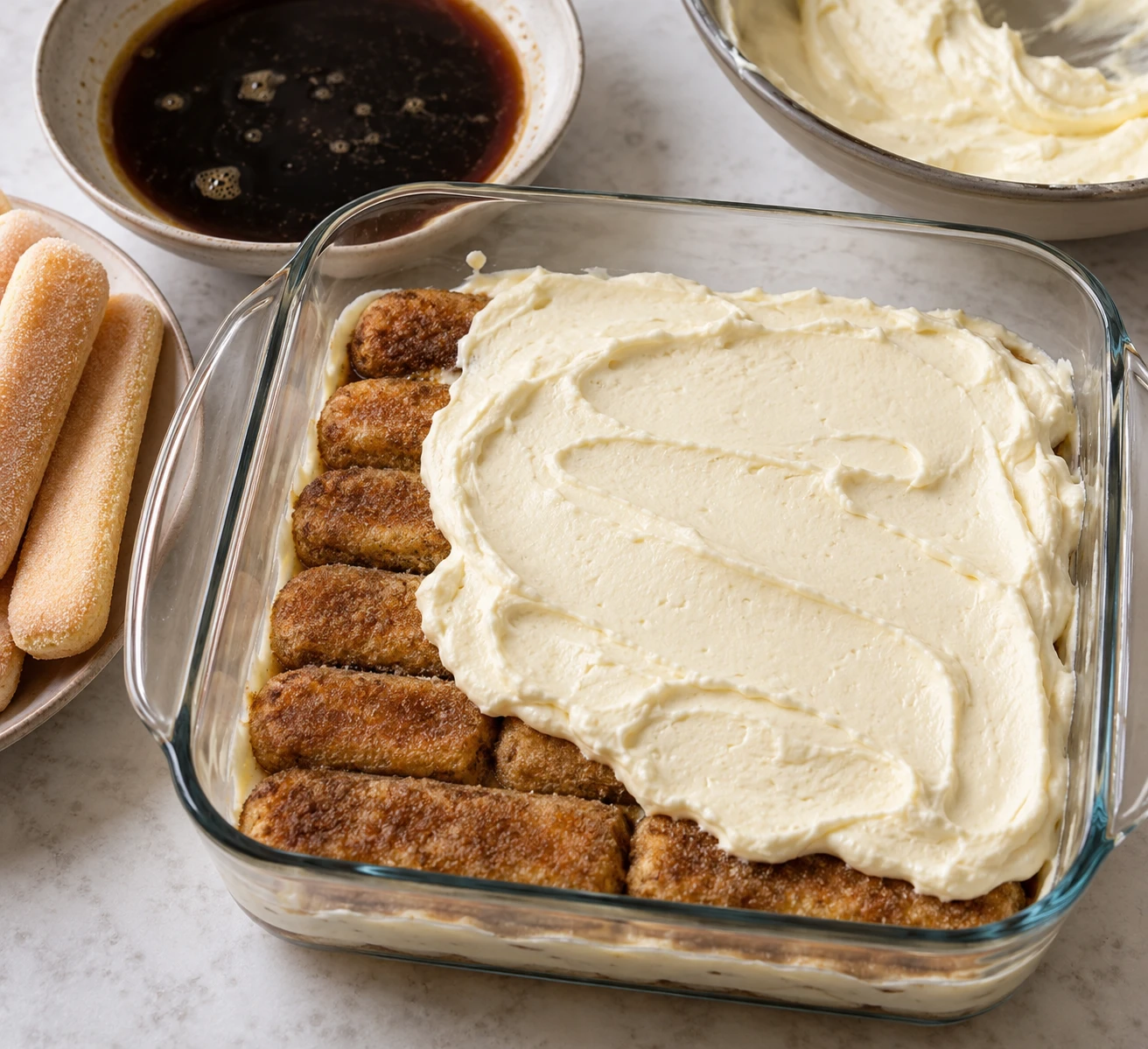
Dip quickly for structure
Cooled espresso gives the ladyfingers flavor without softening them too quickly. One short dip per side is enough; if they bend while being lifted, shorten the dip and let excess coffee drain before arranging them.
Give the layers time
A six-hour chill lets the filling firm and the coffee move evenly through the savoiardi. Overnight chilling makes the dessert easier to portion, while cocoa added just before serving keeps the top dry and aromatic.
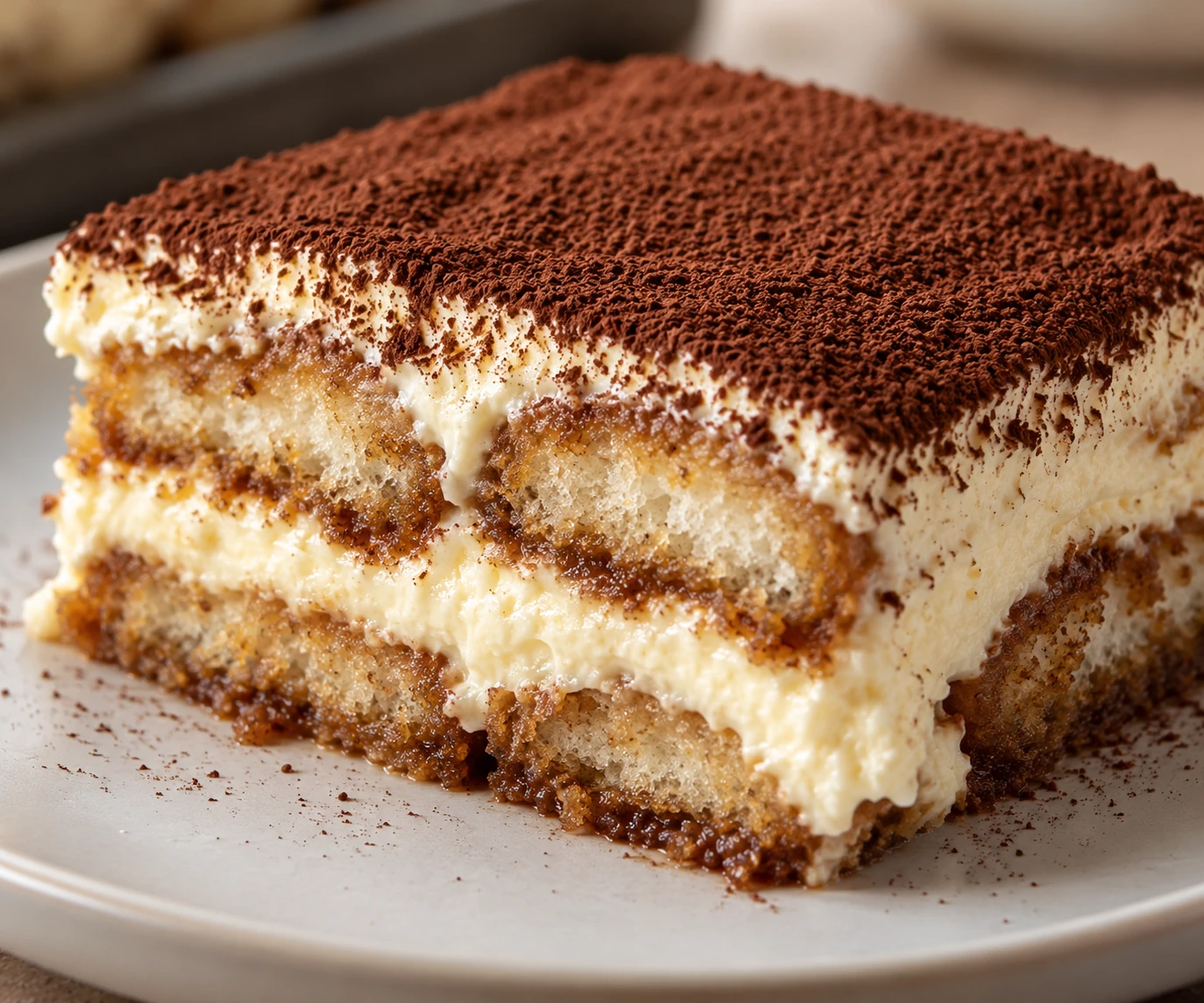
Slice with clean edges
Sift the cocoa over the fully chilled top immediately before serving, then use a sharp knife and wipe it between cuts. The simple finish keeps attention on the coffee, mascarpone, and tender biscuit layers.
Tiramisu
Ingredients
- • 6 large pasteurized egg yolks
- • 2/3 cup granulated sugar
- • 1/8 tsp fine salt
- • 16 oz mascarpone cheese, cool but pliable
- • 1 1/2 cups heavy cream, cold
- • 1 tsp vanilla extract
- • 1 1/2 cups strong espresso, cooled
- • 30 to 36 crisp savoiardi ladyfingers
- • 2 tbsp unsweetened cocoa powder
Method
Prepare the espresso and dish
Brew strong espresso and cool it completely in a shallow bowl; set an 8-inch square dish beside it so the ladyfingers can be dipped and layered without delay.
Look for: The espresso is no longer warm to the touch, which keeps the ladyfingers from turning soggy too quickly.
Warm the yolks and sugar
Set a heatproof bowl over gently simmering water without letting the bowl touch the water; whisk the pasteurized egg yolks, sugar, and salt constantly until pale, thick, and 160 F on an instant-read thermometer.
Look for: The mixture is pale and ribboning from the whisk, and registers 160 F without visible egg curds.
Whip the yolk mixture
Transfer the warm yolk mixture to a stand mixer fitted with the whisk, then beat on medium-high until very pale, thick, and close to room temperature so it will not melt the mascarpone.
Look for: The bowl feels barely warm and the whisk leaves a broad ribbon that sits briefly on the surface.
Make the mascarpone cream
Beat the cool mascarpone briefly in a separate bowl until smooth, then fold it into the yolk mixture in two additions just until no white streaks remain; avoid prolonged beating, which can loosen it.
Look for: The cream is smooth, thick, and uniform, with no grainy or separated patches.
Whip and fold the cream
Whip the cold heavy cream with vanilla to soft peaks, then fold it into the mascarpone mixture in three additions with a broad spatula to keep the filling airy.
Look for: Soft peaks curl over when the whisk is lifted, and the finished cream holds soft waves without looking grainy.
Dip and arrange the first layer
Dip each ladyfinger into the cooled espresso for about one second per side, letting excess drip back into the bowl, then arrange a snug single layer in the 8-inch dish without pressing them together.
Look for: The ladyfingers are lightly darkened on the outside but still firm enough to lift without bending.
Layer the cream and ladyfingers
Spread half of the mascarpone cream evenly over the first layer; dip and arrange the remaining ladyfingers on top, then cover with the remaining cream and smooth the surface.
Look for: The cream reaches the corners and the top is level, with no exposed ladyfingers.
Chill until set
Cover the dish without touching the cream and refrigerate for at least 6 hours, preferably overnight, so the layers set and the espresso softens the ladyfingers evenly.
Look for: The cream is chilled and firm enough to hold a clean-edged slice.
Dust and serve
Right before serving, sift the unsweetened cocoa evenly over the chilled surface and cut into portions with a sharp knife, wiping the blade between cuts for distinct layers.
Look for: The cocoa forms a fine even veil and each slice shows clear espresso-soaked and cream layers.