" fill="%23faf1da" stroke-width="1.8"/>%0A <ellipse cx="64.5" cy="50" rx="43" ry="12" transform="rotate(4 64.5 50)" stroke="%23938466"/>%0A <path d="m26 44 1 10m3-12 1 14m3-14 1 15m3-14 1 15m4-14 1 14m4-13 1 14m39-10-1 10m5-9-1 8m5-7-1 5" stroke="%23b2a181" stroke-width=".7"/>%0A <path d="M55 60c3-10 12-14 23-10l47-44c7-6 15-6 15-2 0 5-9 11-14 14L82 60c-8 4-21 4-27 0Z" fill="%23bc8c48" stroke-width="1.6"/>%0A <path d="M61 59c3-5 9-8 15-5l-4 7m8-8 49-45 6-4M84 52l45-41" stroke="%2376562e" stroke-width="1"/>%0A <path d="M20 53c18 14 69 19 90 2" stroke="%23514431" stroke-width="2"/>%0A <path d="M27 59c22 11 59 14 78 2" stroke="%23fff9e9" stroke-width="2"/>%0A <path d="m48 87 1 1m7 8 1 1m6-12 1 1m6 12 1 1m6-9 1 1m-24 9 1 1m19 4 1-1m10-16 1 1" stroke="%23aa9b7c"/>%0A </g>%0A</svg>%0A)
Teriyaki Sauce
Soy sauce, mirin, sake, and sugar simmer into a balanced Japanese glaze with a natural spoon-coating finish.
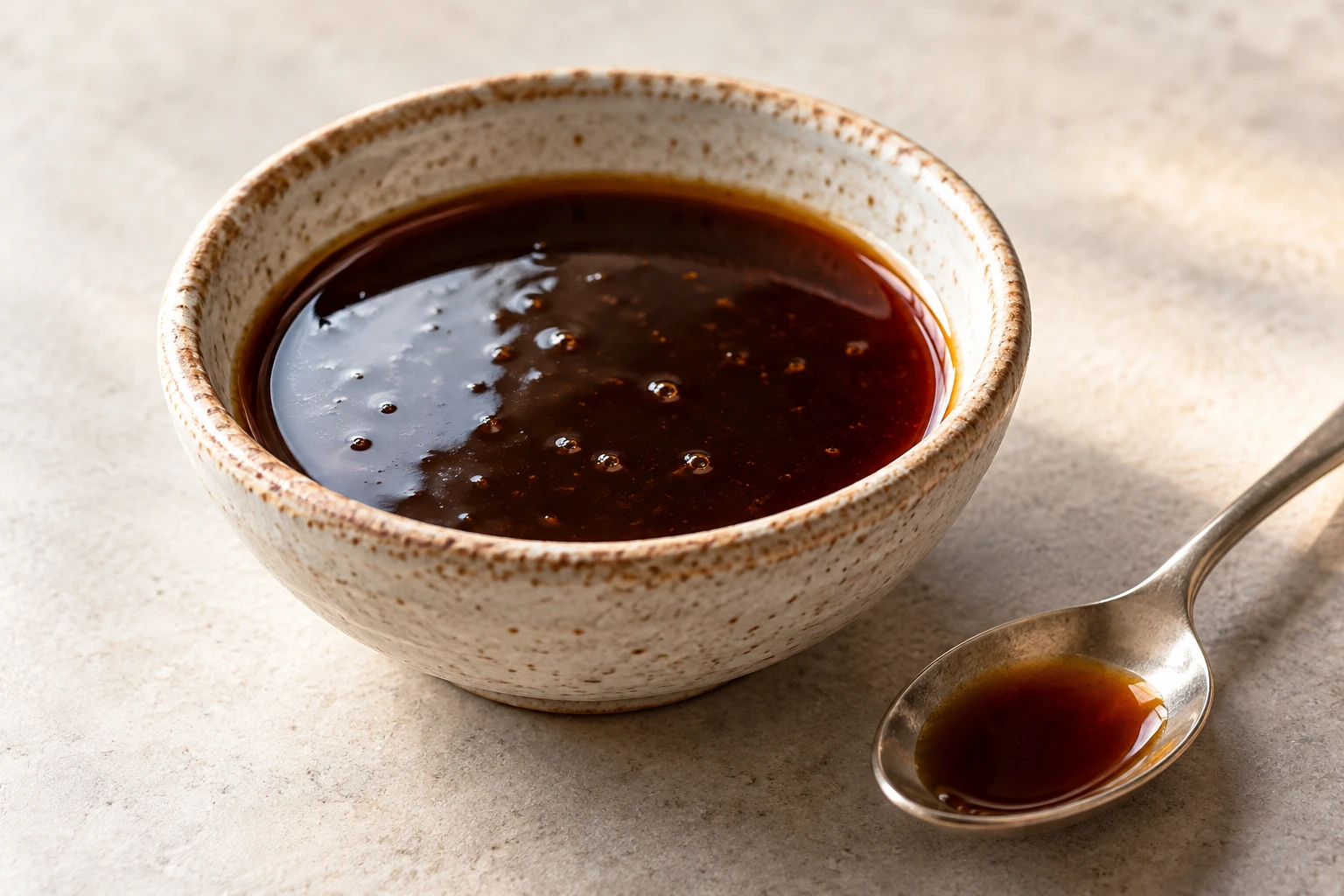
This Japanese-style tare depends on a measured reduction rather than starch. A calm simmer concentrates the savory, sweet, and fragrant elements while keeping the finish clean.
Ginger is optional and should stay in the background; the sauce is equally complete without it.
Start with a balanced base
Soy sauce supplies the savory backbone, while mirin and sake round it with sweetness and aroma. Stirring the sugar into the measured liquids before the simmer helps it dissolve evenly rather than catching on the pan.
A few ginger slices can lend a gentle warmth. Strain them out after reducing for a clear glaze, or leave them out from the start for a more direct soy and mirin profile.
Reduce with a quiet simmer
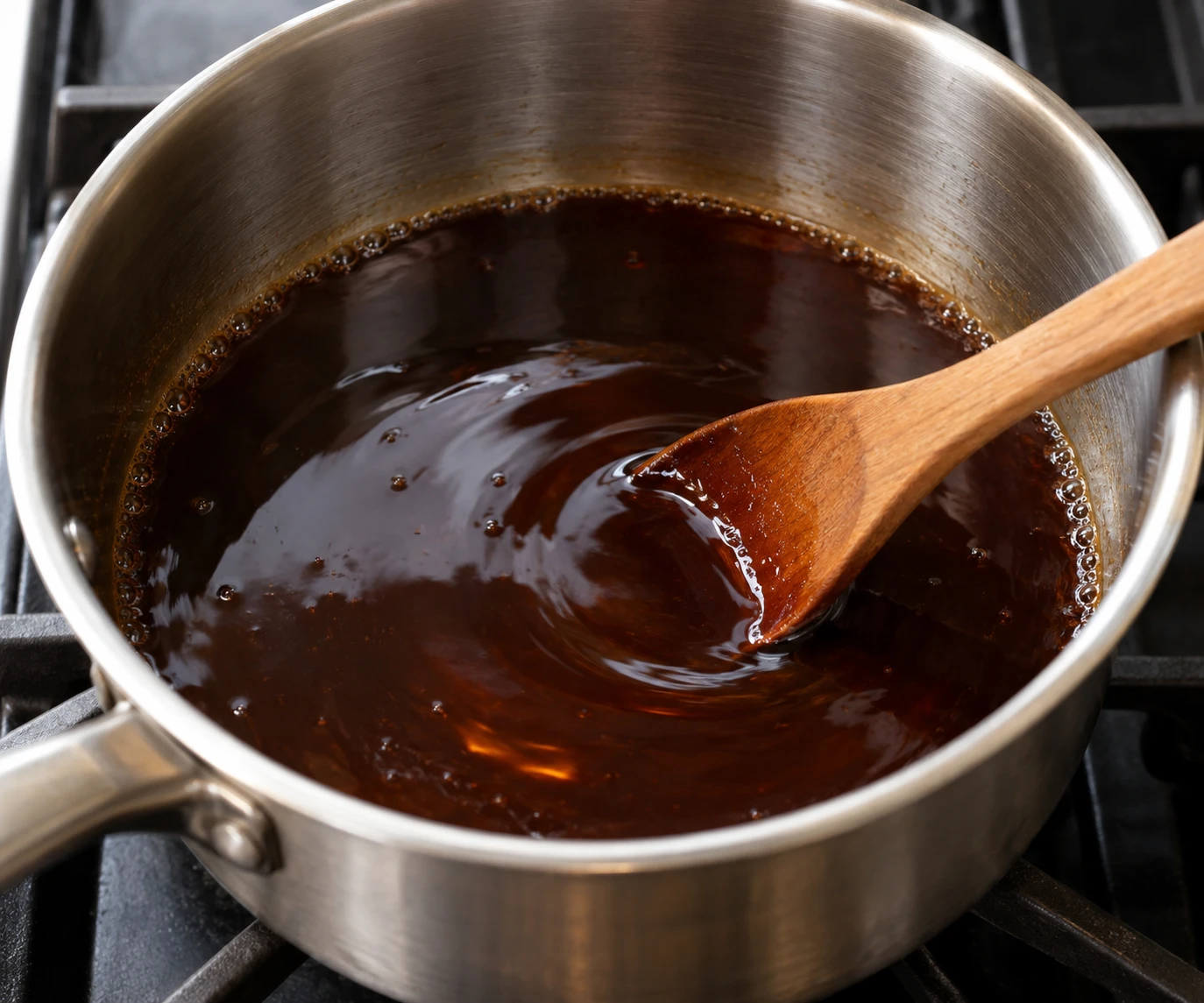
A bare simmer gives the liquids time to concentrate without scorching the sugar at the edge of the saucepan. Stir occasionally and use the spoon as a practical cue: a light film and a slowly closing trail indicate a glaze that can still pour.
Allow for cooling
The sauce is thinner while hot and gains body as it cools, so avoid chasing a sticky texture in the pan. If it coats the spoon lightly before cooling, it should settle into a more substantial glaze afterward without cornstarch.
Use the sauce on its own terms
Brush the glaze over food close to the end of cooking, when its sugars can cling without spending too long over direct heat. It also works as a table dipping sauce, where its balanced reduction can be tasted on its own.
Teriyaki Sauce
Ingredients
- • 1/2 cup Japanese soy sauce (shoyu)
- • 1/2 cup mirin
- • 1/2 cup sake
- • 1/4 cup granulated sugar
- • 3 thin slices fresh ginger (optional)
Method
Measure and combine
Measure the soy sauce, mirin, and sake into a small nonreactive saucepan, then add the sugar and stir briefly to wet it evenly. Add the ginger slices only if you want a gentle warm accent.
Look for: The sugar is evenly dampened and the optional ginger is submerged.
Dissolve the sugar
Set the pan over medium-low heat and stir until the sugar dissolves and tiny bubbles gather at the edge; keep the mixture below a full boil for a clean, even reduction.
Look for: No sugar crystals remain on the spoon and only small edge bubbles appear.
Reduce gently
Lower the heat and simmer uncovered for about 12 minutes, stirring occasionally so the base reduces steadily without scorching around the pan's edge.
Look for: The liquid looks glossy and its bubbles become slightly slower and larger.
Check the coating
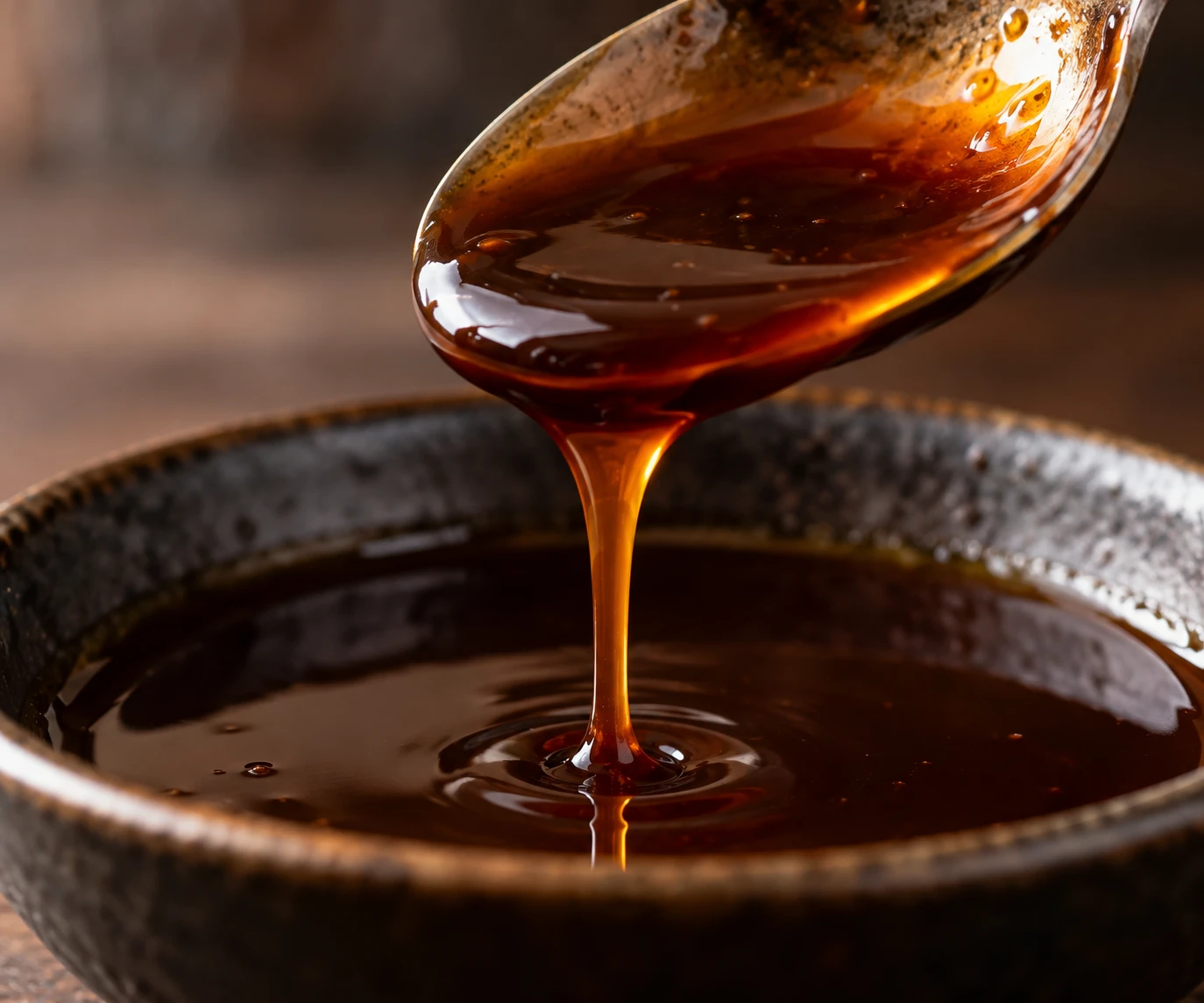
Dip a cool metal spoon into the sauce and let it run back into the pan; the sauce should leave a thin, even film and a trail that closes slowly. If it still runs like water, continue at a bare simmer in short increments.
Look for: A thin glossy film clings to the spoon without becoming sticky or syrupy.
Strain the ginger
If you added ginger, pour the sauce through a fine-mesh strainer into a heatproof bowl and discard the slices; if you skipped ginger, transfer the sauce directly.
Look for: The sauce is smooth and free of ginger pieces when a clear finish is desired.
Cool to finish thickening
Let the sauce stand until warm, then cool it for 15 minutes before judging its final body; it thickens as it cools, so keep the reduction slightly looser than the texture you want to serve.
Look for: The cooled sauce lightly coats a spoon and pours in a slow, continuous ribbon.
Use or store
Brush the sauce over food near the end of cooking or serve it at the table for dipping, keeping the recipe focused on the glaze itself. Refrigerate any unused sauce in a clean covered container.
Look for: The glaze spreads in a thin layer without pooling heavily.