" fill="%23faf1da" stroke-width="1.8"/>%0A <ellipse cx="64.5" cy="50" rx="43" ry="12" transform="rotate(4 64.5 50)" stroke="%23938466"/>%0A <path d="m26 44 1 10m3-12 1 14m3-14 1 15m3-14 1 15m4-14 1 14m4-13 1 14m39-10-1 10m5-9-1 8m5-7-1 5" stroke="%23b2a181" stroke-width=".7"/>%0A <path d="M55 60c3-10 12-14 23-10l47-44c7-6 15-6 15-2 0 5-9 11-14 14L82 60c-8 4-21 4-27 0Z" fill="%23bc8c48" stroke-width="1.6"/>%0A <path d="M61 59c3-5 9-8 15-5l-4 7m8-8 49-45 6-4M84 52l45-41" stroke="%2376562e" stroke-width="1"/>%0A <path d="M20 53c18 14 69 19 90 2" stroke="%23514431" stroke-width="2"/>%0A <path d="M27 59c22 11 59 14 78 2" stroke="%23fff9e9" stroke-width="2"/>%0A <path d="m48 87 1 1m7 8 1 1m6-12 1 1m6 12 1 1m6-9 1 1m-24 9 1 1m19 4 1-1m10-16 1 1" stroke="%23aa9b7c"/>%0A </g>%0A</svg>%0A)
Steak and Eggs
A hot cast-iron skillet sears a simple, unbreaded steak before eggs cook in the same pan for a classic breakfast plate.
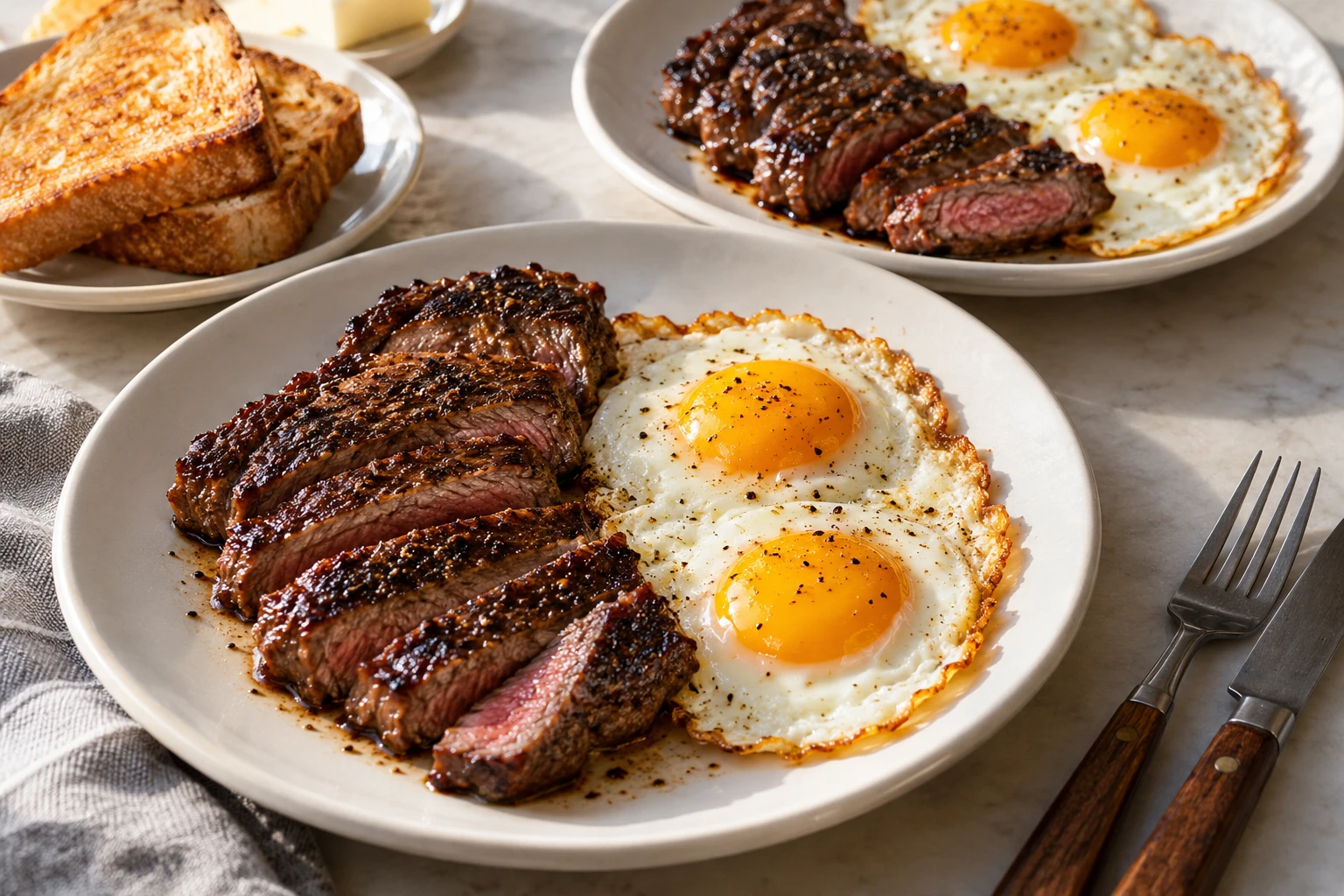
A hot cast-iron skillet sears a simple, unbreaded steak, and the same pan then fries eggs in the remaining butter. Letting the beef rest off the heat while the eggs cook keeps it from sitting in the skillet and gives the juices time to settle.
Choose the steak cut
Sirloin is the default for this plate because it sears quickly and slices neatly across the grain. If New York strip is preferred or available, use the listed strip-steak alternative and follow the same seasoning and thermometer cues.
Start with a dry, hot pan
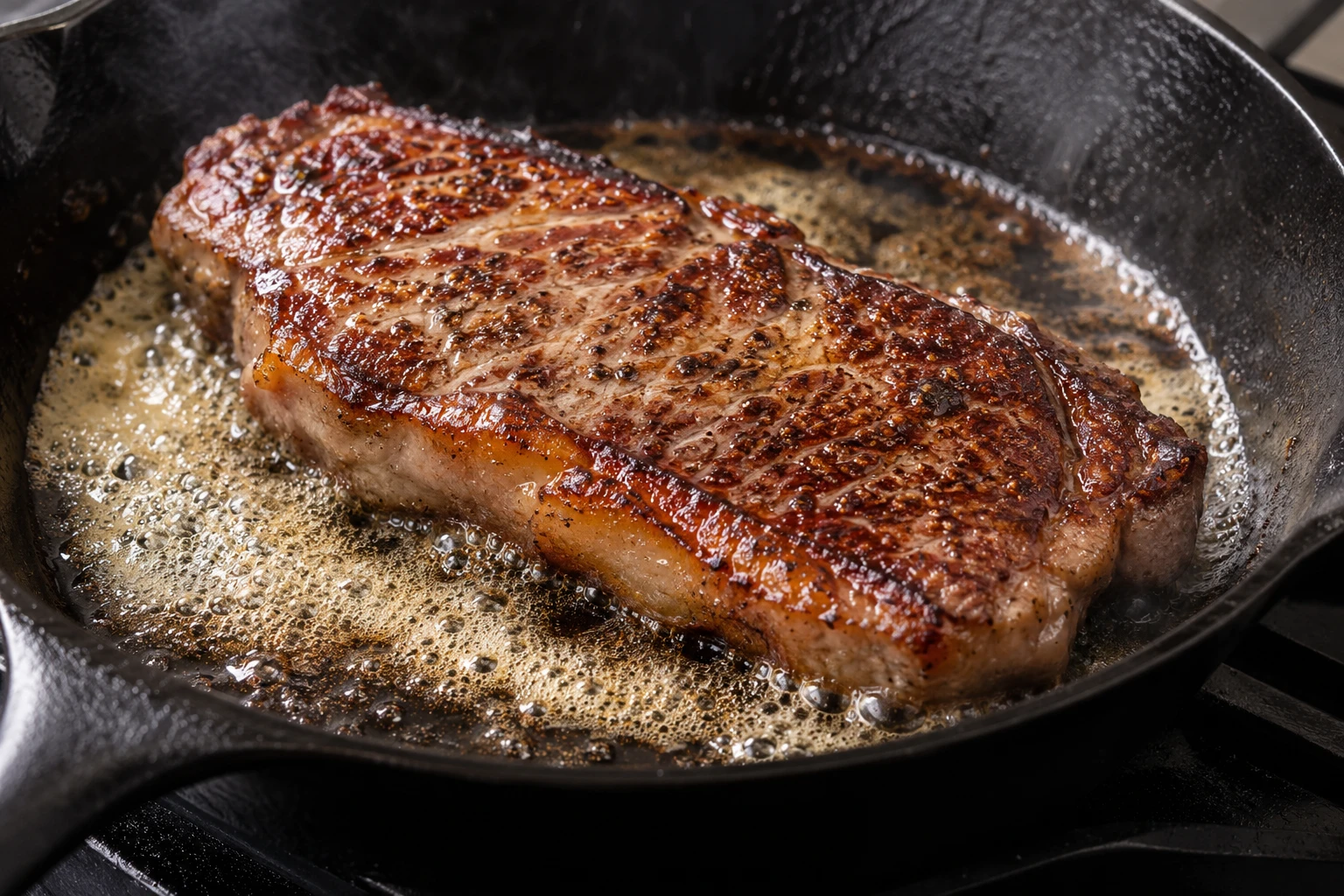
Patting the steak dry helps the surface brown instead of steam, while a thoroughly heated cast-iron skillet builds a deep crust. Add butter only near the end of searing so it can baste the meat without scorching over the strongest heat.
Rest before slicing
Use an instant-read thermometer in the thickest center and remove the steak only after it reaches the safe minimum temperature. A rest of at least three minutes off the skillet completes the safe handling step and keeps the steak from continuing to cook over direct heat.
Cook the eggs to order
Lowering the skillet before the eggs go in lets the butter and steak drippings flavor them without scorching. Sunny-side-up eggs keep a soft yolk; flipping or cooking longer gives the yolk a firmer finish, and fully cooked eggs reach 160 F.
Steak and Eggs
Ingredients
- •
- • 1 tbsp unsalted butter
- • 1/2 tsp kosher salt
- • 1/4 tsp freshly ground black pepper
- • 2 large eggs
- • 2 slices sturdy bread, optional for toast
- • 1 cup prepared breakfast potatoes, optional side
Method
Prepare an optional side
Set two plates by the stove. If serving a side, toast the bread or warm the prepared breakfast potatoes separately, then keep the chosen side warm while the steak cooks.
Look for: The plates are ready and any optional side is warm before the steak comes off the skillet.
Dry and season the steak
Pat the 12 oz sirloin steak dry and season both sides evenly with the kosher salt and black pepper. If using the listed 12 oz New York strip alternative, dry and season it the same way.
Look for: The steak surface is dry and both sides have an even, light coating of seasoning.
Heat the cast iron
Heat a cast-iron skillet over high heat until it is very hot and a faint wisp of smoke appears; the dry pan creates a quick crust without adding oil that could splatter.
Look for: The skillet is hot across the cooking surface and begins to give off a faint wisp of smoke.
Sear to a safe temperature
Lay the steak in the hot skillet and sear about 3 to 4 minutes per side, turning once. During the final minute, add 1 tsp butter and spoon it over the steak; check the thickest center with an instant-read thermometer and continue in 1-minute increments until it reaches 145 F before removing it.
Look for: The steak has a deep brown crust and its thickest center reaches 145 F before it leaves the heat.
Rest the steak
Transfer the steak to a clean plate and let it rest undisturbed for at least 3 minutes before slicing; loosely tent it while the pan cools slightly for the eggs.
Look for: The steak rests off the hot skillet for at least 3 minutes before it is cut.
Butter the same skillet
Lower the cast-iron skillet to medium-low and melt the remaining butter in the same pan; swirl to combine it with the steak drippings without letting it brown or smoke.
Look for: The butter melts into a thin, gently bubbling layer and the pan no longer smokes.
Fry the eggs to order
Crack the eggs into the buttered skillet and cook them sunny-side up until the whites are opaque, or flip each egg gently for over-easy or firmer yolks. For fully cooked eggs, continue until each yolk is firm and reaches 160 F, keeping the heat low so the bottoms do not brown before the tops set.
Look for: The whites are opaque; cook longer or flip for the requested yolk texture, with fully cooked yolks firm at 160 F.
Slice and serve
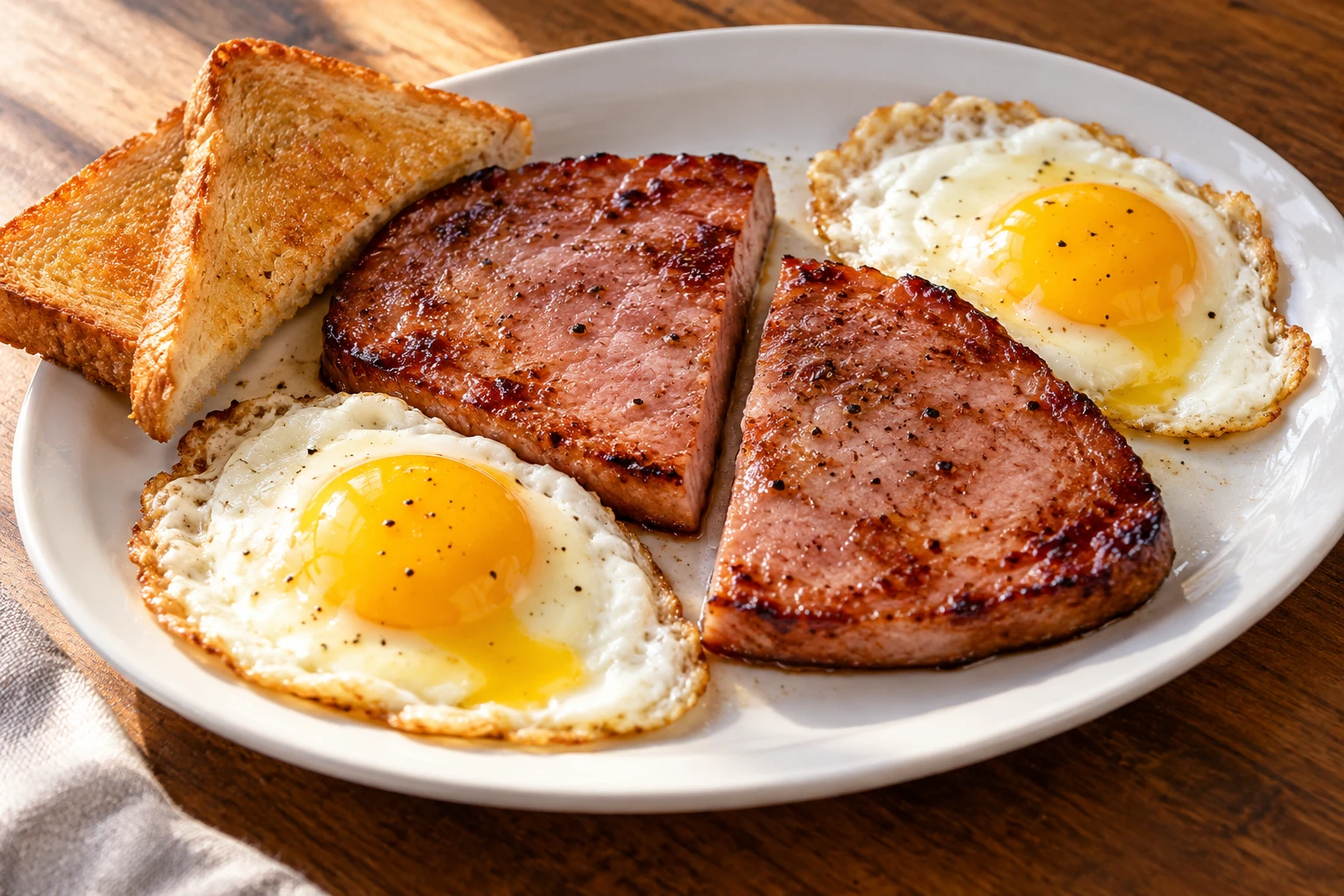
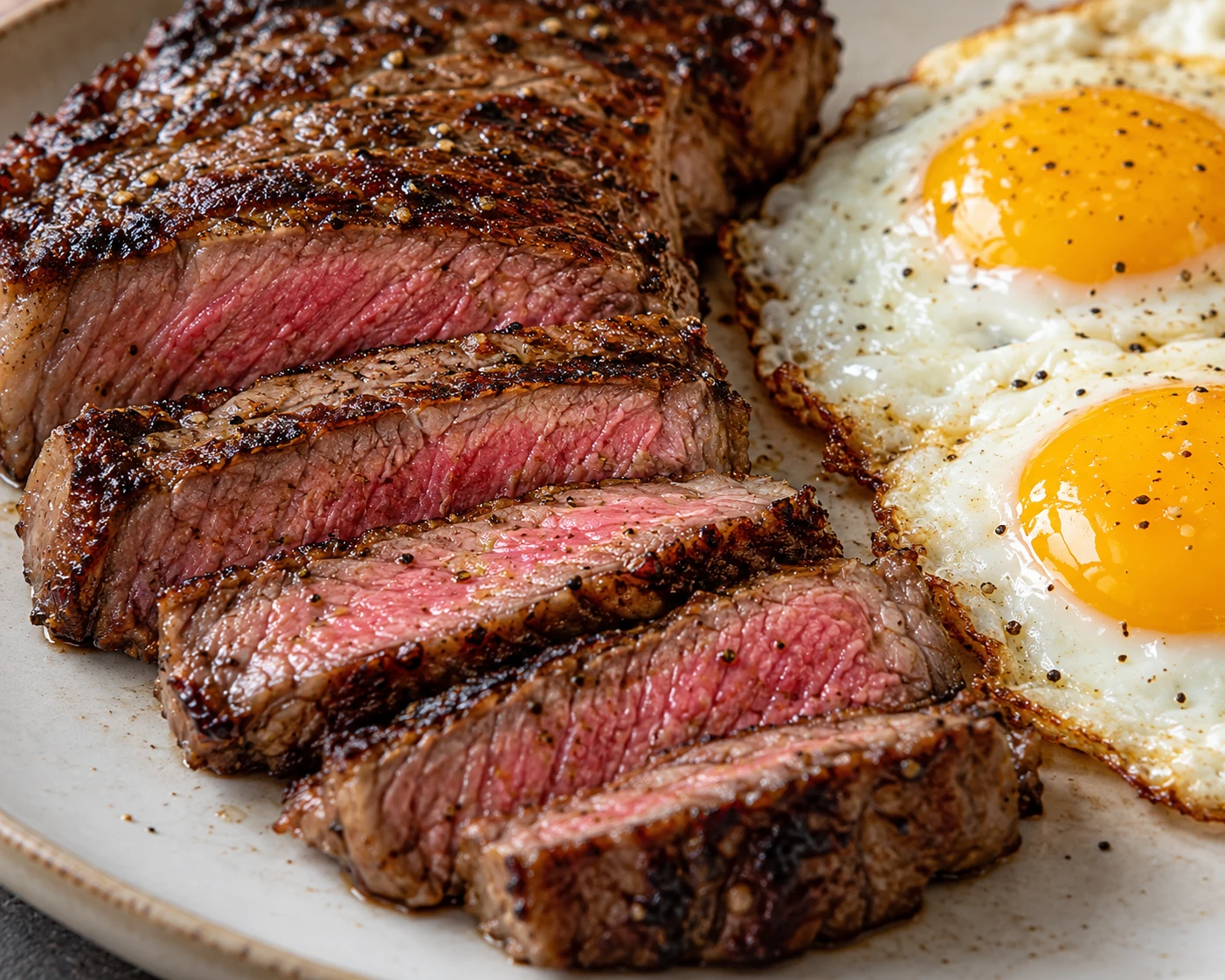
Slice the rested steak across the grain and divide it between the plates. Add the eggs and serve at once with the optional toast or breakfast potatoes, if prepared.
Look for: The steak is sliced across its visible grain and the eggs reach the table hot beside it.