" fill="%23faf1da" stroke-width="1.8"/>%0A <ellipse cx="64.5" cy="50" rx="43" ry="12" transform="rotate(4 64.5 50)" stroke="%23938466"/>%0A <path d="m26 44 1 10m3-12 1 14m3-14 1 15m3-14 1 15m4-14 1 14m4-13 1 14m39-10-1 10m5-9-1 8m5-7-1 5" stroke="%23b2a181" stroke-width=".7"/>%0A <path d="M55 60c3-10 12-14 23-10l47-44c7-6 15-6 15-2 0 5-9 11-14 14L82 60c-8 4-21 4-27 0Z" fill="%23bc8c48" stroke-width="1.6"/>%0A <path d="M61 59c3-5 9-8 15-5l-4 7m8-8 49-45 6-4M84 52l45-41" stroke="%2376562e" stroke-width="1"/>%0A <path d="M20 53c18 14 69 19 90 2" stroke="%23514431" stroke-width="2"/>%0A <path d="M27 59c22 11 59 14 78 2" stroke="%23fff9e9" stroke-width="2"/>%0A <path d="m48 87 1 1m7 8 1 1m6-12 1 1m6 12 1 1m6-9 1 1m-24 9 1 1m19 4 1-1m10-16 1 1" stroke="%23aa9b7c"/>%0A </g>%0A</svg>%0A)
Salted Caramel Sauce
Dry-caramel color cues and deliberate additions make a smooth salted sauce with a pour that can be adjusted after cooling.
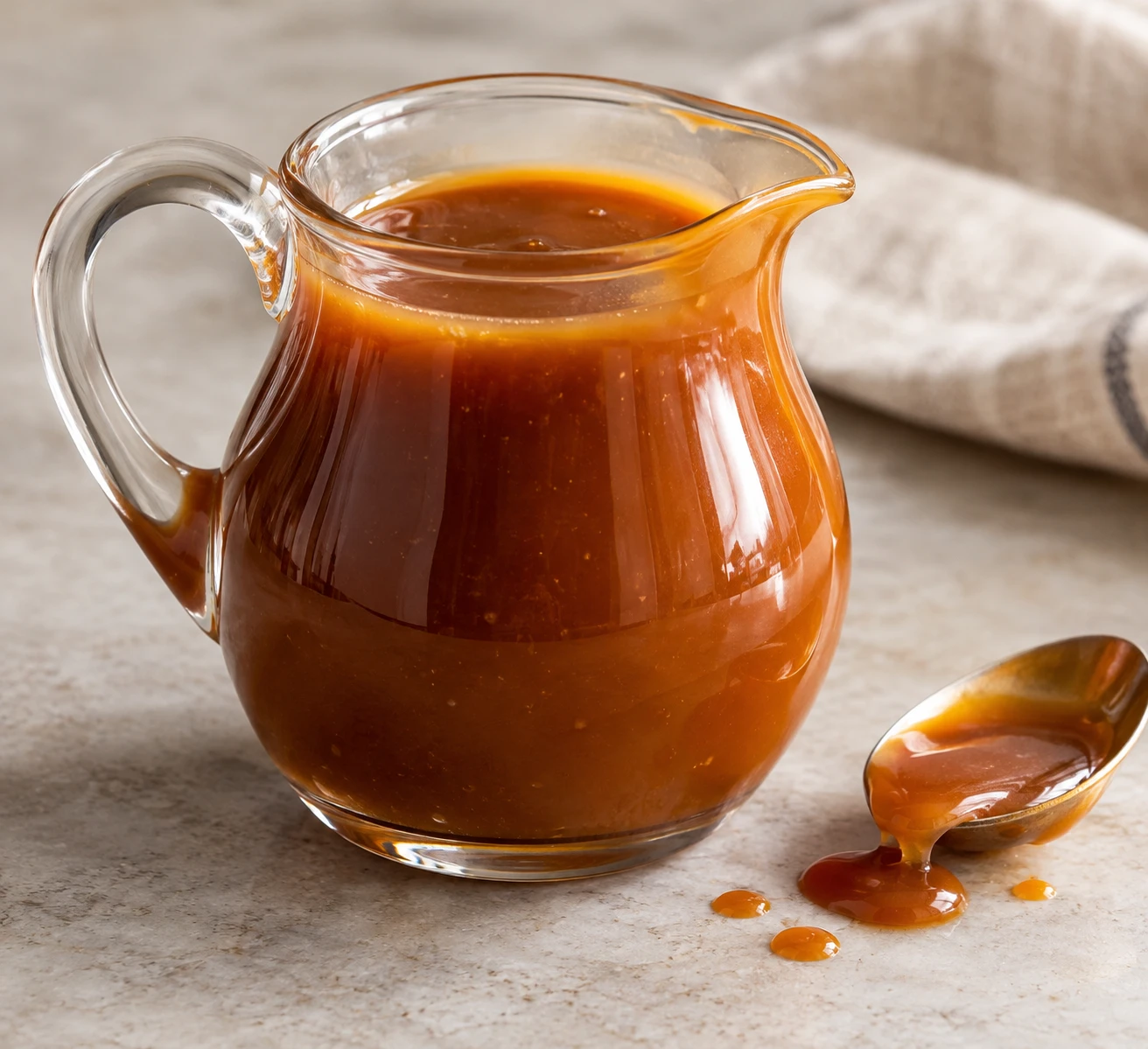
Salted caramel depends on a short window between melted sugar and burnt sugar. A dry pan and steady medium-low heat give the cook time to watch the color change.
Warm cream and gradual additions make the finish easier to control, while a final consistency check accounts for the sauce thickening as it cools.
Watch the sugar, not the clock
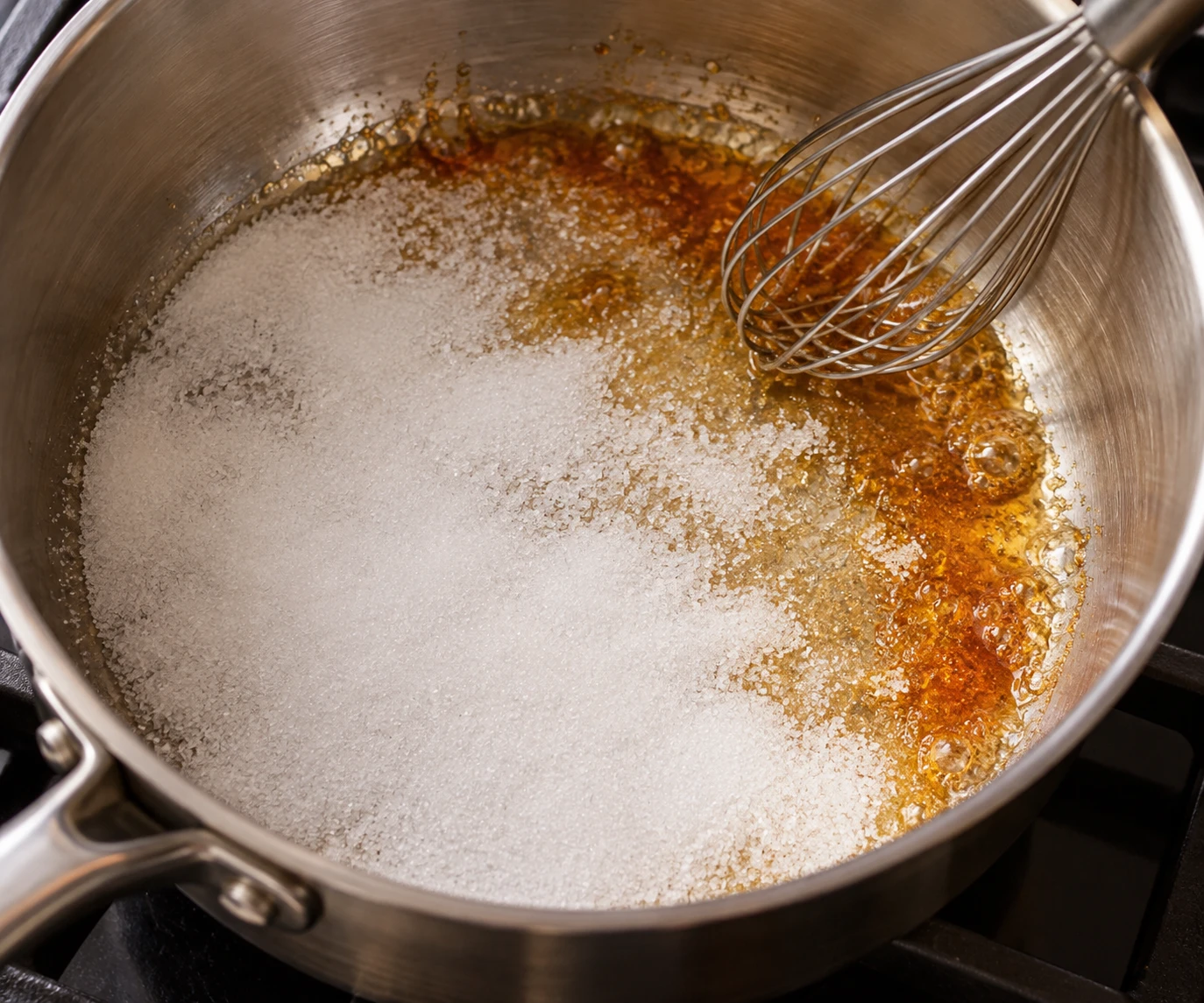
Spread granulated sugar in a dry, even layer and let its edges liquefy before swirling the pan. The clear deep amber color of a copper penny and a toasted aroma signal a good stopping point; mahogany color, an acrid smell, or heavy smoke means the sugar has gone too far.
Manage the foam
Taking the pan off the burner before adding butter gives the foam room to rise without continued heat pushing it higher. Add the cubes gradually and let each addition melt before whisking in more.
Add warm cream with care
Warm cream meets hot sugar with a vigorous burst of bubbles, so stream it in slowly while whisking and keep your face away from the pan. If the caramel briefly seizes into firm pieces, gentle low heat and steady stirring dissolve them again.
Set the final consistency
Judge the sauce after it has cooled, because warm caramel runs more freely than the finished sauce. If it is thicker than you want, whisk in a little reserved cream warmed again; for a thicker coating, simply let it cool further.
Salted Caramel Sauce
Ingredients
- • 1 cup granulated sugar
- • 6 tbsp unsalted butter, cut into small cubes
- • 2/3 cup heavy cream, divided and warmed
- • 1/2 tsp fine sea salt
- • 1 tsp vanilla extract (optional)
Method
Set up for hot caramel
Measure the sugar, cube the butter, and set a heavy high-sided saucepan and a long-handled whisk within reach; keep hands and face clear of the pan once the sugar melts.
Look for: Every ingredient and the whisk are ready before the dry sugar goes into the pan.
Warm the cream
Warm the heavy cream in a small saucepan over low heat until steaming but not simmering, then keep it warm and reserve a little for adjusting the finished sauce.
Look for: The cream gives off steam but has no active bubbles around the edge.
Start the dry caramel
Spread the granulated sugar in an even layer in the dry saucepan and set it over medium-low heat; leave it undisturbed until liquid patches appear around the edges.
Look for: The pan remains dry and clear sugar begins melting first at the edges.
Bring sugar to deep amber
Tilt and gently swirl the pan as the melted sugar spreads, lowering the heat if it darkens quickly; cook until nearly all sugar is liquid and deep amber, like a copper penny, then remove it before the aroma turns acrid or it smokes heavily.
Look for: The caramel is a clear deep amber rather than mahogany, smells toasted and sweet, and has no bitter burnt odor.
Whisk in the butter
Take the pan off the heat and whisk in the unsalted butter a few cubes at a time, pausing if the foam rises; keep the pan on a stable surface and whisk until the butter is melted into the caramel.
Look for: The foam settles between additions and no distinct butter pieces remain.
Add the warm cream slowly
With the pan still off the heat, pour in the warm heavy cream in a thin stream while whisking; expect vigorous bubbling, keep your face back, and pause whenever the foam climbs toward the rim so the sauce does not splatter over the pan.
Look for: Bubbling subsides between additions and the caramel loosens into a glossy sauce.
Smooth and season
If cream has made the caramel seize into firm bits, return the pan to low heat and stir gently until they dissolve; remove from the heat, then stir in the fine sea salt and optional vanilla extract.
Look for: The sauce is smooth and fluid with no hard caramel pieces, and the salt is evenly dispersed.
Cool and adjust the pour
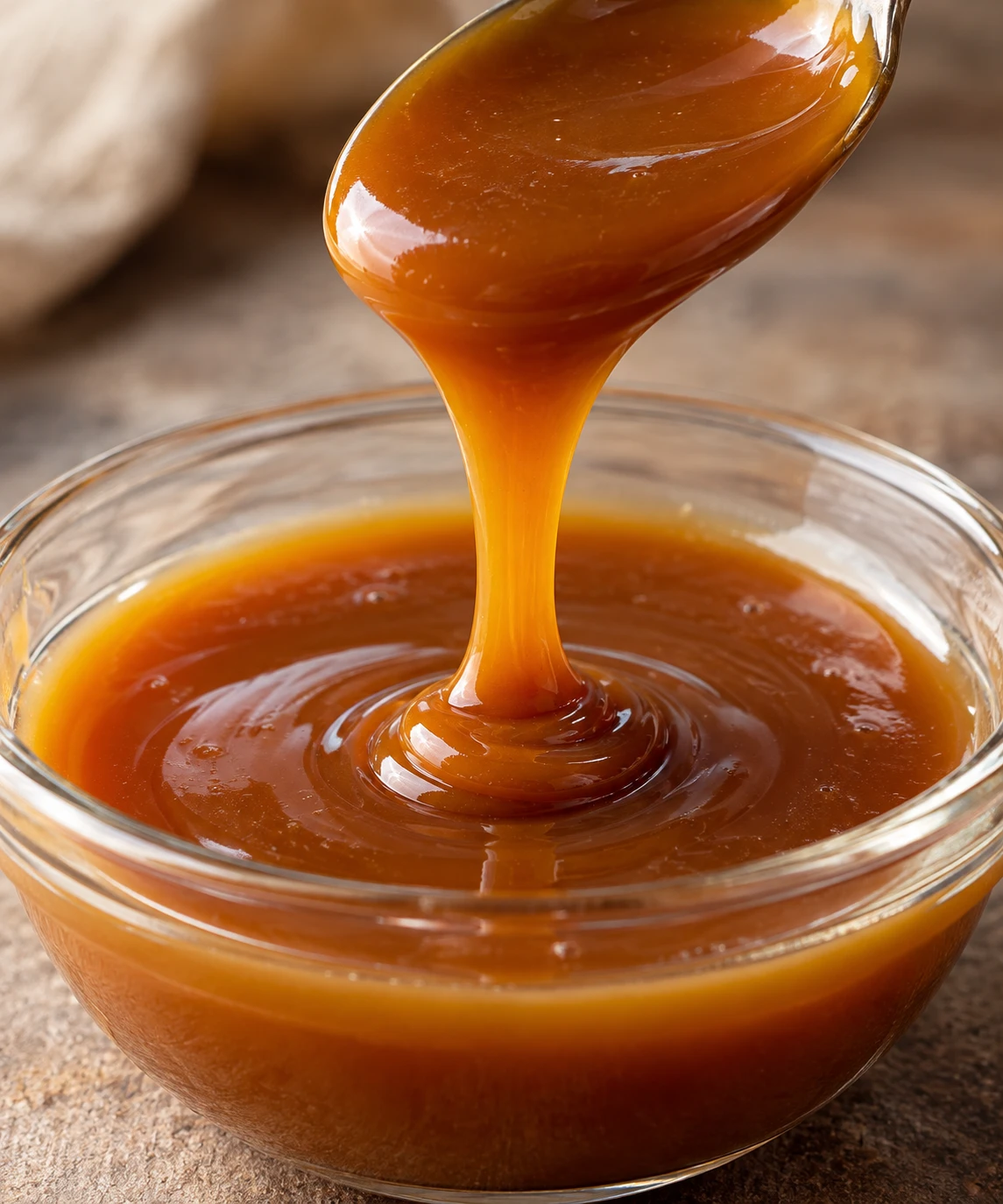
Let the sauce stand for 30 minutes, then check its consistency because it thickens as it cools; for a thinner pour, whisk in a little reserved cream warmed again, or leave the sauce as is for a thicker coating consistency.
Look for: The cooled sauce falls from a spoon in a steady ribbon; it thickens further when chilled.