" fill="%23faf1da" stroke-width="1.8"/>%0A <ellipse cx="64.5" cy="50" rx="43" ry="12" transform="rotate(4 64.5 50)" stroke="%23938466"/>%0A <path d="m26 44 1 10m3-12 1 14m3-14 1 15m3-14 1 15m4-14 1 14m4-13 1 14m39-10-1 10m5-9-1 8m5-7-1 5" stroke="%23b2a181" stroke-width=".7"/>%0A <path d="M55 60c3-10 12-14 23-10l47-44c7-6 15-6 15-2 0 5-9 11-14 14L82 60c-8 4-21 4-27 0Z" fill="%23bc8c48" stroke-width="1.6"/>%0A <path d="M61 59c3-5 9-8 15-5l-4 7m8-8 49-45 6-4M84 52l45-41" stroke="%2376562e" stroke-width="1"/>%0A <path d="M20 53c18 14 69 19 90 2" stroke="%23514431" stroke-width="2"/>%0A <path d="M27 59c22 11 59 14 78 2" stroke="%23fff9e9" stroke-width="2"/>%0A <path d="m48 87 1 1m7 8 1 1m6-12 1 1m6 12 1 1m6-9 1 1m-24 9 1 1m19 4 1-1m10-16 1 1" stroke="%23aa9b7c"/>%0A </g>%0A</svg>%0A)
Healthier Shrimp Fried Rice
A fast, lighter skillet fried rice that turns convenient rice, frozen vegetables, shrimp, and eggs into a crisp-edged dinner for four.
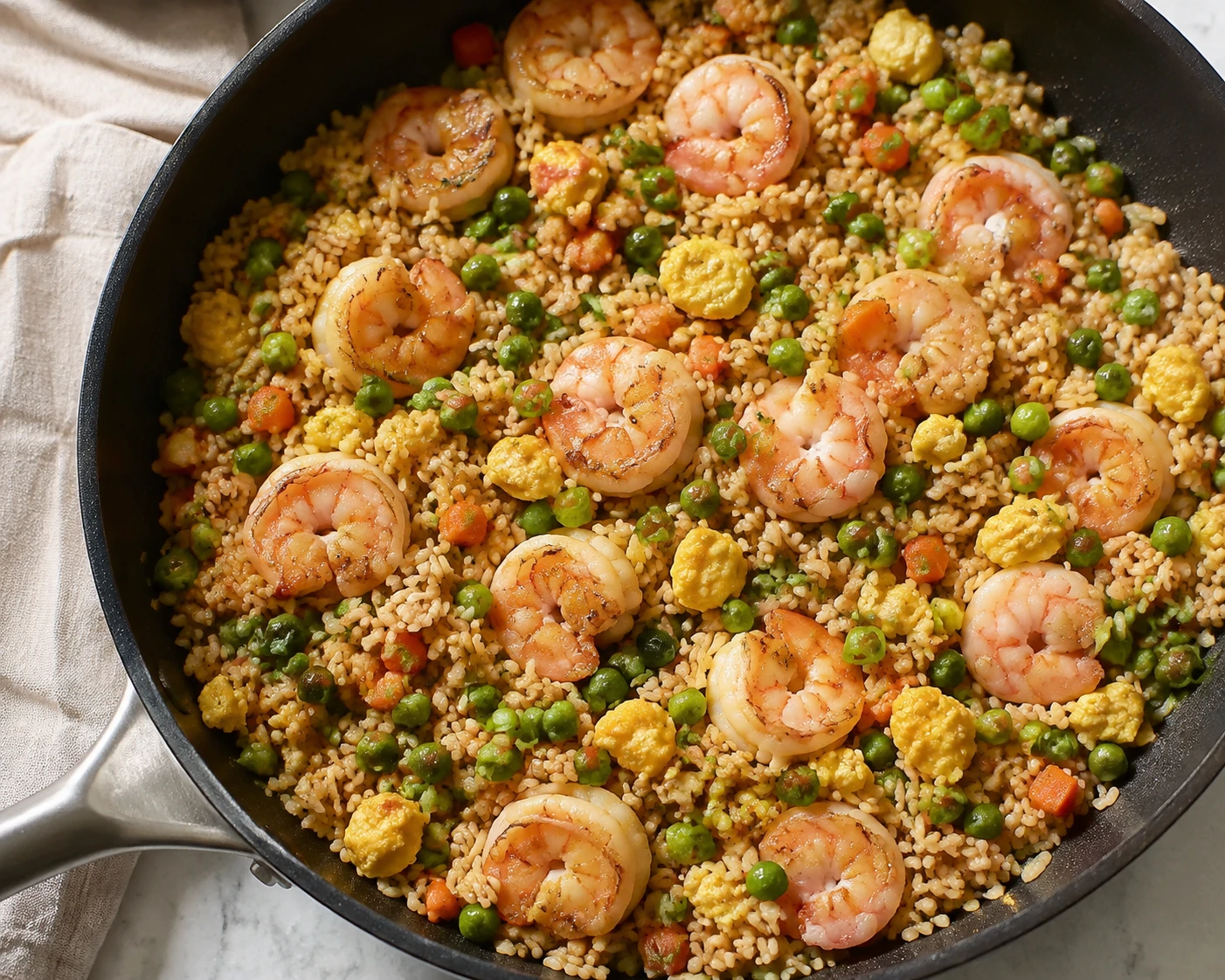
The trick to weeknight fried rice is not more oil; it is controlling water. Starting with loose rice and dry shrimp, then cooking the frozen vegetables until their moisture disappears, gives a modest amount of oil enough heat to brown rather than steam.
Everything moves through one large skillet in a deliberate order. Shrimp and eggs leave at their tender peak, making room for dry, high-heat rice before they return for the final glossy toss.
Begin with loose rice
Cold leftover rice is ideal because its grains have dried and separated, but unheated microwaveable rice works well when broken apart before it reaches the skillet. Packed clumps trap steam, so use your fingers or a spatula to loosen them before the pan gets hot.
Give shrimp a short turn
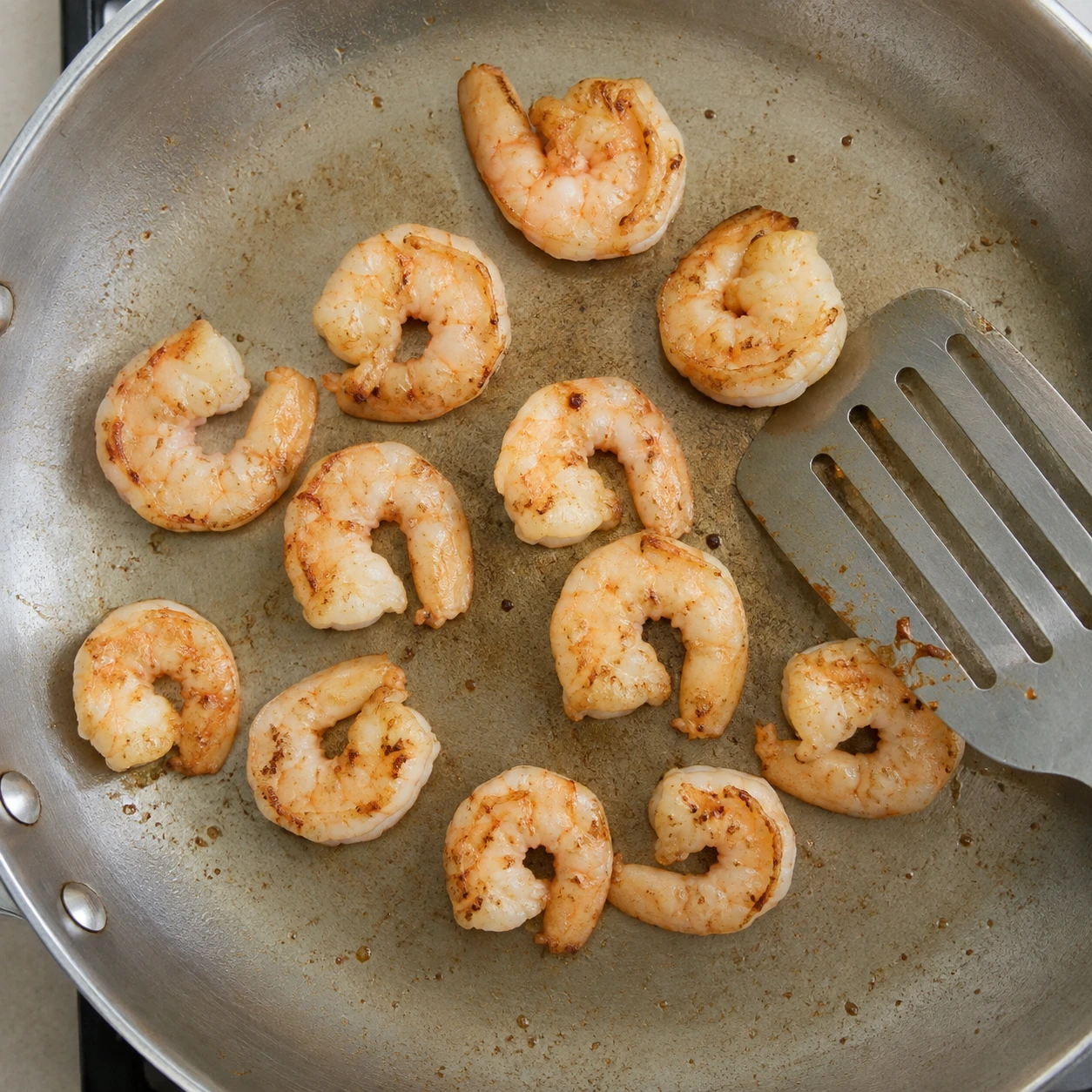
Patting the shrimp dry and leaving them undisturbed gives their surfaces a chance to brown quickly. Take them out once they are opaque with browned spots; they finish gently when folded back into the hot rice.
Evaporate before toasting
Frozen peas and carrots bring useful convenience and water. Let them sit in a single layer until the frost vanishes and the pan is dry, then add rice to direct contact with the skillet instead of a cloud of steam.
Use sauce as a finish
Drizzling soy sauce around the skillet edge makes it sizzle and reduce before it reaches the rice, so it seasons without turning the grains wet. Sesame oil and fresh scallions go in at the end for aroma, then the dish should be served while the browned edges are still lively.
Healthier Shrimp Fried Rice
Ingredients
- • 1 lb peeled, deveined raw shrimp
- • 4 cups microwaveable or cold leftover cooked brown rice
- • 2 cups frozen peas and carrots
- • 3 large eggs, beaten
- • 2 tsp neutral oil, divided
- • 2 tsp pre-minced or frozen garlic
- • 2 tsp pre-minced or frozen ginger
- • 2 tbsp low-sodium soy sauce
- • 1 tsp toasted sesame oil
- • 4 scallions, thinly sliced
Method
Set up dry ingredients
Open the rice packages without heating, or break cold leftover rice into separate grains; pat the shrimp very dry and keep the peas and carrots frozen until needed.
Look for: The rice is loose rather than packed and the shrimp surfaces look dry, not glossy.
Heat the skillet
Heat a large 12-inch skillet over high heat until a drop of water skips across the surface, then add 1 tsp neutral oil and swirl to coat.
Look for: The oil shimmers quickly and the pan is hot enough that moisture sizzles on contact.
Brown the shrimp
Add the dry shrimp in one uncrowded layer and cook without stirring for 1 minute; turn and cook 1 minute more, then move the shrimp to a plate.
Look for: The shrimp are pink and opaque with browned spots, but are not curled tightly.
Scramble the eggs
Add the remaining 1 tsp neutral oil, pour in the beaten eggs, and scramble for 1 minute into soft curds; transfer them to the shrimp plate.
Look for: The eggs are set in tender curds with no liquid egg remaining.
Cook the aromatics
Add the garlic and ginger to the empty skillet and stir constantly for 30 seconds, just until fragrant, before either can darken.
Look for: The skillet smells fragrant and spicy, with no browned garlic bits.
Drive off vegetable moisture
Add the frozen peas and carrots and spread them into a single layer; cook for 2 minutes, stirring only once, until their frost has evaporated and the edges look dry.
Look for: There is no watery puddle in the skillet and the vegetables are hot with dry-looking edges.
Brown the rice
Add the loose rice, spread it across the skillet, and press it into contact with the pan; cook for 3 minutes without stirring, then toss and cook 1 minute more.
Look for: Some rice grains have toasted spots and the skillet sounds dry and lively rather than wet.
Season and finish
Return the shrimp and eggs, drizzle in the soy sauce around the hot pan edge and the sesame oil over the rice, then toss for 1 minute until evenly coated and hot.
Look for: The sauce has absorbed instead of pooling and the shrimp, eggs, and rice are evenly distributed.
Add scallions and serve
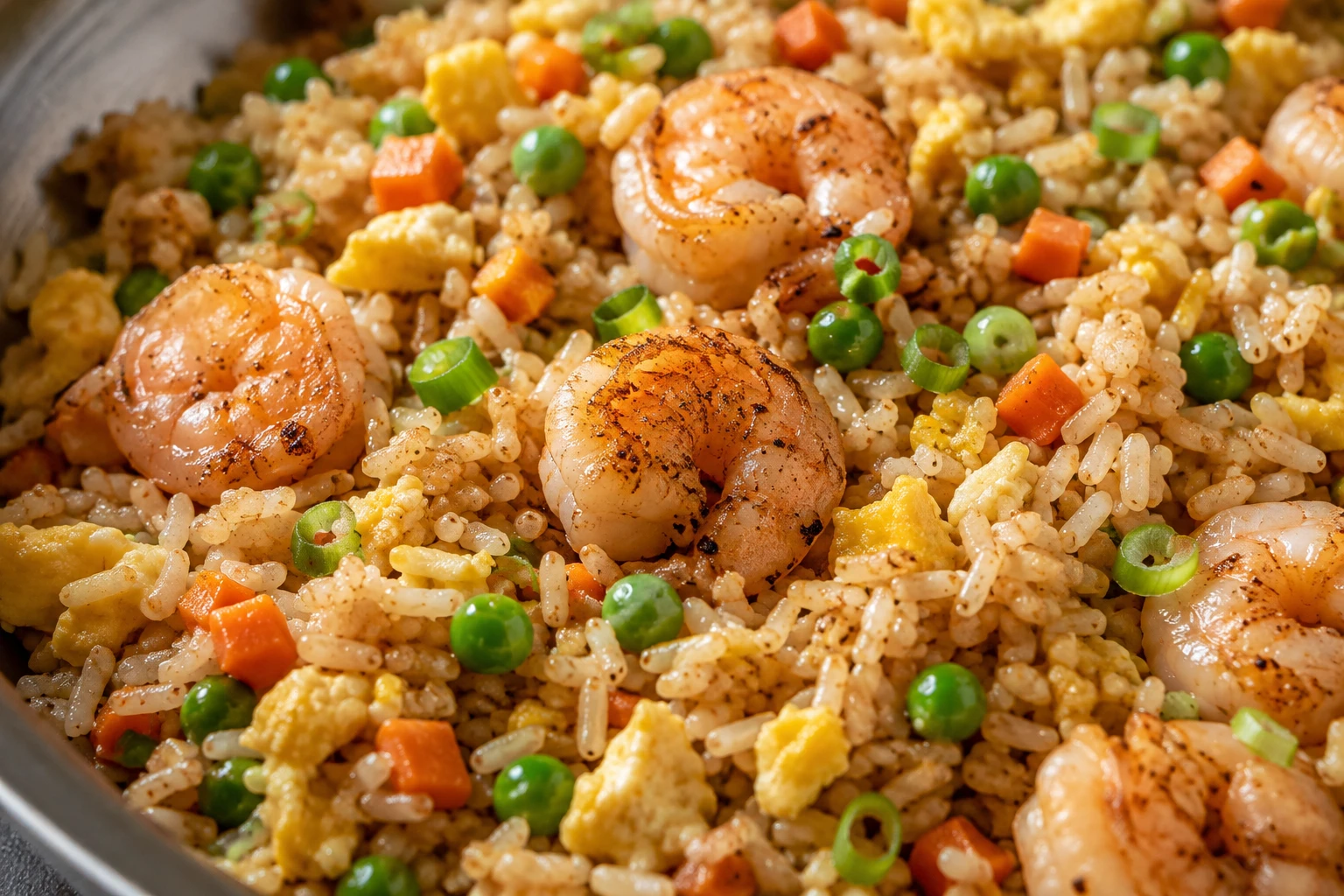
Fold in three-quarters of the scallions, scatter the remaining scallions over the skillet, and serve immediately while the rice still has distinct, lightly crisp grains.
Look for: The scallions stay bright and the rice remains separate instead of softening in the pan.