" fill="%23faf1da" stroke-width="1.8"/>%0A <ellipse cx="64.5" cy="50" rx="43" ry="12" transform="rotate(4 64.5 50)" stroke="%23938466"/>%0A <path d="m26 44 1 10m3-12 1 14m3-14 1 15m3-14 1 15m4-14 1 14m4-13 1 14m39-10-1 10m5-9-1 8m5-7-1 5" stroke="%23b2a181" stroke-width=".7"/>%0A <path d="M55 60c3-10 12-14 23-10l47-44c7-6 15-6 15-2 0 5-9 11-14 14L82 60c-8 4-21 4-27 0Z" fill="%23bc8c48" stroke-width="1.6"/>%0A <path d="M61 59c3-5 9-8 15-5l-4 7m8-8 49-45 6-4M84 52l45-41" stroke="%2376562e" stroke-width="1"/>%0A <path d="M20 53c18 14 69 19 90 2" stroke="%23514431" stroke-width="2"/>%0A <path d="M27 59c22 11 59 14 78 2" stroke="%23fff9e9" stroke-width="2"/>%0A <path d="m48 87 1 1m7 8 1 1m6-12 1 1m6 12 1 1m6-9 1 1m-24 9 1 1m19 4 1-1m10-16 1 1" stroke="%23aa9b7c"/>%0A </g>%0A</svg>%0A)
Crème Brûlée
A slow, gentle bake and a cold rest create a smooth vanilla custard beneath a crisp, freshly torched sugar shell.
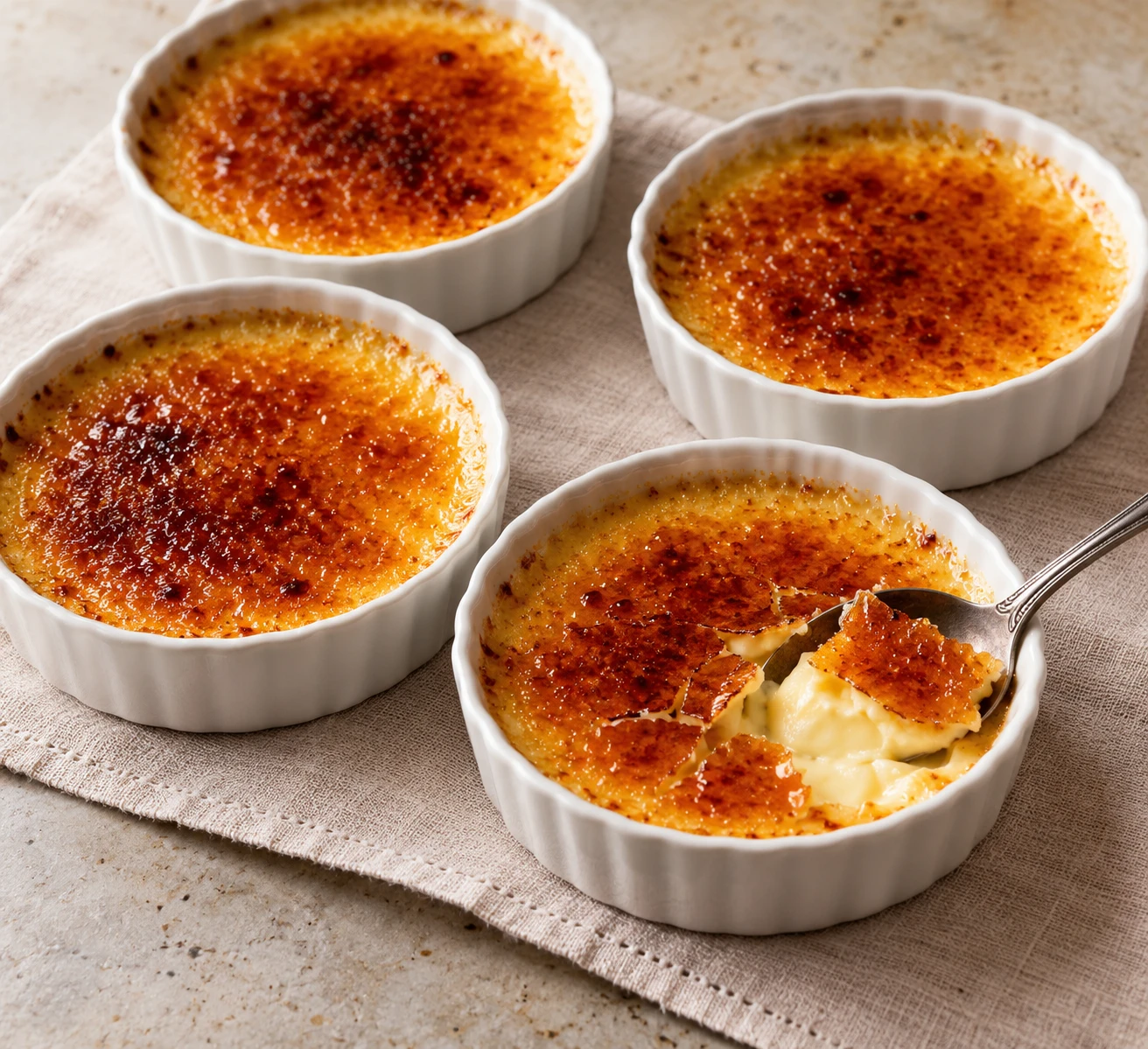
Crème brûlée depends on a contrast in texture: cool, tender custard underneath and a thin layer of hot caramel that snaps under a spoon. A water bath softens the oven's heat so the eggs set without turning grainy.
The custards can be chilled ahead, which leaves only the sugar topping to finish at the table. Torch them shortly before serving, while the caramel is still dry and crisp.
Gentle heat sets a smooth custard
The hot-water bath buffers the ramekins from direct oven heat, giving the yolks time to thicken evenly. Pull the pan when the edges are set and the center still trembles; baking until completely firm can leave the finished custard grainy.
Warm the yolks gradually
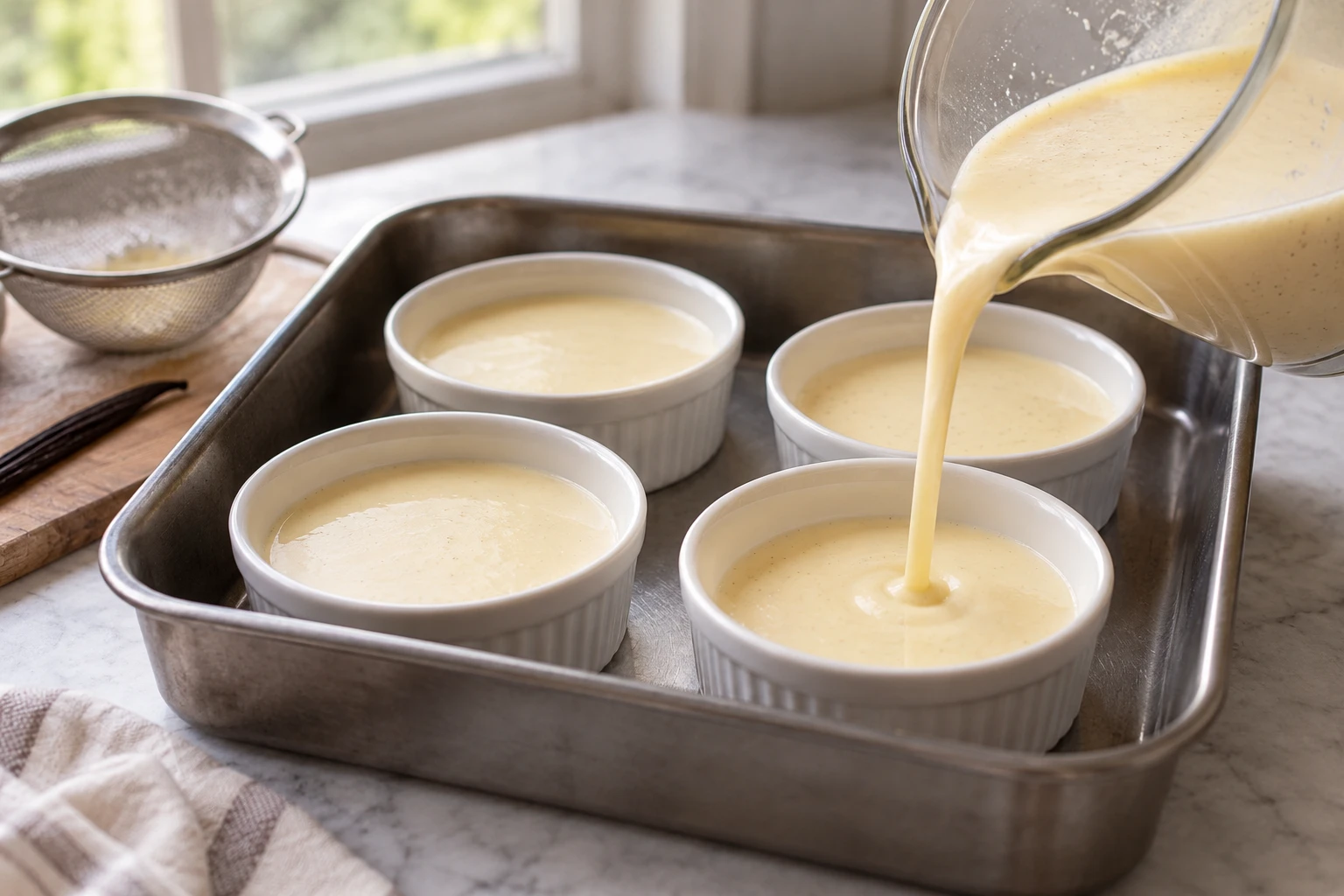
Whisking the hot cream into the yolks in a slow stream raises their temperature without scrambling them. Straining afterward removes the vanilla pod and any foam, so the chilled surface stays especially even.
Build a thin caramel shell
Moisture on the chilled custard can dissolve the sugar before it caramelizes, so blot the surface first. Spread the sugar to the rim in a fine, even layer and keep the torch moving to prevent bitter scorched spots.
Serve while the top is crisp
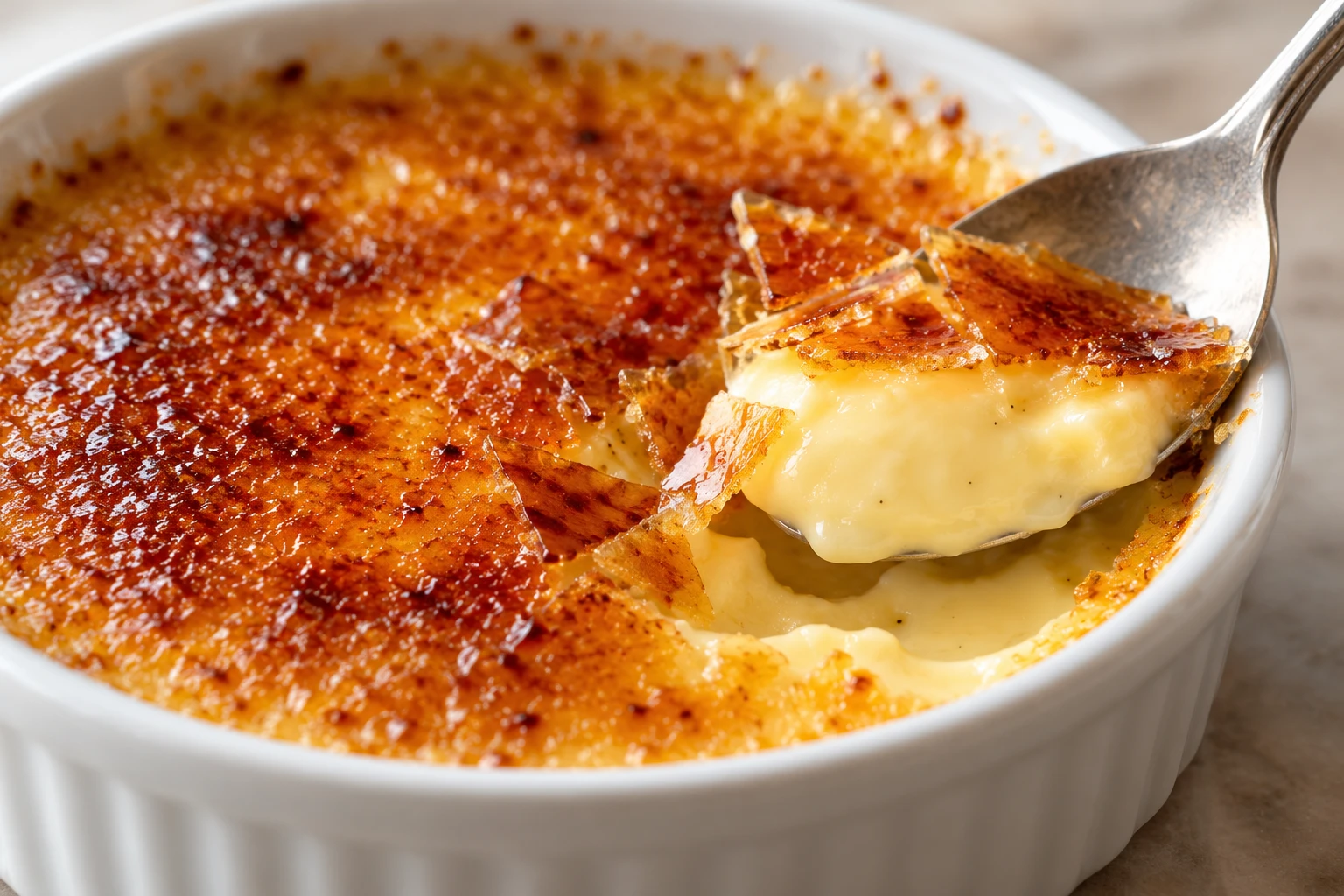
A freshly torched top hardens into a glassy layer while the custard stays cold below it. Bring the ramekins to the table soon after torching, before humidity softens the crackling crust.
Crème Brûlée
Ingredients
- • 2 cups heavy cream
- • 1 vanilla bean, split and seeds scraped
- • 5 large egg yolks
- • 1/3 cup granulated sugar, for custard
- • 1/4 tsp fine salt
- • 4 tsp granulated sugar, for topping
Method
Prepare the oven and bath
Heat the oven to 300 F and set four shallow 6-ounce ramekins in a roasting pan; bring a kettle of water to a boil for the bath.
Look for: The oven is fully heated and the kettle water is steaming before the custards go in.
Infuse the cream
Warm the heavy cream, vanilla bean and seeds, and fine salt in a saucepan over medium-low heat until steaming; remove from the heat and steep for 10 minutes.
Look for: Small wisps of steam rise, but the cream never simmers or forms a skin.
Temper the yolks
Whisk the egg yolks and 1/3 cup custard sugar until smooth, then slowly stream in the warm cream while whisking constantly so the yolks warm without curdling.
Look for: The mixture is fluid and uniform, with no cooked flecks around the bowl.
Strain and portion
Pour the custard through a fine-mesh sieve into a measuring jug, discard the vanilla pod, and divide it evenly among the four ramekins; skim or pop visible surface bubbles.
Look for: Each ramekin has a level surface and the strained custard contains no foam or vanilla-pod pieces.
Bake gently in a water bath
Set the roasting pan on the oven rack, carefully pour hot water halfway up the ramekins, and bake at 300 F for about 35 minutes, until the edges are set and the centers wobble gently.
Look for: The outer ring looks set while a small area in the center trembles when the pan is nudged.
Cool and chill
Lift the ramekins from the hot bath with tongs and cool on a rack until no longer warm; cover and refrigerate for at least 4 hours, until cold and softly set throughout.
Look for: The custards are cold to the touch and hold a gentle jiggle without sloshing.
Prepare the sugar tops
Uncover the chilled custards and blot any condensation with a corner of paper towel; sprinkle 1 tsp topping sugar over each surface and tilt to form a thin, even layer.
Look for: The sugar covers the custard from edge to edge without wet patches or thick drifts.
Caramelize and serve
Hold a kitchen torch several inches above one ramekin at a time and sweep the flame continuously until the sugar melts to an even amber glass; let it harden briefly, then serve promptly.
Look for: The surface is glossy amber and brittle, with no blackened patches or lingering flame in one spot.