" fill="%23faf1da" stroke-width="1.8"/>%0A <ellipse cx="64.5" cy="50" rx="43" ry="12" transform="rotate(4 64.5 50)" stroke="%23938466"/>%0A <path d="m26 44 1 10m3-12 1 14m3-14 1 15m3-14 1 15m4-14 1 14m4-13 1 14m39-10-1 10m5-9-1 8m5-7-1 5" stroke="%23b2a181" stroke-width=".7"/>%0A <path d="M55 60c3-10 12-14 23-10l47-44c7-6 15-6 15-2 0 5-9 11-14 14L82 60c-8 4-21 4-27 0Z" fill="%23bc8c48" stroke-width="1.6"/>%0A <path d="M61 59c3-5 9-8 15-5l-4 7m8-8 49-45 6-4M84 52l45-41" stroke="%2376562e" stroke-width="1"/>%0A <path d="M20 53c18 14 69 19 90 2" stroke="%23514431" stroke-width="2"/>%0A <path d="M27 59c22 11 59 14 78 2" stroke="%23fff9e9" stroke-width="2"/>%0A <path d="m48 87 1 1m7 8 1 1m6-12 1 1m6 12 1 1m6-9 1 1m-24 9 1 1m19 4 1-1m10-16 1 1" stroke="%23aa9b7c"/>%0A </g>%0A</svg>%0A)
Corned Beef Hash and Eggs
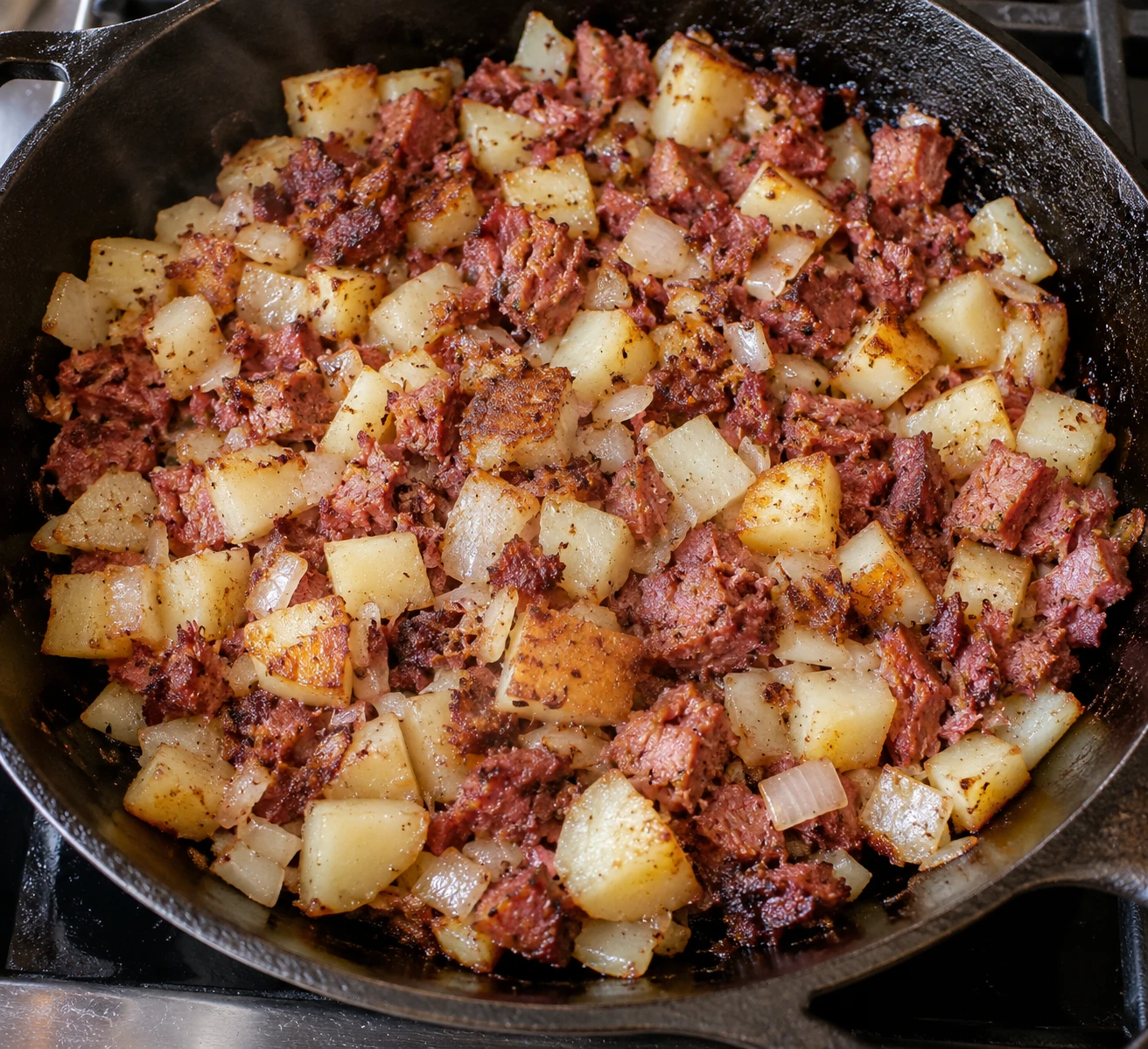
A wide skillet turns cooked corned beef and parboiled potatoes into a browned hash with soft eggs and toast for serving.
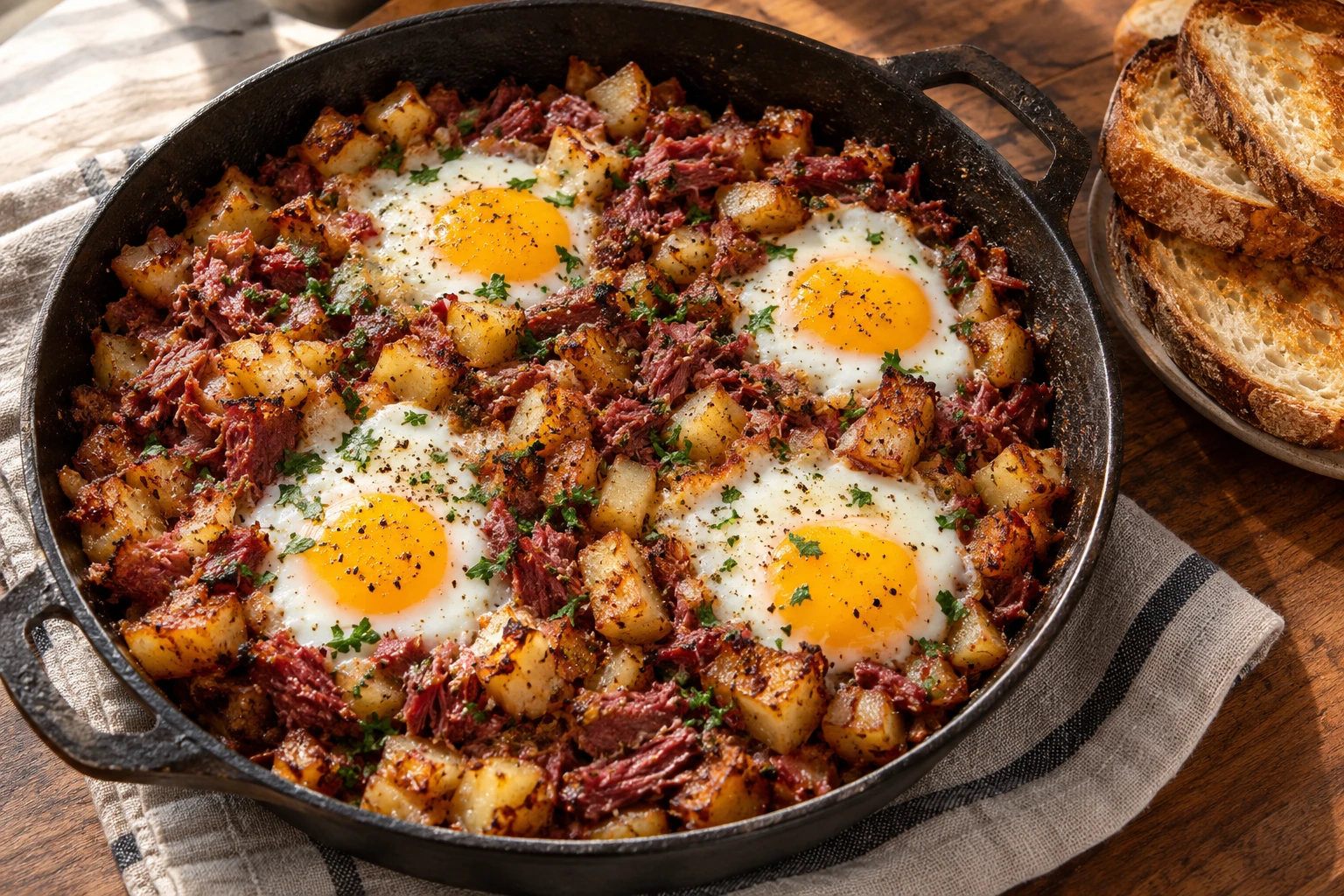
This skillet works best when the potatoes are tender inside but dry on the surface. Pressing the mixture into a hot, wide pan gives the beef and potatoes room to brown instead of steaming.
Start with dry potatoes
The potatoes are parboiled only until their edges turn tender, so they can finish in the skillet without collapsing. After draining, let their steam escape; damp surfaces delay browning and make it harder for the hash to hold together.
Let the skillet build a crust
Once the diced beef and potatoes are spread and pressed into the hot pan, give them time to form a golden underside. Turning in broad sections preserves crisp pieces, while repeated stirring breaks them apart before the crust can set.
Use broth only if the pan dries
A small splash of broth loosens browned bits if the skillet becomes dry or the hash starts sticking. Add it around the edge, let it boil away, and press the mixture back into an even layer so the second side can crisp.
Set eggs in the hash
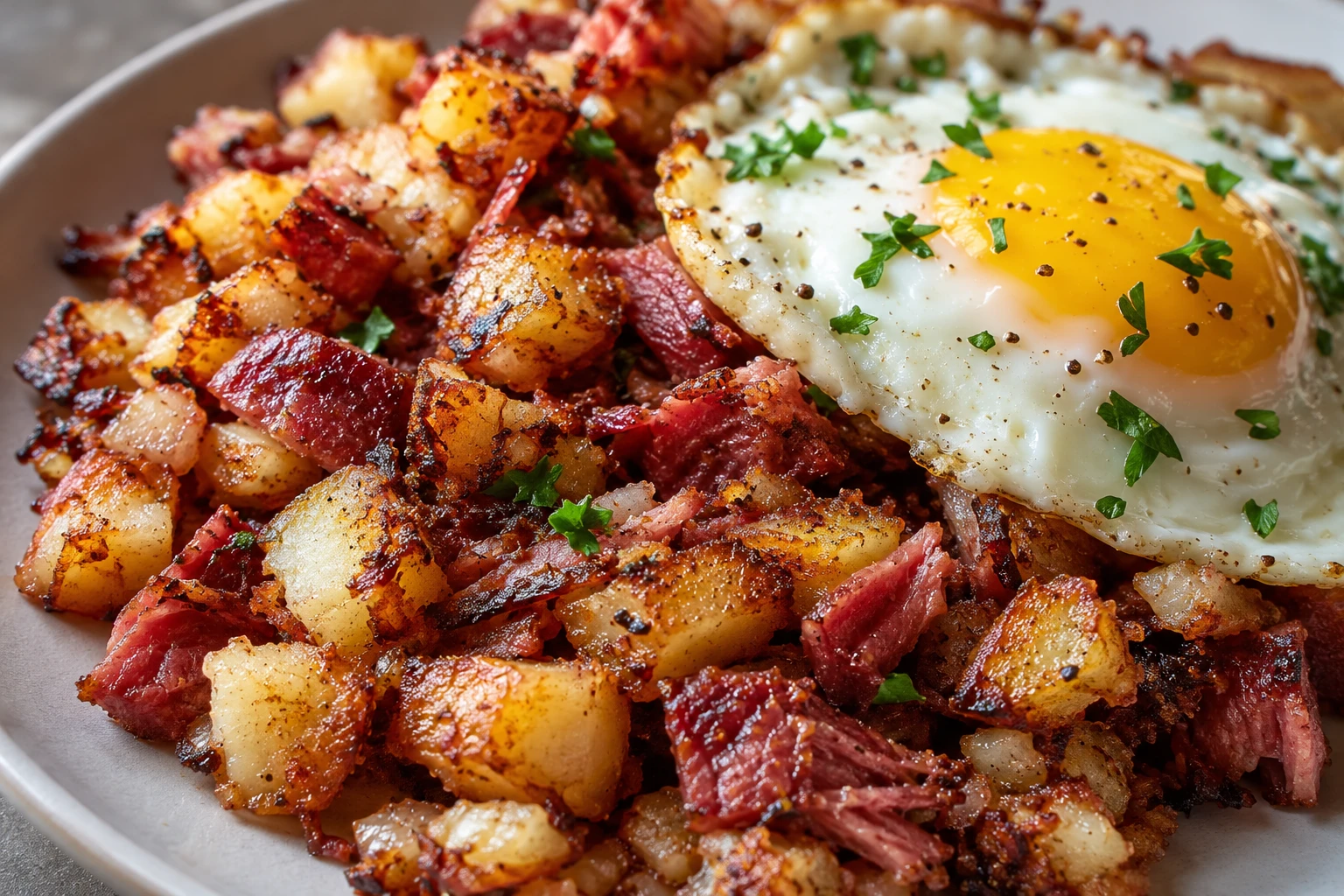
Small wells keep the eggs in place while the covered skillet cooks their whites gently. Remove the lid as soon as the whites are opaque, then finish with parsley and serve with toast while the yolks are still soft.
Corned Beef Hash and Eggs
Ingredients
- • 2 qt water
- • 1 lb Yukon Gold potatoes, cut into 1/2-inch dice
- • 1 tsp kosher salt, divided
- • 2 tbsp unsalted butter, divided
- • 1 tbsp neutral oil
- • 1 medium yellow onion, cut into small dice
- • 12 oz cooked corned beef, cut into small dice
- • 1/2 tsp freshly ground black pepper
- • 1/4 cup low-sodium beef broth
- • 4 large eggs
- • 4 slices sturdy country bread
- • 2 tbsp chopped fresh parsley
Method
Parboil the potatoes
Put the evenly diced potatoes in a saucepan with the water and three-quarters of the salt. Bring to a boil, then simmer until the potatoes are just tender at the edges but still hold their shape, about seven minutes.
Look for: A knife tip enters the potato easily while the dice remain intact. The water simmers steadily rather than breaking the potatoes apart.
Drain and dry
Drain the potatoes well and spread them on a tray to steam dry while you dice the cooked corned beef and onion. Dry surfaces help the hash brown instead of steaming in the skillet.
Look for: There is no water pooled around the potatoes. The corned beef and onion pieces are similar in size to the potato dice.
Soften the onion
Heat one tablespoon of the butter with the neutral oil in a wide skillet over medium heat. Add the onion and cook, stirring occasionally, until softened and just translucent, about four minutes.
Look for: The onion looks glossy and translucent at the edges without taking on dark color. The butter foams gently and smells sweet rather than browned.
Press the first crust
Add the corned beef, potatoes, pepper, remaining salt, and remaining butter. Toss once to coat, spread the mixture across the hot skillet, and press it into an even layer; leave it undisturbed over medium-high heat until a deep golden crust forms, about eight minutes.
Look for: The hash makes a steady sizzle and the butter is absorbed into the mixture. The underside releases in browned patches when nudged with a spatula.
Turn and brown again
Turn the hash in broad sections so some crusty pieces stay intact. If the skillet looks dry or the hash sticks before it browns, add the broth a tablespoon at a time around the edge, scrape up the browned bits, let the liquid boil away, then press the hash flat again and cook until crisp, about five minutes.
Look for: The second side develops browned edges after the broth has evaporated. The hash sounds crisp at the edges rather than wet and bubbling.
Toast bread and cook eggs
Toast the bread while the hash finishes. Reduce the skillet heat to low, make four wells in the hash, and crack an egg into each; cover the pan and cook until the whites are opaque and set while the yolks remain softly jiggly, about four to six minutes.
Look for: The egg whites are opaque all the way to the yolks. The yolks still move slightly when the skillet is gently nudged.
Finish the skillet
Turn off the heat and scatter the parsley over the hash and eggs. Let the skillet stand briefly with the lid off so the eggs stop cooking from trapped steam while the parsley stays fresh.
Look for: The parsley is visible across the hot hash without wilting heavily. The egg whites remain set and the yolks are still glossy.
Serve hot
Spoon portions of hash and an egg onto warm plates, keeping the browned crust facing up. Serve immediately with the toast for scooping up crisp bits and soft yolk.
Look for: Each portion includes crisp browned hash and a freshly cooked egg. The toast is warm and ready as soon as the eggs leave the skillet.