" fill="%23faf1da" stroke-width="1.8"/>%0A <ellipse cx="64.5" cy="50" rx="43" ry="12" transform="rotate(4 64.5 50)" stroke="%23938466"/>%0A <path d="m26 44 1 10m3-12 1 14m3-14 1 15m3-14 1 15m4-14 1 14m4-13 1 14m39-10-1 10m5-9-1 8m5-7-1 5" stroke="%23b2a181" stroke-width=".7"/>%0A <path d="M55 60c3-10 12-14 23-10l47-44c7-6 15-6 15-2 0 5-9 11-14 14L82 60c-8 4-21 4-27 0Z" fill="%23bc8c48" stroke-width="1.6"/>%0A <path d="M61 59c3-5 9-8 15-5l-4 7m8-8 49-45 6-4M84 52l45-41" stroke="%2376562e" stroke-width="1"/>%0A <path d="M20 53c18 14 69 19 90 2" stroke="%23514431" stroke-width="2"/>%0A <path d="M27 59c22 11 59 14 78 2" stroke="%23fff9e9" stroke-width="2"/>%0A <path d="m48 87 1 1m7 8 1 1m6-12 1 1m6 12 1 1m6-9 1 1m-24 9 1 1m19 4 1-1m10-16 1 1" stroke="%23aa9b7c"/>%0A </g>%0A</svg>%0A)
Classic Eggs Benedict
A crisp English muffin, warm Canadian bacon, and a softly poached egg make the base for a smooth, lemony hollandaise.
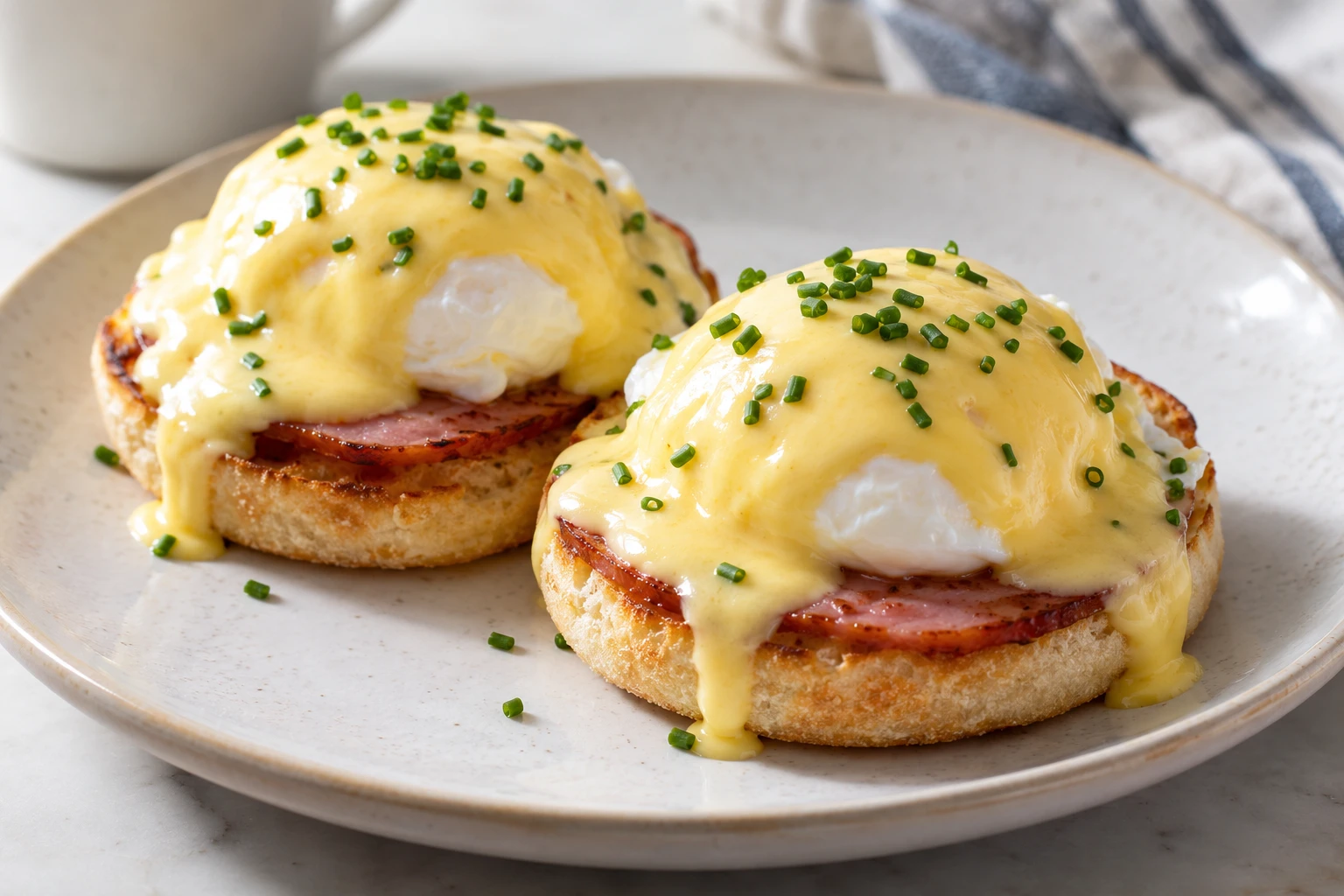
Eggs Benedict works best when each part is ready at the same time. The muffins and bacon wait in a low oven, the sauce stays gently warm, and the eggs go onto the crisp muffin halves only when it is time to eat.
Set up the warm hold
Toast the English muffins until their cut faces are golden, then warm the Canadian bacon in a skillet. The low oven keeps both ready while the sauce and eggs finish, without leaving the muffins under the hollandaise long enough to soften.
Keep hollandaise moving
The small bowl sits above gently simmering water, with its base clear of the water below. Whisk the yolks constantly and stream in warm butter slowly; lifting the bowl from the steam gives the yolks a chance to cool before they scramble.
Poach at a bare simmer
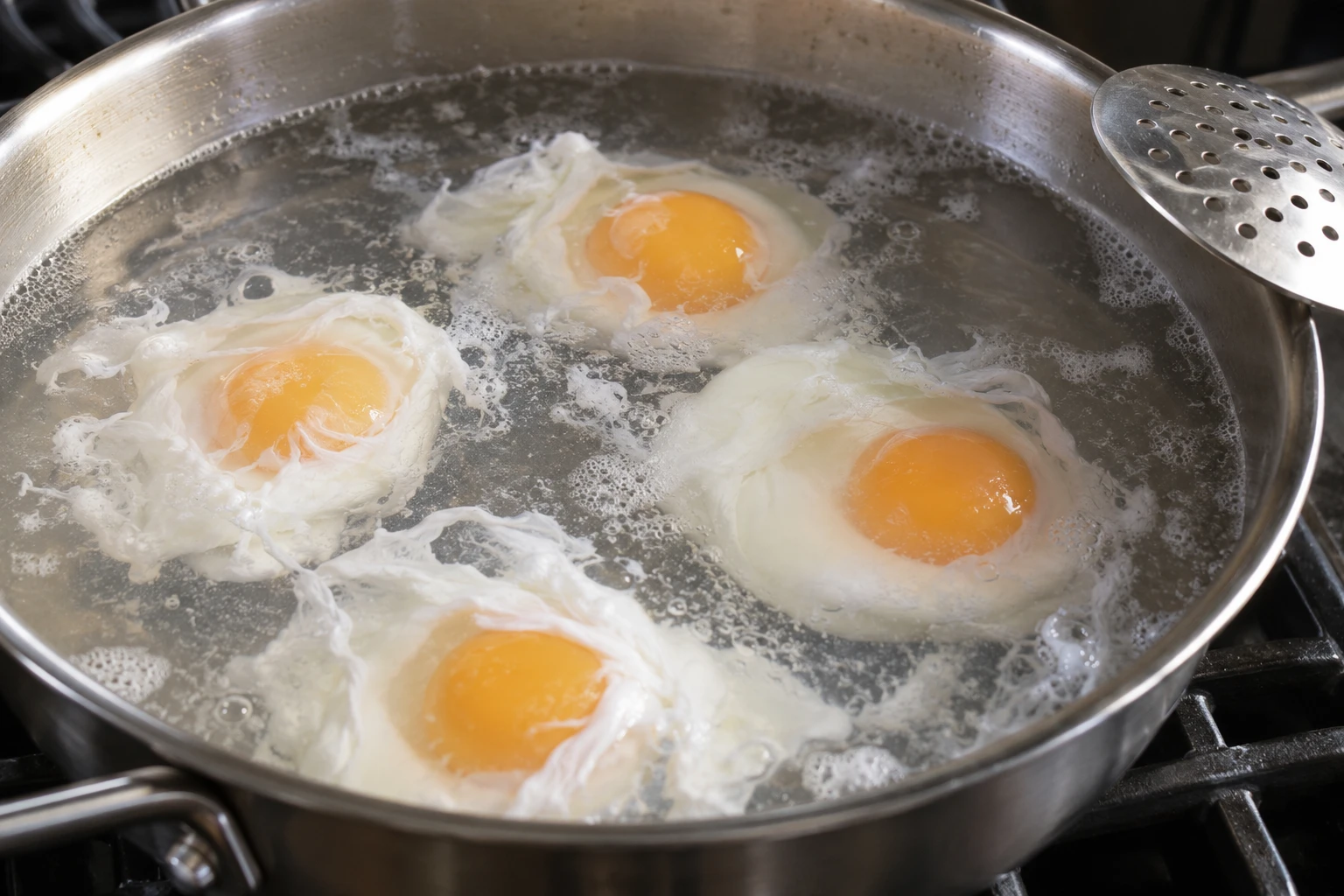
A little vinegar helps the whites set as the water barely trembles. Slide eggs in from individual cups, keep the batches small enough to space them apart, and use the timing as a guide while checking that the whites have turned opaque around soft yolks.
Assemble in the final minute
The first egg batch can wait briefly in warm water while the second cooks. Drain every egg before it reaches the muffins, then add bacon, hollandaise, and chives in quick succession so the toast remains crisp.
Classic Eggs Benedict
Ingredients
- • 4 English muffins
- • 8 slices Canadian bacon
- • 8 large eggs, for poaching
- • 3 large egg yolks, for hollandaise
- • 1 tablespoon fresh lemon juice
- • 1 tablespoon cold water, for hollandaise
- • 1/2 cup unsalted butter, melted and warm
- • 1/4 teaspoon fine salt
- • 1/8 teaspoon cayenne pepper
- • 2 tablespoons finely chopped fresh chives
- • 10 cups water, for poaching
- • 1 tablespoon distilled white vinegar, for poaching
- • 3 cups warm water at about 120 F, for holding the first egg batch
Method
Warm the oven and tray
Set a rack in the center of the oven and heat it to 200 F. Put a rimmed sheet pan inside to warm while you split the English muffins and measure the sauce ingredients.
Look for: The oven is warm and the sheet pan is ready to hold the toasted muffins and bacon without cooling them.
Toast muffins and warm bacon
Toast the split English muffins cut-side up until golden. In a wide skillet over medium heat, warm the Canadian bacon for about 1 minute per side, then arrange both on the warm sheet pan in the oven so they stay hot while you finish the eggs.
Look for: The muffin faces are crisp and golden, and the bacon is hot with lightly browned edges.
Make the hollandaise
Place the egg yolks, lemon juice, cold water, and cayenne in a heatproof bowl over gently simmering water; the bowl must not touch it. Whisk constantly on low until pale and ribbon-thick, then slowly whisk in warm melted butter and salt. Lift the bowl from the steam if yolks thicken quickly. When smooth, turn off the heat and hold the bowl over warm, non-steaming water.
Look for: The sauce is glossy and coats a spoon, with no flecks of cooked egg; the water below the bowl is warm rather than steaming.
Set up the poaching water
Fill a separate wide saucepan with the poaching water and distilled white vinegar, then bring it to a gentle simmer. Pour the warm holding water into a medium bowl, crack each egg into its own small cup, and lower the burner until the poaching surface barely trembles.
Look for: Small bubbles gather around the saucepan's edge, but the water does not roll or toss the eggs.
Poach the first eggs
Slide four eggs gently from their cups into the vinegar water, spacing them around the saucepan. Poach for 3 1/2 to 4 minutes for set whites and runny yolks, then lift them with a slotted spoon into the warm holding water while the remaining eggs cook.
Look for: The whites are opaque and hold together while the centers still feel soft when nudged gently with the spoon.
Poach the remaining eggs
Return the water to a gentle simmer if needed, then slide in the remaining four eggs one at a time. Cook them for 3 1/2 to 4 minutes, keeping the water below a boil so the whites stay neat and the yolks remain fluid.
Look for: The whites are fully set and the yolks give slightly under a light touch.
Drain the eggs and check the sauce
Lift the second batch out with the slotted spoon and let each egg drain briefly. Lift the first batch from the warm holding water and drain it too; whisk the hollandaise smooth, loosening it with a teaspoon of warm water only if it has thickened.
Look for: The eggs have no puddle of water beneath them, and the hollandaise flows from the whisk in a smooth ribbon.
Assemble just before serving
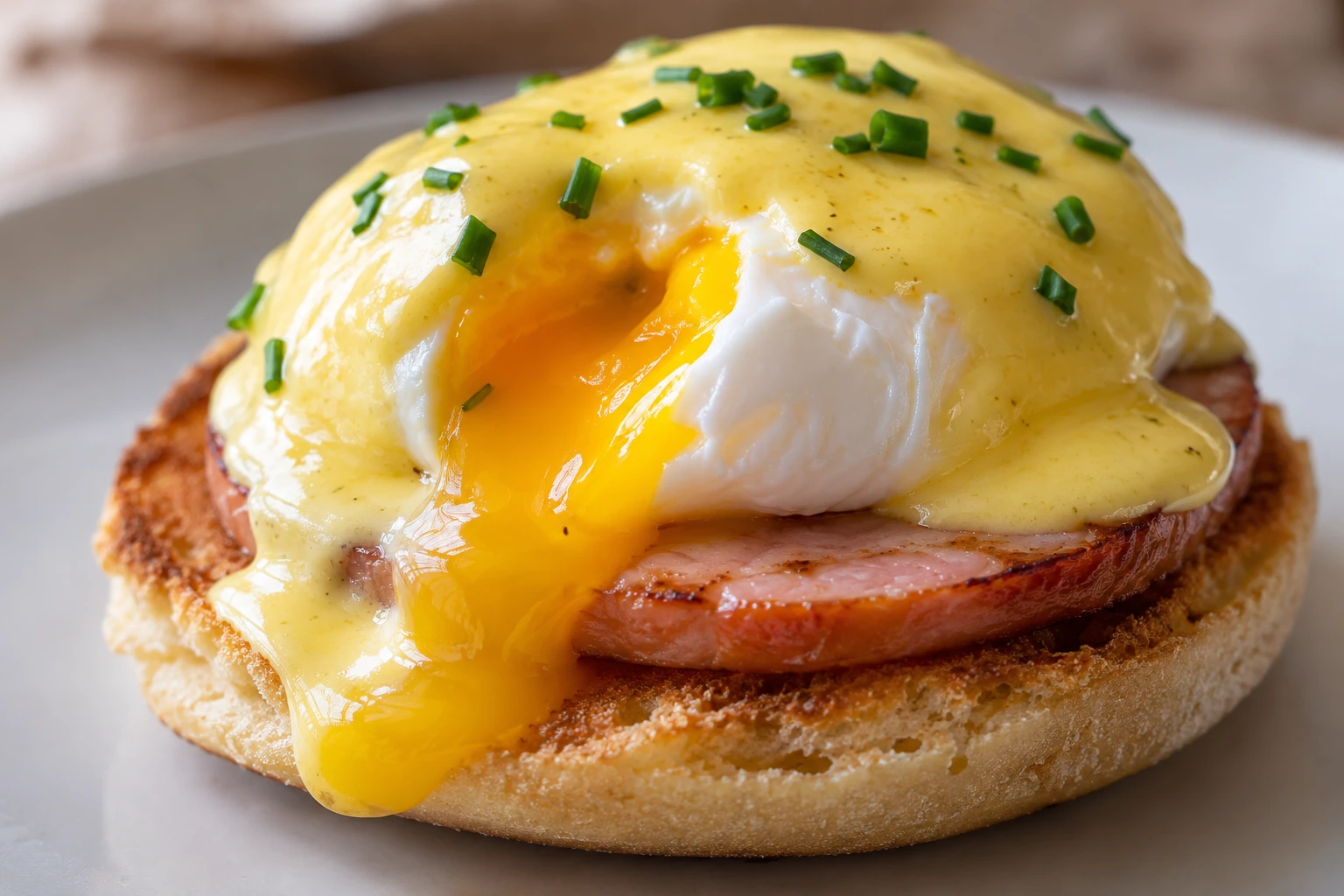
Set two toasted English muffin halves on each warm plate, add a slice of Canadian bacon to each half, and top each with a poached egg. Spoon hollandaise over the eggs, scatter with fresh chives, and serve immediately so the muffins stay crisp.
Look for: The sauce settles over each egg while the muffin edges remain crisp beneath the bacon.