" fill="%23faf1da" stroke-width="1.8"/>%0A <ellipse cx="64.5" cy="50" rx="43" ry="12" transform="rotate(4 64.5 50)" stroke="%23938466"/>%0A <path d="m26 44 1 10m3-12 1 14m3-14 1 15m3-14 1 15m4-14 1 14m4-13 1 14m39-10-1 10m5-9-1 8m5-7-1 5" stroke="%23b2a181" stroke-width=".7"/>%0A <path d="M55 60c3-10 12-14 23-10l47-44c7-6 15-6 15-2 0 5-9 11-14 14L82 60c-8 4-21 4-27 0Z" fill="%23bc8c48" stroke-width="1.6"/>%0A <path d="M61 59c3-5 9-8 15-5l-4 7m8-8 49-45 6-4M84 52l45-41" stroke="%2376562e" stroke-width="1"/>%0A <path d="M20 53c18 14 69 19 90 2" stroke="%23514431" stroke-width="2"/>%0A <path d="M27 59c22 11 59 14 78 2" stroke="%23fff9e9" stroke-width="2"/>%0A <path d="m48 87 1 1m7 8 1 1m6-12 1 1m6 12 1 1m6-9 1 1m-24 9 1 1m19 4 1-1m10-16 1 1" stroke="%23aa9b7c"/>%0A </g>%0A</svg>%0A)
Cheese Omelet
A diner-style cheddar omelet stays tender through moderate-low heat, a glossy finish, and a short rest in the turned-off skillet.
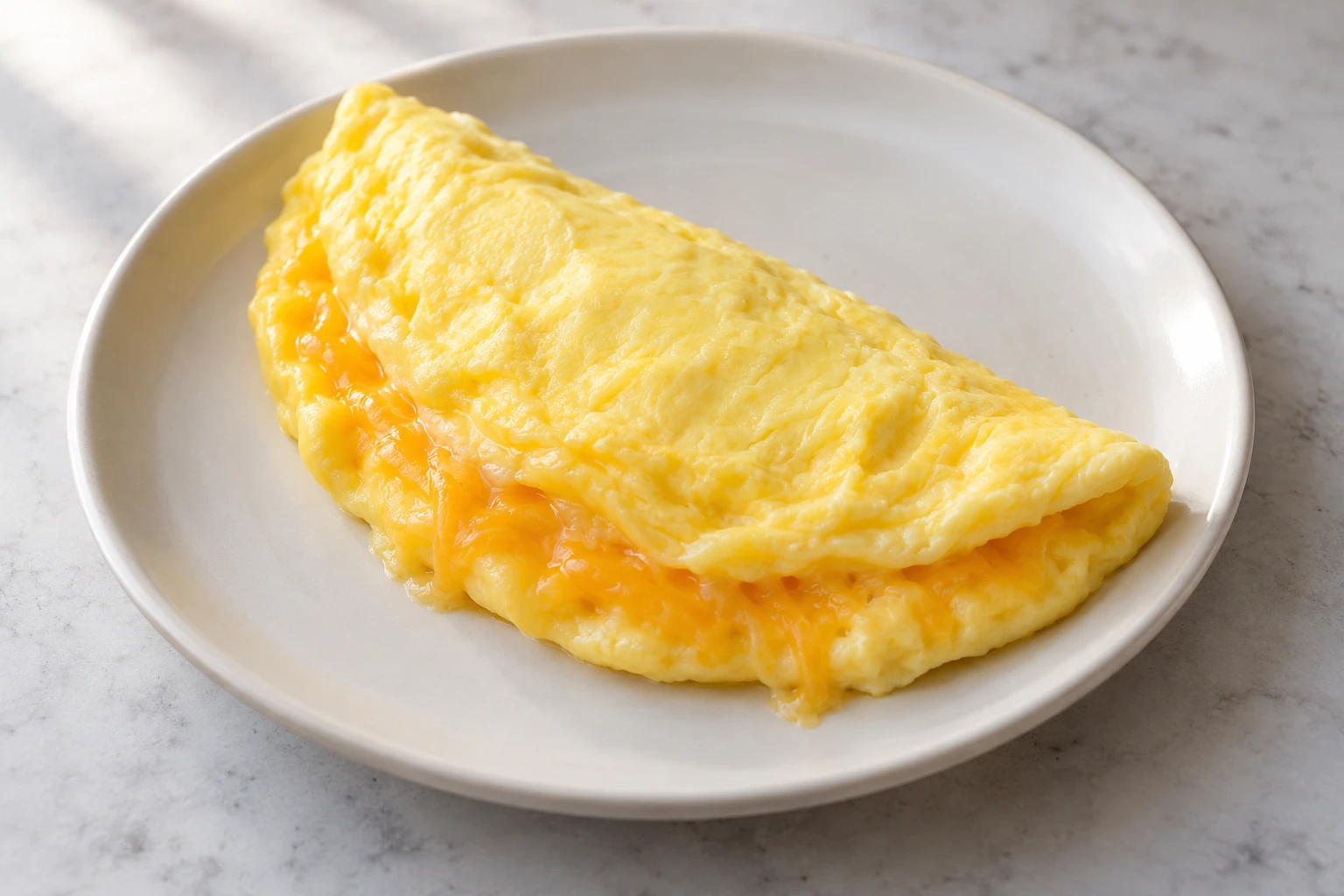
This omelet keeps the ingredient list spare and lets technique do the work. Gently set eggs stay soft, while sharp cheddar melts during the brief rest off heat.
Blend without adding foam
Whisk the eggs only until whites and yolks lose their separate streaks. Keeping the mixture relatively calm helps the finished curds stay soft instead of springy.
Let the skillet warm gently
A small nonstick skillet over moderate-low heat gives the eggs time to set evenly. If the butter sizzles aggressively or begins to brown, lower the heat before the eggs go in.
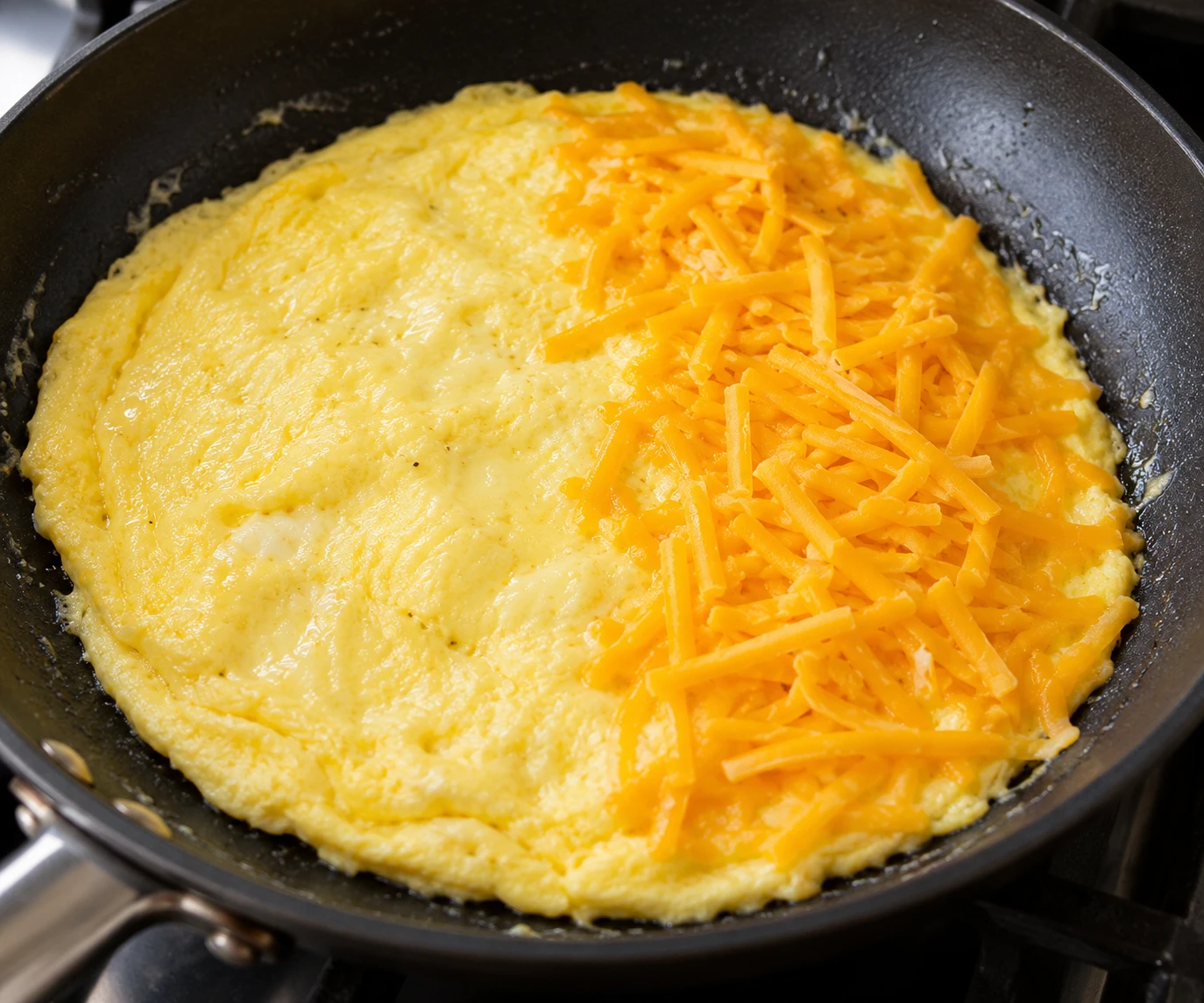
Add cheese at the glossy stage
Wait until the top is mostly set but still shines with a little moisture, then place the cheddar over one half. The remaining warmth loosens the cheese as the omelet folds around it.
Finish with residual heat
Turning off the burner before folding keeps the eggs from carrying on into a dry, browned layer. A short pause in the warm skillet is enough to soften the cheddar without overcooking the omelet.
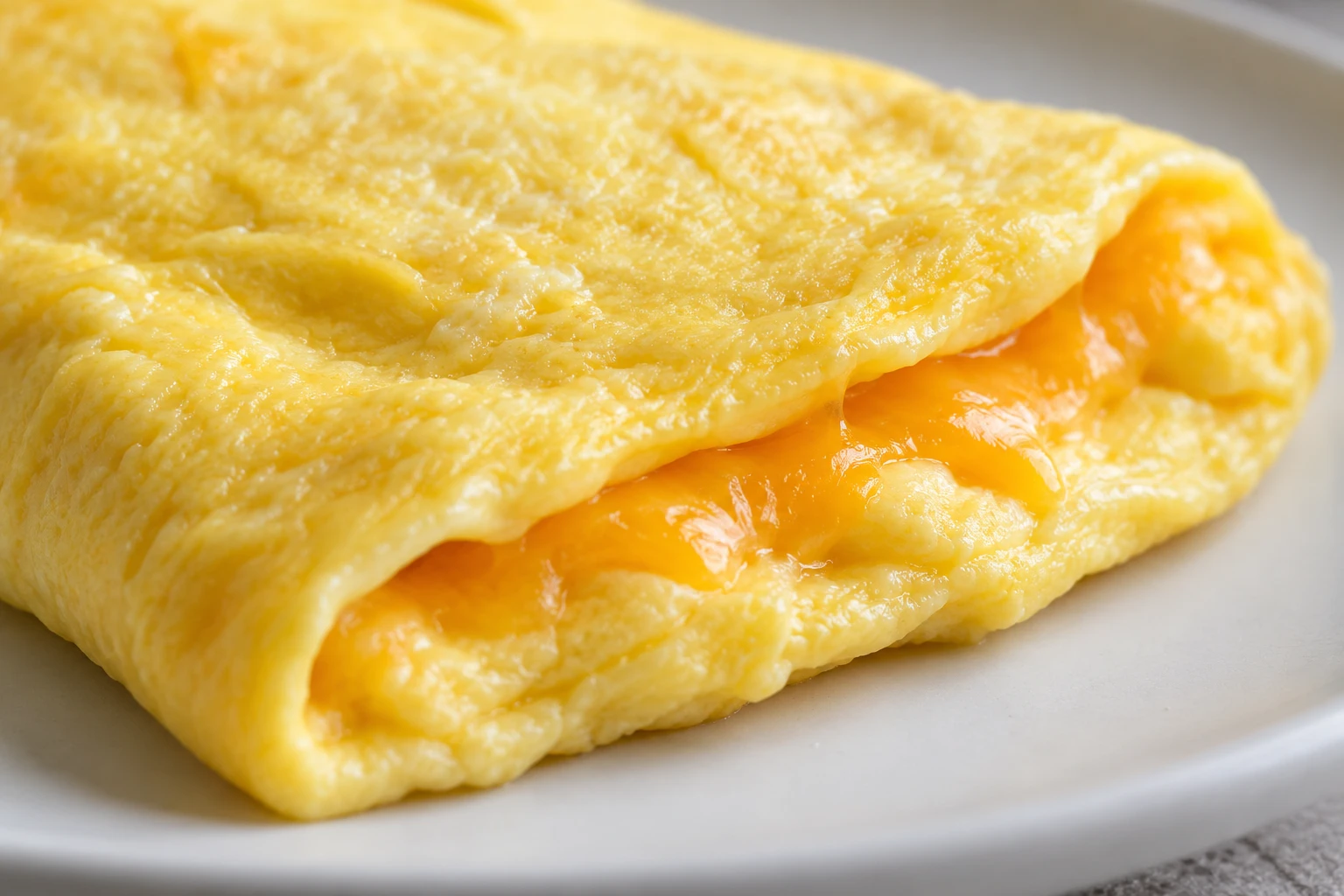
Serve while tender
Slide the omelet onto a warm plate and bring it to the table promptly. Toast or breakfast potatoes make a familiar diner-style accompaniment.
Cheese Omelet
Ingredients
- • 3 large eggs
- • 1 tbsp unsalted butter
- • 1/2 cup (2 oz) finely shredded sharp cheddar cheese
- • 1/8 tsp kosher salt
- • 1/8 tsp freshly ground black pepper
Method
Whisk the eggs
Crack 3 large eggs into a bowl, add the kosher salt and black pepper, and whisk just until the whites and yolks blend with no clear streaks; avoid whipping in foam.
Look for: The mixture is even in color but not foamy.
Warm the skillet
Measure the shredded sharp cheddar and set it beside the stove, then warm a small nonstick skillet over medium-low heat for 2 minutes; it should feel evenly warm without smoking.
Look for: The skillet is warm, and no butter or egg has begun to brown.
Set the eggs gently
Melt the unsalted butter and swirl to coat the skillet, then pour in the eggs; as the edges set, draw them toward the center with a flexible spatula and tilt the pan so loose egg fills the gaps.
Look for: Soft curds form without sizzling hard, and the top becomes mostly set while remaining glossy.
Add the cheddar
When the surface is mostly set but still glossy, scatter the sharp cheddar over one half of the eggs and cook briefly until the cheese just begins to soften.
Look for: The eggs still look moist and tender, and the cheddar edges begin to relax.
Fold and rest off heat
Turn off the heat and fold the uncovered half over the cheese into a soft half-moon; leave it in the warm skillet briefly so residual heat melts the filling without toughening the eggs.
Look for: The omelet holds its fold while the cheddar turns soft and melty.
Plate and serve
Slide the omelet onto a plate and serve promptly with toast or breakfast potatoes while the center is tender and the cheddar is warm.
Look for: The folded omelet is soft rather than browned or rubbery.