" fill="%23faf1da" stroke-width="1.8"/>%0A <ellipse cx="64.5" cy="50" rx="43" ry="12" transform="rotate(4 64.5 50)" stroke="%23938466"/>%0A <path d="m26 44 1 10m3-12 1 14m3-14 1 15m3-14 1 15m4-14 1 14m4-13 1 14m39-10-1 10m5-9-1 8m5-7-1 5" stroke="%23b2a181" stroke-width=".7"/>%0A <path d="M55 60c3-10 12-14 23-10l47-44c7-6 15-6 15-2 0 5-9 11-14 14L82 60c-8 4-21 4-27 0Z" fill="%23bc8c48" stroke-width="1.6"/>%0A <path d="M61 59c3-5 9-8 15-5l-4 7m8-8 49-45 6-4M84 52l45-41" stroke="%2376562e" stroke-width="1"/>%0A <path d="M20 53c18 14 69 19 90 2" stroke="%23514431" stroke-width="2"/>%0A <path d="M27 59c22 11 59 14 78 2" stroke="%23fff9e9" stroke-width="2"/>%0A <path d="m48 87 1 1m7 8 1 1m6-12 1 1m6 12 1 1m6-9 1 1m-24 9 1 1m19 4 1-1m10-16 1 1" stroke="%23aa9b7c"/>%0A </g>%0A</svg>%0A)
Brown Butter and Sage Sweet Potato Mash
Tender sweet potatoes meet brown butter and crisp sage, with careful draining and a gentle mash keeping the texture smooth instead of gluey.
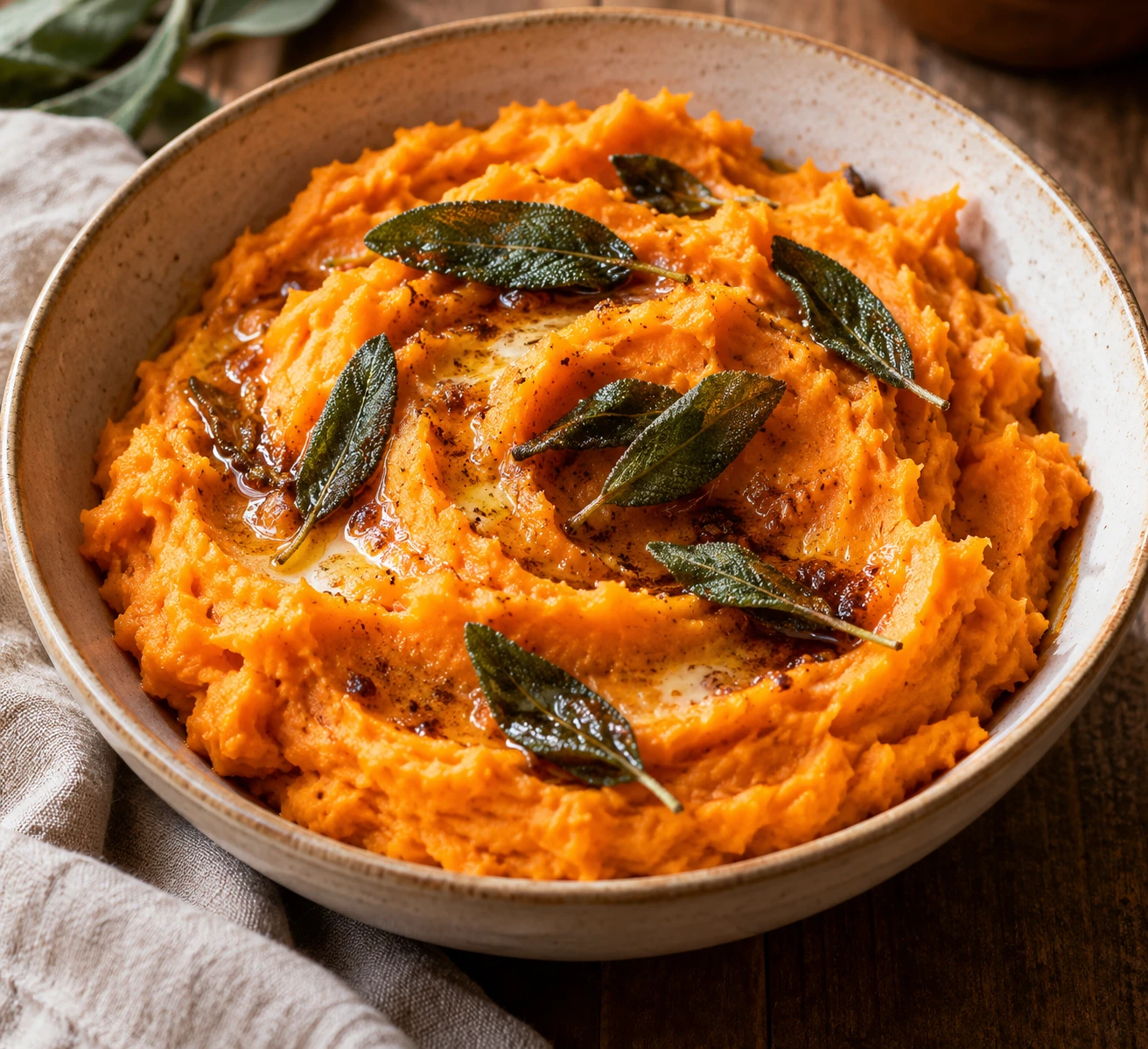
This mash gets its depth from butter browned until the milk solids turn amber and smell toasted. A brief stovetop water-bath hold keeps it warm while dinner comes together without cooking the potatoes harder.
Cut evenly and simmer gently
Uniform cubes finish at nearly the same moment, so the smaller pieces do not dissolve while the larger ones catch up. Keep the water at a gentle simmer after it returns to a boil, and test a large cube for a clean, easy knife glide.
Read the butter, not the clock
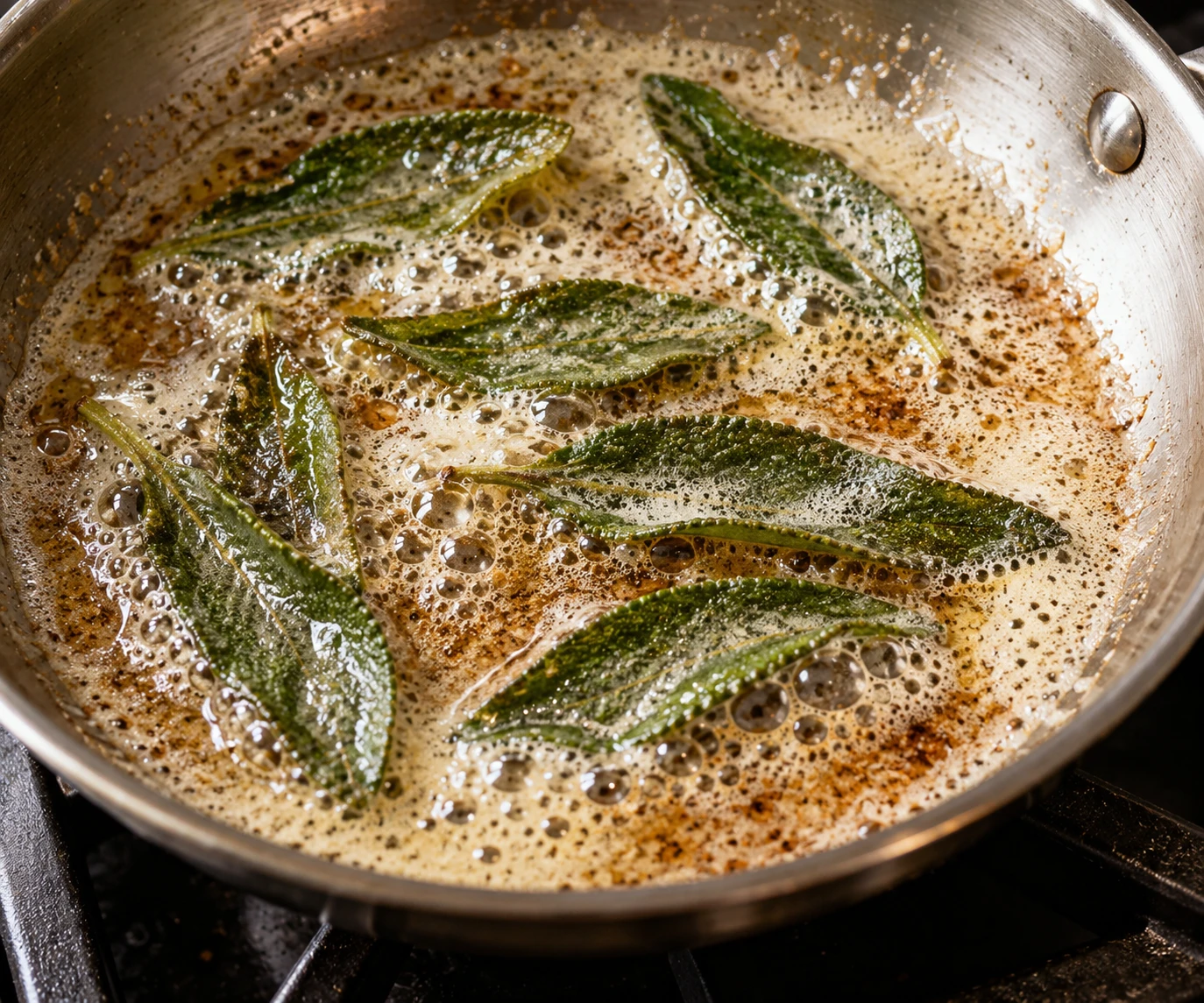
The butter first foams, then its bubbles settle as the milk solids toast. Pull the skillet as soon as the flecks turn amber and smell nutty; the hot pan keeps browning them, so waiting for a darker color can take them straight to burnt.
Keep the texture tender
A thorough drain and a short steam-dry remove water that would dilute the mash. Use a hand masher and stop when the large lumps disappear; extended beating can release starch and make the sweet potatoes stretchy.
Hold gently and finish at the table
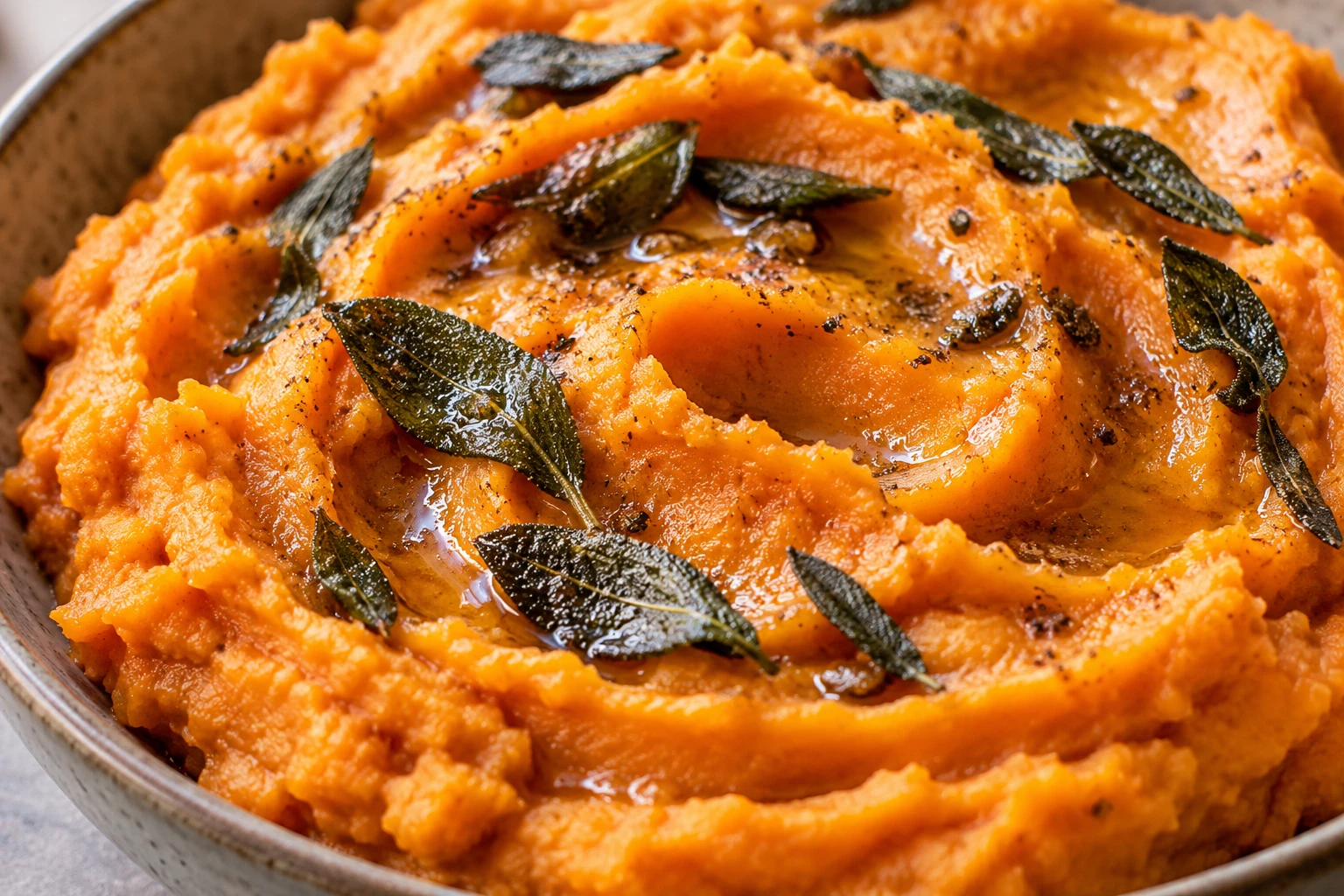
If the rest of dinner needs a few minutes, keep the covered bowl above barely simmering water so the mash stays warm without direct heat on its base. Finish with the reserved brown butter and crisp sage at the last moment, when the butter can settle into the ridges and the leaves still crunch.
Brown Butter and Sage Sweet Potato Mash
Ingredients
- • 2 lb orange-fleshed sweet potatoes, peeled and cut into 1-inch cubes
- • 2 tsp kosher salt, for the cooking water
- • 1/2 tsp kosher salt, for mashing, plus more to taste
- • 6 tbsp unsalted butter
- • 10 fresh sage leaves
- • 1/3 cup whole milk, warmed
- • 1/4 tsp freshly ground black pepper
Method
Cut the sweet potatoes
Peel the sweet potatoes and cut them into even 1-inch cubes so they soften at the same pace; rinse away any loose starch and set them beside a large saucepan.
Look for: The cubes are close in size, with no very thin pieces that could break apart first.
Salt the water
Fill the saucepan with enough water to cover the sweet potatoes by an inch, stir in 2 tsp kosher salt, and bring it to a steady boil over high heat.
Look for: The water has active bubbles across the surface and the salt has dissolved.
Simmer until tender
Add the sweet potatoes, return the water to a gentle simmer, and cook for 12 to 16 minutes, adjusting the heat as needed to keep the pieces intact.
Look for: A knife slides through the largest cube without resistance, but the pieces still hold their shape.
Drain and dry
Drain the sweet potatoes very well, return them to the warm saucepan over low heat, and shake the pan gently for about 1 minute to drive off surface moisture; turn off the heat.
Look for: The cubes look matte rather than wet, and visible steam has mostly subsided.
Crisp sage and brown butter
Melt the butter in a small skillet over medium-low heat, add the sage leaves, and fry until crisp, 20 to 30 seconds; lift the leaves to a plate, then swirl the butter until its milk solids turn amber and smell nutty, and immediately take it off the heat.
Look for: The sage leaves are crisp and deeply green; the butter has golden-brown flecks and a toasted, nut-like aroma, not a burnt smell.
Mash gently
Add the warm milk, 1/2 tsp kosher salt, black pepper, and about two-thirds of the brown butter to the sweet potatoes; mash with a hand masher just until smooth, stopping as soon as the last large lumps disappear.
Look for: The mash is creamy and spoonable, with no long, elastic strands from overworking.
Taste and adjust
Taste the mash and add a little more salt if needed, then fold gently once or twice; keep the reserved brown butter and crisp sage separate for serving.
Look for: The seasoning is balanced and the mash keeps soft ridges when lifted with a spoon.
Hold warm if needed
For a short delay, spoon the mash into a heatproof bowl, cover it, and set the bowl over a saucepan with about an inch of barely simmering water; hold for up to 20 minutes and stir gently once before serving.
Look for: The water gives off a few quiet bubbles without touching the bowl, and the mash stays warm without scorching underneath.
Finish and serve
Spoon the mash into a warm serving dish, drizzle over the reserved brown butter, and crumble the crisp sage leaves on top while they still hold their crunch.
Look for: The browned butter catches in the soft ridges and the sage stays crisp at the surface.