" fill="%23faf1da" stroke-width="1.8"/>%0A <ellipse cx="64.5" cy="50" rx="43" ry="12" transform="rotate(4 64.5 50)" stroke="%23938466"/>%0A <path d="m26 44 1 10m3-12 1 14m3-14 1 15m3-14 1 15m4-14 1 14m4-13 1 14m39-10-1 10m5-9-1 8m5-7-1 5" stroke="%23b2a181" stroke-width=".7"/>%0A <path d="M55 60c3-10 12-14 23-10l47-44c7-6 15-6 15-2 0 5-9 11-14 14L82 60c-8 4-21 4-27 0Z" fill="%23bc8c48" stroke-width="1.6"/>%0A <path d="M61 59c3-5 9-8 15-5l-4 7m8-8 49-45 6-4M84 52l45-41" stroke="%2376562e" stroke-width="1"/>%0A <path d="M20 53c18 14 69 19 90 2" stroke="%23514431" stroke-width="2"/>%0A <path d="M27 59c22 11 59 14 78 2" stroke="%23fff9e9" stroke-width="2"/>%0A <path d="m48 87 1 1m7 8 1 1m6-12 1 1m6 12 1 1m6-9 1 1m-24 9 1 1m19 4 1-1m10-16 1 1" stroke="%23aa9b7c"/>%0A </g>%0A</svg>%0A)
Bright Green Beans with Bacon and Caramelized Onions
Bright, crisp-tender green beans meet sweet onions, smoky bacon, and a quick cider-vinegar glaze in a side dish that stays balanced rather than heavy.
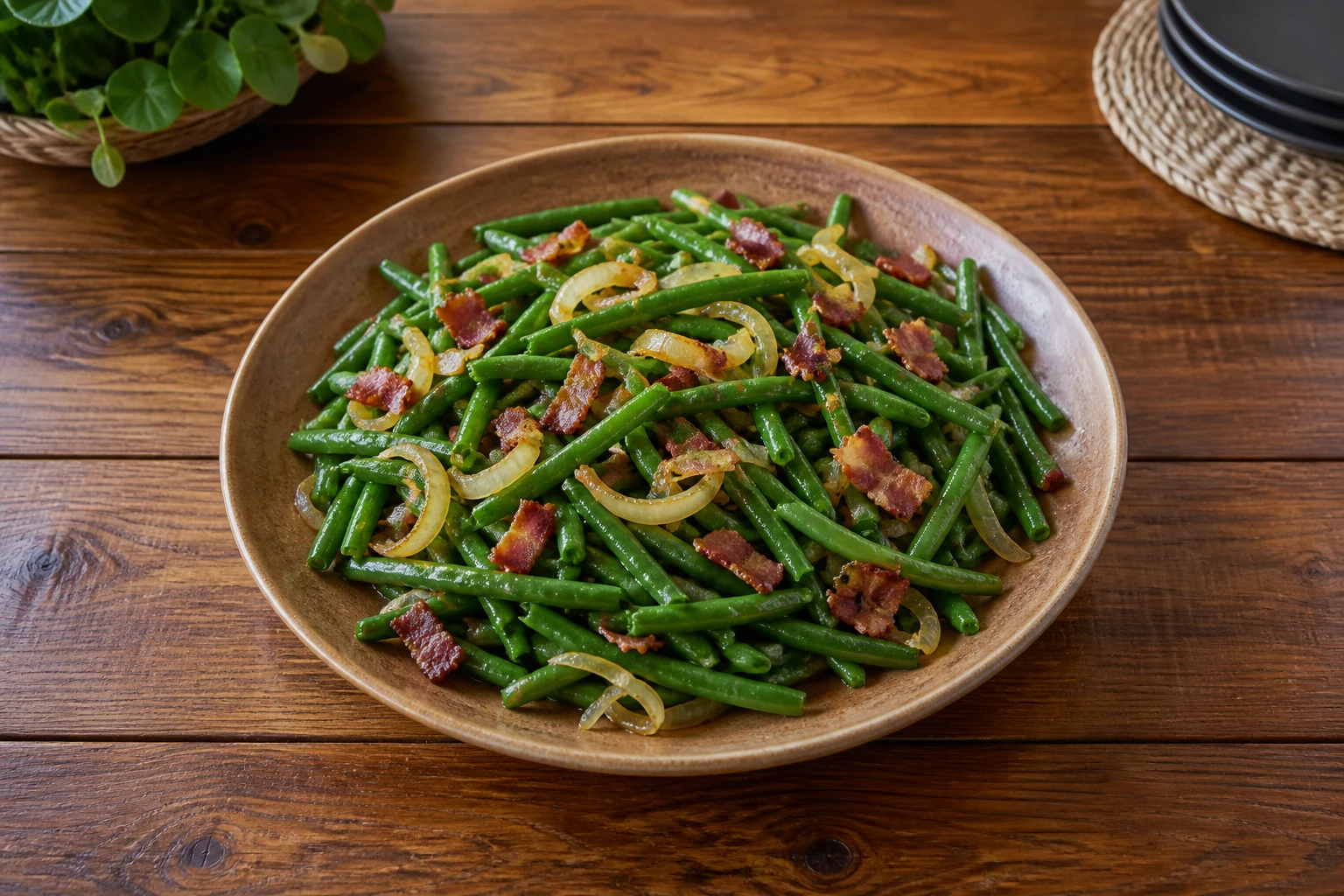
This side dish builds flavor in layers without asking the beans to cook until limp. A short blanch sets their color and texture first, then a quick return to the skillet lets them pick up the savory onion glaze without losing their snap.
Bacon is treated as a seasoning, not a sauce. Draining the crisp pieces and measuring the rendered fat gives the onions a smoky base, while apple cider vinegar cuts through that richness just before the beans return to the pan.
Start with a short blanch
Three minutes in actively boiling salted water is enough to turn the beans vivid green and take away their raw edge. They should still have a clear snap; continuing until fully tender means they will soften too much during the final skillet toss.
Spreading the drained beans on towels is a small but useful pause. It stops carryover steam and prevents excess water from thinning the onion glaze when the beans return to the skillet.
Use bacon for seasoning
Crisp bacon brings salt, smoke, and texture, but leaving all of its rendered fat in the pan would overwhelm a pound of beans. Keeping just 1 1/2 tablespoons captures the flavor while allowing the vegetables to taste clean.
Save the bacon itself for the end. Folding it in off heat keeps its edges crisp instead of letting steam from the beans soften it in the skillet.
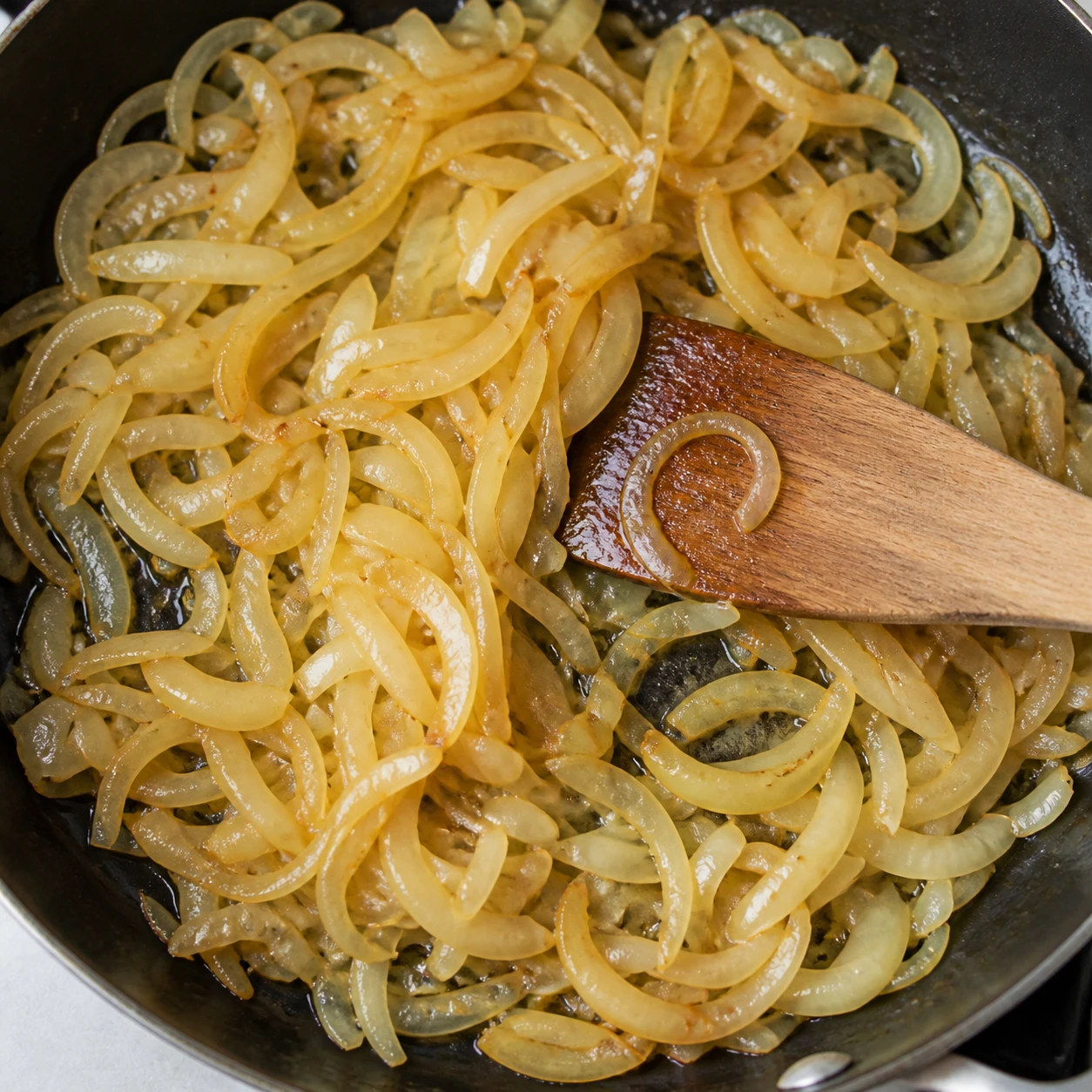
Caramelize lightly, not deeply
The goal is soft onions with light amber edges and a sweet aroma, rather than dark onion jam. Medium-low heat and regular stirring give them time to soften evenly while the butter rounds out the bacon flavor.
If the onions begin to color too quickly, lower the heat and keep them moving. Their gentle sweetness is the counterpoint to the bacon, so avoid taking them to a bitter or scorched stage.
Let acid do the balancing
Apple cider vinegar loosens the browned bits from the skillet and gives the onions a tangy finish that makes the bacon taste less heavy. A little water keeps the vinegar from reducing too sharply before it can coat the onions.
Reduce the liquid until the skillet is nearly dry and glossy before adding the beans. That concentrated coating clings to the vegetables instead of pooling beneath them and making them soggy.
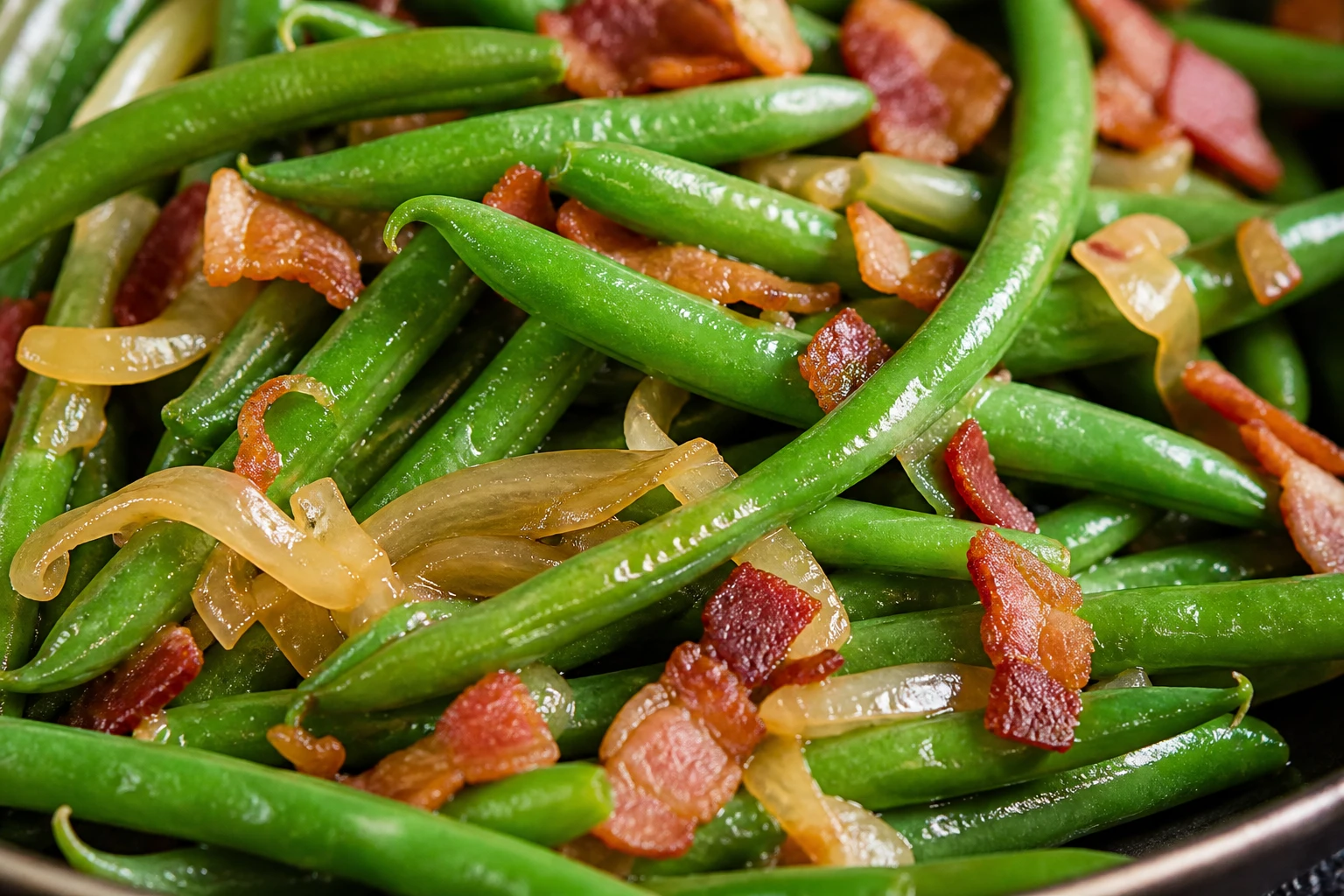
Finish quickly and serve
Give the beans only enough time in the skillet to heat through. Their bright color and slight resistance are the point of the dish, and both fade if they sit in the pan too long.
A warm shallow platter is ideal for serving because it lets steam escape. Scatter the bacon and parsley at the last moment, then bring the dish straight to the table.
Bright Green Beans with Bacon and Caramelized Onions
Ingredients
- • 1 lb green beans, trimmed
- • 4 oz thick-cut bacon
- • 1 large yellow onion, thinly sliced
- • 1 tbsp unsalted butter
- • 1/2 tsp kosher salt, divided
- • 1/4 tsp freshly ground black pepper
- • 2 tbsp apple cider vinegar
- • 2 tbsp water
- • 1 tbsp chopped fresh parsley
Method
Blanch the beans
Bring a large pot of well-salted water to a boil, add the green beans, and cook just until vivid green and crisp-tender; drain immediately.
Look for: The beans are bright green and bend slightly but still snap when bitten.
Cool and dry the beans
Spread the drained beans on a clean kitchen towel or paper towels to cool and dry while you prepare the bacon and onions.
Look for: The beans have stopped steaming and their surfaces no longer look wet.
Render the bacon
Cook the bacon in a large skillet over medium heat, stirring occasionally, until crisp and browned; transfer it to a paper-towel-lined plate.
Look for: The bacon is deeply browned with crisp edges and has released its fat.
Control the bacon fat
Carefully pour off all but 1 1/2 tbsp bacon fat from the skillet, leaving the browned bits behind for flavor without making the finished dish greasy.
Look for: A thin coating of fat remains in the skillet rather than a visible pool.
Caramelize the onions
Add the onion, butter, 1/4 tsp salt, and pepper to the skillet and cook over medium-low heat, stirring often, until soft, lightly golden, and sweet-smelling.
Look for: The onions are tender and light amber at the edges, not dark or scorched.
Deglaze with vinegar
Add the apple cider vinegar and water, scraping the skillet bottom until the browned bits dissolve and the liquid reduces to a glossy coating on the onions.
Look for: The skillet is nearly dry and the onions look glossy with a bright, tangy aroma.
Warm the beans briefly
Add the dry green beans and remaining 1/4 tsp salt, then toss over medium heat only until warmed through and coated with the onions.
Look for: The beans are hot and shiny but still vivid green and pleasantly crisp.
Finish and serve
Fold in the crisp bacon and parsley, taste for seasoning, and serve immediately so the beans keep their bright color and slight crunch.
Look for: Bacon stays crisp against the glossy beans and lightly caramelized onions.