" fill="%23faf1da" stroke-width="1.8"/>%0A <ellipse cx="64.5" cy="50" rx="43" ry="12" transform="rotate(4 64.5 50)" stroke="%23938466"/>%0A <path d="m26 44 1 10m3-12 1 14m3-14 1 15m3-14 1 15m4-14 1 14m4-13 1 14m39-10-1 10m5-9-1 8m5-7-1 5" stroke="%23b2a181" stroke-width=".7"/>%0A <path d="M55 60c3-10 12-14 23-10l47-44c7-6 15-6 15-2 0 5-9 11-14 14L82 60c-8 4-21 4-27 0Z" fill="%23bc8c48" stroke-width="1.6"/>%0A <path d="M61 59c3-5 9-8 15-5l-4 7m8-8 49-45 6-4M84 52l45-41" stroke="%2376562e" stroke-width="1"/>%0A <path d="M20 53c18 14 69 19 90 2" stroke="%23514431" stroke-width="2"/>%0A <path d="M27 59c22 11 59 14 78 2" stroke="%23fff9e9" stroke-width="2"/>%0A <path d="m48 87 1 1m7 8 1 1m6-12 1 1m6 12 1 1m6-9 1 1m-24 9 1 1m19 4 1-1m10-16 1 1" stroke="%23aa9b7c"/>%0A </g>%0A</svg>%0A)
Blueberry Dutch Baby
A hot cast-iron skillet gives this blueberry Dutch baby a high golden rim and soft eggy middle, ready for a bright lemon finish.
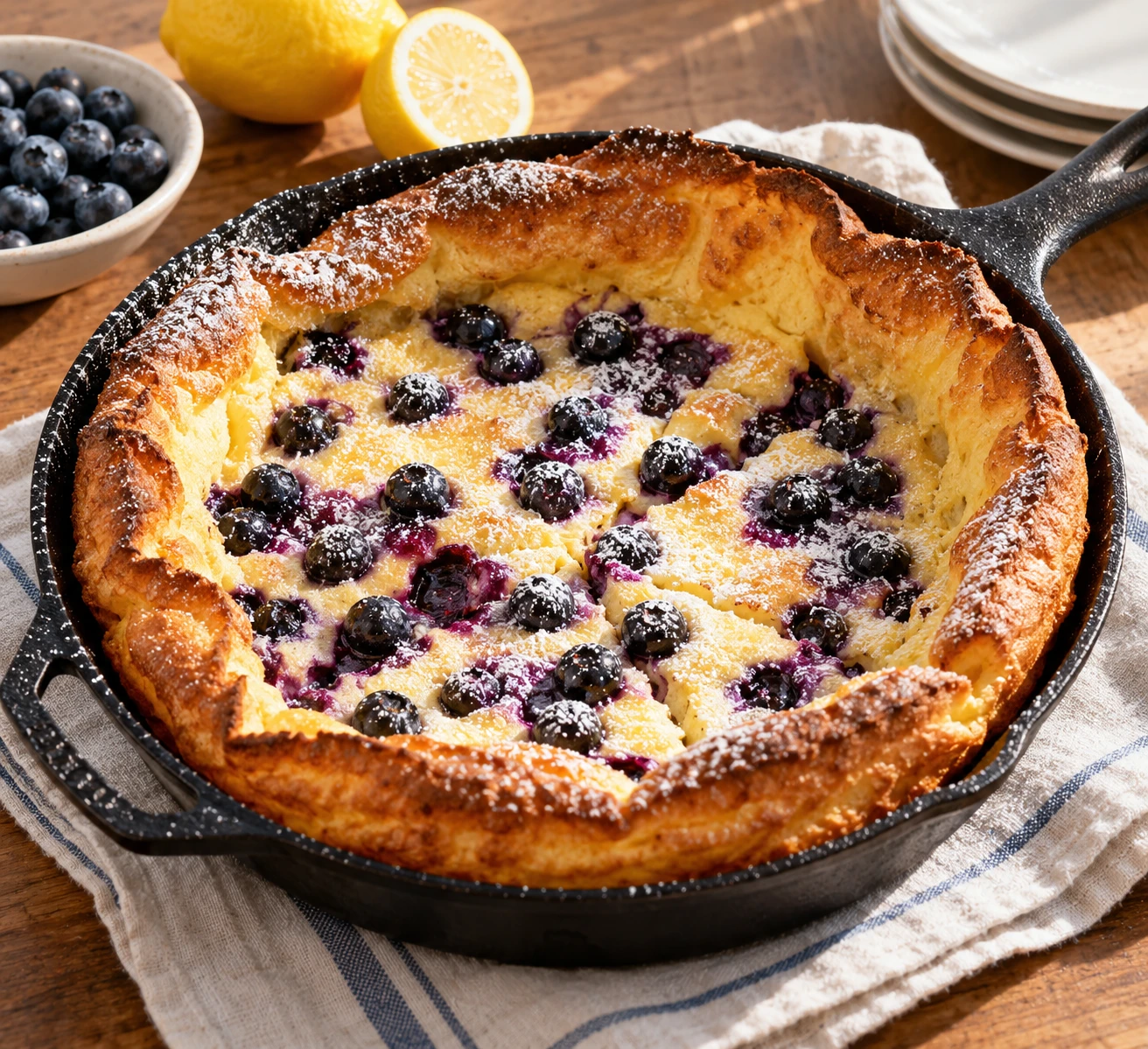
A Dutch baby gets its dramatic edge from a smooth batter meeting a thoroughly heated pan. Blueberries add juicy pockets, while lemon keeps the rich, eggy center lively at the table.
Blend for an even rise
Blending eggs, milk, flour, sugar, salt, and vanilla makes a fluid batter without dry flour pockets. Letting it rest as the skillet heats gives the flour time to hydrate, so the center bakes tender rather than streaky.
Let the pan create the rim
A thoroughly hot cast-iron skillet melts the butter on contact and starts setting the batter at its edge. Pour promptly after swirling the butter, then return the pan to the oven so the batter can climb the sides.
Keep the oven closed
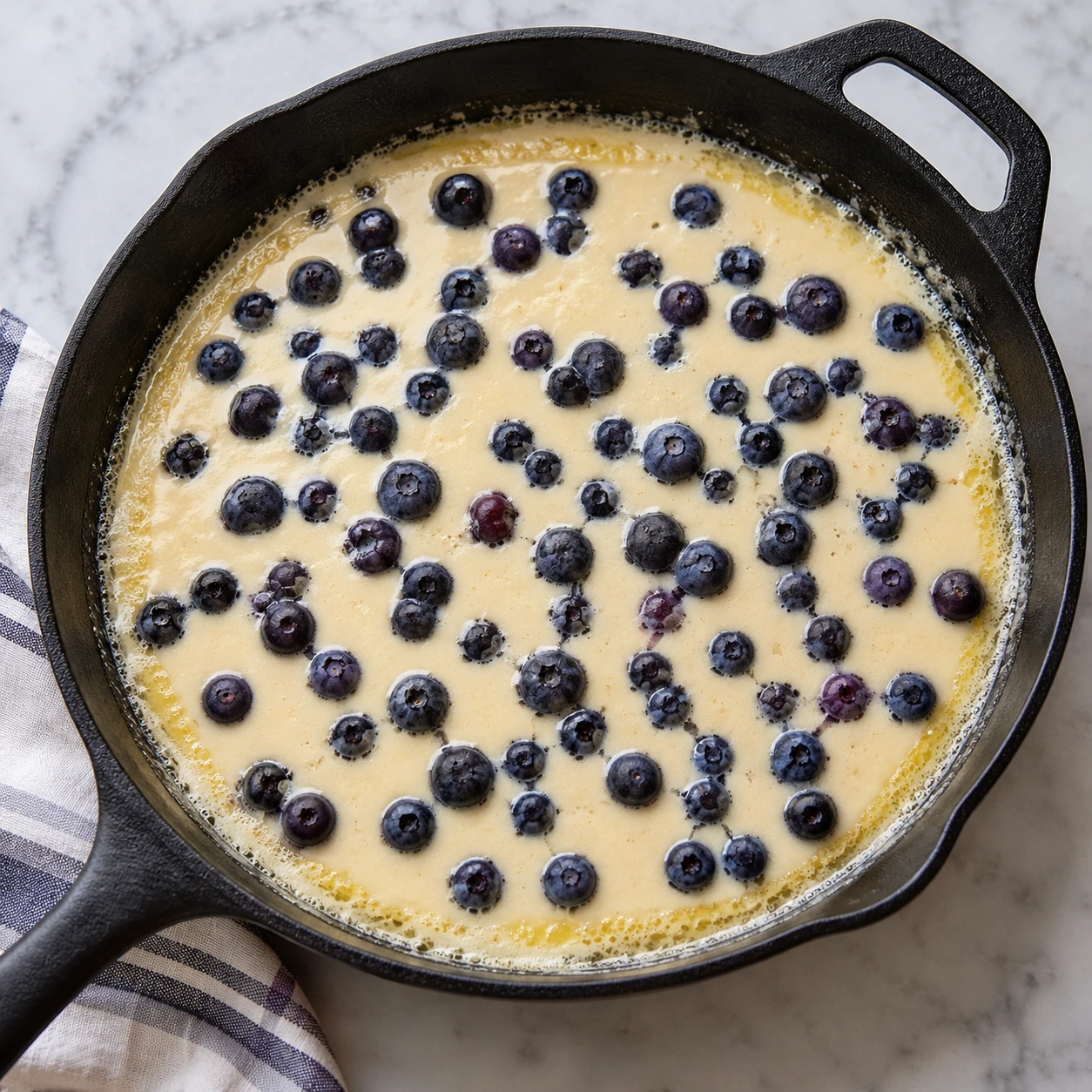
The batter needs steady heat to rise and turn deeply golden, so resist opening the oven while it bakes. Drying the blueberries before scattering them also limits extra moisture in the soft center.
Serve while the edge is tall
The Dutch baby naturally deflates as it cools; that settling is expected and leaves the middle tender. Set the skillet on a heatproof trivet with mitts, then serve promptly with lemon and either the powdered sugar or its maple-syrup replacement.
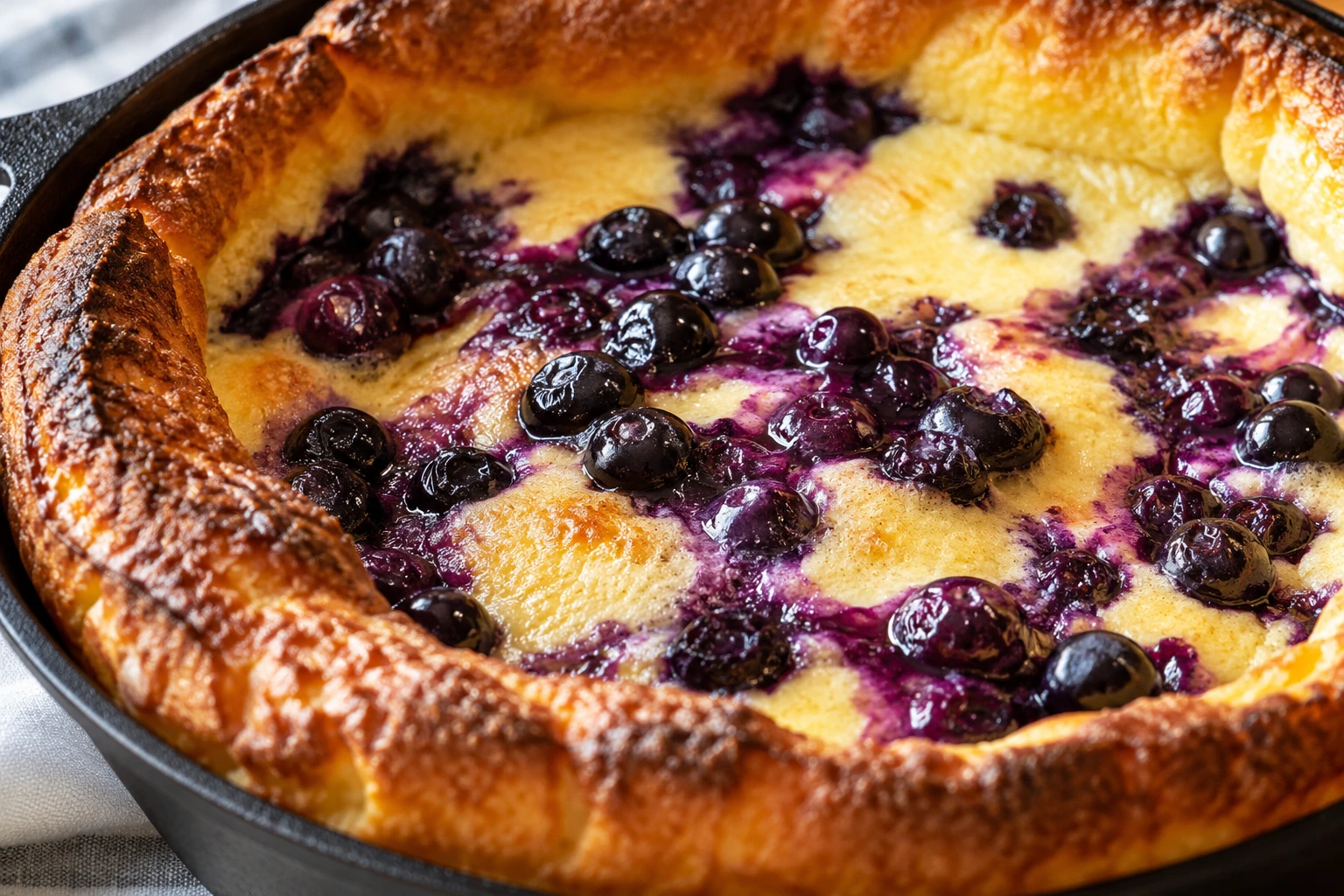
Blueberry Dutch Baby
Ingredients
- • 3 large eggs, at room temperature
- • 3/4 cup whole milk, at room temperature
- • 3/4 cup all-purpose flour
- • 1 tbsp granulated sugar
- • 1/2 tsp kosher salt
- • 1 tsp pure vanilla extract
- • 2 tbsp unsalted butter
- • 1 cup fresh blueberries, washed and dried
- • 1 tbsp lemon juice, for serving
- •
Method
Heat the skillet
Set a rack in the center of the oven, heat to 425 F, and place a 10-inch cast-iron skillet on the rack so it preheats with the oven.
Look for: The oven is fully heated and the skillet has been hot long enough to warm evenly.
Blend the batter
Blend the eggs, milk, flour, granulated sugar, kosher salt, and vanilla until completely smooth, scraping the blender jar once if flour clings to its sides.
Look for: The batter pours in a smooth ribbon without visible flour pockets.
Rest and dry the berries
Let the batter rest while the skillet finishes heating, and wash then thoroughly dry the blueberries; dry berries keep extra water from pooling on the custardy center.
Look for: The batter surface settles and the blueberries feel dry rather than slick.
Butter and fill the skillet
With dry oven mitts, transfer the hot skillet to a heatproof surface, add the butter, and swirl as it melts and foams; immediately pour in the batter, keeping your hands clear of the rim.
Look for: The butter coats the bottom and the batter begins to sizzle gently at the edge.
Add berries and bake
Scatter the blueberries over the batter, return the skillet to the oven, and bake for 18 to 20 minutes without opening the door, until the rim is dramatically puffed and deeply golden.
Look for: The edge rises high above the center and turns a deep, even gold.
Move the hot pan safely
Use dry oven mitts to set the skillet on a heatproof trivet and keep its handle turned away; cast iron stays hot, and the tall edge will begin to deflate as the Dutch baby cools.
Look for: The skillet rests securely on the trivet and the edge starts to settle naturally.
Finish and serve at once
Squeeze the lemon juice over the Dutch baby and serve immediately; finish with the preferred powdered sugar, or instead drizzle the maple syrup over portions for a pourable finish.
Look for: The lemon smells fresh and the chosen sweet finish is added just before serving.