" fill="%23faf1da" stroke-width="1.8"/>%0A <ellipse cx="64.5" cy="50" rx="43" ry="12" transform="rotate(4 64.5 50)" stroke="%23938466"/>%0A <path d="m26 44 1 10m3-12 1 14m3-14 1 15m3-14 1 15m4-14 1 14m4-13 1 14m39-10-1 10m5-9-1 8m5-7-1 5" stroke="%23b2a181" stroke-width=".7"/>%0A <path d="M55 60c3-10 12-14 23-10l47-44c7-6 15-6 15-2 0 5-9 11-14 14L82 60c-8 4-21 4-27 0Z" fill="%23bc8c48" stroke-width="1.6"/>%0A <path d="M61 59c3-5 9-8 15-5l-4 7m8-8 49-45 6-4M84 52l45-41" stroke="%2376562e" stroke-width="1"/>%0A <path d="M20 53c18 14 69 19 90 2" stroke="%23514431" stroke-width="2"/>%0A <path d="M27 59c22 11 59 14 78 2" stroke="%23fff9e9" stroke-width="2"/>%0A <path d="m48 87 1 1m7 8 1 1m6-12 1 1m6 12 1 1m6-9 1 1m-24 9 1 1m19 4 1-1m10-16 1 1" stroke="%23aa9b7c"/>%0A </g>%0A</svg>%0A)
Blistered Padrón Peppers with Sea Salt
A very hot skillet gives whole Padrón peppers smoky blisters while keeping them tender enough to pick up by their stems.
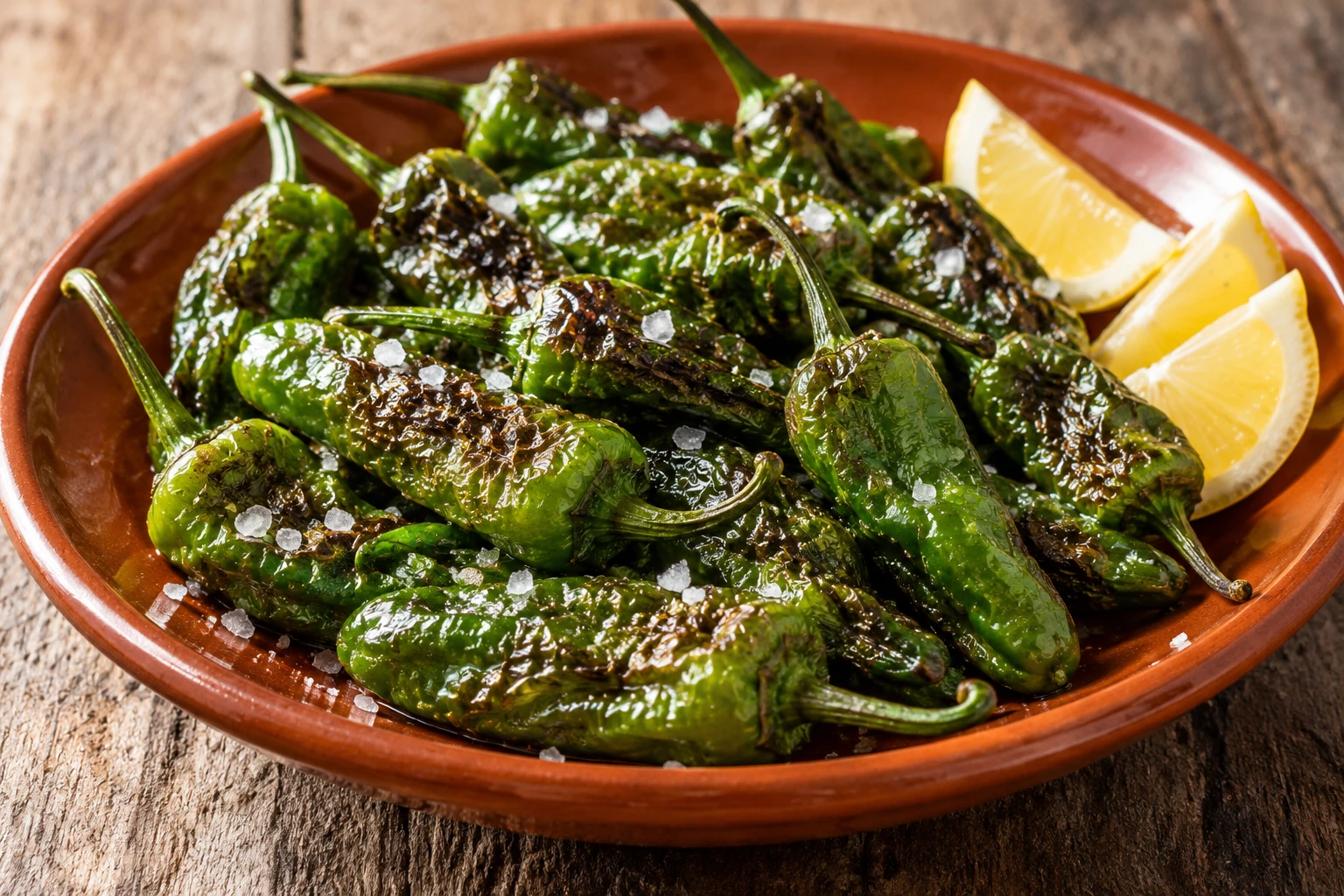
This tapas plate depends on high heat and dry peppers rather than a long ingredient list. A fast skillet sear creates charred spots while the peppers stay plump and easy to share.
Start with a thoroughly dry pepper
Water clinging to the skins can spit when it hits hot oil, so dry the peppers carefully after rinsing. Keeping the stems attached gives each pepper a natural handle for turning and serving.
Let the pan blister the skins
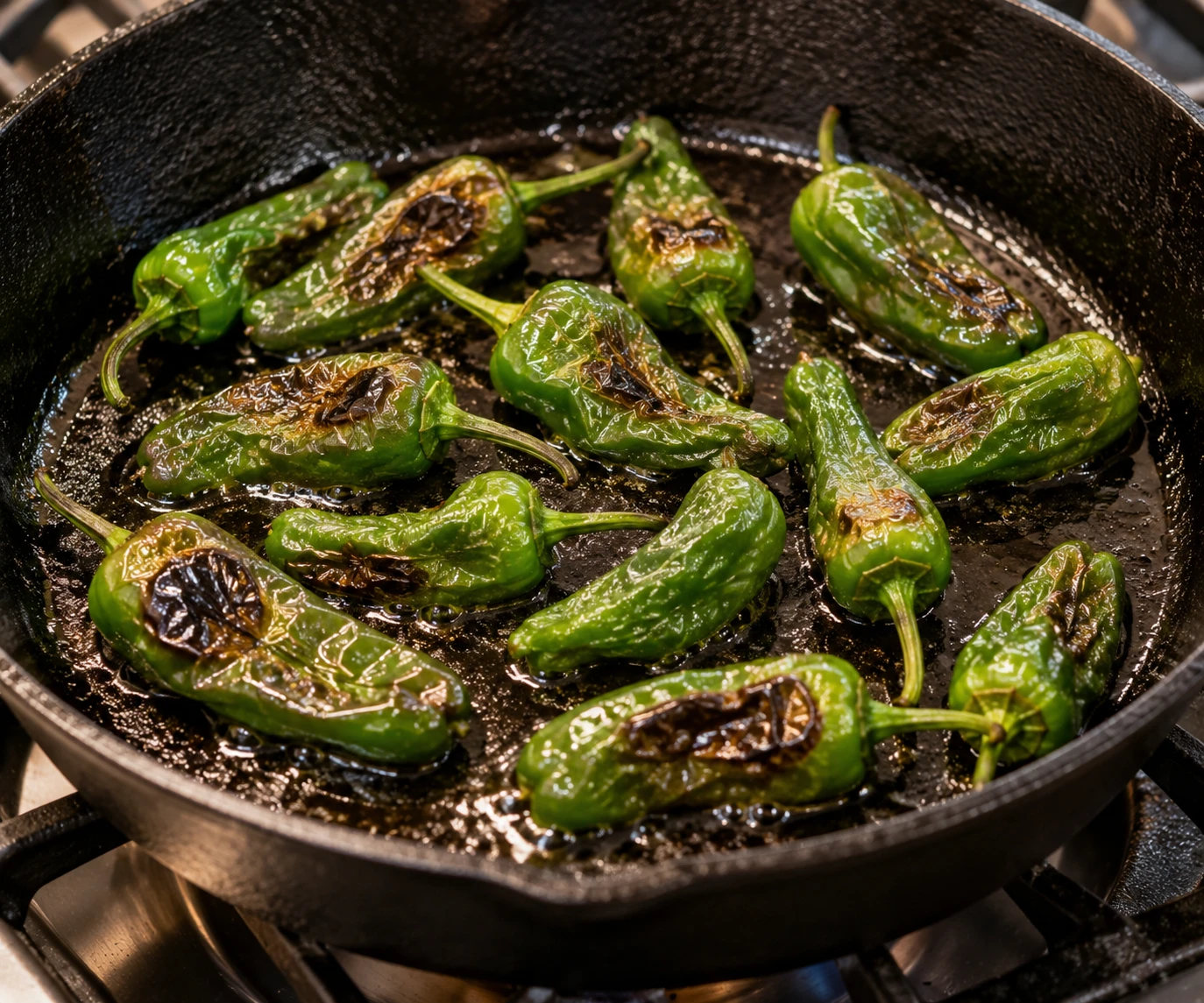
A cast-iron skillet holds enough heat to blister the peppers quickly. Give each batch room and let the first contact sit briefly so the skins color instead of steaming.
Turn for tender, spotted skins
Use tongs to turn the peppers as the skins blister across several sides. They are ready when they yield slightly but still hold their shape, rather than collapsing in the pan.
Season and bring them straight to the table
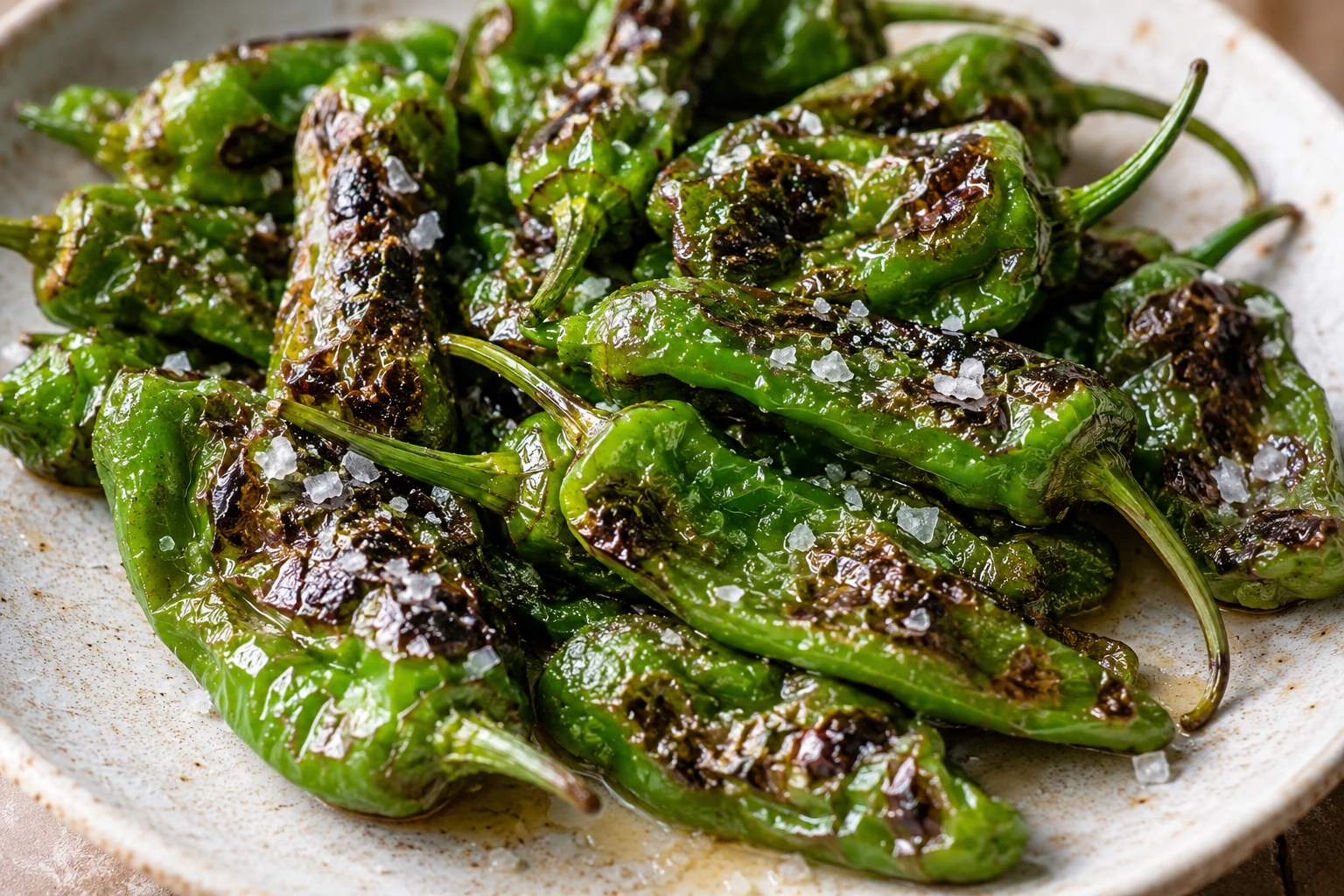
Flaky sea salt catches on the warm, lightly oiled skins, and a little lemon juice can brighten the smoky flavor. Serve the peppers promptly while their centers are tender and the skins remain glossy.
Keep heat high and batches open
If the peppers release moisture and soften before their skins blister, the pan may be crowded or not hot enough. Cook in an uncrowded layer, and lift the skillet briefly if the oil begins to smoke.
Blistered Padrón Peppers with Sea Salt
Ingredients
- • 1 1/2 lb whole Padrón peppers, stems attached
- • 1 1/2 tbsp extra-virgin olive oil, divided
- • 1/2 tsp flaky sea salt
- • 1 small lemon, cut into wedges (optional)
- • 1/4 tsp smoked paprika (optional)
Method
Dry the peppers
Rinse the Padrón peppers and dry them thoroughly with a clean kitchen towel, keeping their stems attached for easy picking up; moisture left on the skins will spit when it meets hot oil.
Look for: The peppers feel dry and no droplets remain around the stems.
Heat the skillet
Set a 12-inch cast-iron skillet over high heat for 3 minutes, until the pan is intensely hot and a hand held well above it feels strong rising heat.
Look for: The empty skillet radiates strong heat without smoking.
Coat the pan
Lift the skillet off the burner briefly, add 1 tbsp olive oil, and swirl into a thin film; return it to the heat when the oil shimmers but is not smoking.
Look for: The oil moves freely and shimmers across the skillet without a smoke plume.
Blister the first batch
Add half the peppers in one uncrowded layer with tongs, keeping their stems pointed away from you, and let them sear undisturbed for 2 minutes; use a splatter screen if the oil spits.
Look for: The peppers hiss steadily and their undersides develop scattered dark blisters.
Turn and finish the first batch
Turn the peppers with tongs every 30 to 45 seconds for 2 to 3 minutes, until several sides are blistered and the peppers are tender but still hold their shape; transfer them to a warm serving plate.
Look for: The skins have charred spots on several sides while the peppers remain plump rather than collapsed.
Cook the remaining peppers
Add the remaining peppers to the hot skillet in a single layer and drizzle with the remaining 1/2 tbsp olive oil if the pan looks dry; blister and turn them the same way, then transfer them to the plate.
Look for: The second batch has charred patches and yields slightly when pressed with tongs.
Season while hot
Sprinkle the warm peppers evenly with flaky sea salt and, if desired, smoked paprika, then turn them gently once so the seasoning clings to the lightly oiled skins.
Look for: The salt catches on the glossy skins without collecting in a wet puddle.
Finish and serve
Serve the peppers immediately while warm, with lemon wedges alongside for guests who want a little fresh juice squeezed over their portion.
Look for: The peppers are warm, fragrant, and still lightly crisp at the stems.