" fill="%23faf1da" stroke-width="1.8"/>%0A <ellipse cx="64.5" cy="50" rx="43" ry="12" transform="rotate(4 64.5 50)" stroke="%23938466"/>%0A <path d="m26 44 1 10m3-12 1 14m3-14 1 15m3-14 1 15m4-14 1 14m4-13 1 14m39-10-1 10m5-9-1 8m5-7-1 5" stroke="%23b2a181" stroke-width=".7"/>%0A <path d="M55 60c3-10 12-14 23-10l47-44c7-6 15-6 15-2 0 5-9 11-14 14L82 60c-8 4-21 4-27 0Z" fill="%23bc8c48" stroke-width="1.6"/>%0A <path d="M61 59c3-5 9-8 15-5l-4 7m8-8 49-45 6-4M84 52l45-41" stroke="%2376562e" stroke-width="1"/>%0A <path d="M20 53c18 14 69 19 90 2" stroke="%23514431" stroke-width="2"/>%0A <path d="M27 59c22 11 59 14 78 2" stroke="%23fff9e9" stroke-width="2"/>%0A <path d="m48 87 1 1m7 8 1 1m6-12 1 1m6 12 1 1m6-9 1 1m-24 9 1 1m19 4 1-1m10-16 1 1" stroke="%23aa9b7c"/>%0A </g>%0A</svg>%0A)
Belgian Waffles
A simple batter makes waffles with crisp golden ridges and a tender center, with each batch held on a rack in a low oven until brunch is ready.
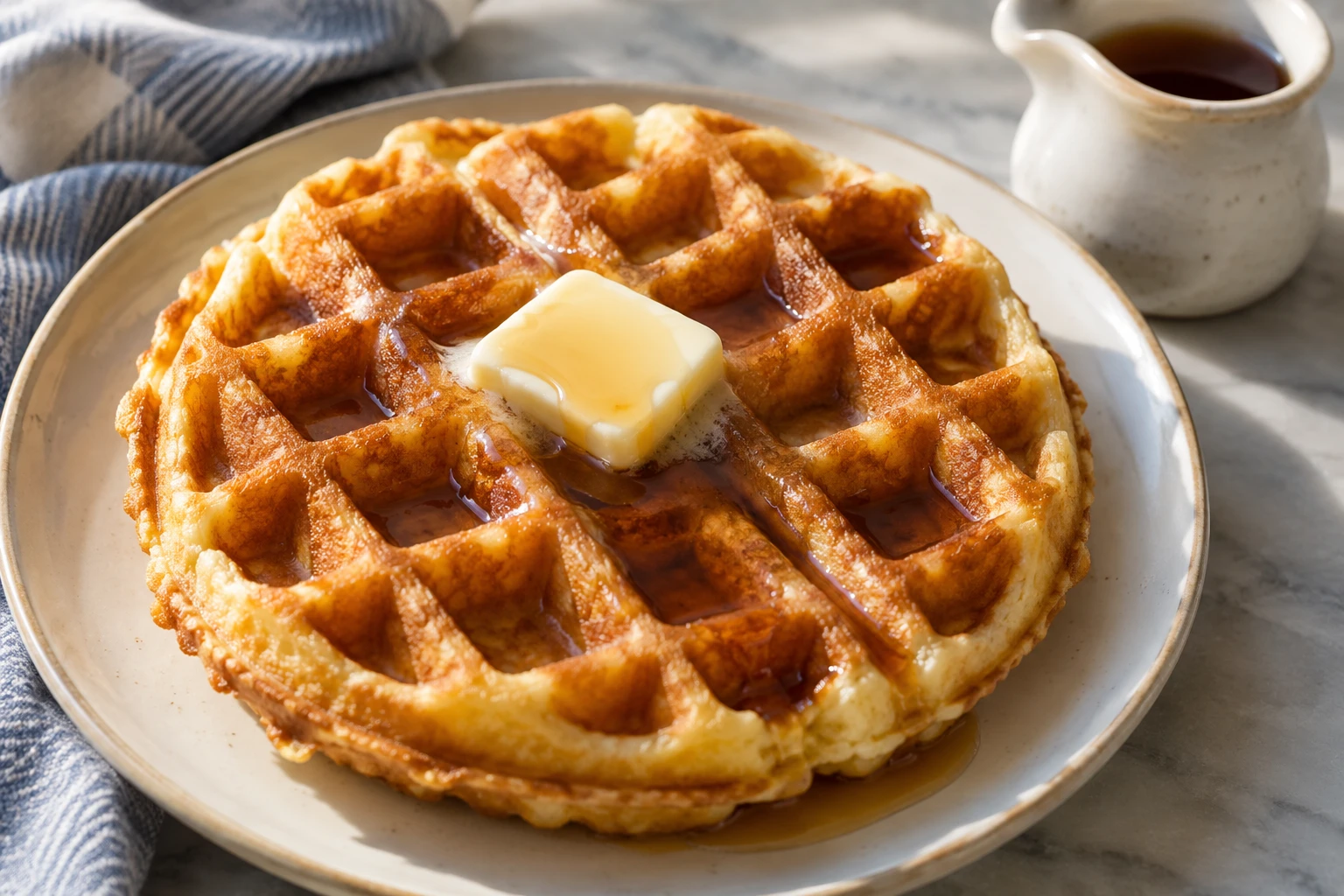
Belgian waffles have deep ridges that reward a fully heated iron. Mixing the batter only until the dry streaks disappear helps keep the center tender while the exterior browns.
A straightforward batter
The batter uses familiar ingredients: flour, eggs, milk, melted butter, and baking powder for lift. Small lumps are fine, and a short rest gives the flour time to absorb moisture while the iron finishes heating.
Heat both surfaces and oven
Preheating the Belgian iron gives the batter immediate contact with hot ridges, helping a browned shell form as the center cooks. The low oven and open wire rack then hold each finished batch while steam can escape.
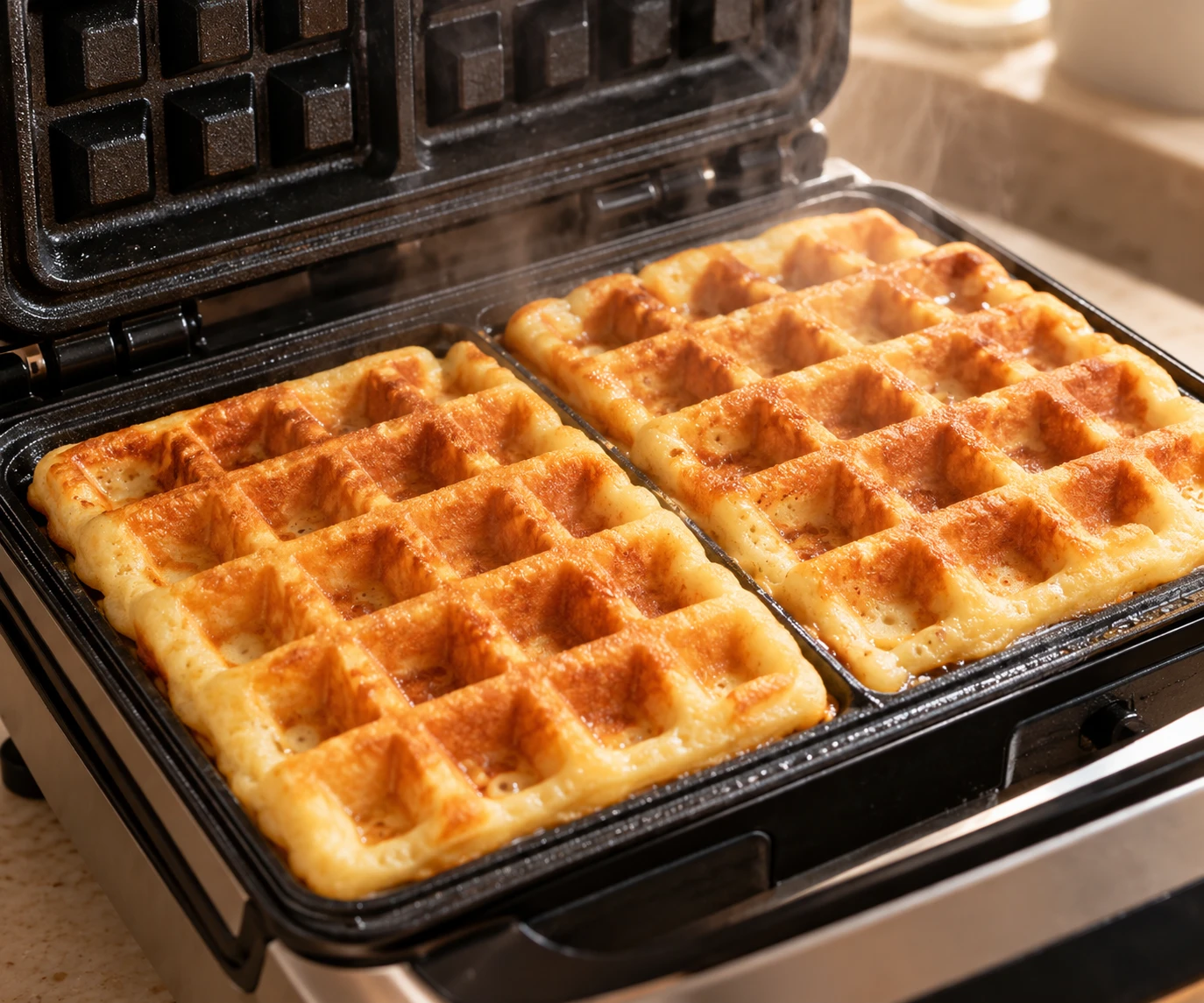
Watch the steam
Steam is a useful progress cue when waffle makers differ in size and heat. Once it slows and the ridges look browned, lift the waffle carefully; if it is pale or soft, close the iron for a little longer.
Keep the edges crisp
Place waffles in one layer on the rack rather than stacking them, since trapped steam softens the crisp ridges. Bring softened butter and maple syrup to the table, and let diners add syrup just before eating.
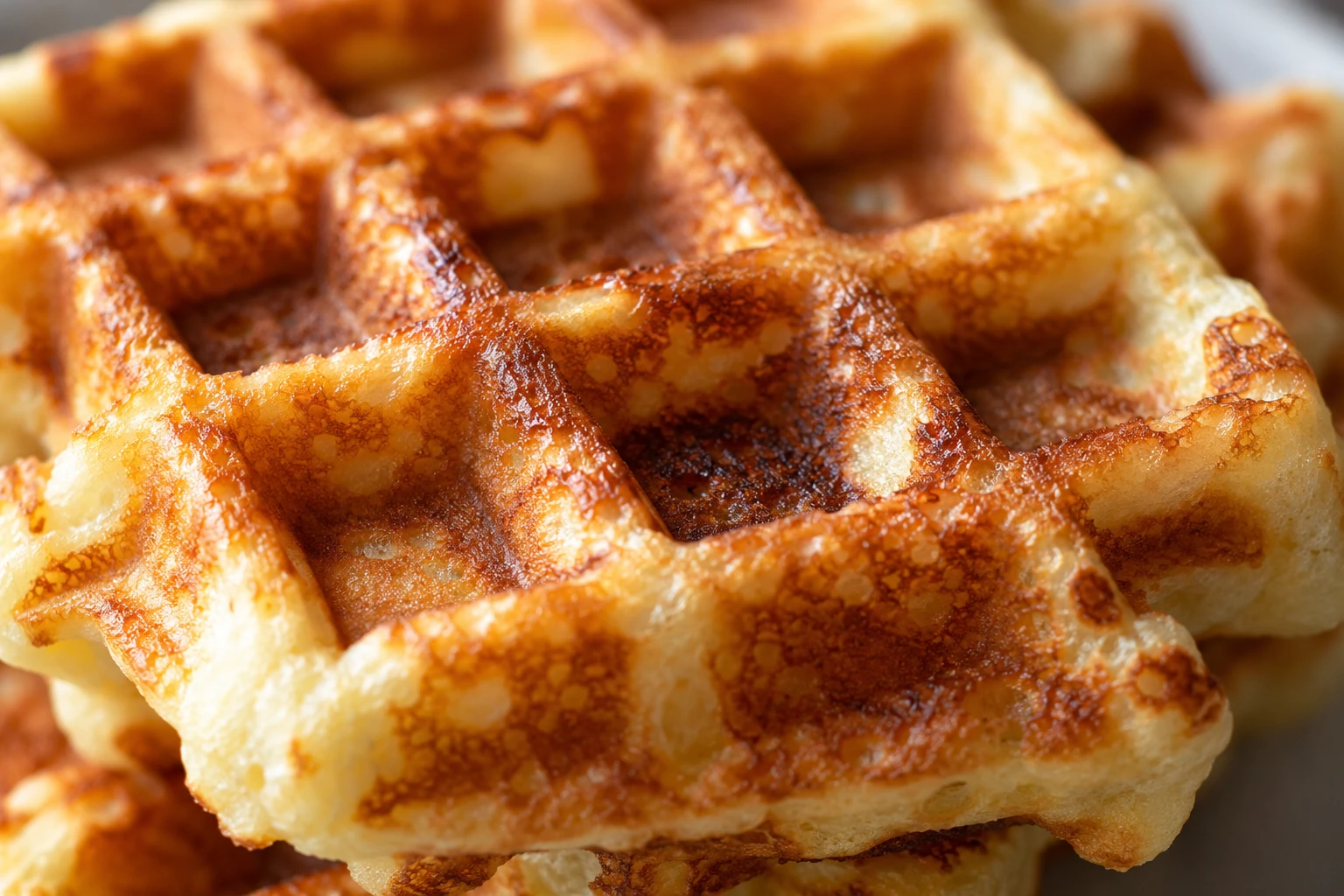
Belgian Waffles
Ingredients
- • 2 cups all-purpose flour
- • 2 tablespoons granulated sugar
- • 2 teaspoons baking powder
- • 1/2 teaspoon fine salt
- • 2 large eggs
- • 1 3/4 cups whole milk
- • 6 tablespoons unsalted butter, melted and cooled
- • 2 tablespoons unsalted butter, softened for serving
- • 1 teaspoon vanilla extract
- • 1 teaspoon neutral oil, for brushing the waffle iron
- • 1/2 cup pure maple syrup, for serving
Method
Warm the holding oven
Set a wire rack over a sheet pan and heat the oven to 200 F. Preheat the Belgian waffle iron according to its maker while you mix the batter.
Look for: The oven is warm and the waffle iron's ready light or indicator signals that its plates are hot.
Whisk the dry ingredients
In a large bowl, whisk the flour, granulated sugar, baking powder, and fine salt until the leavening is evenly distributed.
Look for: No white pockets of baking powder or salt remain in the flour.
Combine the wet ingredients
In a second bowl, whisk the eggs, whole milk, and vanilla until blended, then whisk in the melted, cooled butter until the mixture looks smooth.
Look for: The butter is incorporated and no streaks of egg remain.
Make the batter
Pour the wet mixture into the dry ingredients and fold with a spatula only until no large flour streaks remain; small lumps are fine. Rest the batter for 3 minutes while the iron finishes heating.
Look for: The batter is thick and cohesive, with no dry flour pockets and a few small lumps.
Oil and fill the iron
Brush the hot waffle grids with a thin film of neutral oil, then add the portion of batter recommended for your Belgian iron, leaving the edges clear for expansion.
Look for: The grids have a light sheen and the batter does not reach the outer edge.
Cook until golden
Close the iron and cook until the escaping steam slows and the deep ridges are browned, using about 4 minutes per waffle as a starting point for the iron's indicator.
Look for: The steam has slowed and the waffle's ridges look crisp and deep gold.
Hold waffles on the rack
Lift each finished waffle out carefully and place it directly on the wire rack in the low oven, leaving space around it so escaping steam does not soften the crust.
Look for: Waffles sit in a single layer with their edges exposed to the warm air.
Finish the remaining batter
Repeat with the remaining batter, brushing the grids with a little more of the measured neutral oil only if a waffle begins to stick; keep finished batches on the rack without stacking.
Look for: Each waffle releases cleanly, and the held batches remain separate rather than steaming together.
Serve warm
Transfer the warm waffles to plates with softened butter and maple syrup at the table, adding syrup just before eating to preserve their crisp ridges.
Look for: The butter softens on contact and the waffles are served warm with syrup alongside.