" fill="%23faf1da" stroke-width="1.8"/>%0A <ellipse cx="64.5" cy="50" rx="43" ry="12" transform="rotate(4 64.5 50)" stroke="%23938466"/>%0A <path d="m26 44 1 10m3-12 1 14m3-14 1 15m3-14 1 15m4-14 1 14m4-13 1 14m39-10-1 10m5-9-1 8m5-7-1 5" stroke="%23b2a181" stroke-width=".7"/>%0A <path d="M55 60c3-10 12-14 23-10l47-44c7-6 15-6 15-2 0 5-9 11-14 14L82 60c-8 4-21 4-27 0Z" fill="%23bc8c48" stroke-width="1.6"/>%0A <path d="M61 59c3-5 9-8 15-5l-4 7m8-8 49-45 6-4M84 52l45-41" stroke="%2376562e" stroke-width="1"/>%0A <path d="M20 53c18 14 69 19 90 2" stroke="%23514431" stroke-width="2"/>%0A <path d="M27 59c22 11 59 14 78 2" stroke="%23fff9e9" stroke-width="2"/>%0A <path d="m48 87 1 1m7 8 1 1m6-12 1 1m6 12 1 1m6-9 1 1m-24 9 1 1m19 4 1-1m10-16 1 1" stroke="%23aa9b7c"/>%0A </g>%0A</svg>%0A)
Classic Sunday Pot Roast with Horseradish Sauce
This chuck roast gets its character from a real sear, reduced wine-and-Worcestershire braising liquid, and vegetables timed to stay beautifully intact.
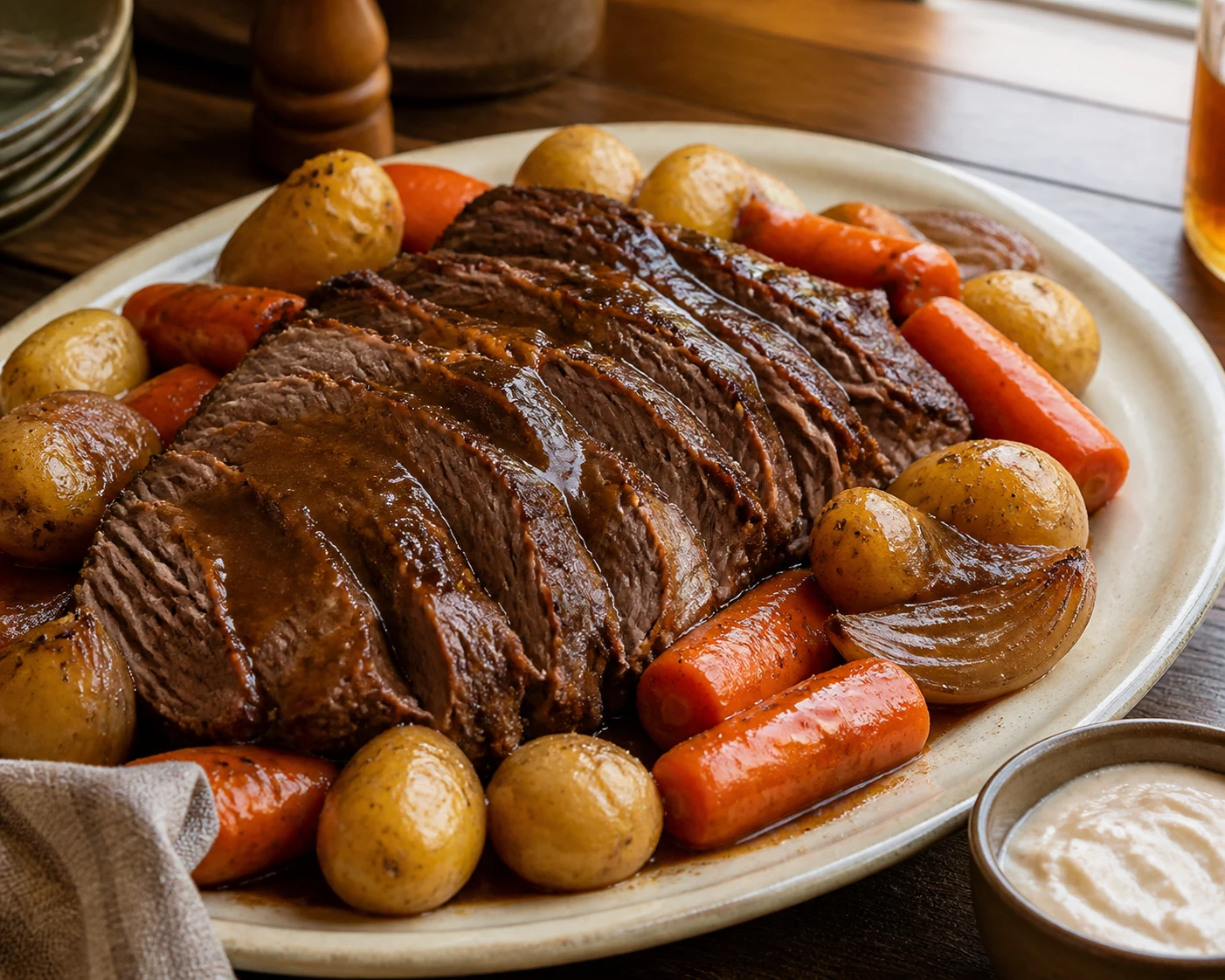
A classic pot roast should taste roasted before it tastes braised. Here, a patient mahogany sear and darkened tomato paste build a base that becomes a glossy gravy, while red wine adds a little extra roundness; beef broth works in its place when needed.
The pot does most of the work, but timing protects the vegetables. Potatoes and carrots join only after the chuck has started to yield, so the finished meal has tender beef, distinct vegetables, and enough generous slices left for another meal.
Start with a serious sear
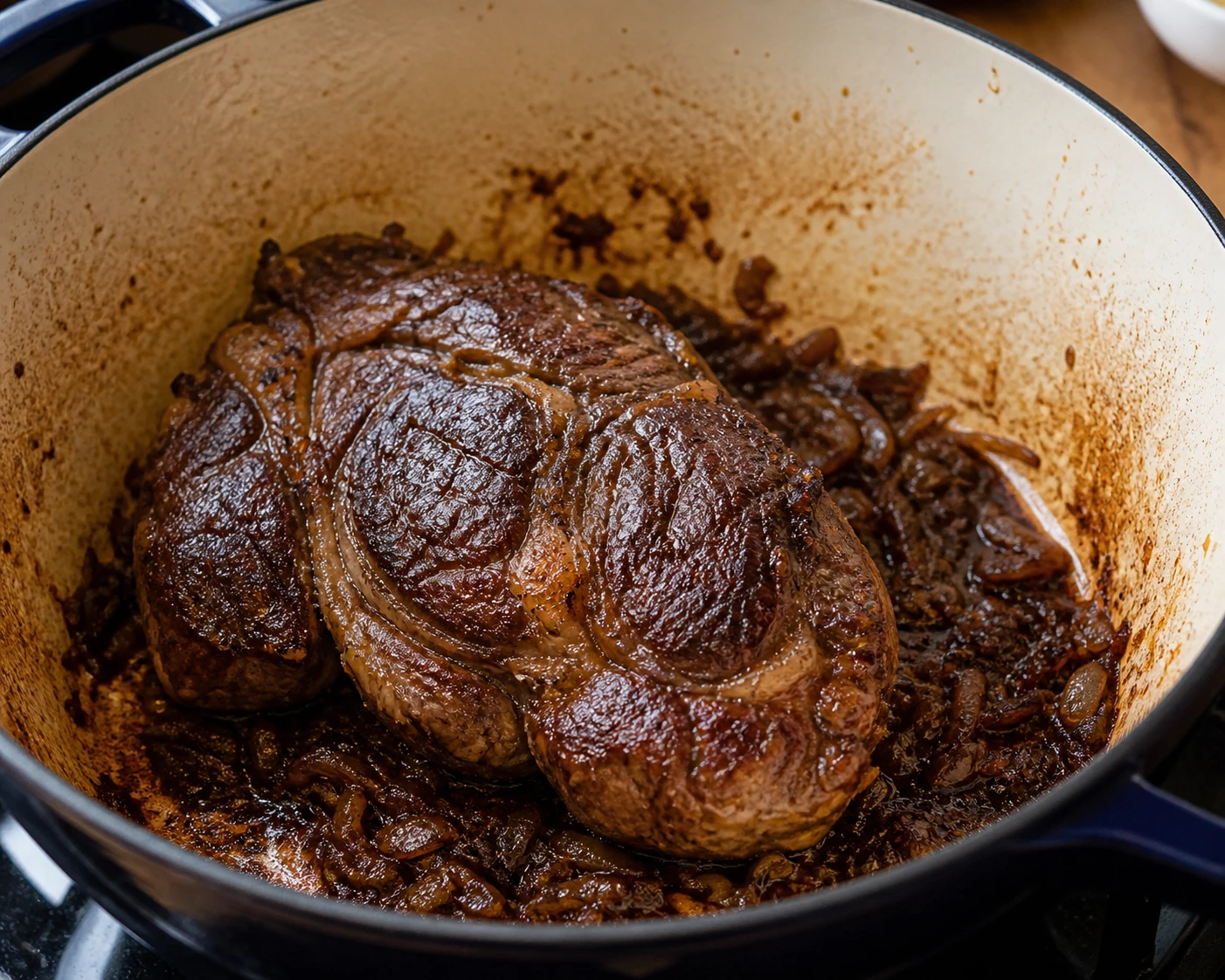
Drying the chuck and leaving it undisturbed on the hot pot surface creates the dark crust that broth alone cannot provide. Those browned bits dissolve during deglazing, giving the final gravy roasted depth and body.
Layer savory flavors
Golden onions, brick-red tomato paste, Worcestershire, herbs, and a short wine reduction all contribute different notes without obscuring the beef. The covered oven braise keeps the liquid at a gentle pace, which is ideal for chuck's connective tissue.
Add vegetables at the right moment
Sturdy whole small potatoes and thick carrot pieces can withstand the final part of the braise, but not the entire cook. Keeping them in a single layer and leaving the pot undisturbed preserves clean edges and prevents a muddy gravy.
Finish with contrast
Reducing the liquid after the roast comes out concentrates every browned flavor into a spoon-coating gravy. The cool creamy horseradish sauce cuts that richness and gives each slice a gentle sharpness at the table.
Classic Sunday Pot Roast with Horseradish Sauce
Ingredients
- • 3 1/2 lb boneless beef chuck roast
- • 2 tsp kosher salt
- • 1 tsp black pepper
- • 2 tbsp neutral oil
- • 2 large yellow onions
- • 4 garlic cloves
- • 2 tbsp tomato paste
- •
- • 3 cups unsalted beef broth
- • 2 tbsp Worcestershire sauce
- • 4 sprigs thyme
- • 2 sprigs rosemary
- • 2 bay leaves
- • 1 1/2 lb small Yukon Gold potatoes
- • 1 lb large carrots, cut into 2-inch pieces
- • 1/2 cup sour cream
- • 2 tbsp prepared horseradish
- • 1 tsp Dijon mustard
- • 2 tbsp chopped parsley
Method
Heat the oven and season the roast
Heat the oven to 300 F. Pat the chuck roast dry and season all over with kosher salt and black pepper so its surface is dry enough to brown deeply. Use red wine by default; use beef broth for a nonalcoholic version.
Look for: The roast looks dry and evenly seasoned, with no damp spots.
Brown the chuck roast
Heat neutral oil in a Dutch oven over medium-high until shimmering, then sear the chuck roast without moving it for 5 minutes per broad side, including the edges, until it is deeply mahogany brown; transfer it to a plate.
Look for: A dark brown crust forms on every side and browned bits cling to the pot.
Build the savory base
Lower heat to medium, add onions and a pinch of salt, and cook for 8 minutes until deeply golden at the edges. Stir in garlic and tomato paste for 1 minute until the paste darkens to brick red.
Look for: The onions are golden and the tomato paste is dark, fragrant, and no longer bright red.
Deglaze and braise
Pour in red wine or beef broth, scrape up every browned bit, and simmer for 3 minutes until reduced slightly. Stir in beef broth, Worcestershire sauce, thyme, rosemary, and bay leaves; return the roast and its juices to the pot.
Look for: The liquid is dark brown, glossy, and carries no stuck bits on the pot bottom.
Braise until nearly tender
Cover the pot and braise in the 300 F oven for 2 hours, turning the roast once halfway through, until a fork enters with some resistance but the roast does not yet fall apart.
Look for: The braising liquid barely bubbles and the roast has begun to soften at the edges.
Add sturdy vegetables
Add whole small potatoes and 2-inch carrot pieces around, not on top of, the roast; keep them mostly submerged in the gravy so they cook evenly without being stirred apart.
Look for: The potatoes and carrots sit in a single layer with enough liquid around them.
Finish the braise
Cover and return the pot to the 300 F oven for 60 minutes, until the roast is fork-tender and the potatoes and carrots are tender but still hold their shape.
Look for: A fork twists easily in the beef, while each potato and carrot piece remains intact.
Make horseradish sauce
Stir sour cream, prepared horseradish, Dijon mustard, and a pinch of kosher salt in a small bowl; refrigerate until serving so the sharp flavor stays fresh.
Look for: The sauce is smooth, creamy, and pleasantly sharp without being watery.
Reduce the gravy
Move roast and vegetables to a warm platter, tent loosely, and rest for 15 minutes. Skim excess fat from the braising liquid, simmer it over medium-high for 10 minutes until it coats a spoon, then discard the herb stems and bay leaves.
Look for: The gravy leaves a clean trail when a spoon is drawn through it and tastes deeply savory.
Slice and serve
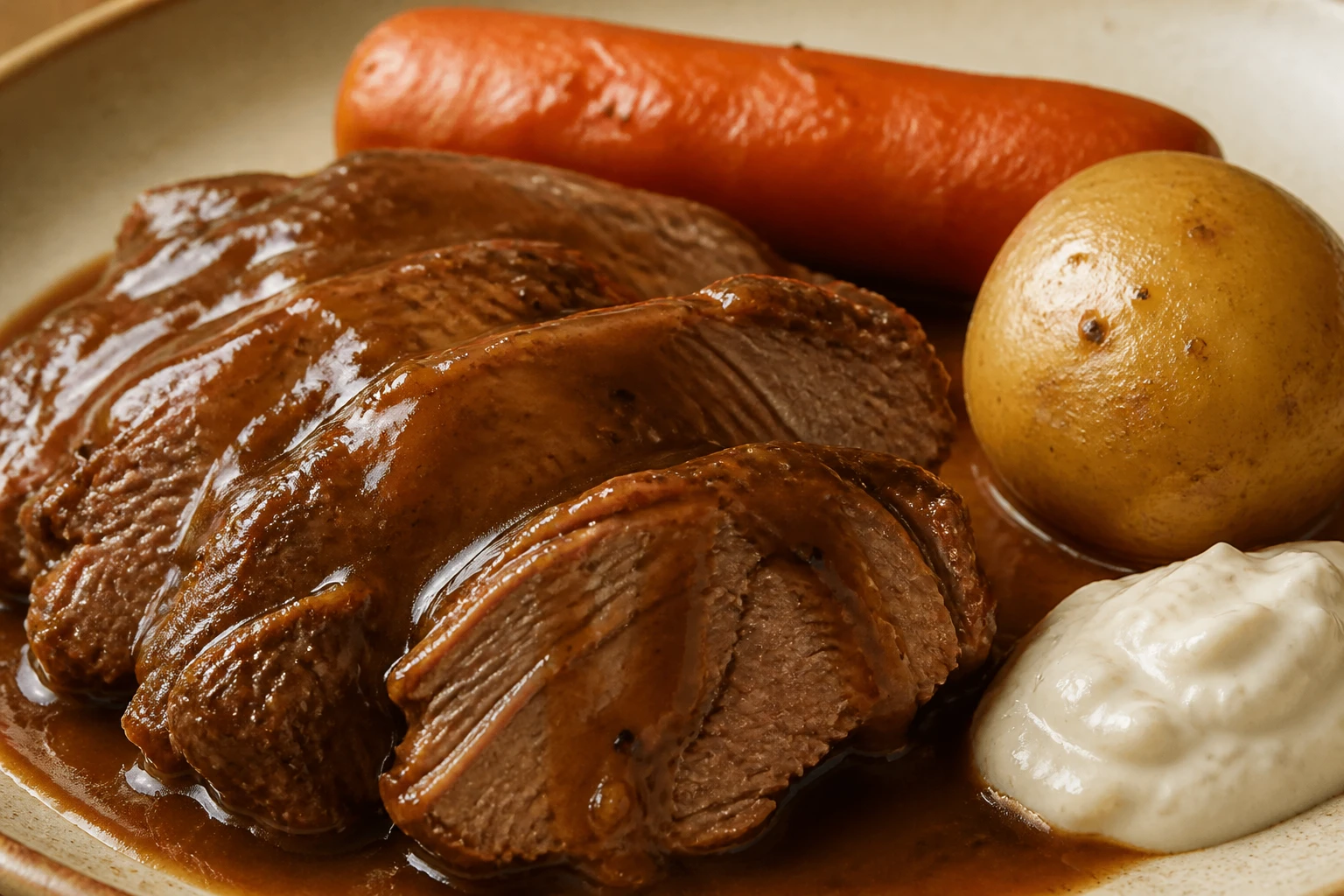
Slice the rested chuck roast across the grain, spoon the reduced gravy over the beef and vegetables, scatter with parsley, and pass the creamy horseradish sauce alongside.
Look for: The slices are moist and tender, and the vegetables remain distinct rather than mashed.