" fill="%23faf1da" stroke-width="1.8"/>%0A <ellipse cx="64.5" cy="50" rx="43" ry="12" transform="rotate(4 64.5 50)" stroke="%23938466"/>%0A <path d="m26 44 1 10m3-12 1 14m3-14 1 15m3-14 1 15m4-14 1 14m4-13 1 14m39-10-1 10m5-9-1 8m5-7-1 5" stroke="%23b2a181" stroke-width=".7"/>%0A <path d="M55 60c3-10 12-14 23-10l47-44c7-6 15-6 15-2 0 5-9 11-14 14L82 60c-8 4-21 4-27 0Z" fill="%23bc8c48" stroke-width="1.6"/>%0A <path d="M61 59c3-5 9-8 15-5l-4 7m8-8 49-45 6-4M84 52l45-41" stroke="%2376562e" stroke-width="1"/>%0A <path d="M20 53c18 14 69 19 90 2" stroke="%23514431" stroke-width="2"/>%0A <path d="M27 59c22 11 59 14 78 2" stroke="%23fff9e9" stroke-width="2"/>%0A <path d="m48 87 1 1m7 8 1 1m6-12 1 1m6 12 1 1m6-9 1 1m-24 9 1 1m19 4 1-1m10-16 1 1" stroke="%23aa9b7c"/>%0A </g>%0A</svg>%0A)
Slow-Cooker Pork Pozole Rojo
Toasted guajillo and ancho chiles give this slow-cooked pork pozole its deep red broth, while hominy joins late and stays plump beneath a crisp, bright spread of garnishes.
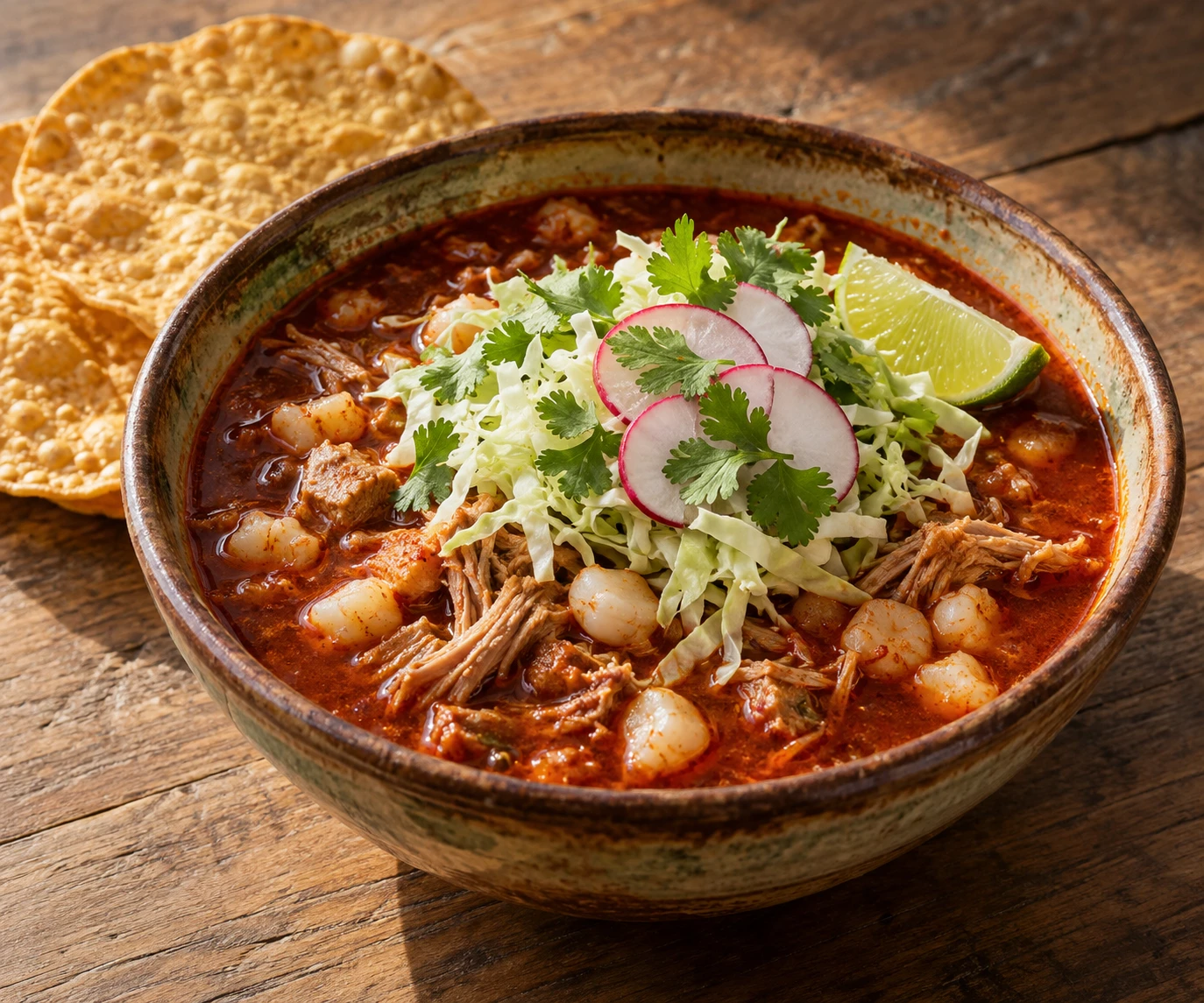
Pozole rojo gets its color and rounded chile flavor from dried chiles softened and blended into the cooking broth. Pork shoulder simmers until it shreds easily, while hominy waits until the end so its kernels keep their shape in the bowl.
Toast, soak, then blend
Briefly toasting the guajillo and ancho chiles wakes up their aroma, but blackened patches can make the sauce bitter. A short soak softens the skins enough for the blender to turn the chiles, onion, garlic, oregano, and cumin into a smooth base.
Blending with part of the broth helps the sauce circulate around the pork in the cooker. Scraping the jar once catches chile pieces that might otherwise stay coarse.
Let the shoulder become tender
Browning the pork in batches gives the broth a deeper savory base; crowded meat would release moisture and steam instead. The long LOW cook then softens the shoulder until it yields to a fork, which matters more here than a precise clock alone.
Shred the pork while it is still warm and keep it covered as the hominy finishes. Returning the meat at the end warms it through without extending the cook enough to dry the strands.
A deep red broth without heaviness
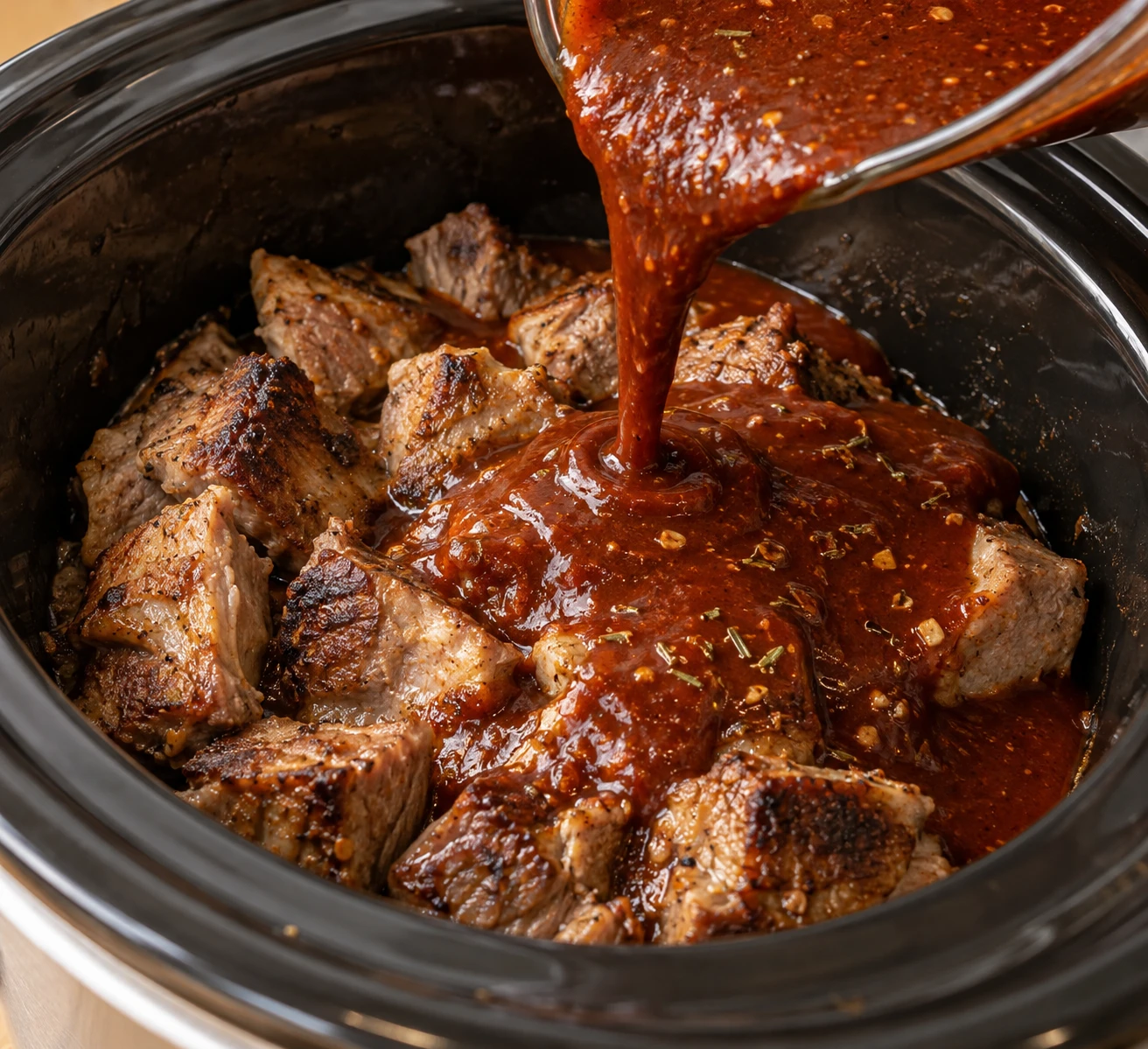
Guajillo brings a fruity, gently sharp chile note, while ancho adds a rounder, raisin-like depth. Their blended sauce colors the broth and seasons the pork as it cooks, making the long simmer useful for both tenderness and flavor.
Add hominy near the finish
Canned hominy is already cooked, so it needs only enough time in the seasoned broth to heat through and pick up flavor. Adding it after the pork shreds keeps the kernels plump and distinct instead of letting them soften throughout the full slow-cooker cycle.
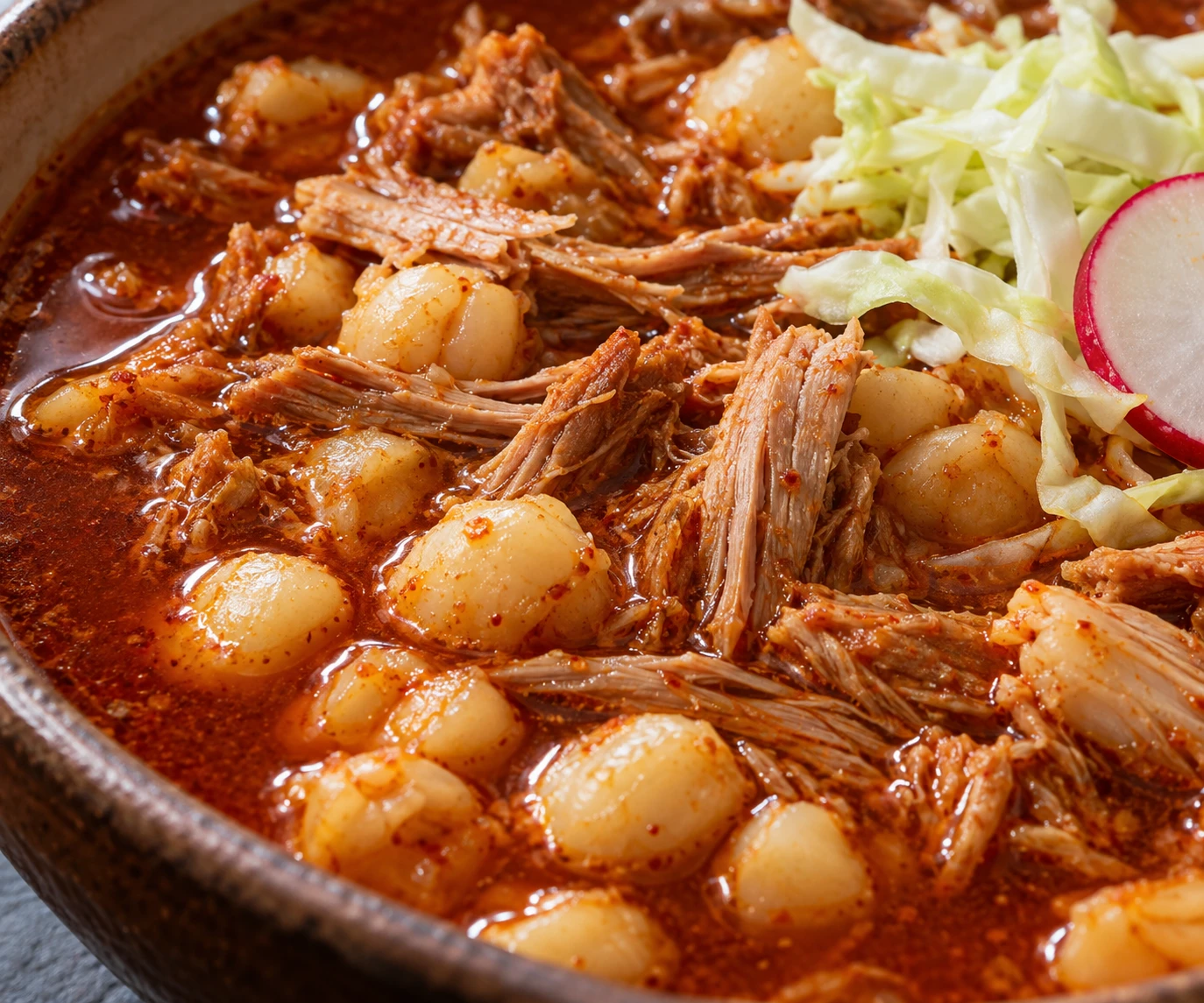
Finish each bowl at the table
Shredded cabbage and sliced radish bring cool crunch against the hot broth, while cilantro and lime brighten the chile and pork. Set the toppings out separately so everyone can build a bowl with the amount of freshness and acidity they like.
Tostadas make a crisp accompaniment and can be eaten alongside the soup or broken into a bowl at the table. Serve the pozole while the broth is steaming and the garnishes are freshly cut.
Slow-Cooker Pork Pozole Rojo
Ingredients
- • 3 lb boneless pork shoulder, trimmed and cut into 2-inch chunks
- • 2 tbsp neutral oil
- • 3 dried guajillo chiles, stemmed and seeded
- • 2 dried ancho chiles, stemmed and seeded
- • 1 medium white onion, quartered
- • 5 garlic cloves, peeled
- • 6 cups low-sodium chicken broth, divided
- • 2 tsp dried Mexican oregano
- • 1 tsp ground cumin
- • 2 tsp kosher salt, divided
- • 1/2 tsp ground black pepper
- • 2 bay leaves
- • 2 cans (15 oz each) white hominy, drained and rinsed
- • 2 cups finely shredded green cabbage
- • 6 radishes, thinly sliced
- • 1/2 cup fresh cilantro leaves
- • 2 limes, cut into wedges
- • 8 tostadas
Method
Set up the slow cooker
Set out a 5- to 6-quart slow cooker and a heavy skillet. Pat the pork chunks dry so they brown instead of steaming when they hit the hot pan.
Look for: The pork surfaces feel dry and the slow cooker is ready for the chile-broth mixture.
Toast the chiles
Heat a dry skillet over medium heat and toast the guajillo and ancho chiles in batches, pressing them flat for about 20 seconds per side until fragrant but not blackened.
Look for: The chiles smell warm and fruity and remain pliable, with no black patches.
Soften the chiles
Put the toasted chiles in a heatproof bowl, cover with just-boiled water, and steep for 15 minutes until flexible. Drain them well before blending so the sauce stays concentrated.
Look for: The chiles bend easily without cracking and their skins feel supple.
Blend the rojo sauce
Blend the softened chiles with the onion, garlic, Mexican oregano, cumin, and 1 1/2 cups of the broth until very smooth, stopping once to scrape down any chile pieces clinging to the jar.
Look for: The sauce is brick red and smooth, with no visible pieces of chile skin.
Brown and season the pork
Heat the oil in the skillet over medium-high heat. Season the pork with 1 1/2 teaspoons of the salt and the black pepper, then brown it in uncrowded batches for 2 to 3 minutes per side; transfer each batch to the slow cooker.
Look for: Pork has browned patches on several sides; the centers do not need to be cooked through.
Slow-cook until tender
Pour the chile sauce over the pork, add the remaining 4 1/2 cups broth and the bay leaves, then cover and cook on LOW for 6 1/2 hours, until the pork twists apart easily with a fork.
Look for: The pork is fork-tender and registers about 195 to 205 F in its thickest pieces.
Shred the pork
Lift the pork onto a rimmed plate and discard the bay leaves. Shred the meat into generous strands with two forks, keeping it covered while the hominy finishes so it stays moist.
Look for: The pork separates with little resistance and still looks moist rather than stringy.
Add the hominy
Stir the drained hominy into the chile broth, cover, and cook on LOW for 45 minutes; adding it now keeps the kernels plump instead of letting them break down during the long cook.
Look for: The broth is gently steaming and the hominy is hot and tender while its kernels remain whole.
Prepare the garnishes
While the hominy cooks, arrange the cabbage, radishes, cilantro, lime wedges, and tostadas on a serving tray so each person can finish a bowl at the table.
Look for: The cabbage is finely shredded, the radishes are thin enough to bend, and the lime wedges are ready to squeeze.
Warm and serve
Return the shredded pork to the cooker and heat on LOW for 10 minutes. Taste the broth and stir in the remaining salt as needed, then ladle the pozole into bowls with cabbage, radish, cilantro, and lime; serve tostadas alongside.
Look for: The broth tastes savory and chile-rich, the pork is hot throughout, and the fresh garnishes stay crisp on top.