" fill="%23faf1da" stroke-width="1.8"/>%0A <ellipse cx="64.5" cy="50" rx="43" ry="12" transform="rotate(4 64.5 50)" stroke="%23938466"/>%0A <path d="m26 44 1 10m3-12 1 14m3-14 1 15m3-14 1 15m4-14 1 14m4-13 1 14m39-10-1 10m5-9-1 8m5-7-1 5" stroke="%23b2a181" stroke-width=".7"/>%0A <path d="M55 60c3-10 12-14 23-10l47-44c7-6 15-6 15-2 0 5-9 11-14 14L82 60c-8 4-21 4-27 0Z" fill="%23bc8c48" stroke-width="1.6"/>%0A <path d="M61 59c3-5 9-8 15-5l-4 7m8-8 49-45 6-4M84 52l45-41" stroke="%2376562e" stroke-width="1"/>%0A <path d="M20 53c18 14 69 19 90 2" stroke="%23514431" stroke-width="2"/>%0A <path d="M27 59c22 11 59 14 78 2" stroke="%23fff9e9" stroke-width="2"/>%0A <path d="m48 87 1 1m7 8 1 1m6-12 1 1m6 12 1 1m6-9 1 1m-24 9 1 1m19 4 1-1m10-16 1 1" stroke="%23aa9b7c"/>%0A </g>%0A</svg>%0A)
Radicchio and Citrus Salad with Castelvetrano Olives
Bitter radicchio, sweet citrus, and briny Castelvetrano olives meet under a clean lemon and olive oil dressing.
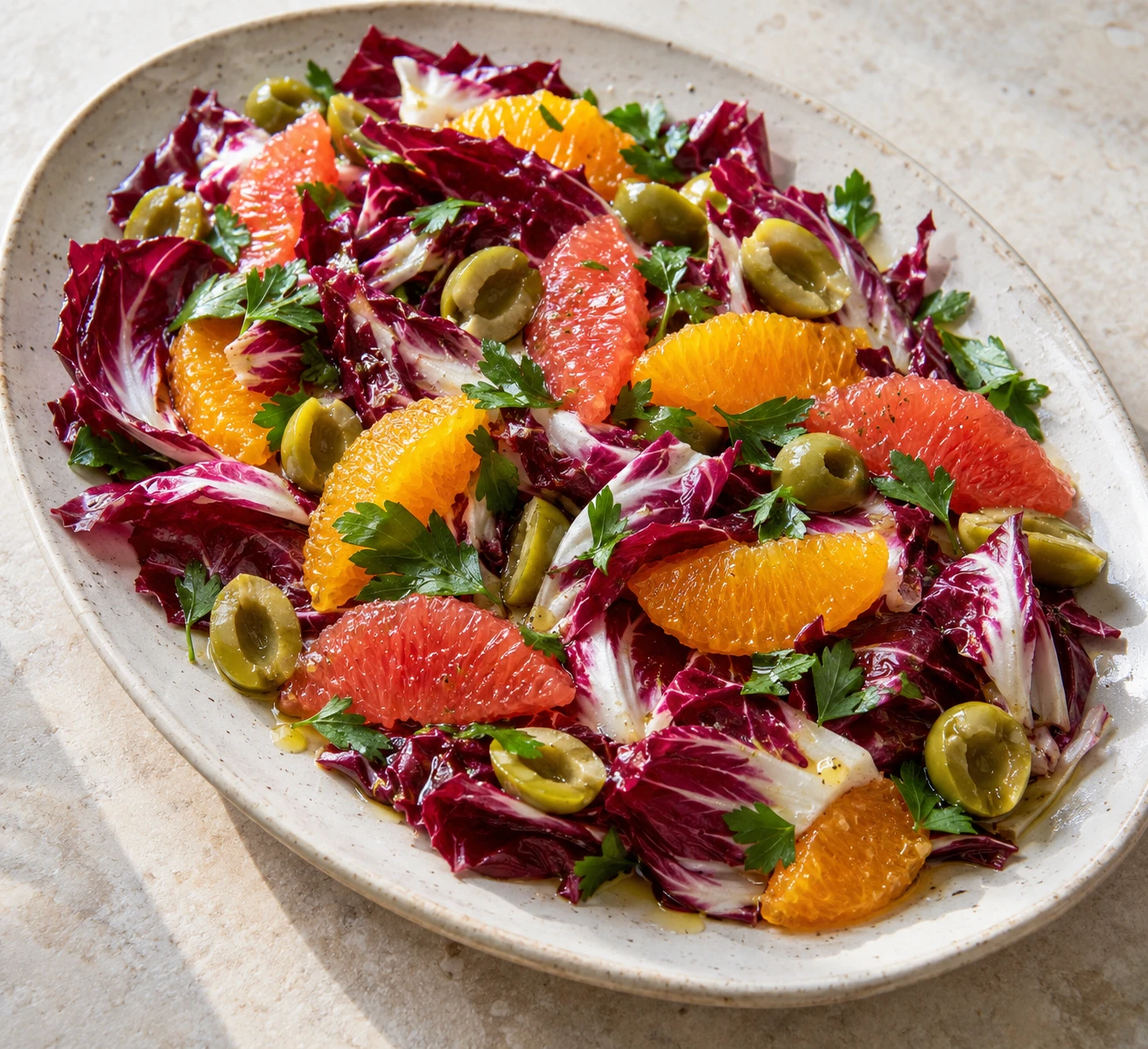
Radicchio's crisp bitterness gives this salad structure, while orange and grapefruit bring both sweetness and a tart edge. Mild, buttery olives add a briny counterpoint, so the dressing stays simple and the leaves remain the focus.
Start with dry, crisp leaves
Separate the radicchio into leaves and dry them well after rinsing. Their ridges catch a light coating of dressing, while excess water would soften the flavor and leave liquid at the bottom of the bowl.
Release citrus without the membranes
After paring away the peel and white pith, hold the fruit over a bowl and cut down each side of a membrane to free the segment. Rotate the fruit as you work, then squeeze the remaining membrane gently to collect its juice.

Keep the dressing clean
Lemon juice and olive oil are enough to link the fruit and bitter leaves without masking their contrast. Whisk in the salt and pepper until the mixture turns glossy, then use part of it to coat the radicchio lightly.
Finish on the platter
Transfer the leaves before adding citrus so the delicate segments stay whole and visible. Scatter olives and parsley across the top, then add the remaining dressing just before serving for a crisp, bright salad.
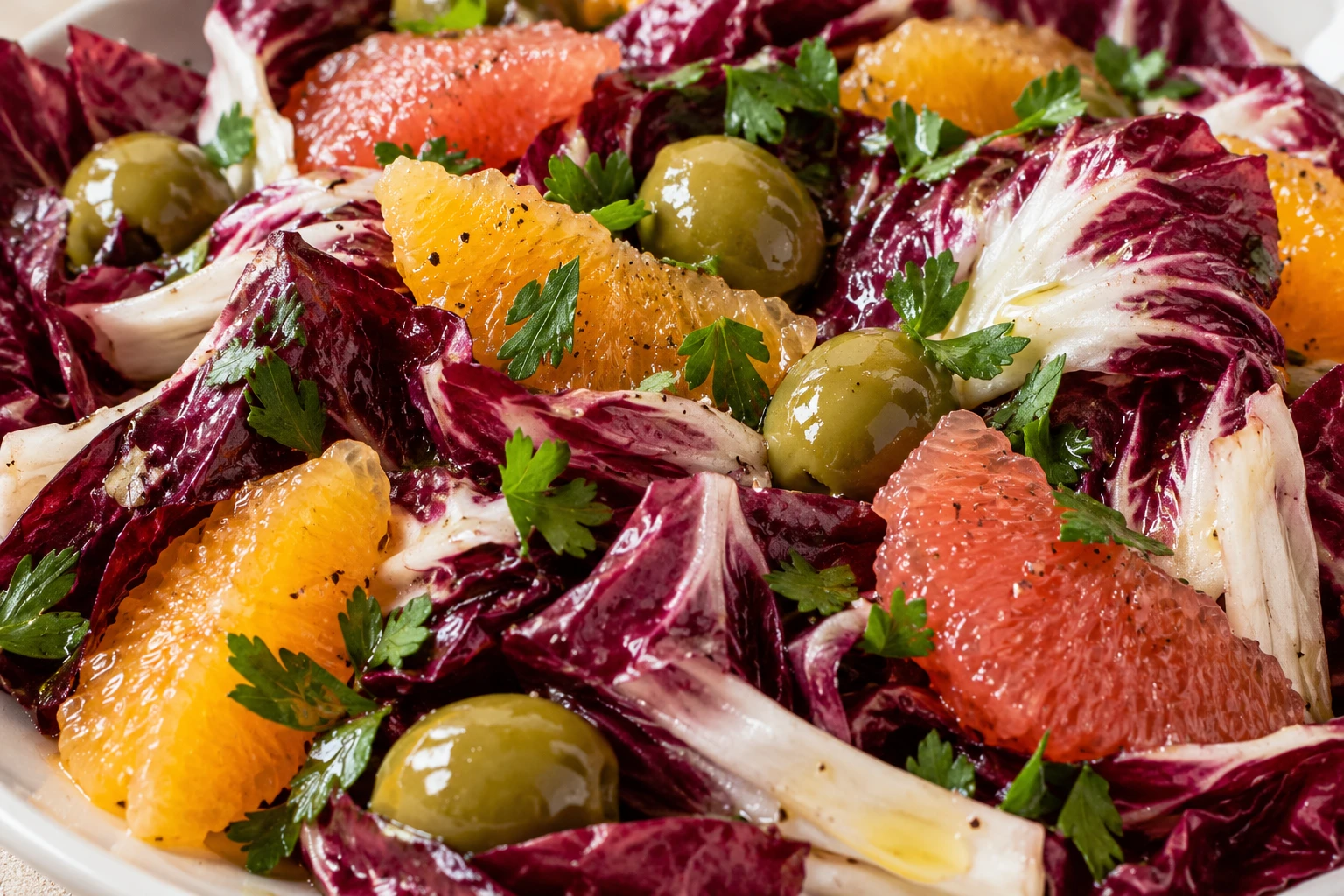
Radicchio and Citrus Salad with Castelvetrano Olives
Ingredients
- • 2 small heads radicchio
- • 2 navel oranges
- • 1 large ruby grapefruit
- • 1/2 cup Castelvetrano olives, pitted and halved
- • 1/4 cup flat-leaf parsley leaves, chopped
- • 1 tbsp fresh lemon juice
- • 3 tbsp extra-virgin olive oil
- • 1/2 tsp kosher salt
- • 1/4 tsp freshly ground black pepper
Method
Whisk the dressing
Whisk the lemon juice, olive oil, kosher salt, and black pepper in a small bowl until the salt dissolves and the dressing looks lightly emulsified.
Look for: The dressing is glossy and no salt crystals collect at the bottom of the bowl.
Prepare the radicchio
Remove any wilted outer leaves from the radicchio, cut out each core, separate the leaves, and tear large leaves into fork-friendly pieces; rinse and dry them thoroughly.
Look for: The leaves are dry enough that water will not dilute the dressing.
Peel the citrus
Slice a thin cap from each end of the oranges and grapefruit, stand each fruit on a cut end, and pare away the peel and white pith in curved strips, following the fruit's contour.
Look for: The exposed fruit is clean of tough white pith while the segments remain intact.
Cut clean citrus segments
Hold a peeled citrus fruit over a bowl and cut beside the membranes on both sides of each segment to release it cleanly; rotate the fruit and repeat, then squeeze the remaining membrane gently over the bowl.
Look for: The segments release without attached membrane and the bowl catches their juice.
Dress the leaves
Place the dry radicchio in a wide bowl and toss with about half of the lemon dressing, turning the leaves until they are lightly coated rather than pooled at the bottom.
Look for: A thin sheen covers the ridged leaves and the bowl bottom remains mostly clear.
Finish and serve
Spread the dressed radicchio on a platter, arrange the orange and grapefruit segments over it, then scatter on the olives and parsley; spoon the remaining dressing over the salad and serve promptly.
Look for: The citrus and olives are distributed across the leaves and the salad looks freshly dressed.