" fill="%23faf1da" stroke-width="1.8"/>%0A <ellipse cx="64.5" cy="50" rx="43" ry="12" transform="rotate(4 64.5 50)" stroke="%23938466"/>%0A <path d="m26 44 1 10m3-12 1 14m3-14 1 15m3-14 1 15m4-14 1 14m4-13 1 14m39-10-1 10m5-9-1 8m5-7-1 5" stroke="%23b2a181" stroke-width=".7"/>%0A <path d="M55 60c3-10 12-14 23-10l47-44c7-6 15-6 15-2 0 5-9 11-14 14L82 60c-8 4-21 4-27 0Z" fill="%23bc8c48" stroke-width="1.6"/>%0A <path d="M61 59c3-5 9-8 15-5l-4 7m8-8 49-45 6-4M84 52l45-41" stroke="%2376562e" stroke-width="1"/>%0A <path d="M20 53c18 14 69 19 90 2" stroke="%23514431" stroke-width="2"/>%0A <path d="M27 59c22 11 59 14 78 2" stroke="%23fff9e9" stroke-width="2"/>%0A <path d="m48 87 1 1m7 8 1 1m6-12 1 1m6 12 1 1m6-9 1 1m-24 9 1 1m19 4 1-1m10-16 1 1" stroke="%23aa9b7c"/>%0A </g>%0A</svg>%0A)
Pineapple Upside-Down Cake
A simple butter cake bakes over a neat layer of pineapple and brown sugar, then is inverted warm to reveal its glossy fruit topping.
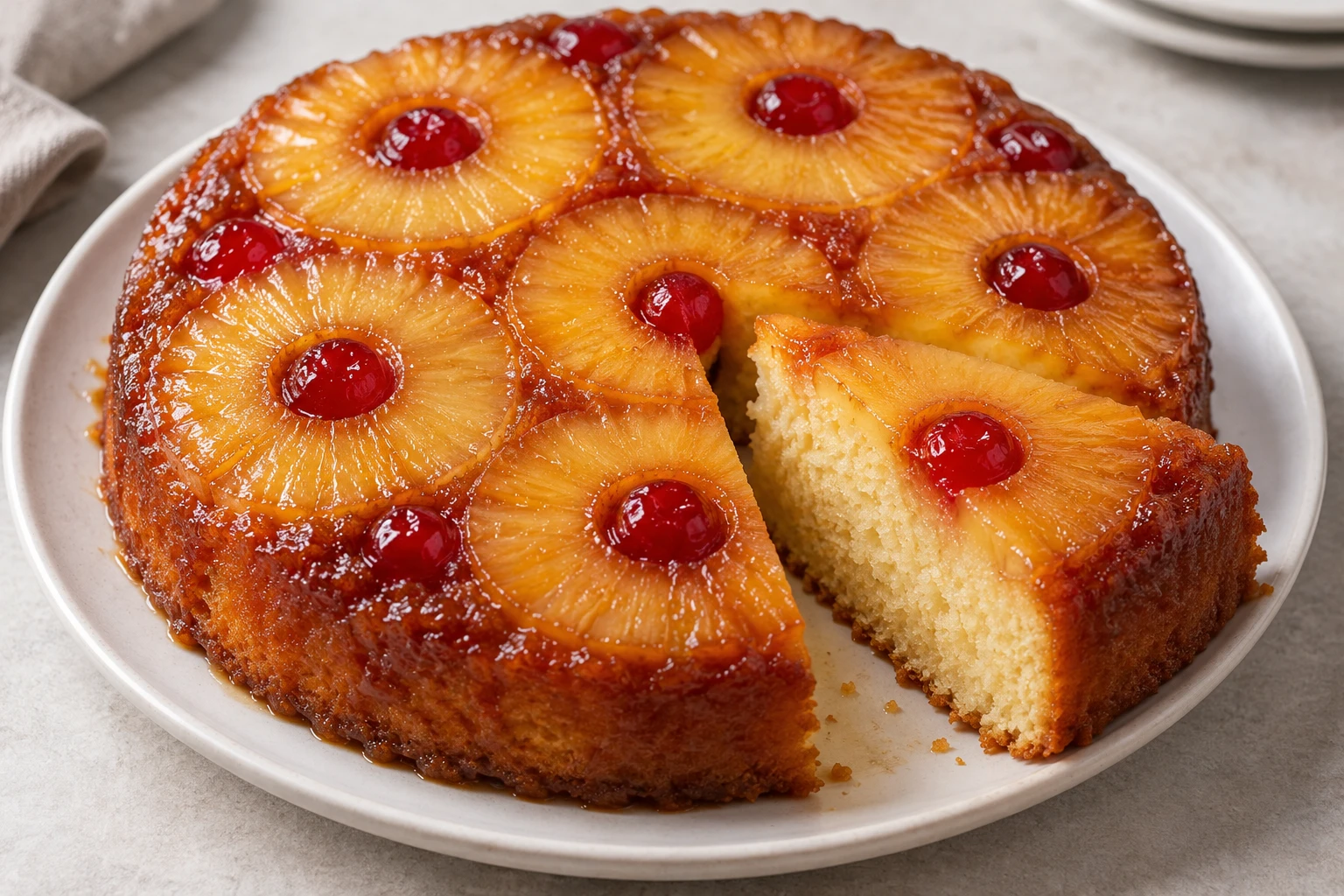
Pineapple upside-down cake is built in reverse: the fruit and brown sugar go into the pan first, while the cake batter covers them for baking. Turning it out while warm reveals the softened rings glazed with butter and sugar.
The arrangement is easy to adjust, but dry fruit and a brief rest before inversion make the difference between a clean release and a sticky pan.
Build the topping in the pan
The butter and brown sugar are stirred into a thick paste before they meet the fruit. This gives the topping an even base and keeps loose sugar from baking into dry patches around the pan.
Keep the fruit dry and level
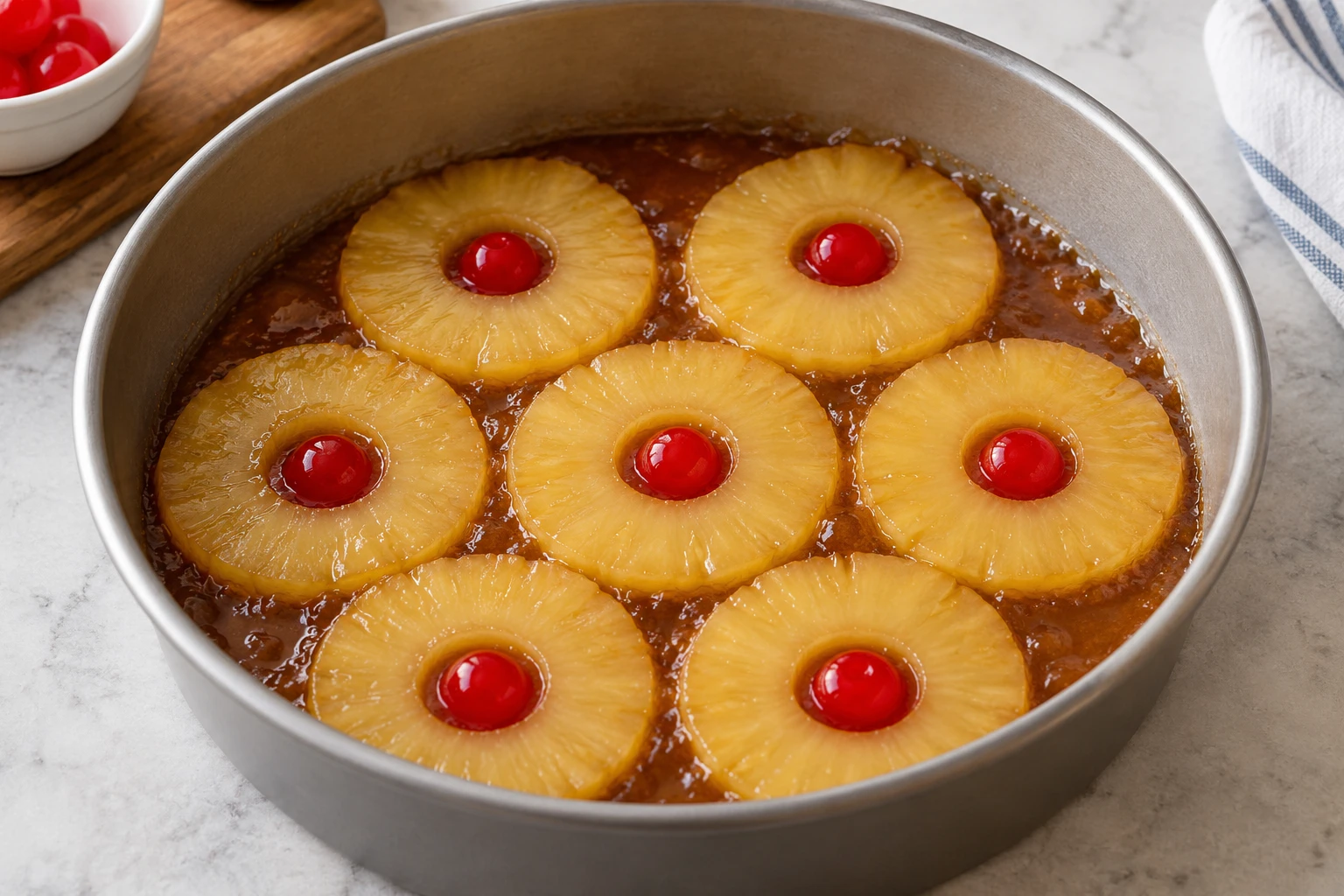
Draining and blotting the pineapple limits the extra liquid that would loosen the topping. Arrange the rings before adding batter, since moving them later can smear the sugar and leave gaps.
Mix a tender butter cake
Creaming softened butter with sugar adds air before the flour goes in, and room-temperature eggs and milk help the mixture stay smooth. Alternate the dry ingredients and milk, then stop mixing as soon as the flour disappears to avoid a tight crumb.
Bake until the center is set
The cake should look golden and spring back lightly in the center, with no wet batter on a tester. A clean tester matters more than surface color because the fruit layer keeps the bottom moist.
Invert while the caramel is warm
A short rest lets the cake settle and gives the topping time to loosen from the pan. Invert it while still warm, lifting the pan straight up so the rings stay in place instead of dragging across the surface.
Let the cake settle before slicing
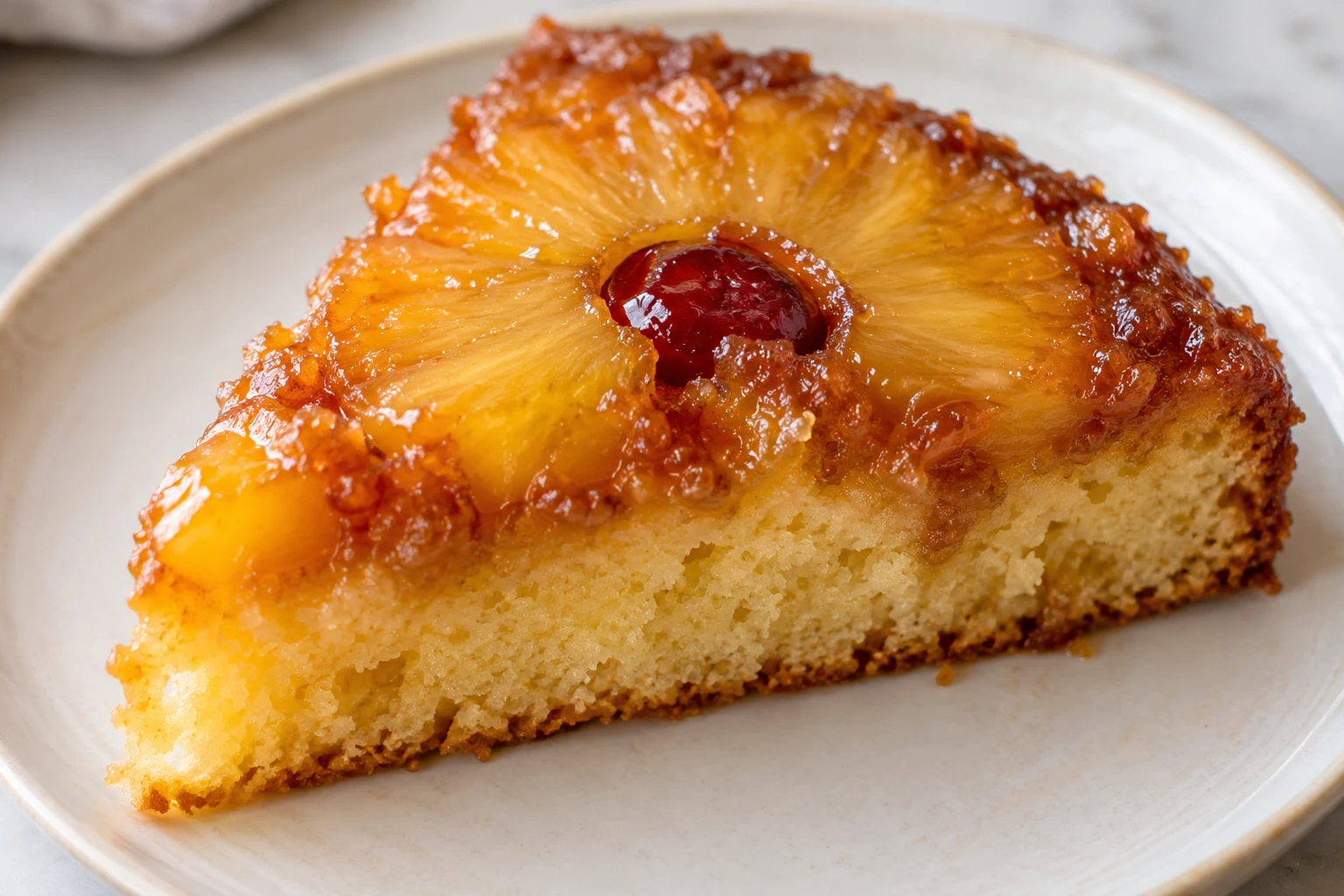
The cake can be served slightly warm, once the crumb has had a little time to set. A sharp knife makes clean slices through the soft fruit and tender cake without pulling the topping away.
Pineapple Upside-Down Cake
Ingredients
- • 1/4 cup unsalted butter, for the topping
- • 1/2 cup packed light brown sugar
- • 7 pineapple rings, drained and patted dry
- • 8 maraschino cherries, drained and patted dry (optional)
- • 1 1/2 cups all-purpose flour
- • 1 1/2 teaspoons baking powder
- • 1/2 teaspoon kosher salt
- • 6 tablespoons unsalted butter, softened
- • 3/4 cup granulated sugar
- • 2 large eggs, at room temperature
- • 1 1/2 teaspoons vanilla extract
- • 1/2 cup whole milk, at room temperature
Method
Heat the oven and prepare the pan
Set a rack in the center and heat the oven to 350 F. Lightly butter the sides of a 9-inch round cake pan, leaving its bottom ungreased for the caramel topping.
Look for: The oven is fully heated and the pan sides have a thin, even butter coating.
Make the brown sugar topping
Melt the topping butter in a small saucepan over low heat, then stir in the brown sugar until every grain is moistened. Spread the mixture evenly over the bottom of the prepared pan.
Look for: The butter and sugar form a thick, glossy paste without boiling or separating.
Arrange the pineapple
Lay the pineapple rings over the brown sugar in a single, neat layer, trimming a ring if needed to fill the center. Set an optional cherry in the center of each ring and pat away any pooled juice.
Look for: The fruit sits flat with little open space and no juice pooling in the pan.
Whisk the dry ingredients
In a medium bowl, whisk together the flour, baking powder, and salt until the leavening is evenly distributed and no small clumps remain.
Look for: The flour mixture looks uniform from edge to edge.
Cream butter and sugar
Beat the softened cake butter and granulated sugar in a large bowl until pale and fluffy, scraping the bowl once so no dense butter remains at the bottom.
Look for: The mixture is lighter in color and holds soft ridges from the beaters.
Add the eggs and vanilla
Beat in the eggs one at a time, letting each disappear into the batter before adding the next. Mix in the vanilla until smooth; scrape the bowl if the mixture gathers on its sides.
Look for: The batter is cohesive and creamy, without visible streaks of egg.
Finish the cake batter
Add the flour mixture in three portions, alternating with the milk in two portions and beginning and ending with flour. Mix on low only until the last dry streak disappears.
Look for: The batter is thick, smooth, and free of dry flour, with no need for prolonged beating.
Cover the fruit
Spoon the batter over the arranged fruit, then gently spread it to the pan edges without shifting the rings. Smooth the surface so the cake bakes at an even depth.
Look for: The fruit is fully covered and the batter reaches the sides in an even layer.
Bake until set
Bake at 350 F for 40 to 45 minutes, rotating the pan once if the oven browns unevenly. The cake is ready when its center springs back lightly and a tester inserted into cake comes out clean.
Look for: The top is golden, the center springs back, and a tester has no wet batter.
Rest and invert while warm
Rest the cake in its pan for 10 minutes, then loosen the edge with a thin knife. Set a serving plate over the pan and invert in one confident motion while the topping is still warm; leave the pan in place briefly, lift it straight up, and cool the cake for 10 minutes before slicing.
Look for: The cake releases in one piece and the glossy pineapple topping stays on its surface.