" fill="%23faf1da" stroke-width="1.8"/>%0A <ellipse cx="64.5" cy="50" rx="43" ry="12" transform="rotate(4 64.5 50)" stroke="%23938466"/>%0A <path d="m26 44 1 10m3-12 1 14m3-14 1 15m3-14 1 15m4-14 1 14m4-13 1 14m39-10-1 10m5-9-1 8m5-7-1 5" stroke="%23b2a181" stroke-width=".7"/>%0A <path d="M55 60c3-10 12-14 23-10l47-44c7-6 15-6 15-2 0 5-9 11-14 14L82 60c-8 4-21 4-27 0Z" fill="%23bc8c48" stroke-width="1.6"/>%0A <path d="M61 59c3-5 9-8 15-5l-4 7m8-8 49-45 6-4M84 52l45-41" stroke="%2376562e" stroke-width="1"/>%0A <path d="M20 53c18 14 69 19 90 2" stroke="%23514431" stroke-width="2"/>%0A <path d="M27 59c22 11 59 14 78 2" stroke="%23fff9e9" stroke-width="2"/>%0A <path d="m48 87 1 1m7 8 1 1m6-12 1 1m6 12 1 1m6-9 1 1m-24 9 1 1m19 4 1-1m10-16 1 1" stroke="%23aa9b7c"/>%0A </g>%0A</svg>%0A)
Parmesan Gougères
A handful of finely grated Parmesan turns airy pâte à choux into warm, crisp-edged gougères with a hollow center.
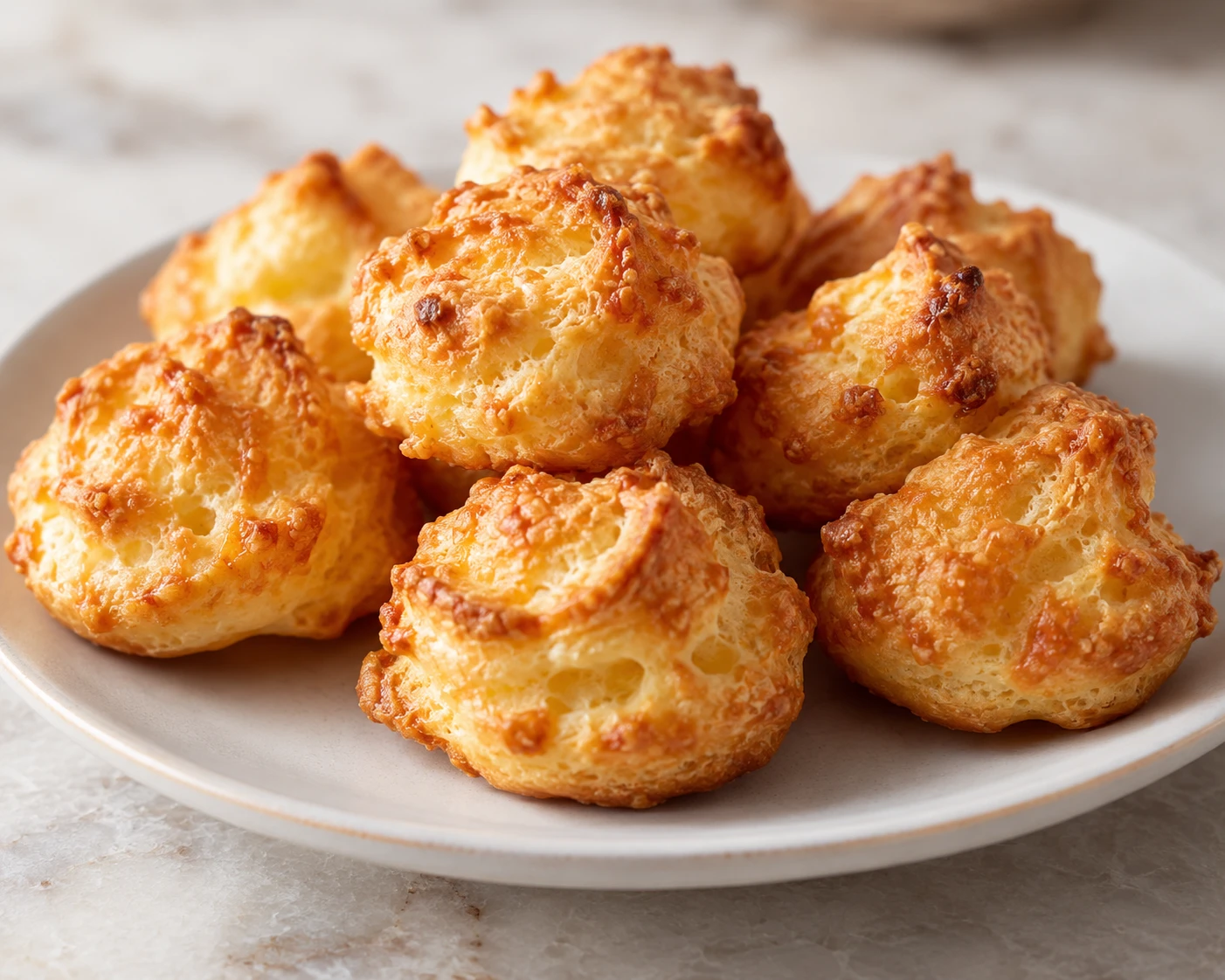
Gougères are small cheese puffs built from pâte à choux, a dough that rises from steam rather than a chemical leavener. Here finely grated Parmesan seasons the dough throughout, making each puff a savory, self-contained amuse-bouche.
The process is straightforward when the panade is dried on the stove and the eggs go in gradually. A two-stage bake gives the puffs time to rise first and set their shells afterward.
A small French cheese puff
Gougères are made for a small first bite: crisp at the edges, light enough to eat in one or two bites, and savory from the cheese in the dough. They need no filling, so the airy interior and browned shell stay at the center of the experience.
Dry the panade before adding eggs
When flour meets boiling water and butter, it forms a paste called a panade. Stirring that paste over heat for another minute drives off extra moisture and helps the dough take in its eggs while keeping enough structure to puff.
Add eggs one at a time
Beating each egg fully into the dough before adding the next keeps the mixture smooth instead of greasy or separated. Once glossy, the dough should fall from the paddle in a thick ribbon and still hold enough shape to pipe.
Let the shells set at two temperatures
The hotter start gives steam a quick push to lift the mounds, while the lower oven finishes browning and setting the sides. Waiting for a deep golden color matters because pale shells can collapse as their steam escapes.
Serve warm, while crisp
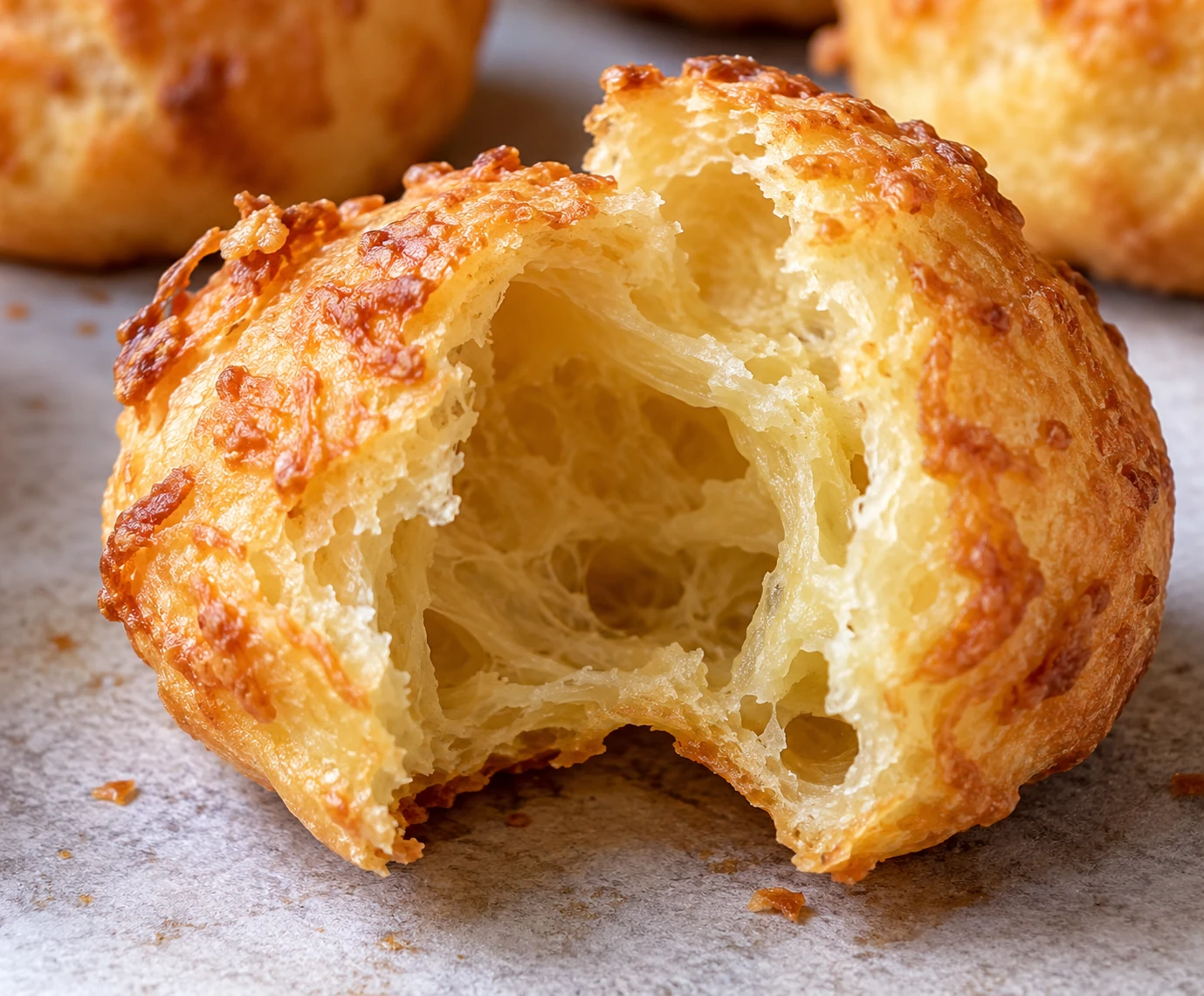
Piercing the sides releases trapped steam, and a short rest in the turned-off oven helps the centers finish drying. Serve the puffs warm in small portions while their shells are crisp.
Parmesan Gougères
Ingredients
- • 1 cup water
- • 8 tbsp unsalted butter, cut into pieces
- • 1 tsp kosher salt
- • 1 cup all-purpose flour
- • 4 large eggs, at room temperature
- • 1 cup finely grated Parmesan cheese
- • 1/4 tsp freshly ground black pepper
- • 1/8 tsp ground nutmeg
Method
Heat the oven and prepare pans
Set a rack in the center of the oven and heat to 425 F; line two rimmed sheet pans with parchment so the piped mounds can bake with room to expand.
Look for: The oven is fully preheated and the parchment lies flat on both pans.
Measure and grate ingredients
Grate the Parmesan finely, measure the flour, and make sure the eggs are at room temperature; set out a piping bag fitted with a plain 1/2-inch tip.
Look for: The cheese is fluffy and fine enough to fold into the dough without leaving large clumps.
Bring butter and water to a boil
Combine the water, butter, and salt in a medium saucepan and bring to a full boil over medium heat, stirring until the butter is completely melted.
Look for: The butter has melted and the liquid bubbles across the surface rather than only at the edges.
Cook the flour into a panade
Remove the pan from the heat, add all the flour at once, and stir vigorously until no dry flour remains; return to medium-low heat and stir for 1 to 2 minutes until a thin film forms on the pan.
Look for: The dough gathers into one smooth ball and leaves a light film on the saucepan base.
Cool the dough briefly
Transfer the hot dough to a mixing bowl and beat on low for 2 minutes to release steam; let it cool until warm but no longer hot enough to scramble the eggs.
Look for: The dough is warm to the touch and steady streams of steam have stopped.
Beat in eggs and seasonings
Beat in the eggs one at a time, allowing each to disappear before adding the next; after the last egg, mix in Parmesan, black pepper, and nutmeg until the dough is glossy and falls from the paddle in a thick ribbon.
Look for: The dough is smooth and pipeable, holds a soft peak, and has no streaks of egg or cheese.
Pipe small mounds
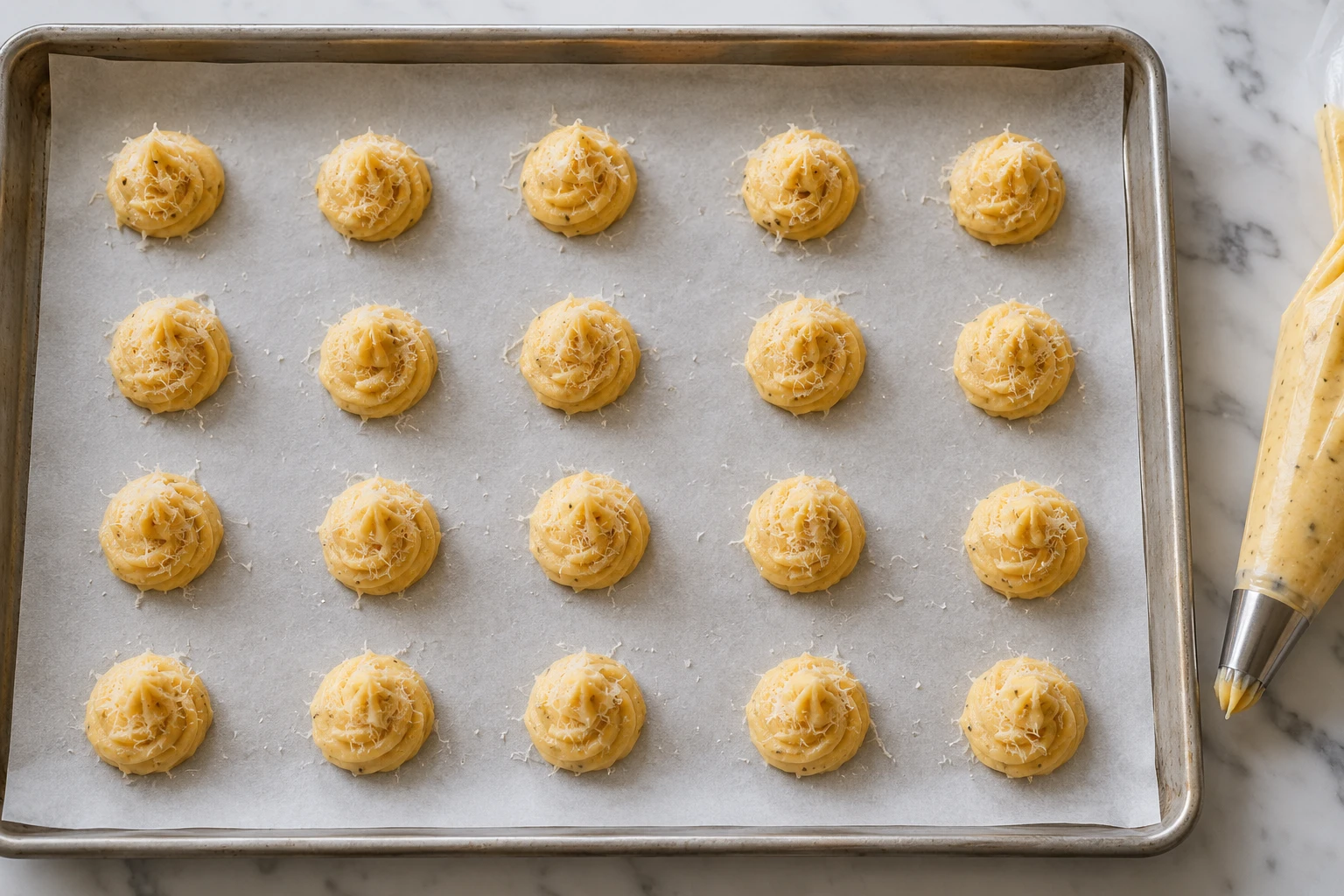
Spoon the dough into the piping bag and pipe 1-inch mounds onto the prepared pans, spacing them about 1 1/2 inches apart; damp a fingertip and flatten any pointed peaks gently.
Look for: The mounds are similar in size with smooth tops and enough space to puff without touching.
Bake until deeply golden
Bake at 425 F for 10 minutes, then lower the oven to 375 F without opening the door and bake for 18 to 22 minutes more, until the gougères are deeply golden, puffed, and firm on the sides.
Look for: The shells are deep golden rather than pale and do not sag when the pan is gently nudged.
Vent and check the centers
Turn off the oven, pierce the side of each puff with a small knife to release steam, and leave the pans inside for 5 minutes with the door ajar; open one puff to confirm its center is hollow and dry.
Look for: A cut puff has an airy cavity and no wet, glossy layer of dough inside.
Serve warm in small portions
Transfer the gougères to a serving plate and bring them out warm as small bites, about four per guest while the shells are crisp.
Look for: The shells are crisp outside and light inside when served warm.