" fill="%23faf1da" stroke-width="1.8"/>%0A <ellipse cx="64.5" cy="50" rx="43" ry="12" transform="rotate(4 64.5 50)" stroke="%23938466"/>%0A <path d="m26 44 1 10m3-12 1 14m3-14 1 15m3-14 1 15m4-14 1 14m4-13 1 14m39-10-1 10m5-9-1 8m5-7-1 5" stroke="%23b2a181" stroke-width=".7"/>%0A <path d="M55 60c3-10 12-14 23-10l47-44c7-6 15-6 15-2 0 5-9 11-14 14L82 60c-8 4-21 4-27 0Z" fill="%23bc8c48" stroke-width="1.6"/>%0A <path d="M61 59c3-5 9-8 15-5l-4 7m8-8 49-45 6-4M84 52l45-41" stroke="%2376562e" stroke-width="1"/>%0A <path d="M20 53c18 14 69 19 90 2" stroke="%23514431" stroke-width="2"/>%0A <path d="M27 59c22 11 59 14 78 2" stroke="%23fff9e9" stroke-width="2"/>%0A <path d="m48 87 1 1m7 8 1 1m6-12 1 1m6 12 1 1m6-9 1 1m-24 9 1 1m19 4 1-1m10-16 1 1" stroke="%23aa9b7c"/>%0A </g>%0A</svg>%0A)
Flexible Protein Pad Thai
A flexible Pad Thai with a tamarind-and-water sauce by default, lime juice when tamarind is unavailable, and any mix of chicken, shrimp, or tofu.
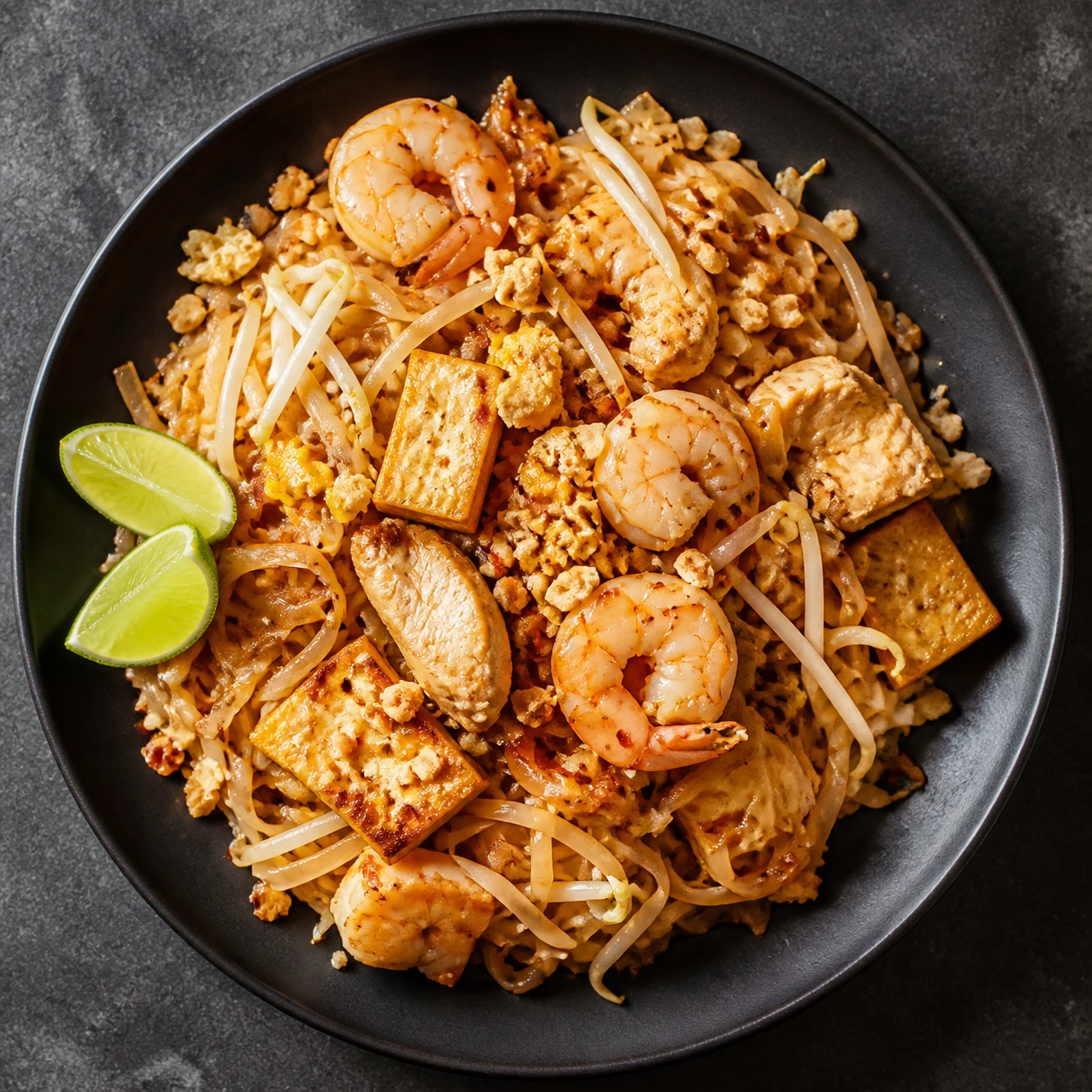
Pad Thai is defined here by the quick sequence and the lively balance of tart, salty, sweet, and savory flavors. Tamarind concentrate diluted with water is the preferred sauce acid because it gives a deep fruity tang. Use lime juice instead only when tamarind is unavailable.
The method is deliberately modular: choose chicken, shrimp, tofu, or a combination, then keep the total protein amount the same. Once the wok is hot, organization matters more than elaborate technique.
Build a balanced sauce
Use tamarind concentrate diluted with water for the preferred sauce. Lime juice is the fallback when tamarind is unavailable, rather than an ingredient to add alongside it. Whisk the selected acid into the sauce before cooking and taste it for contrast: the finished noodles should be tangy first, then savory and sweet.
Choose a protein path
Chicken breast, shrimp, and firm tofu all work because each can be browned quickly and finished in the final toss. A mixed version is equally workable; keep the pieces bite-size and remove them from the pan once nearly cooked so their textures stay distinct.
Let the wok finish the noodles
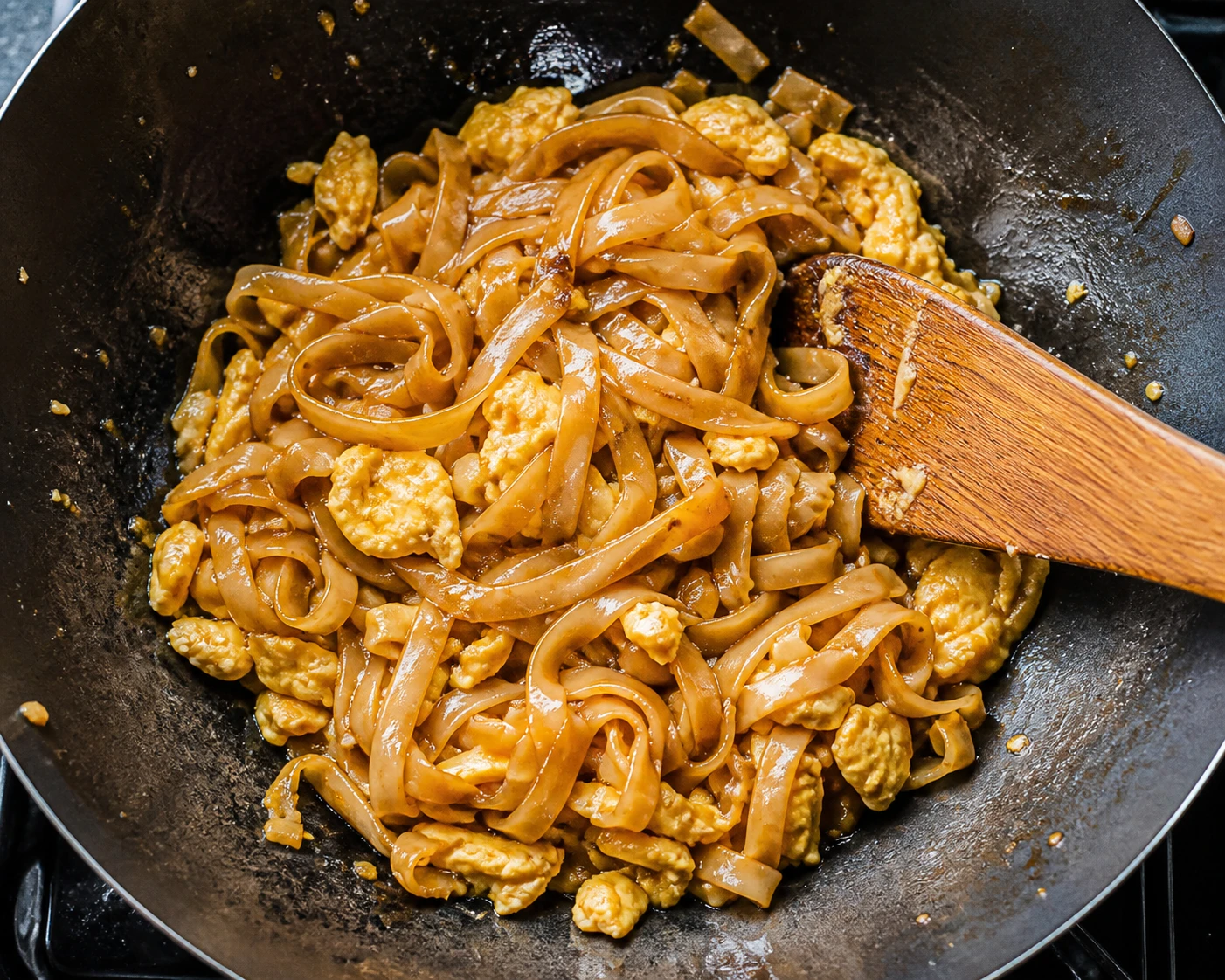
Soaked noodles should still be firm when they meet the sauce. Constant tossing distributes heat and liquid evenly, while a small splash of water is enough to rescue noodles that need a little more time to soften.
Hold back the crunch
Some sprouts warm in the wok, but the final handful stays raw for contrast. Peanuts, lime wedges, and chili flakes also go on at the table, so each plate can be adjusted without changing the whole batch.
Troubleshoot at the pan
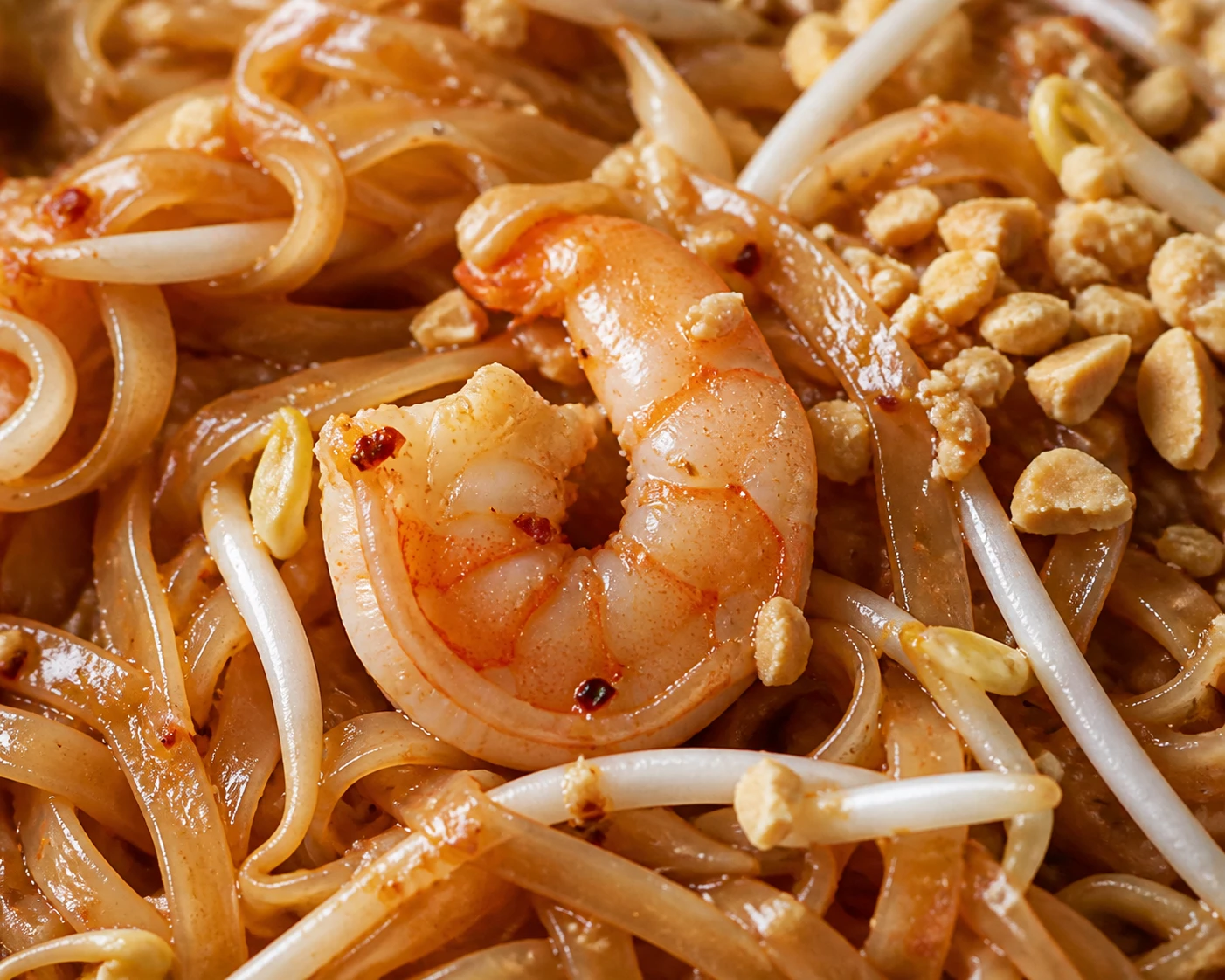
If the noodles clump, keep tossing and add water a tablespoon at a time instead of flooding the wok. If the flavor seems dull, correct it after tasting with lime for tartness or fish sauce or soy sauce for salt rather than adding more sugar first.
Flexible Protein Pad Thai
Ingredients
- • 8 oz dried flat rice noodles
- • 12 oz chicken breast, shrimp, firm tofu, or a combination, cut bite-size
- • 3 tbsp neutral oil, divided
- • 3 shallots, thinly sliced
- • 3 garlic cloves, minced
- • 3 large eggs
- •
- •
- • 3 tbsp fish sauce, or soy sauce for tofu
- • 3 tbsp packed light brown sugar
- • 3 cups bean sprouts
- •
- • 1/2 cup roasted unsalted peanuts, chopped, plus lime wedges and chili flakes
Method
Soak the noodles
Cover the rice noodles with very warm water in a bowl and soak for 20 to 30 minutes, until flexible but still firm at the center; drain well. Use garlic chives by default; use scallions when unavailable.
Look for: The noodles bend without snapping but have a firm, opaque center.
Mix the sauce
For the preferred sauce, whisk the tamarind concentrate with 2 tbsp water. If tamarind is unavailable, use 3 tbsp lime juice instead. Whisk the selected acid with fish sauce or soy sauce and brown sugar until the sugar is mostly dissolved.
Look for: The sauce tastes balanced between tart, salty, and sweet with no large sugar crystals.
Prepare the wok station
Set the drained noodles, sauce, protein, shallots, garlic, eggs, sprouts, chives or scallions, and peanuts beside the stove because the stir-fry cooks quickly.
Look for: Every component is within reach before the wok is heated.
Cook the protein
Heat 1 tbsp oil in a large wok or skillet over medium-high heat. Stir-fry the bite-size chicken, shrimp, tofu, or combination until nearly cooked, 2 to 4 minutes, then transfer to a bowl.
Look for: Chicken turns mostly opaque, shrimp are just pink at the edges, and tofu has golden sides.
Cook the aromatics and eggs
Add 1 tbsp oil, then cook the shallots and garlic cloves for 1 minute. Push them aside, add the remaining 1 tbsp oil and eggs, and scramble until softly set.
Look for: The garlic is fragrant without browning and the eggs form soft curds.
Stir-fry the noodles
Add the noodles and sauce, toss constantly for 3 to 5 minutes, and add 1 to 2 tbsp water only if the noodles look dry before becoming tender.
Look for: The noodles turn glossy, loosen apart, and become tender with a slight chew.
Finish the stir-fry
Return the protein and add 2 cups bean sprouts and the chives. Toss for 1 to 2 minutes, until chicken reaches 165 F, shrimp are curled and opaque, or tofu is hot.
Look for: The protein is cooked through and the sprouts are warmed but still crisp.
Adjust and plate
Taste the noodles and add a small squeeze of lime for more tartness or a splash of fish sauce or soy sauce for more salt, then divide among warm plates.
Look for: The finished noodles taste distinctly tart, savory, and sweet rather than flat.
Add the garnishes
Top with the remaining 1 cup bean sprouts, chopped peanuts, lime wedges, and chili flakes so each diner can add crunch, acidity, and heat.
Look for: Fresh sprouts and peanuts remain crisp against the hot noodles.