" fill="%23faf1da" stroke-width="1.8"/>%0A <ellipse cx="64.5" cy="50" rx="43" ry="12" transform="rotate(4 64.5 50)" stroke="%23938466"/>%0A <path d="m26 44 1 10m3-12 1 14m3-14 1 15m3-14 1 15m4-14 1 14m4-13 1 14m39-10-1 10m5-9-1 8m5-7-1 5" stroke="%23b2a181" stroke-width=".7"/>%0A <path d="M55 60c3-10 12-14 23-10l47-44c7-6 15-6 15-2 0 5-9 11-14 14L82 60c-8 4-21 4-27 0Z" fill="%23bc8c48" stroke-width="1.6"/>%0A <path d="M61 59c3-5 9-8 15-5l-4 7m8-8 49-45 6-4M84 52l45-41" stroke="%2376562e" stroke-width="1"/>%0A <path d="M20 53c18 14 69 19 90 2" stroke="%23514431" stroke-width="2"/>%0A <path d="M27 59c22 11 59 14 78 2" stroke="%23fff9e9" stroke-width="2"/>%0A <path d="m48 87 1 1m7 8 1 1m6-12 1 1m6 12 1 1m6-9 1 1m-24 9 1 1m19 4 1-1m10-16 1 1" stroke="%23aa9b7c"/>%0A </g>%0A</svg>%0A)
Korean Dakgalbi
A home-skillet dakgalbi delivers spicy-sweet chicken and vegetables with rice and quick banchan-style sides.
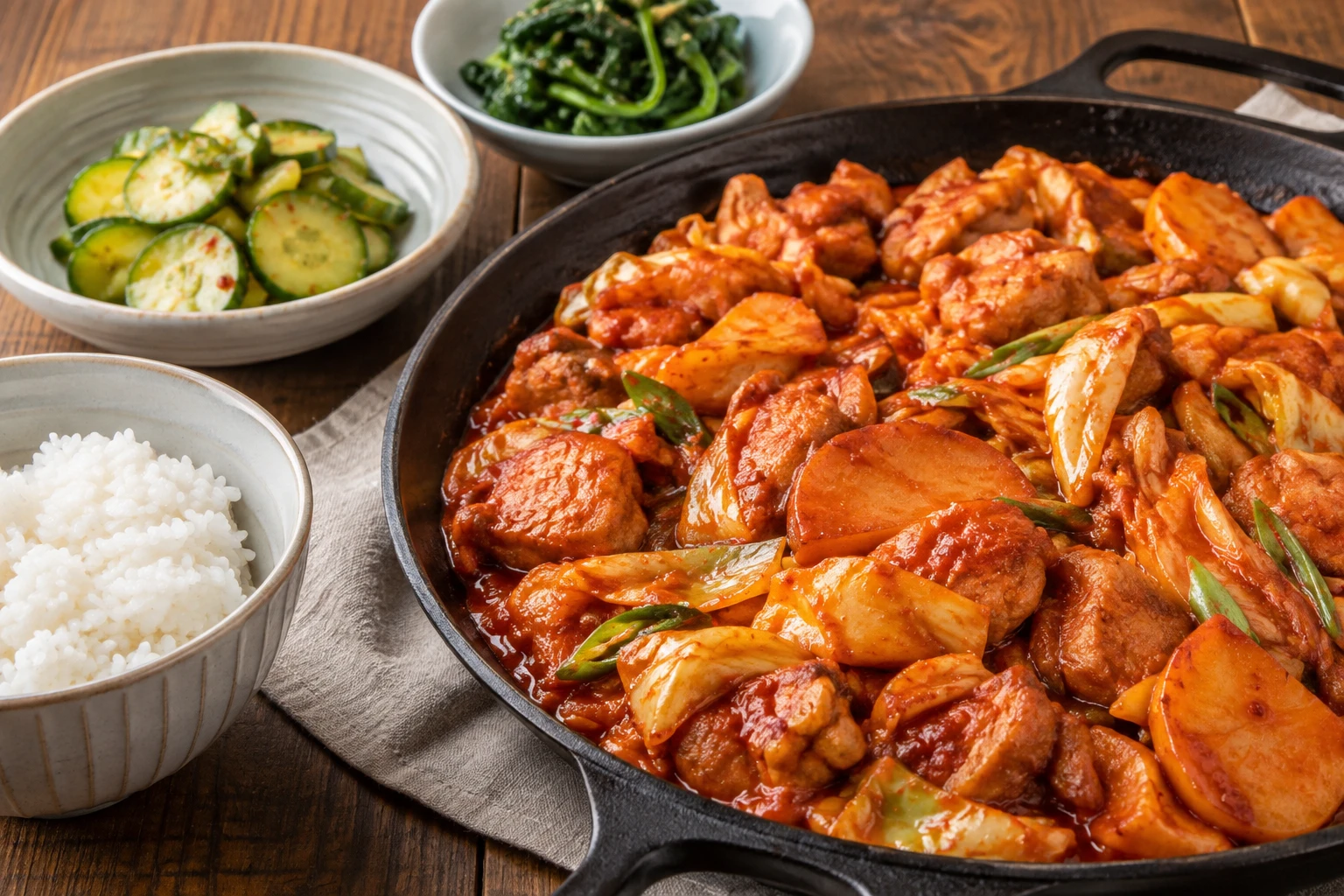
Dakgalbi is designed here for a large skillet or Dutch oven, so no tabletop grill is required. Gochujang, soy, garlic, ginger, sesame oil, and honey create heat with sweetness and deep savory flavor.
Build balanced heat
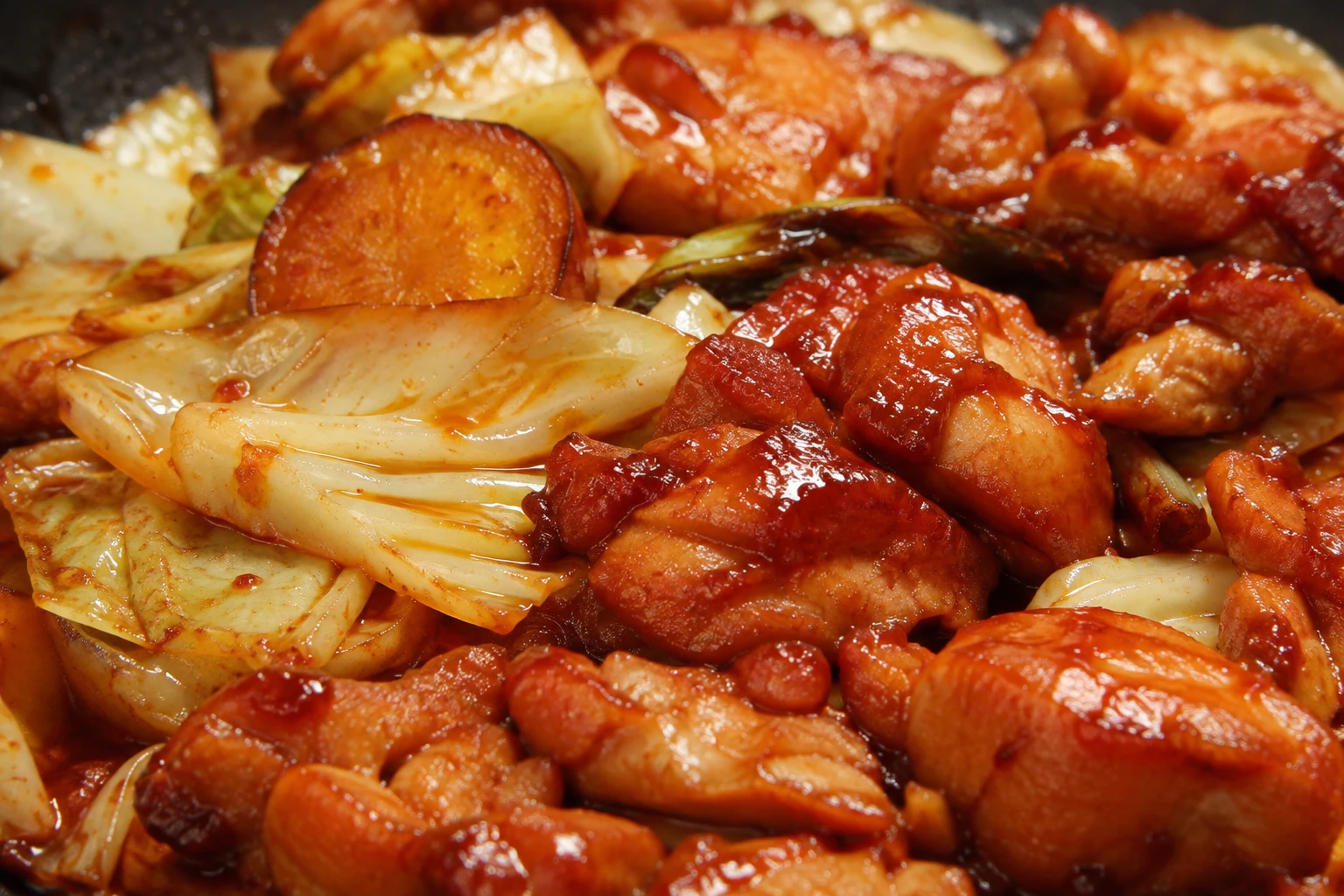
The sauce is not meant to be a test of heat. Honey, vinegar, and soy round gochujang into a glossy, savory glaze.
Use a wide pan
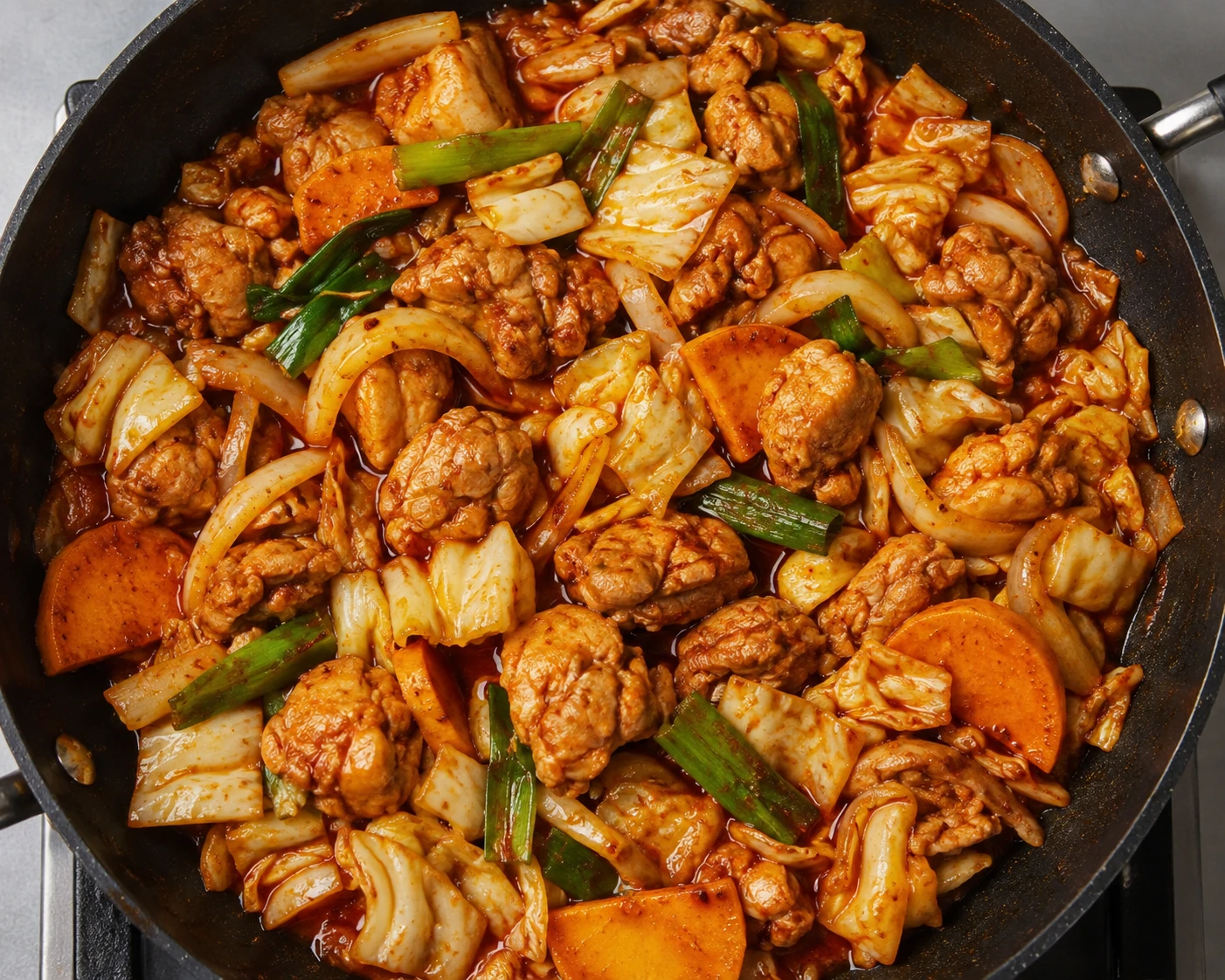
A wide skillet or Dutch oven provides enough surface to soften the sweet potato and reduce the sauce evenly.
Flexible pantry swaps
Crushed red pepper plus paprika replaces gochugaru, while honey or corn syrup replaces rice syrup. Shiso or extra scallions can stand in for perilla leaves.
Add cool sides
Cucumber salad and seasoned spinach provide clean contrast to the hot chicken. Steamed rice catches every bit of sauce.
Korean Dakgalbi
Ingredients
- • 1 1/2 lb boneless skinless chicken thighs, sliced
- • 1/2 small green cabbage
- • 1 medium sweet potato
- • 1 large onion
- • 4 scallions
- • 3 tbsp gochujang
- • 3 tbsp soy sauce
- • 4 garlic cloves
- • 1 tbsp ginger
- • 2 tsp sesame oil
- •
- • 1 tbsp rice vinegar
- •
- • 2 cups cooked steamed rice
- • 1 English cucumber
- • 2 tbsp rice vinegar
- • 1 tsp sugar
- • 1/2 tsp salt
- • 10 oz spinach
- • 1 tsp sesame oil
- • 1 tsp soy sauce
- • sesame seeds
- • Shiso leaves or extra scallions, optional
Method
Mix the sauce
Whisk gochujang, soy sauce, garlic, ginger, sesame oil, honey, rice vinegar, and gochugaru until smooth; it should taste savory, sweet, tangy, and spicy in balance. Use honey by default; use corn syrup when unavailable. Use gochugaru by default; use crushed red pepper and paprika together when unavailable.
Look for: The sauce is glossy and tastes rounded rather than simply hot.
Season the chicken
Toss chicken thighs with half the sauce and set aside while the vegetables are cut; reserve the remaining sauce for the skillet.
Look for: Every chicken slice is evenly red and coated.
Make cucumber salad
Thinly slice cucumber and toss with rice vinegar, sugar, and salt; set aside to become crisp and lightly pickled.
Look for: The cucumber is glossy but still crunchy.
Season the spinach
Wilt spinach in a covered skillet over medium heat with a splash of water, then toss with sesame oil, soy sauce, and sesame seeds.
Look for: The spinach is just wilted and not watery.
Start the vegetables
Heat a large skillet or Dutch oven over medium-high heat, then add sweet potato and onion with a splash of water; cover and cook until the potato begins to soften.
Look for: The sweet potato is starting to yield at its edges.
Cook the dakgalbi
Add cabbage, scallions, chicken, and reserved sauce to the skillet or Dutch oven. Cook uncovered, stirring often, until chicken is cooked through and vegetables are tender.
Look for: Chicken reaches 165 F and the sauce clings to the vegetables.
Reduce the sauce
Continue cooking until the pan is glossy with only a small amount of thick sauce; add a splash of water only if the skillet looks dry before the potato is tender.
Look for: The sauce coats the chicken without pooling.
Serve the dinner
Serve dakgalbi with steamed rice, cucumber salad, seasoned spinach, and shiso or extra scallions if desired.
Look for: The hot chicken is balanced by cool, simple banchan sides.