" fill="%23faf1da" stroke-width="1.8"/>%0A <ellipse cx="64.5" cy="50" rx="43" ry="12" transform="rotate(4 64.5 50)" stroke="%23938466"/>%0A <path d="m26 44 1 10m3-12 1 14m3-14 1 15m3-14 1 15m4-14 1 14m4-13 1 14m39-10-1 10m5-9-1 8m5-7-1 5" stroke="%23b2a181" stroke-width=".7"/>%0A <path d="M55 60c3-10 12-14 23-10l47-44c7-6 15-6 15-2 0 5-9 11-14 14L82 60c-8 4-21 4-27 0Z" fill="%23bc8c48" stroke-width="1.6"/>%0A <path d="M61 59c3-5 9-8 15-5l-4 7m8-8 49-45 6-4M84 52l45-41" stroke="%2376562e" stroke-width="1"/>%0A <path d="M20 53c18 14 69 19 90 2" stroke="%23514431" stroke-width="2"/>%0A <path d="M27 59c22 11 59 14 78 2" stroke="%23fff9e9" stroke-width="2"/>%0A <path d="m48 87 1 1m7 8 1 1m6-12 1 1m6 12 1 1m6-9 1 1m-24 9 1 1m19 4 1-1m10-16 1 1" stroke="%23aa9b7c"/>%0A </g>%0A</svg>%0A)
Homemade Potato Gnocchi from Scratch
Dry baked potatoes, a light touch with flour, and a test dumpling make homemade gnocchi tender and reliable.
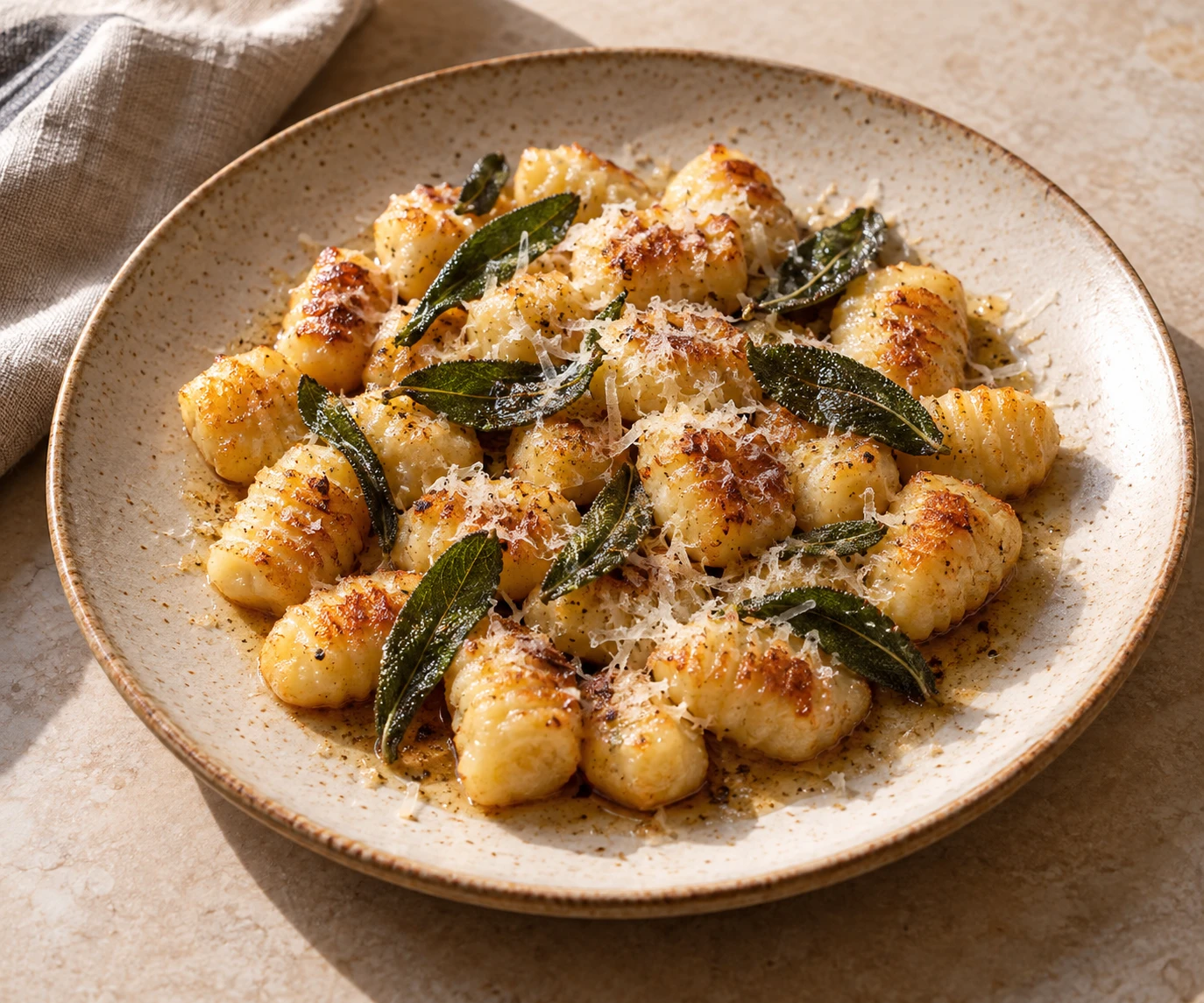
Homemade gnocchi depend more on the potato's moisture than on complicated technique. Baking the potatoes keeps their flesh dry, so it takes less flour to bring the dough together.
Start with dry potato
Russet potatoes turn fluffy when baked and riced while hot. Letting the riced flesh steam briefly removes moisture that would otherwise require more flour.
Use the least flour that works
The dough should feel soft and a little tacky, not elastic or dry. Fold it together gently and use a small test dumpling to decide whether it needs a little more flour.
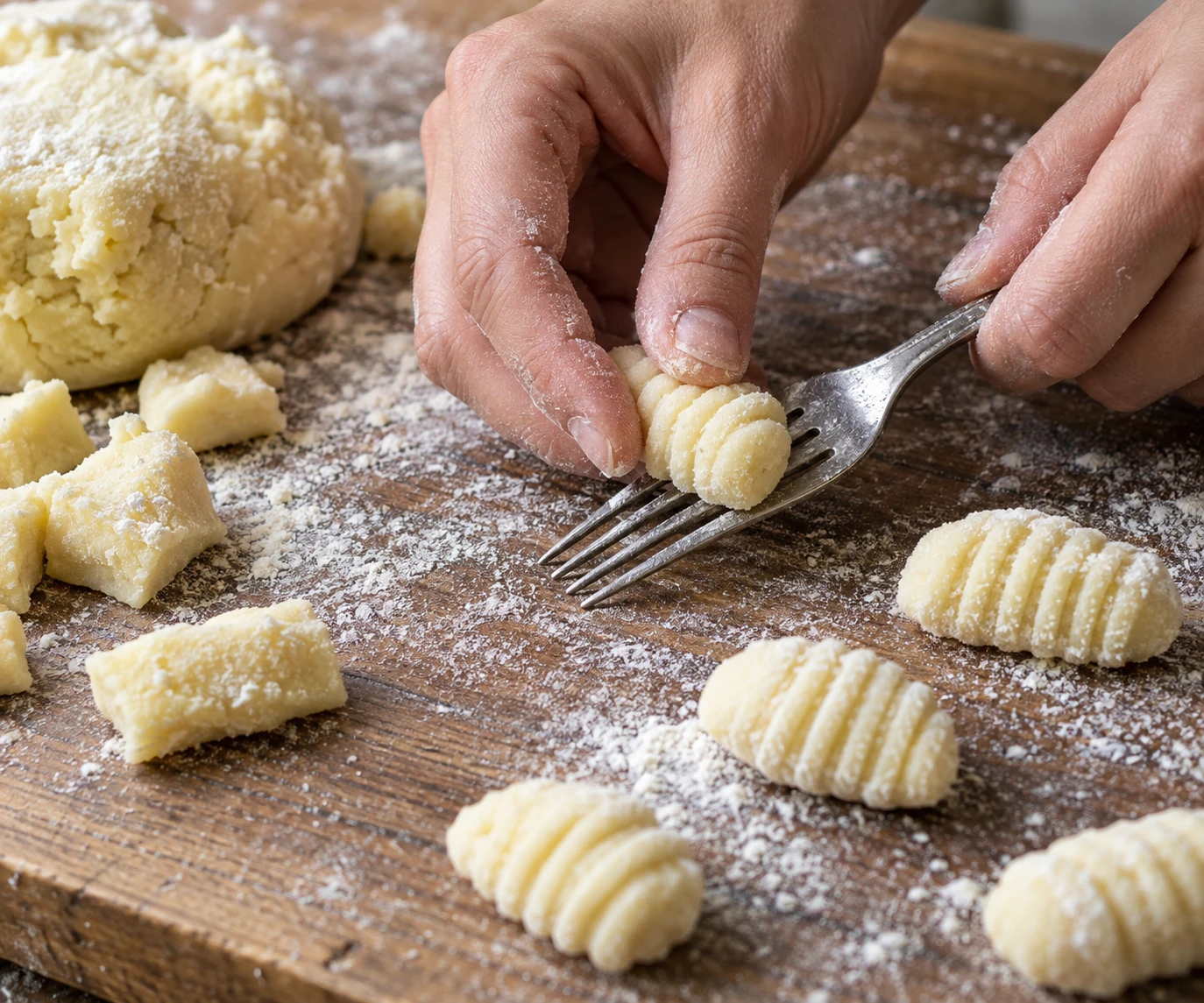
Shape without compressing
Short ropes and a quick cut make pieces that cook evenly. Fork ridges catch the butter, but press only enough to mark the dough without flattening it.
Keep the water gentle
A rolling boil can knock tender dumplings apart, so keep the pot at a gentle bubble and cook in small batches. Their float is a useful cue, followed by a short finish in the water.
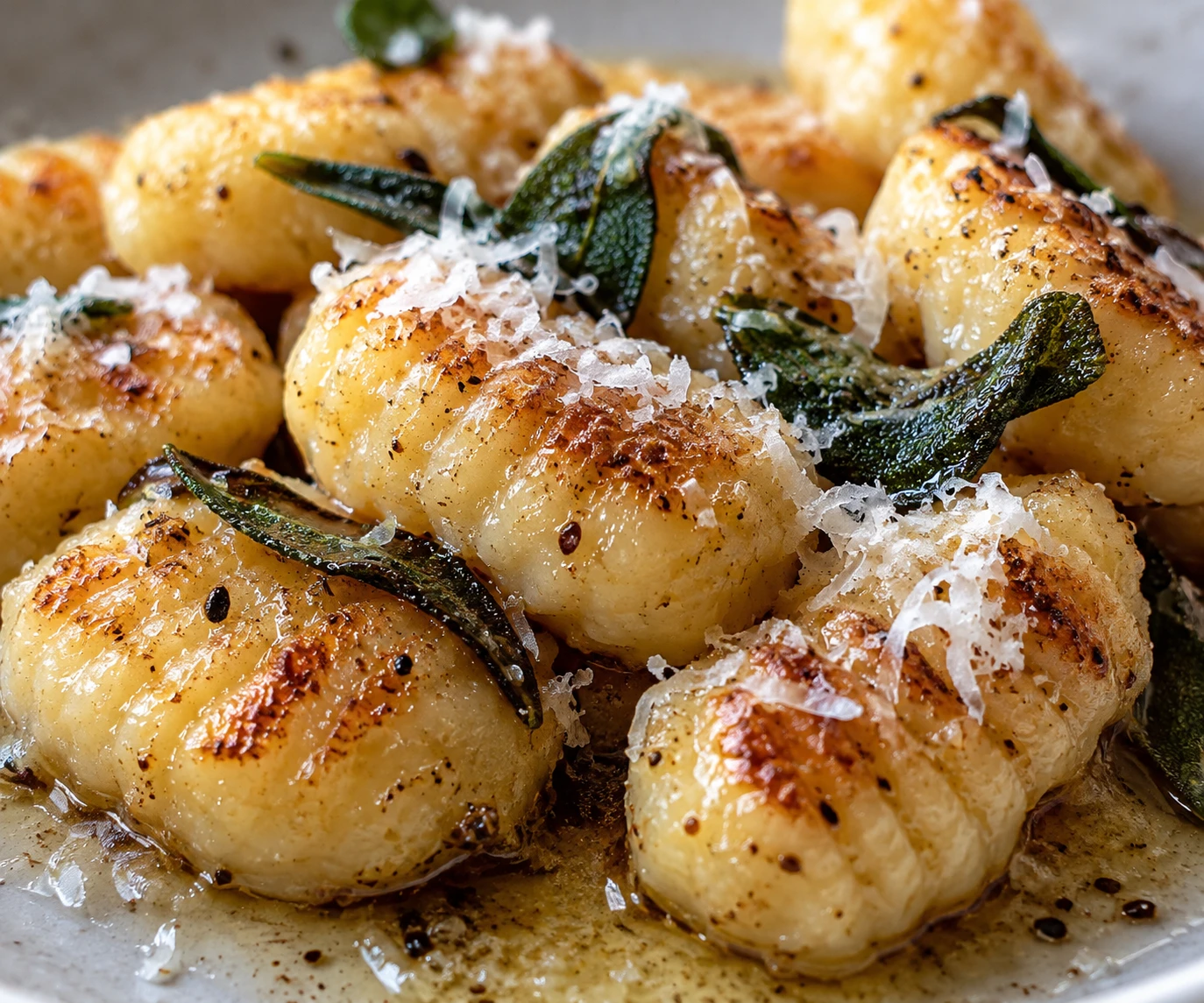
Finish in sage butter
Brown butter until its milk solids turn golden, then add the gnocchi gently so their ridges stay intact. Sage and Parmesan bring a savory finish without hiding the potato's soft texture.
Homemade Potato Gnocchi from Scratch
Ingredients
- • 2 lb russet potatoes
- • 1 1/4 cups all-purpose flour
- • 1 large egg yolk
- • 1 tsp fine salt, for the dough
- • 1 tbsp fine salt, for the cooking water
- • 3 tbsp unsalted butter
- • 10 fresh sage leaves
- • 1/4 cup finely grated Parmesan cheese
Method
Bake the potatoes
Heat the oven to 425 F. Scrub and dry the potatoes, prick them several times, set them directly on the oven rack, and bake until a thin knife slides easily through the centers and the skins feel dry, 50 to 60 minutes.
Look for: The centers are fully tender and the skins feel papery rather than damp.
Rice the potatoes
While hot, split the potatoes and scoop the flesh through a ricer onto a clean counter. Let the fluffy potato steam for 2 minutes so excess moisture escapes before adding flour.
Look for: The riced potato is light and dry to the touch, with no wet clumps.
Bring the dough together
Sprinkle the dough salt over the potato, add the egg yolk, and scatter in about 3/4 cup flour. Fold and press with a bench scraper, adding just enough of the remaining flour for a soft dough that no longer sticks heavily to your hands.
Look for: The dough is soft and slightly tacky, not wet or elastic.
Test a dumpling
Simmer a small test piece of dough. If it breaks apart, fold 1 teaspoon flour from the remaining measured amount into the dough and test again; stop as soon as it holds together so the gnocchi stay tender.
Look for: The test dumpling floats intact and has a tender center when cut.
Shape the gnocchi
Dust the board lightly with the remaining flour as needed. Divide the dough into four portions, roll each into a 1/2-inch rope, cut into 3/4-inch pieces, and roll each piece over a fork to form ridges; arrange on a lightly floured tray without touching.
Look for: Pieces are similar in size and the ridges hold without compressing the centers.
Boil the gnocchi
Bring a large pot of water to a gentle boil and stir in the cooking-water salt. Cook gnocchi in uncrowded batches; lift each batch about 30 seconds after the pieces float and drain well.
Look for: The water bubbles gently and the gnocchi float without breaking or sticking together.
Brown butter and sage
Melt the butter in a wide skillet over medium heat. Add the sage and swirl until the butter smells nutty and its milk solids turn golden; lower the heat if they darken quickly.
Look for: The butter is golden and fragrant, and the sage is crisp without turning dark.
Coat and serve
Transfer drained gnocchi to the sage-butter skillet and toss gently. Let them sit briefly in one layer for lightly golden sides, then divide among warm plates and finish with Parmesan.
Look for: The gnocchi have a thin butter sheen, a few golden patches, and tender centers.