" fill="%23faf1da" stroke-width="1.8"/>%0A <ellipse cx="64.5" cy="50" rx="43" ry="12" transform="rotate(4 64.5 50)" stroke="%23938466"/>%0A <path d="m26 44 1 10m3-12 1 14m3-14 1 15m3-14 1 15m4-14 1 14m4-13 1 14m39-10-1 10m5-9-1 8m5-7-1 5" stroke="%23b2a181" stroke-width=".7"/>%0A <path d="M55 60c3-10 12-14 23-10l47-44c7-6 15-6 15-2 0 5-9 11-14 14L82 60c-8 4-21 4-27 0Z" fill="%23bc8c48" stroke-width="1.6"/>%0A <path d="M61 59c3-5 9-8 15-5l-4 7m8-8 49-45 6-4M84 52l45-41" stroke="%2376562e" stroke-width="1"/>%0A <path d="M20 53c18 14 69 19 90 2" stroke="%23514431" stroke-width="2"/>%0A <path d="M27 59c22 11 59 14 78 2" stroke="%23fff9e9" stroke-width="2"/>%0A <path d="m48 87 1 1m7 8 1 1m6-12 1 1m6 12 1 1m6-9 1 1m-24 9 1 1m19 4 1-1m10-16 1 1" stroke="%23aa9b7c"/>%0A </g>%0A</svg>%0A)
Buttery Dinner Rolls
Soft milk-and-butter rolls bake together in one dish, with simple rise cues that make the schedule easy to adjust.
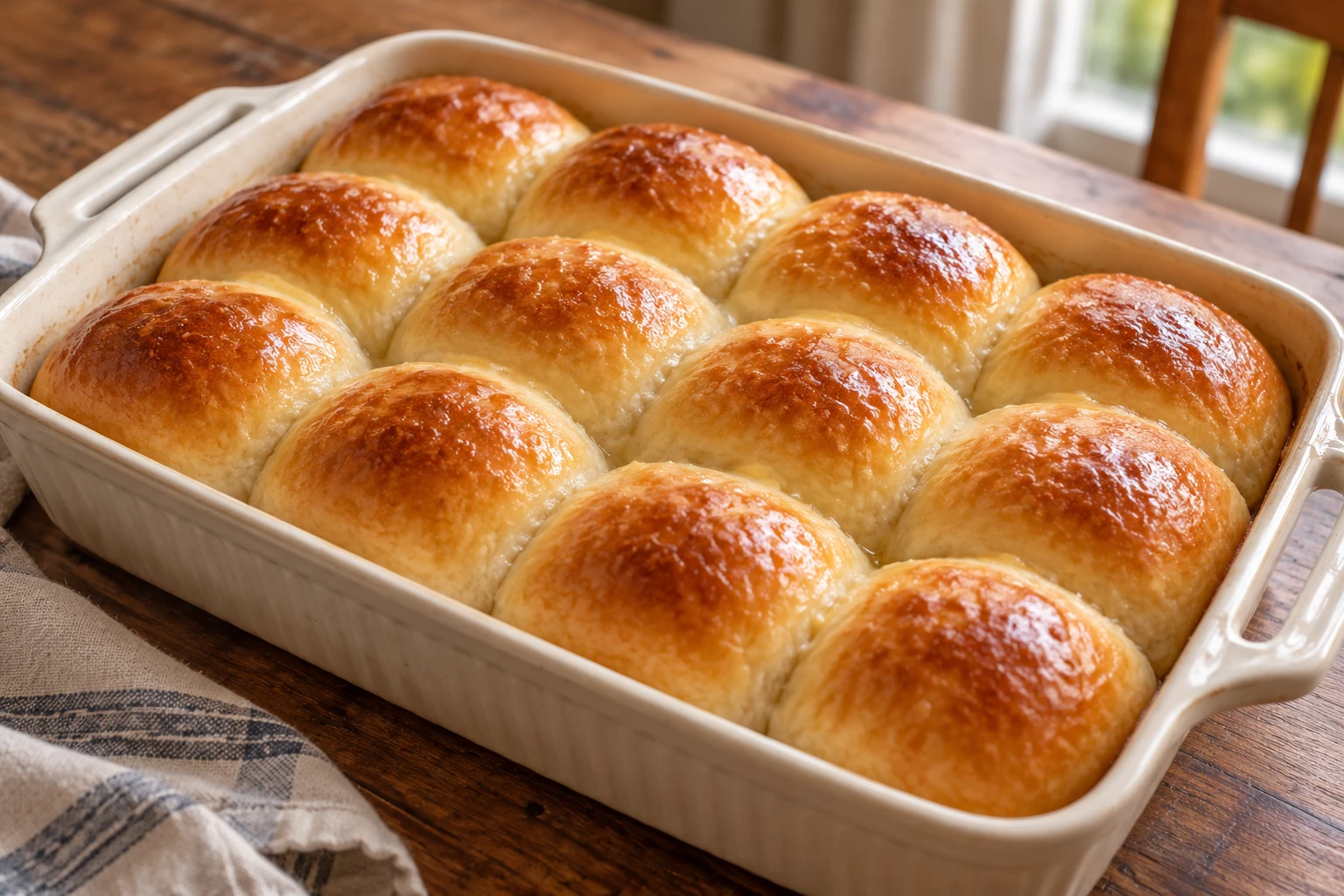
These soft, pull-apart rolls bring the familiar richness of milk, butter, and a little sugar to a family-style table. Watch the dough itself as it rises, so a cool kitchen or an overnight rest does not turn the clock into a guess.
Build a tender dough
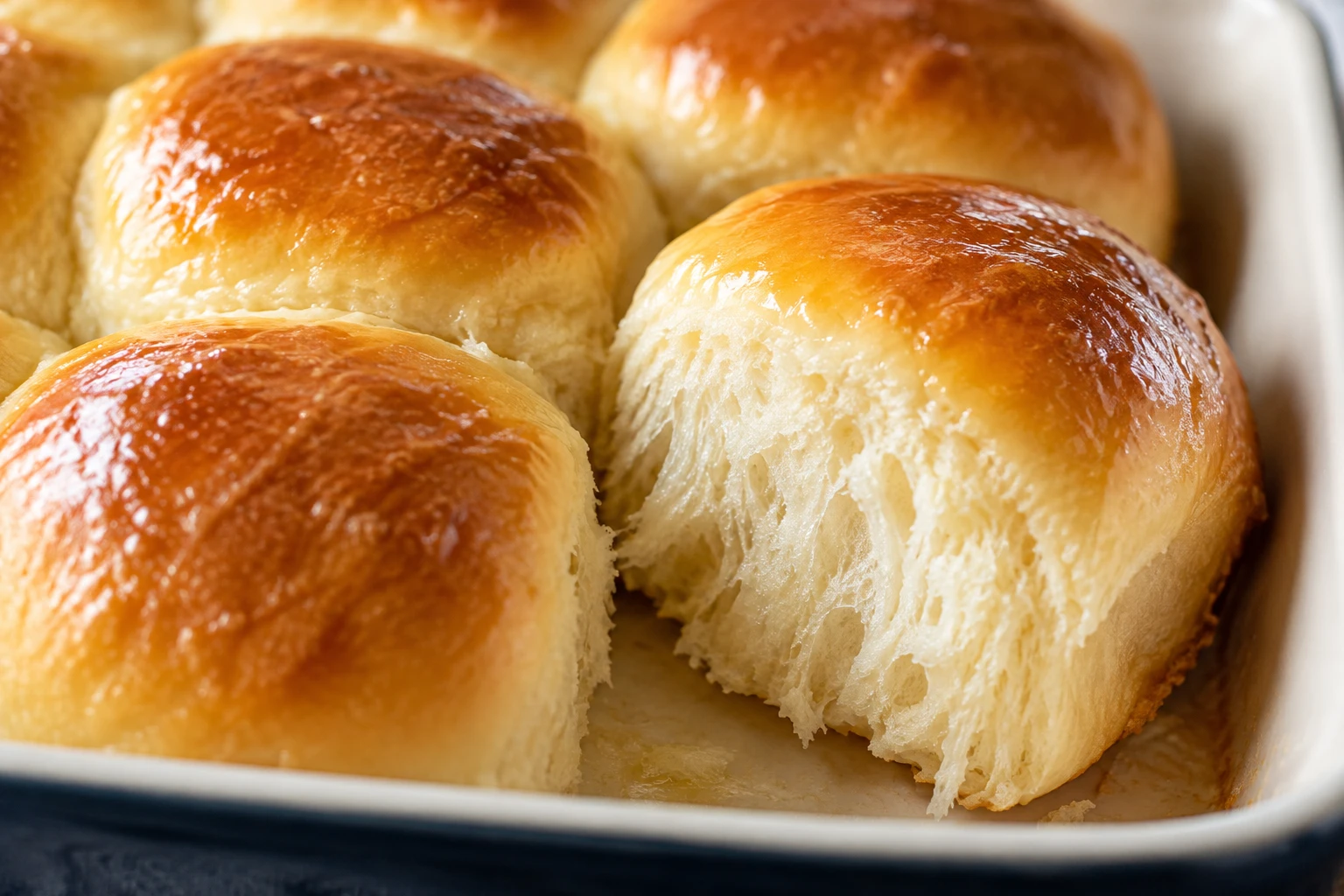
Milk, egg, sugar, and butter make this dough supple and rich, while the flour gives it enough structure to hold a rounded shape. Kneading until it stretches smoothly helps the rolls pull apart in soft layers after baking.
Let the first rise set the pace
A warm room speeds fermentation and a cool one slows it, so use the stated time as a window. The dough is ready when it has doubled and a light fingertip dent fills back gradually, showing that it has expanded without losing all its strength.
Shape for pull-apart sides
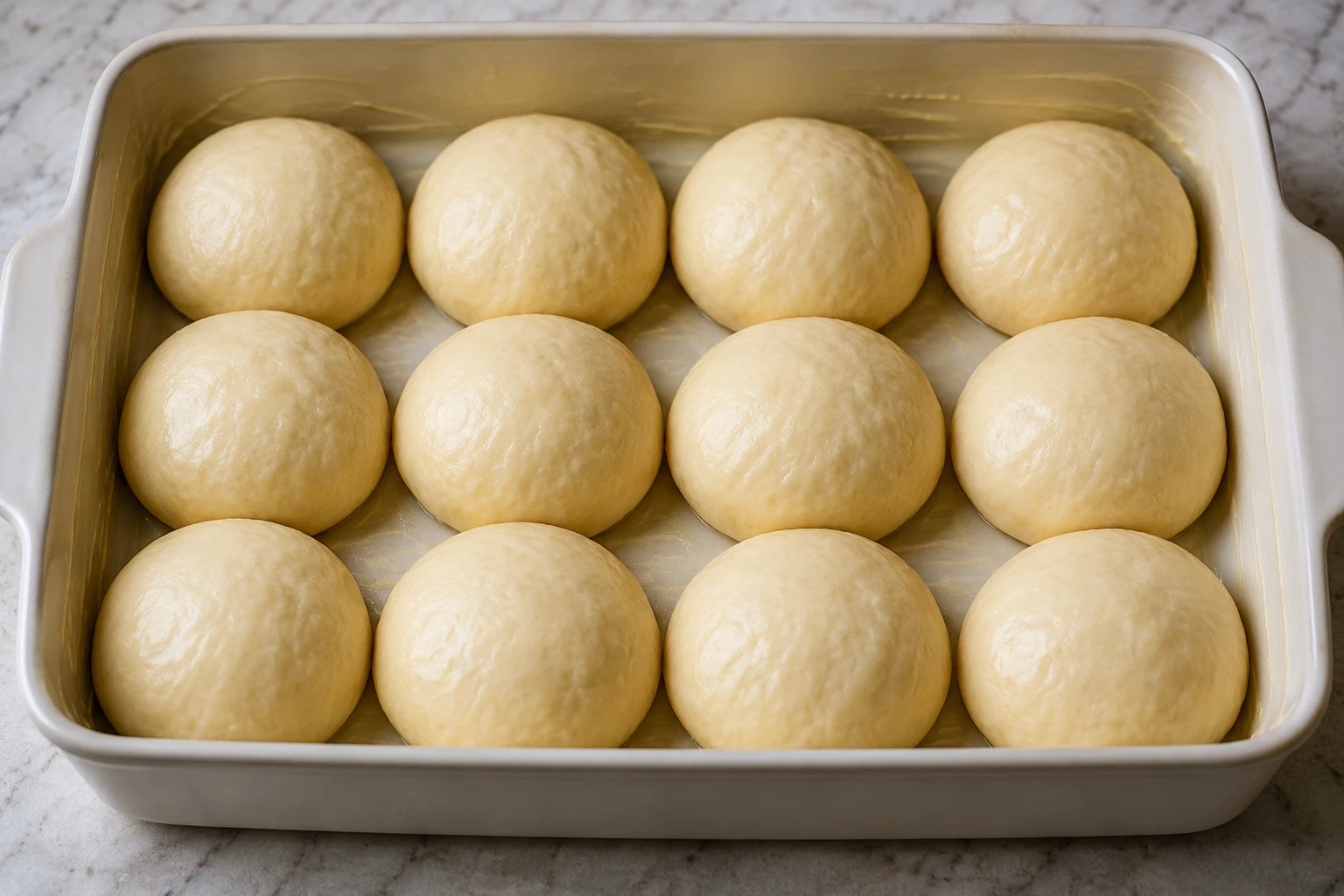
Tucking each portion into a smooth ball creates a taut top that expands evenly. As the rolls proof side by side, they begin to touch and bake with tender edges where they meet.
Plan the proof around dinner
For the same-day schedule, allow about three hours from mixing through the short rest after baking, with most of that time spent waiting for the dough. You can also chill the shaped rolls overnight and bake them after they become puffy at room temperature the next day.
Buttery Dinner Rolls
Ingredients
- • 4 cups (480 g) all-purpose flour
- • 1 cup (240 ml) whole milk, warmed to 105-110 F
- • 2 1/4 tsp active dry yeast
- • 1/4 cup (50 g) granulated sugar
- • 1 large egg, at room temperature
- • 1 tsp fine salt
- • 8 tbsp (113 g) unsalted butter, softened and divided
Method
Wake the yeast
Whisk the warmed whole milk, active dry yeast, and granulated sugar in a large bowl until the sugar dissolves. Let stand for 5-10 minutes, until creamy foam forms across the surface.
Look for: The milk feels warm but not hot, and the yeast mixture develops a creamy, bubbly cap.
Mix a soft dough
Beat the egg into the foamy milk mixture. Hold back 2 tablespoons flour for dusting, then stir the remaining flour and fine salt into the bowl until no dry patches remain.
Look for: The mixture is shaggy and soft, with all the flour moistened.
Knead in the butter
Knead 6 tablespoons softened butter into the dough a tablespoon at a time, then continue kneading for 8-10 minutes by hand or with a dough hook. Use a little reserved flour only if needed; the finished dough should feel supple and tacky, not dry.
Look for: The dough becomes smooth, stretchy, and slightly tacky, and begins to pull cleanly from the bowl.
Let the dough rise
Use a little of the divided butter to grease the bowl, turn the dough to coat it, and cover. Let rise in a comfortably warm, draft-free place until doubled, usually 60-90 minutes; press a floured fingertip gently into the dough, and look for a dent that fills back slowly.
Look for: The dough is visibly doubled and a fingertip dent springs back gradually instead of snapping shut.
Shape the rolls
Butter a 9-by-13-inch baking dish with part of the divided butter. Press the dough gently to deflate, divide it into 15 equal pieces, tuck each piece into a smooth ball, and arrange the balls in the dish with their seams underneath.
Look for: The shaped balls have taut, smooth tops and sit evenly spaced in the buttered dish.
Proof until pillowy
Cover the dish and proof at room temperature for about 30-45 minutes, until the rolls look puffy and their sides touch. For a make-ahead option, cover the shaped rolls tightly and refrigerate for 8-16 hours instead; the next day, let them stand at room temperature until puffy, often 60-90 minutes, before baking.
Look for: The rolls feel airy, fill the dish, and a light fingertip dent returns slowly; use this cue over the clock.
Bake until golden
Heat the oven to 350 F while the rolls finish proofing, then bake the dish for 18-22 minutes until the tops are evenly golden and the center rolls feel set. If the tops brown before the centers are baked through, loosely cover the dish with foil for the remaining bake.
Look for: The top row is evenly golden and a center roll no longer feels doughy when gently pressed.
Brush and serve
Melt the remaining tablespoon of divided butter and brush it over the hot roll tops. Let the rolls settle in the dish for 5 minutes, then pull them apart and serve warm.
Look for: The melted butter gives the warm tops a soft sheen, and the rolls separate easily after their brief rest.